Artwork
Spring
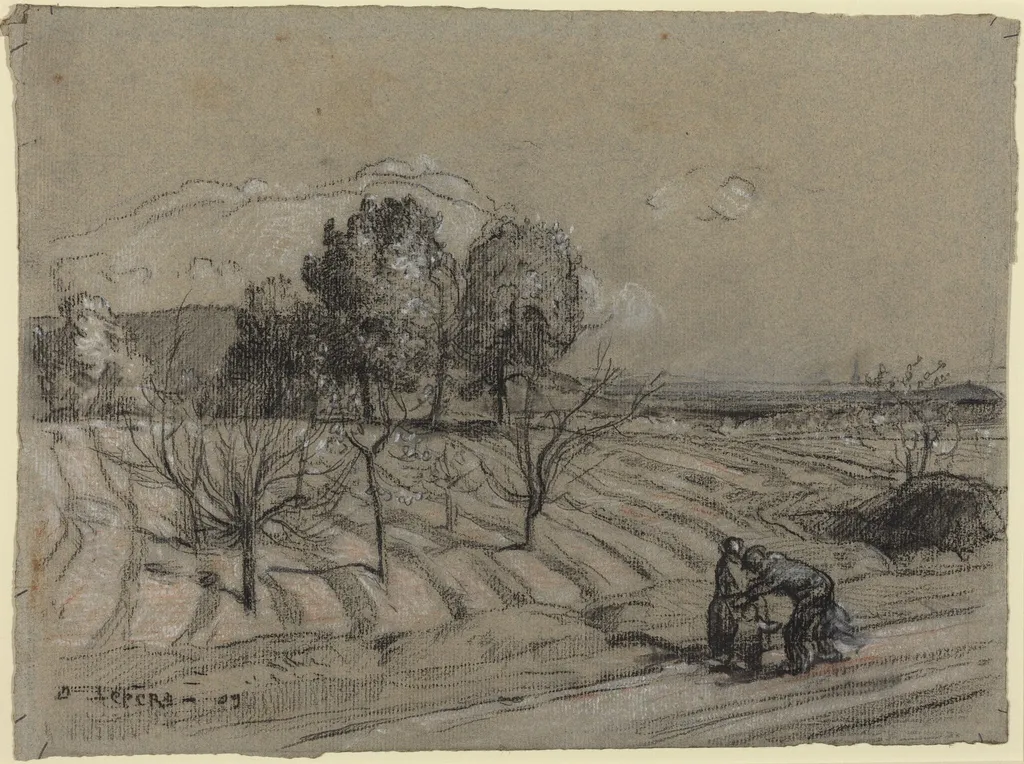
Spring is a charcoal drawing by Auguste Lepère. It dates from 1909 and is held in the collection of the National Gallery of Art.
About this work
Overview
Created around 1909, *Spring* is a drawing by French artist Auguste Lepère, executed in charcoal and colored chalk on blue-gray laid paper. Though known primarily for his etchings and wood engravings, Lepère also produced intimate landscape sketches that reflect his sensitivity to natural forms. This work captures a quiet rural moment with minimal detail, emphasizing atmosphere over narrative.
Subject & Meaning
The scene portrays a quiet springtime countryside: three bare trees rise on a gentle slope, with distant trees framing the horizon.
The scene portrays a quiet springtime countryside: three bare trees rise on a gentle slope, with distant trees framing the horizon. A faint path meanders through the field, leading to two small figures crouched near a plowed row of earth. Their posture suggests labor or rest, grounding the image in everyday rural life. The absence of bloom or vibrant color underscores a subdued, transitional season rather than a celebratory one.
Technique & Style
Lepère employed charcoal and colored chalk to build soft, layered tones across the blue-gray paper, using scumbling and hatching to suggest texture without definition. The trees are rendered in dense, irregular strokes, avoiding precise outlines. The paper’s subtle hue unifies the composition, allowing the chalk to glow faintly against the cool ground. The sketchy, unfinished quality reflects a direct, observational approach.
History & Provenance
Lepère, active from the mid-19th century until his death in 1918, was a central figure in the revival of wood engraving in Europe. While his printed works gained wider recognition, his drawings like *Spring* remained personal studies, often kept in private collections. The drawing’s provenance is not widely documented, but its materials and style align with his late-period sketches, made during his time in the French countryside.
Context
In the early 20th century, many European artists turned to intimate, direct studies of nature as a counterpoint to industrialization and academic formalism. Lepère’s work fits within this trend, echoing the quiet realism of contemporaries like Corot or the Barbizon painters. His use of humble materials and focus on unidealized landscapes reflect a broader shift toward authenticity in visual art during this period.
Legacy
Though less known than his engravings, *Spring* exemplifies Lepère’s ability to convey mood through restraint. The drawing’s emphasis on process over polish influenced later generations of draftsmen who valued spontaneity and material sensitivity. Its quiet presence in collections today serves as a reminder of the enduring value of modest, observational works in the broader history of drawing.
Own this work as a print
Artist & collection
Artist
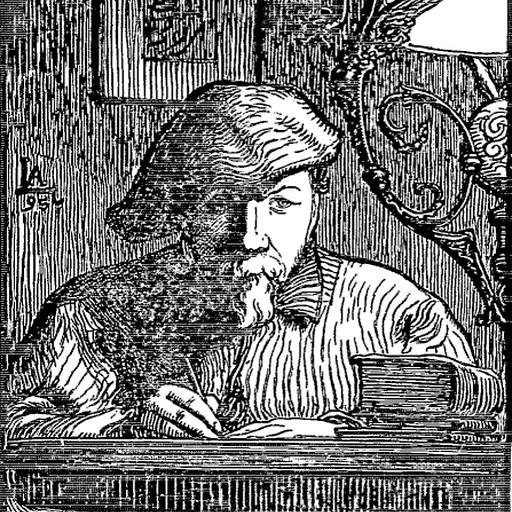
Louis-Auguste Lepère (30 November 1849 – 20 November 1918) was a French painter and etcher. Lepère is also considered a leader in the creative revival of wood engraving in Europe.

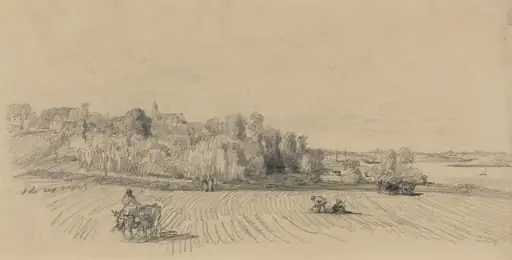 L'Ile aux Moines with Workers in a Field
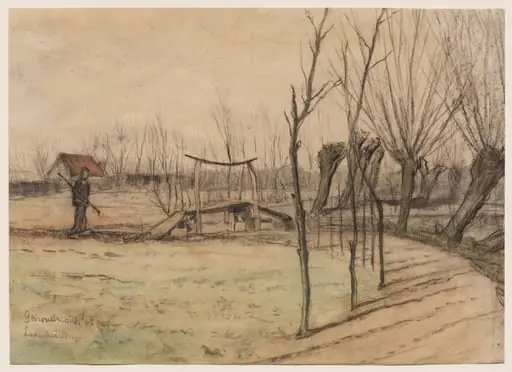 Landscape at Loosduinen
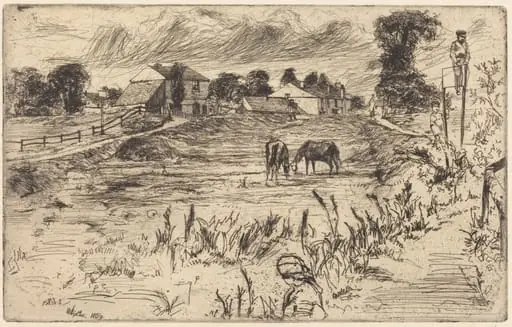 Landscape with Horses
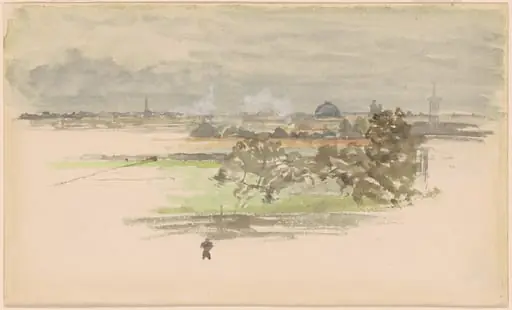 Marsh in Zeeland
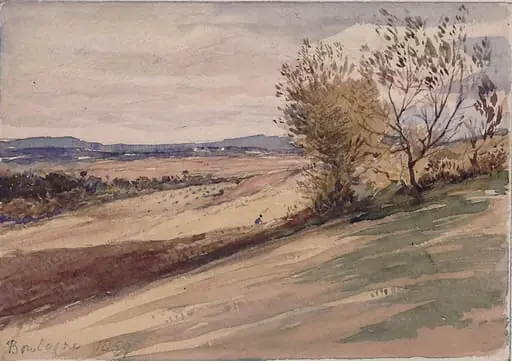 Landscape near Boulogne
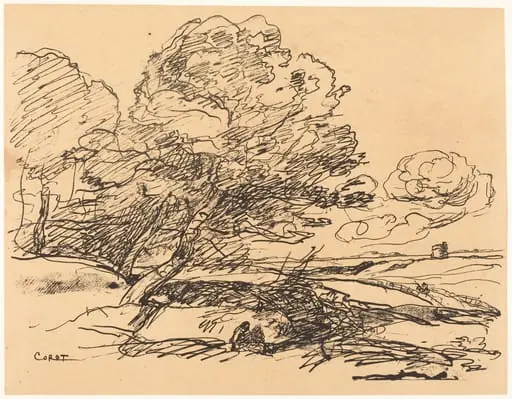 The Lonely Tower (La Tour isolee)
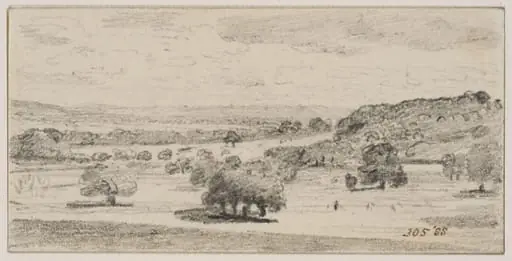 Wimbledon Park
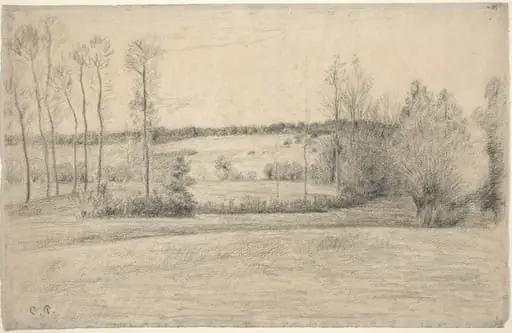 Trees and Meadows at Eragny
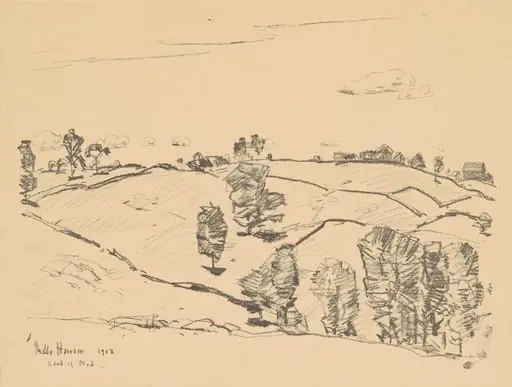 Stone Fences, Land of Nod
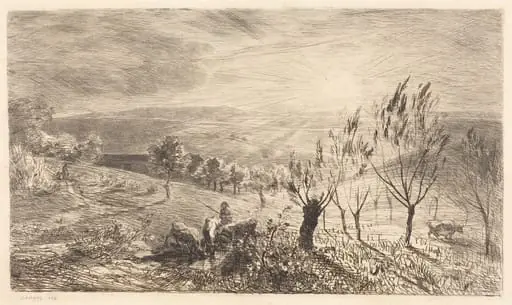 Sunrise (Le Lever du soleil)
 Landscape, Land of Nod
 A Great Beech Tree at the Edge of a Wood