Artwork
View of a Bay from a Hillside (Amalfi)
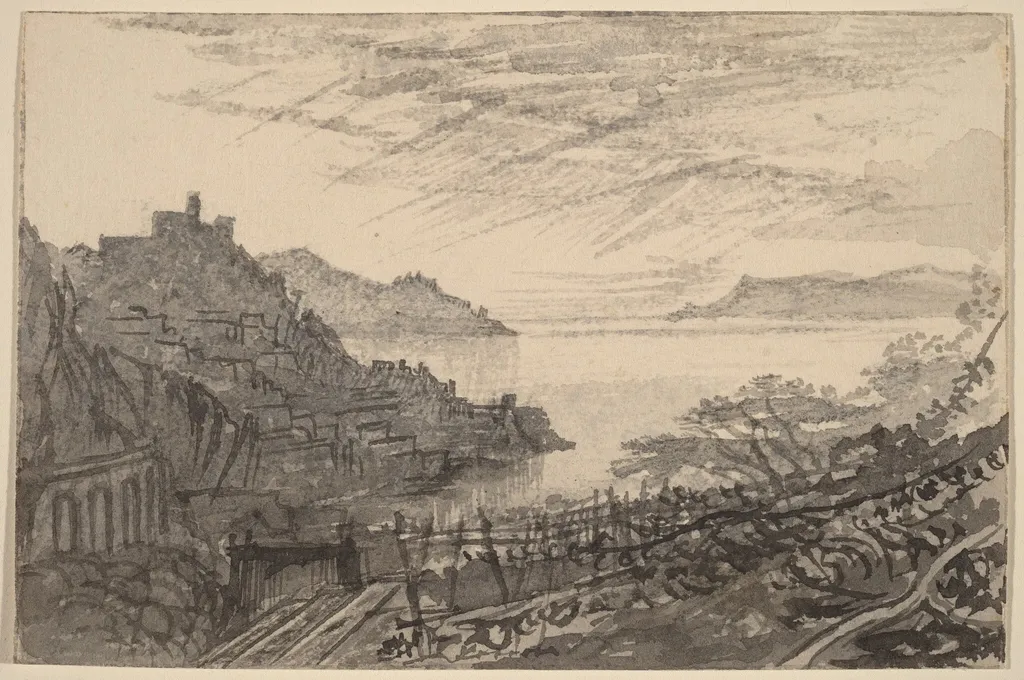
View of a Bay from a Hillside (Amalfi) is a graphite drawing by the Impressionist artist Edward Lear. It dates from 1884 and is held in the collection of the National Gallery of Art.
About this work
Overview
Created in 1884, this drawing by Edward Lear portrays a coastal vista of Amalfi seen from an elevated position. Executed with black and gray wash combined with graphite on card, the work captures a tranquil bay framed by distant hills and foreground foliage, employing tonal contrasts to suggest depth.
Subject & Meaning
The composition presents a serene landscape where a quiet bay unfolds beneath a sky of muted tones, while trees and shrubbery occupy the lower plane. The elevated viewpoint invites contemplation of the harmonious relationship between land and sea, emphasizing the calm atmosphere of the Amalfi shoreline.
Technique & Style
Lear applied a wash of black and gray pigments alongside graphite, allowing for subtle gradations of tone. The interplay of light and shadow, achieved through chiaroscuro, creates a three‑dimensional effect, while the graphite lines define architectural and natural forms with precision typical of his travel sketches.
History & Provenance
An English illustrator and poet, Lear produced numerous on‑the‑road sketches that he later refined for publication. This particular drawing reflects his practice of recording scenes during journeys, later incorporated into travel books and illustrated editions, such as his work for Alfred, Lord Tennyson’s poetry.
Context
The piece belongs to a period when Lear was extensively traveling across Europe, documenting landscapes that would accompany his literary and artistic projects. Amalfi, a historic port on Italy’s coast, offered a picturesque subject that aligned with the 19th‑century fascination with Mediterranean vistas.
Artist & collection

Artist
Edward Lear (12 May 1812 – 29 January 1888) was an English artist, illustrator, musician, author and poet, who is known mostly for his literary nonsense in poetry and prose and especially his limericks, a form he popularised but which term…

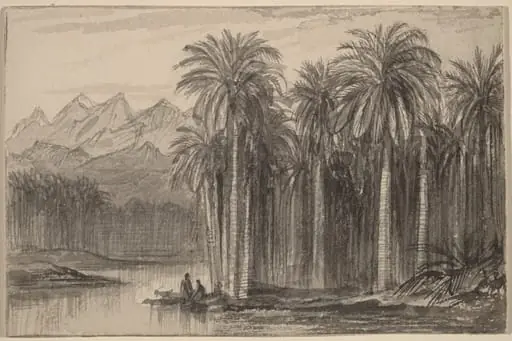
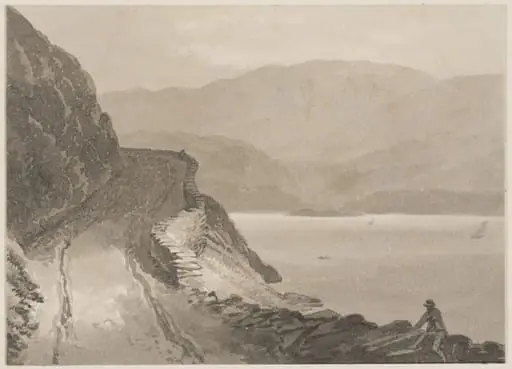 Landscape with lake and mountains
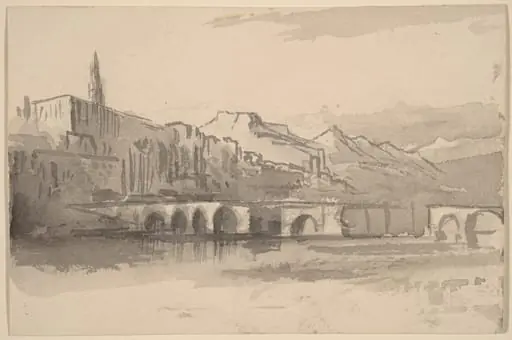 Bridge with Mountains in the Distance (Ventimiglia)
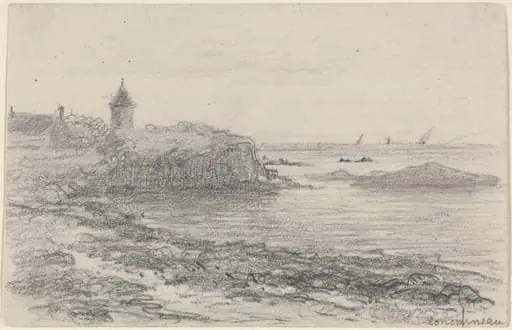 The Coast at Concarneau
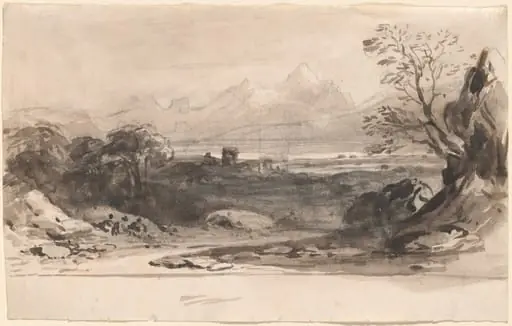 Landscape with Ruins
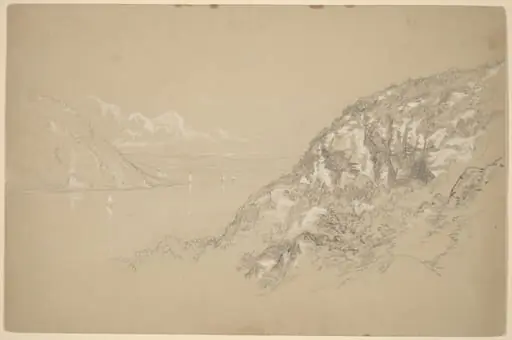 Hudson Highlands
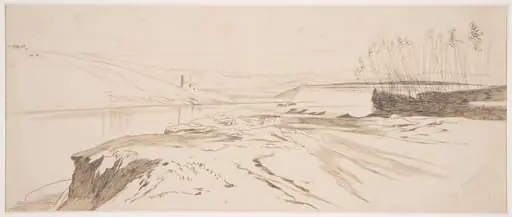 Untitled
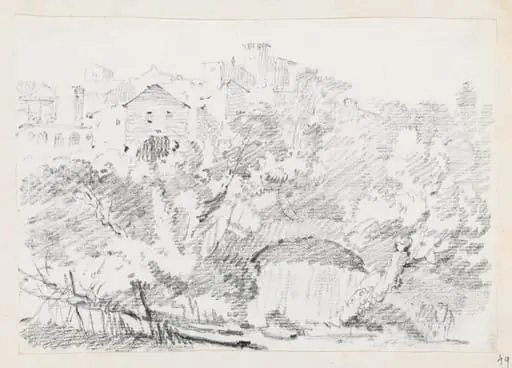 A Waterfall near a Hilltown in Italy
 La Falaise: Baie de Saint-Malo (The Cliff: Saint-Malo Bay)
 Freshwater Bay, Isle of Wight
 Le Havre
 Landscape with Hills and Water