Artwork
Sepelire mortuos
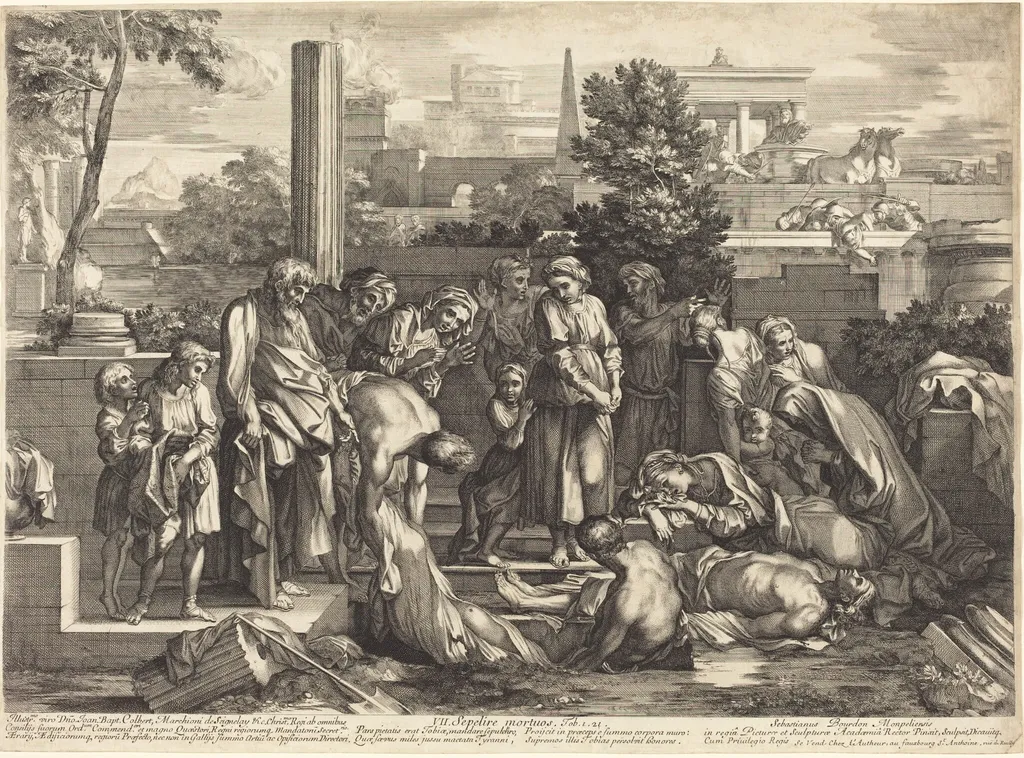
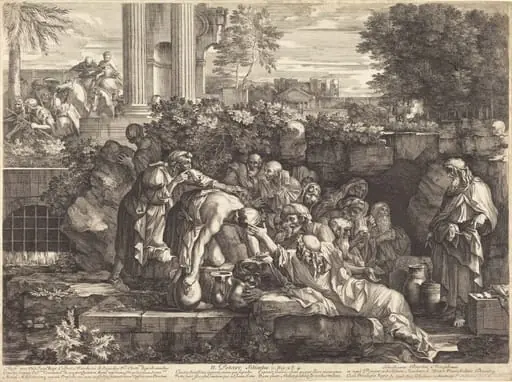
Sepelire mortuos is an ink print by the Baroque artist Sébastien Bourdon. It dates from 1668 and is held in the collection of the National Gallery of Art.
About this work
Overview
Though primarily known for his paintings, including religious commissions for Notre Dame, Bourdon also engaged deeply with printmaking.
Sébastien Bourdon, a French artist active in the mid-17th century, produced *Sepelire mortuos* in 1668 as an engraving. Though primarily known for his paintings, including religious commissions for Notre Dame, Bourdon also engaged deeply with printmaking. This work belongs to a body of engravings that reflect his interest in narrative and solemn themes, executed with technical precision characteristic of the medium.
Subject & Meaning
The scene portrays a funeral gathering around a deceased figure laid upon the ground. Figures react with varied gestures—kneeling, shielding faces, or raising hands—conveying grief and communal mourning. The presence of classical architecture and statues in the background suggests a link between ancient rites and contemporary Christian burial practices, reinforcing themes of mortality and the continuity of ritual.
Technique & Style
Bourdon employed fine, controlled lines to model form and depth, using cross-hatching and varied stroke density to create shadow and texture. The engraving’s detail—individual folds of fabric, facial expressions, and architectural elements—demonstrates mastery of the burin on metal. Unlike painting, this method required reverse planning and precision, resulting in a highly refined, monochromatic image with layered tonal effects.
History & Provenance
Created in 1668, the engraving emerged during Bourdon’s later career, after his return to France from Italy. It was likely produced for private collectors or as part of a series of religious prints circulating among educated audiences. While its early ownership is undocumented, it entered institutional collections in the 19th century, where it remains studied for its technical and thematic qualities.
Context
In mid-17th-century France, engraving served both artistic and devotional purposes, especially among those who could not access large-scale paintings. Bourdon’s work aligned with a broader trend of using prints to disseminate religious imagery. The classical backdrop reflects contemporary humanist interests, blending biblical subject matter with antiquity’s visual language to elevate the scene’s solemnity.
Legacy
Though less widely known than his paintings, *Sepelire mortuos* exemplifies Bourdon’s skill in printmaking and his ability to convey emotional gravity through line. It contributed to the reputation of French engravers in the Baroque period and remains a reference for studies on the intersection of religious narrative and graphic technique in early modern Europe.
Artist & collection
Artist
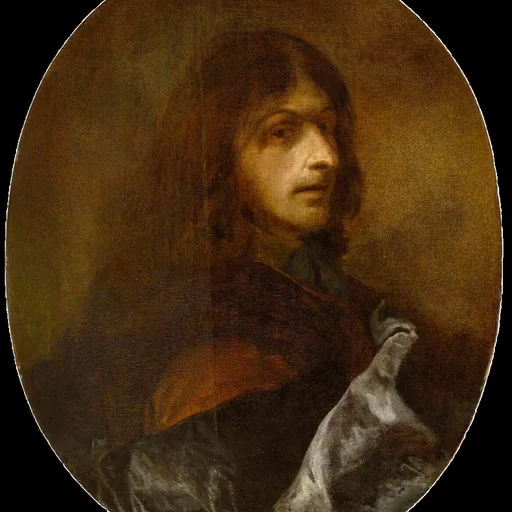
Sébastien Bourdon (French pronunciation: ; 2 February 1616 – 8 May 1671) was a French painter and engraver. His chef d'œuvre is The Crucifixion of St. Peter made for the cathedral of Notre Dame.

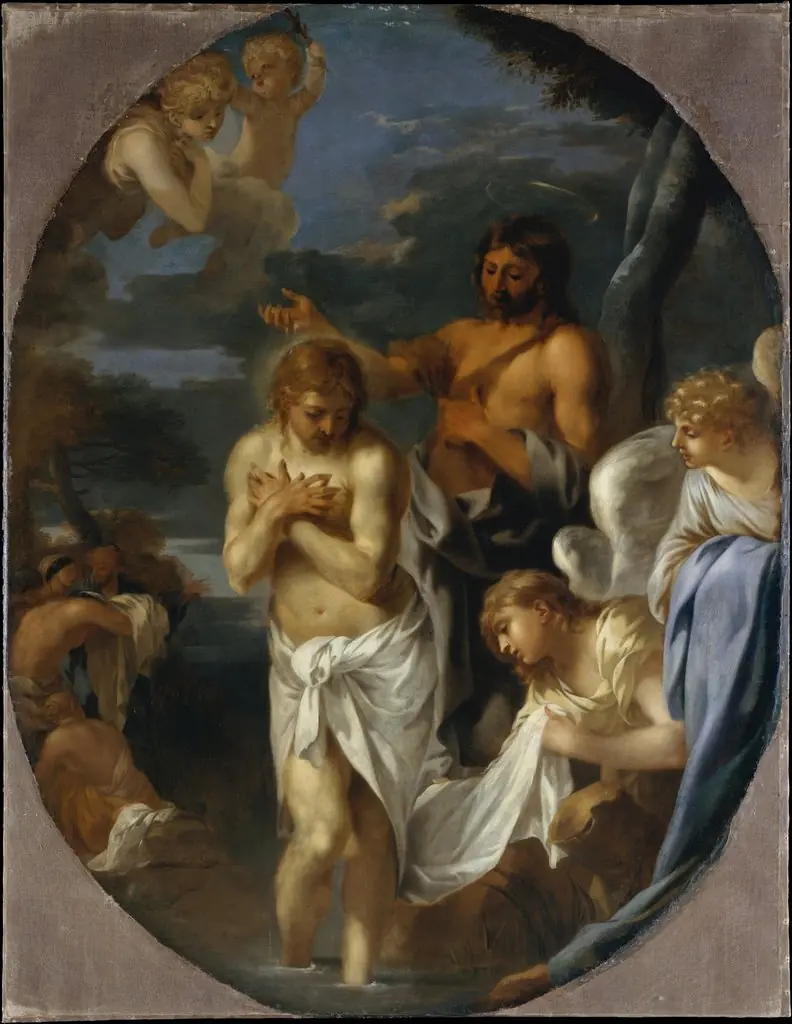
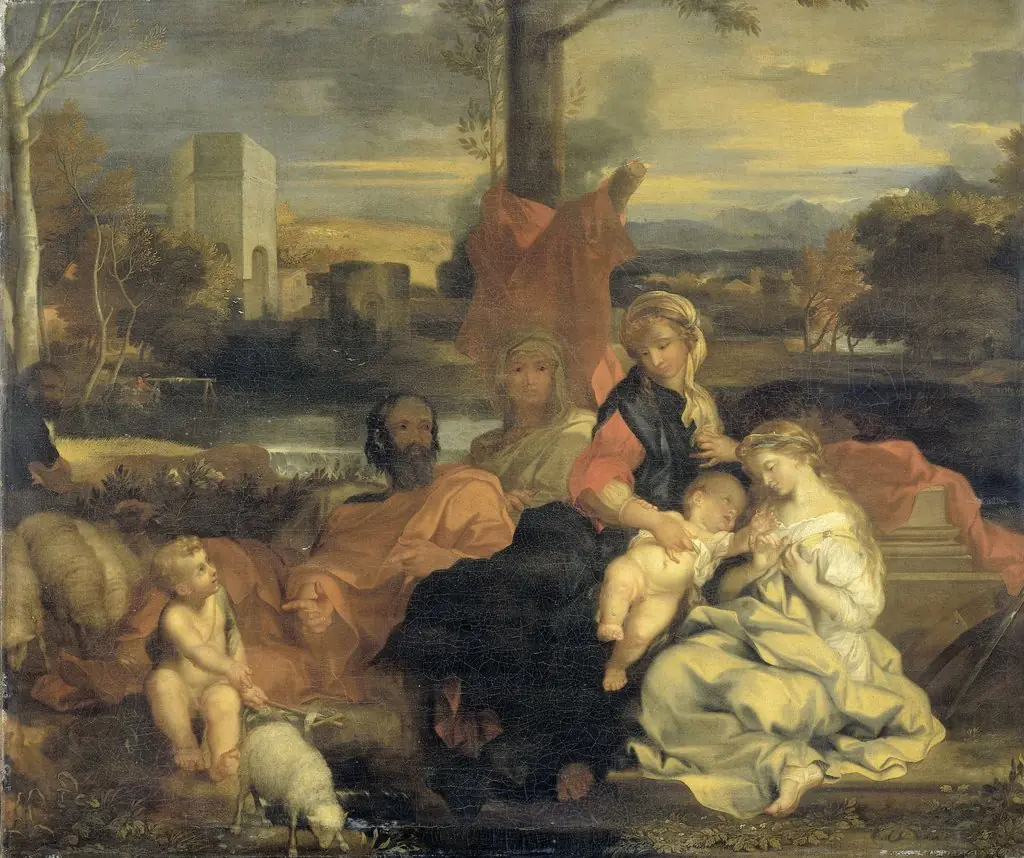
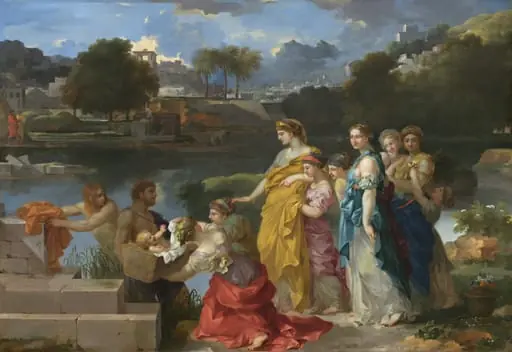
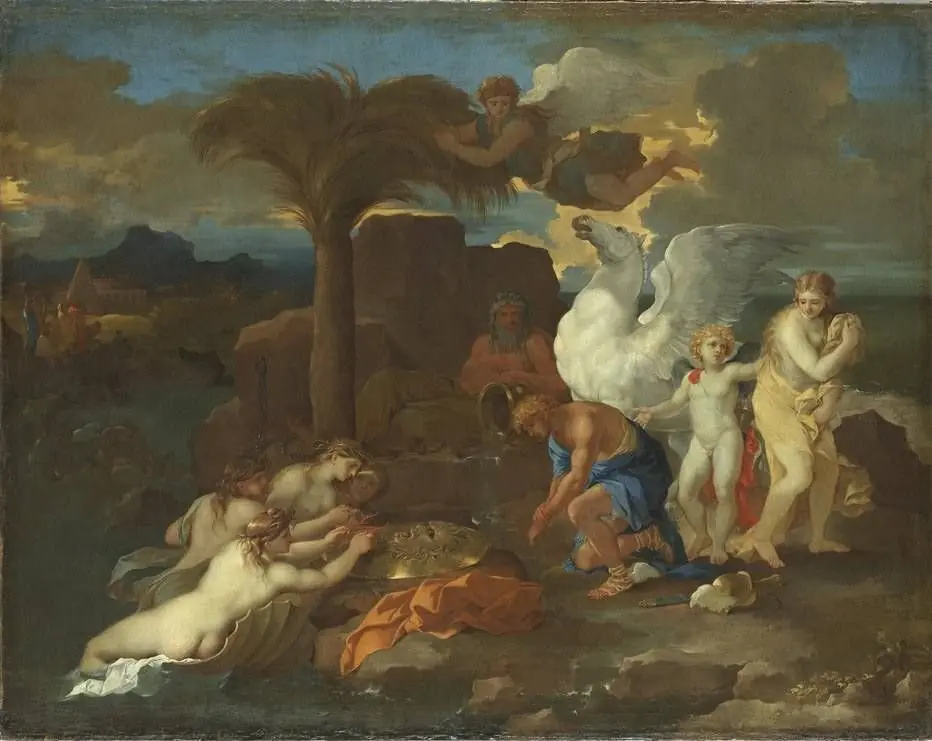
 Potare sitientes
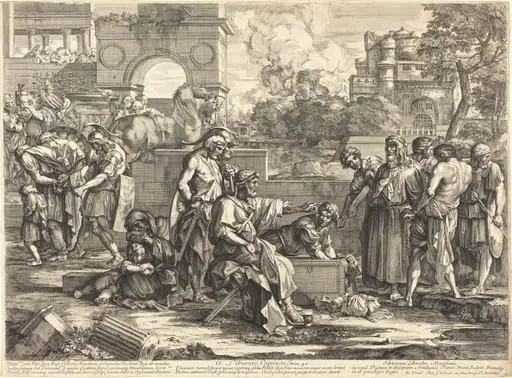 Liberare Captivos
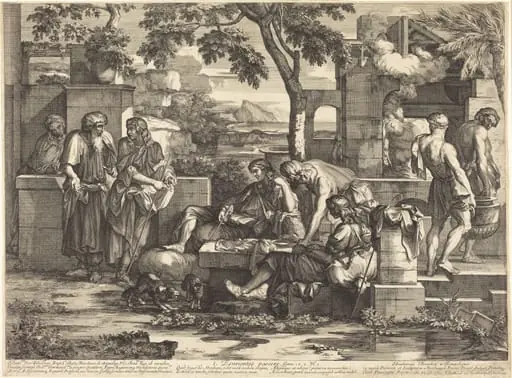 Esurientes pascere
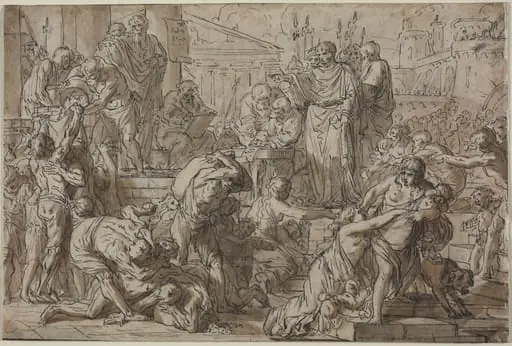 Roman Subject
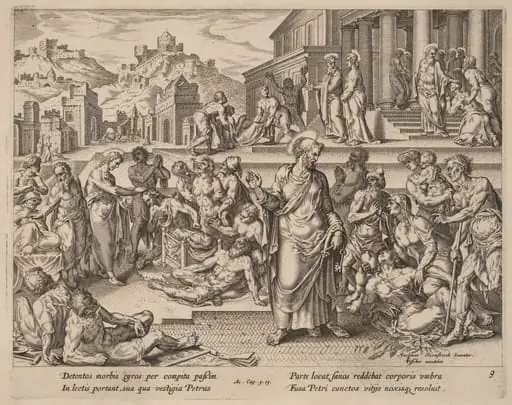 Saint Peter Healing the Sick with His Shadow
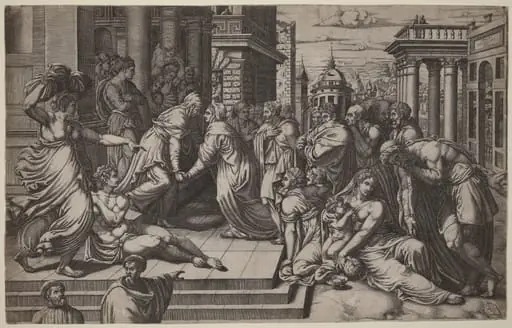 The Visitation
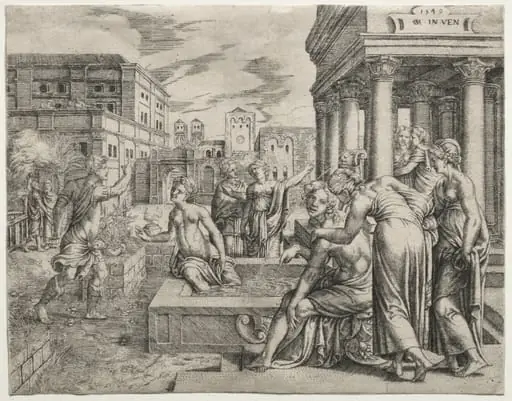 Bathsheba in the Bath
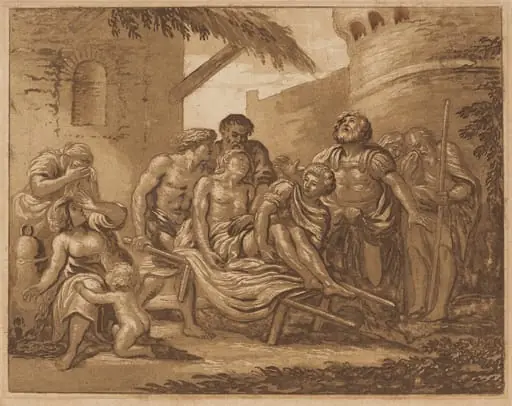 The Death of Hector on the Ramparts of Troy (recto) / Tancred and Erminia (verso)
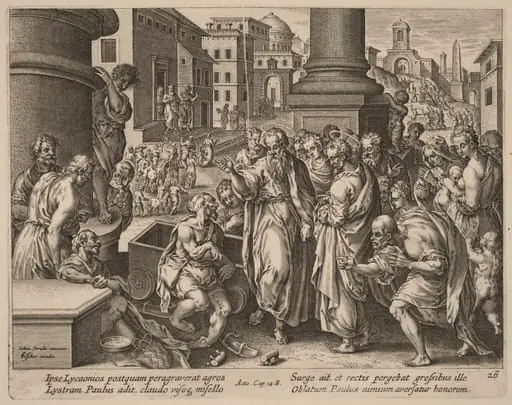 Saint Paul Heals the Lame Man at Lystra
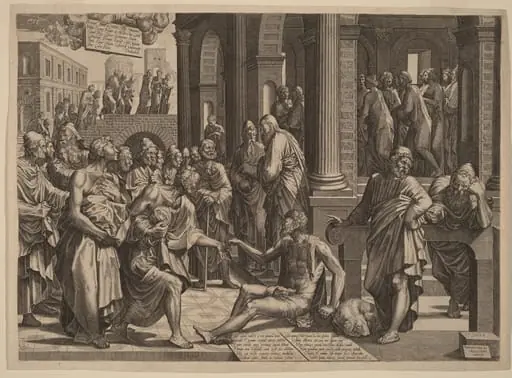 Apostles Peter and John Healing the Paralytic
 Saint Roch Distributing Alms
 Vestine nudos