Artwork
Liberare Captivos
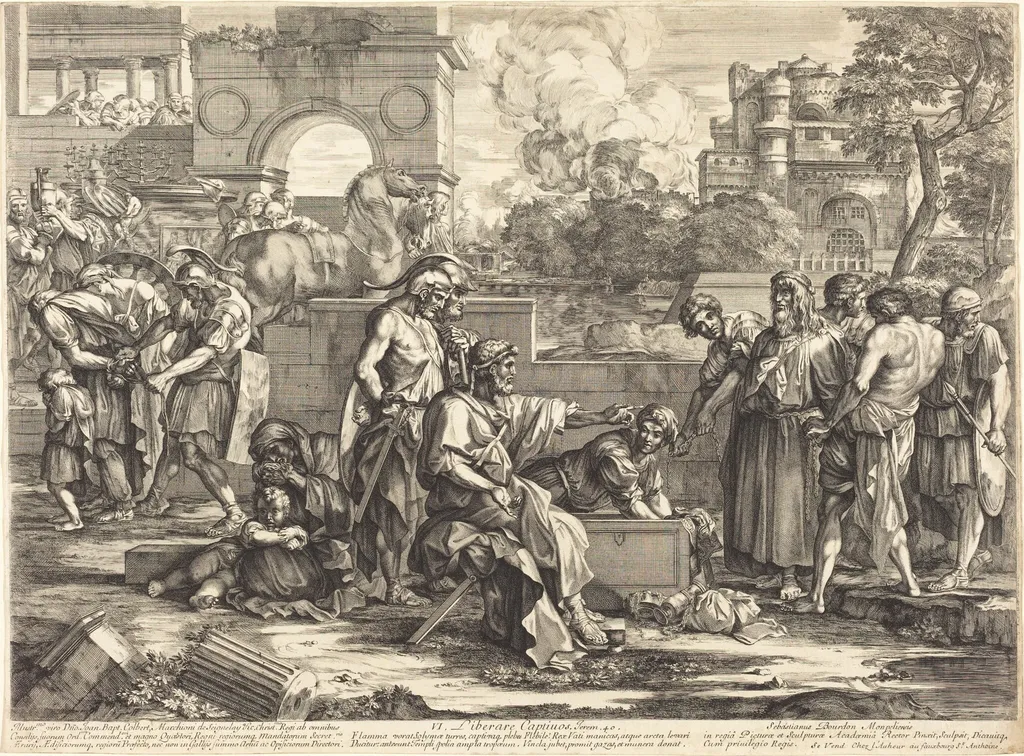
Liberare Captivos is an ink print by the Baroque artist Sébastien Bourdon. It dates from 1668 and is held in the collection of the National Gallery of Art.
About this work
Overview
Measuring roughly a modest size for a print of its period, the work presents a densely populated scene within a decaying architectural setting.
Liberare Captivos is a copperplate engraving executed in 1668 by the French artist Sébastien Bourdon. Measuring roughly a modest size for a print of its period, the work presents a densely populated scene within a decaying architectural setting. The composition is populated by figures in a mixture of classical and contemporary attire, all engaged in a tumultuous moment of rescue amid a burning cityscape.
Subject & Meaning
The image centers on an act of liberation, as suggested by its title, showing a man cradling a child while surrounding figures gesture, kneel, or reach outward. The juxtaposition of ancient robes with modern dress implies a timeless narrative of emancipation, perhaps alluding to biblical or historical episodes where individuals are freed from oppression amid chaos and destruction.
Technique & Style
Bourdon employs fine, incised lines and cross‑hatching to render intricate textures, from the folds of garments to the swirling smoke above ruined columns. The engraving’s high contrast of light and shadow creates depth, while the crowded composition demonstrates the artist’s skill in managing complex spatial arrangements on a relatively small surface.
History & Provenance
Created during Bourdon’s mature period, the print reflects his dual practice as painter and engraver. Although primarily known for large‑scale religious canvases such as his Crucifixion of St. Peter for Notre‑Dame, this work was likely produced for the print market, circulating among collectors interested in narrative engravings. Surviving copies are held in several European museum collections.
Context
The engraving emerges from a 17th‑century European tradition that combined classical motifs with contemporary concerns, a hallmark of the Baroque era’s dramatic storytelling. Bourdon’s choice to blend antiquated and current dress mirrors the period’s fascination with antiquity while addressing present‑day themes of liberty and moral rescue, resonating with the broader cultural preoccupations of post‑Thirty Years’ War France.
Artist & collection
Artist
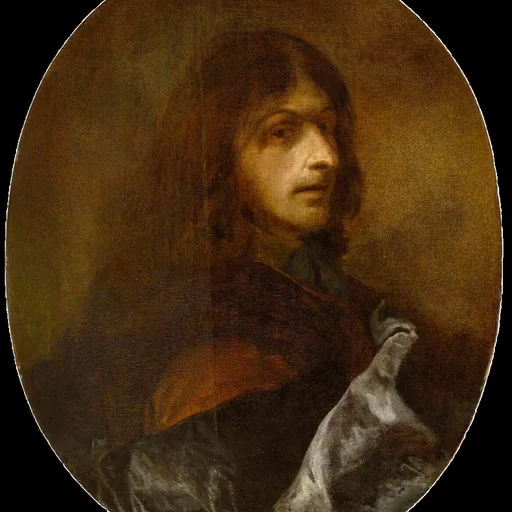
Sébastien Bourdon (French pronunciation: ; 2 February 1616 – 8 May 1671) was a French painter and engraver. His chef d'œuvre is The Crucifixion of St. Peter made for the cathedral of Notre Dame.

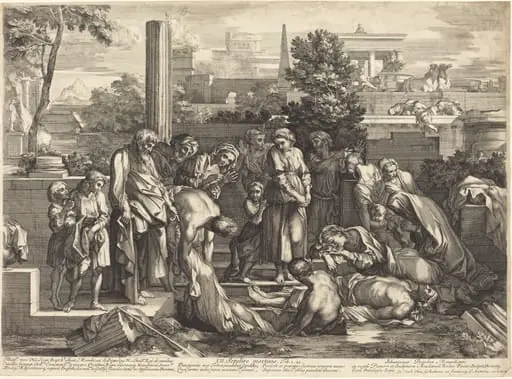 Sepelire mortuos
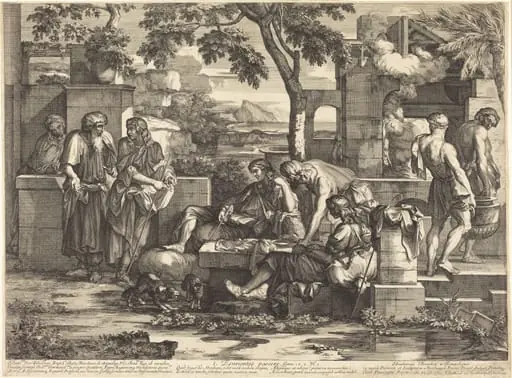 Esurientes pascere
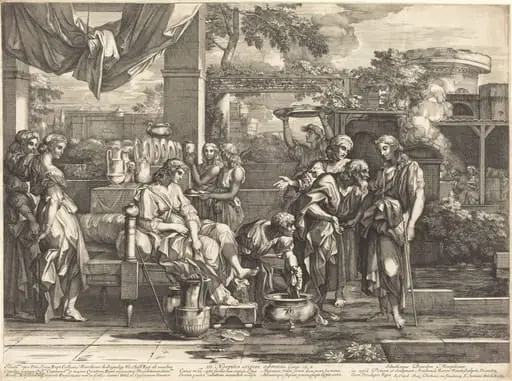 Hospitio exipere advenas
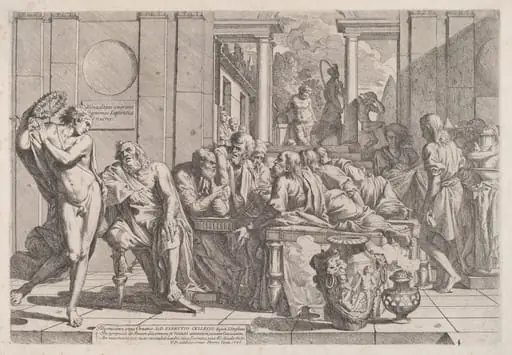 The Symposium
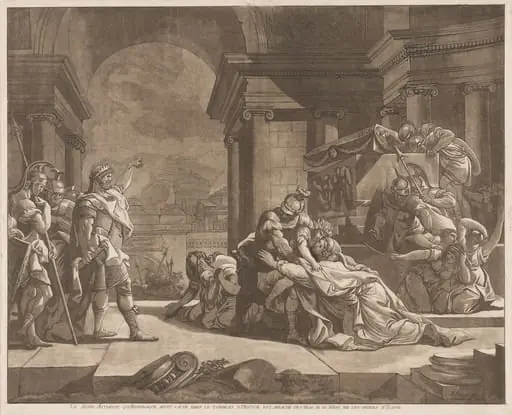 Le Jeune Astianax qu’Andromaque avoit caché dans le tombeau d’Hector est arraché des bras de sa Mere par les ordres d'Ulisse (Young Astianax, who Andromache Hid in Hector's Tomb, is Seized from his Mother's Arms by Ulysses' Orders)
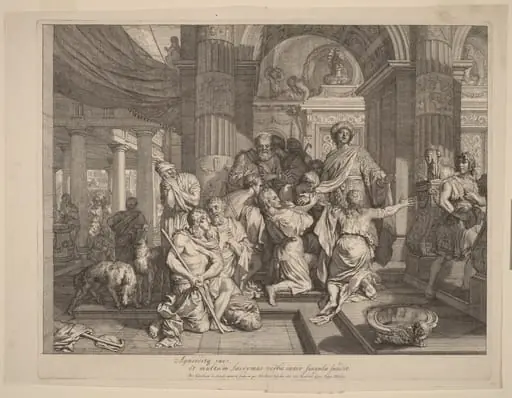 Joseph Reveals Himself to His Brothers
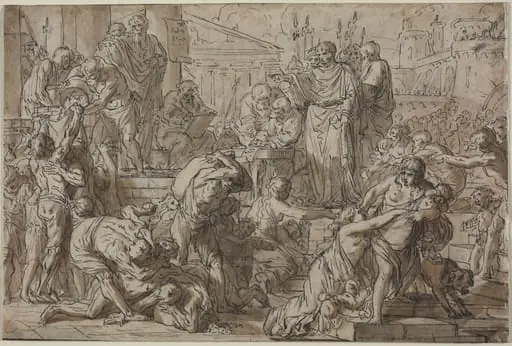 Roman Subject
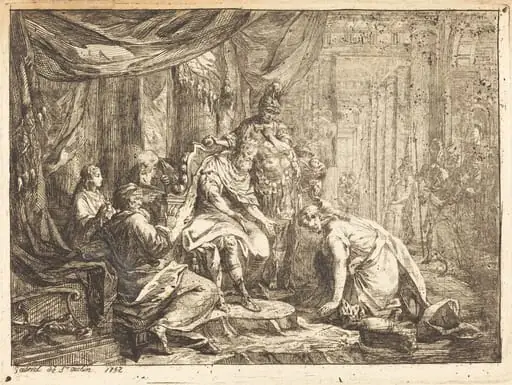 Reconciliation of Absalom and David (Réconciliation d'Absalom et de David)
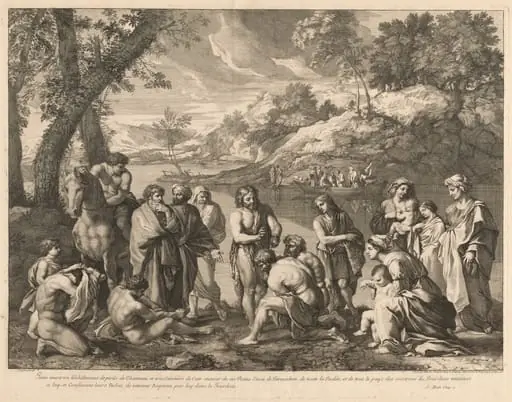 Saint John the Baptist in the River Jordan
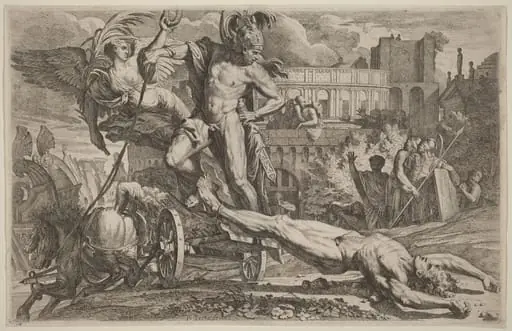 Achilles Dragging the Body of Hector
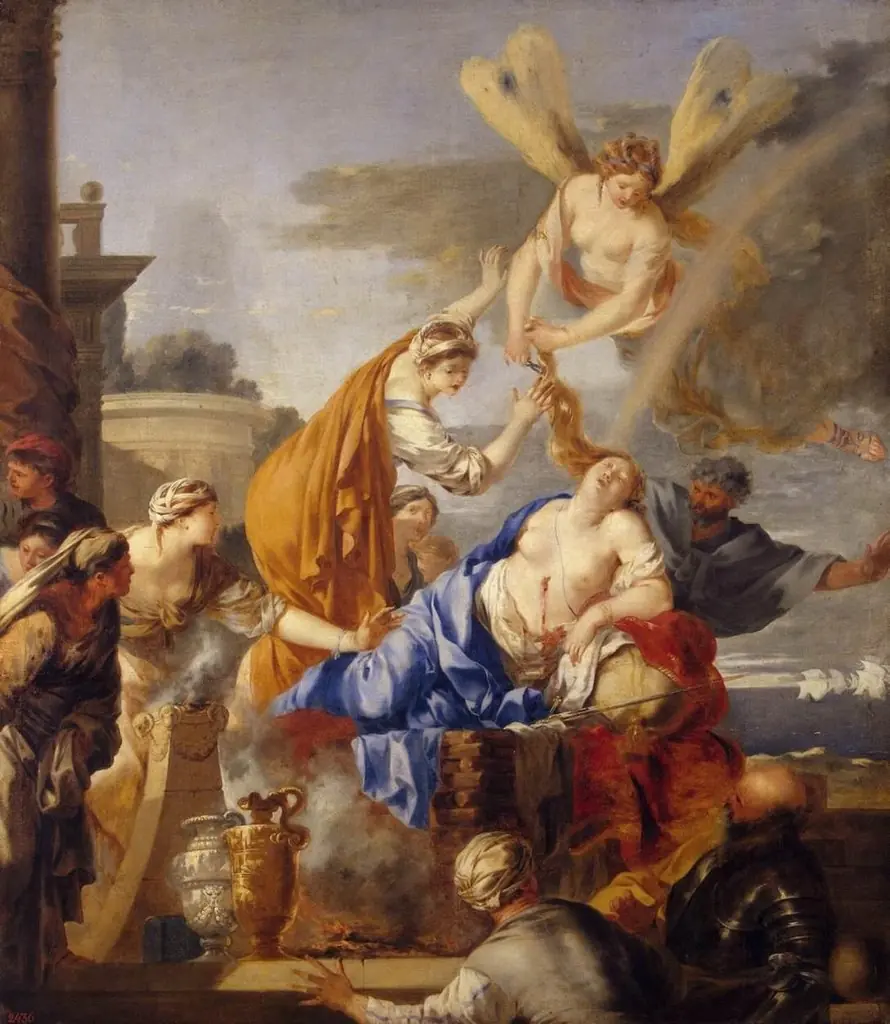
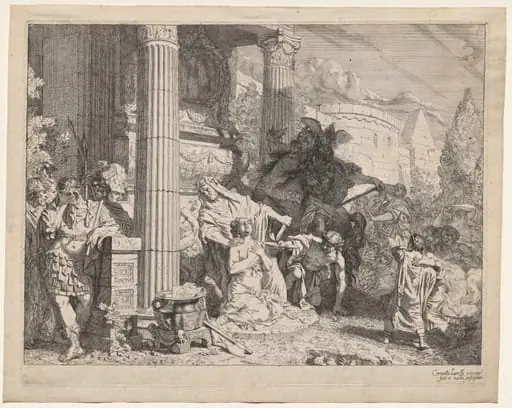 The Sacrifice of Polyxena
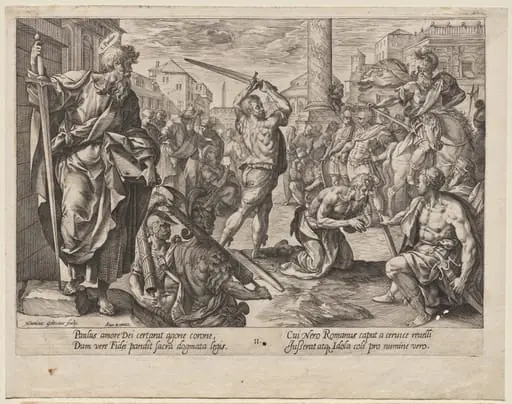 St. Paul