Artwork
The Visitation
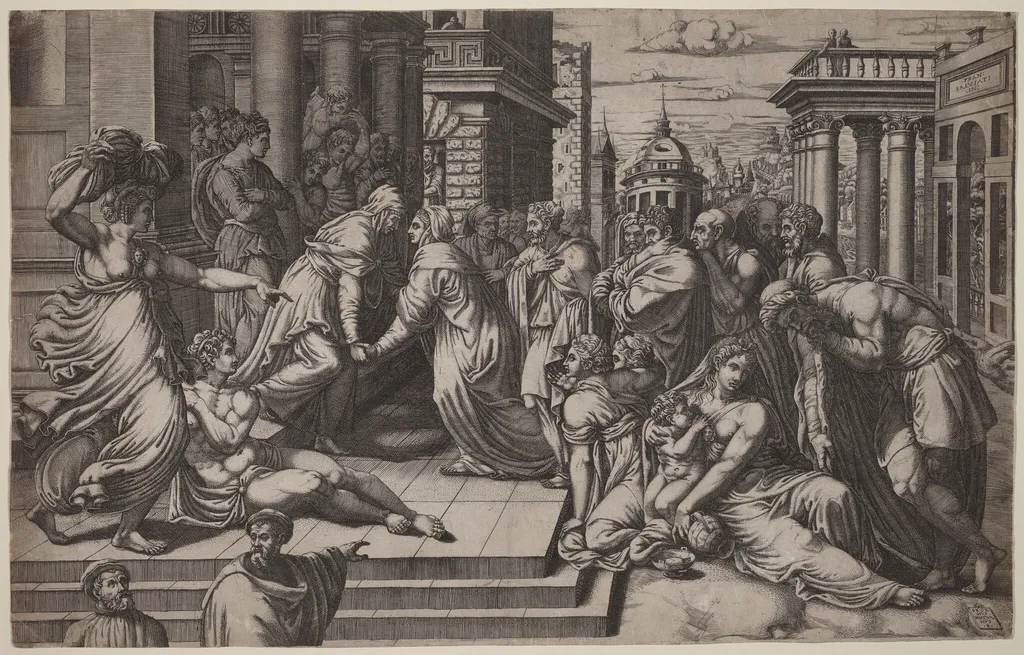
The Visitation is an ink print by the Renaissance artist Giorgio Ghisi. It dates from 1544 and is held in the collection of the National Gallery of Art.
About this work
Overview
Giorgio Ghisi’s *The Visitation* is a black‑and‑white engraving executed on laid paper around 1544. The print captures the biblical encounter between the Virgin Mary and her relative Elizabeth, rendered in a densely populated setting with figures in varied poses and an architectural backdrop.
Subject & Meaning
The composition centers on the meeting of Mary, who carries the infant Jesus, with Elizabeth, who holds her own newborn, John the Baptist. Their exchange is emphasized by the surrounding crowd, whose gestures and gazes underscore the significance of the moment as a mutual recognition of the children’s destinies.
Technique & Style
Ghisi employed fine incised lines to model light and shadow, achieving depth without pigment. The engraving reflects a late Mannerist aesthetic, evident in the elongated figures, intricate drapery, and complex spatial arrangement that guide the eye through the bustling scene.
History & Provenance
An Italian native of Mantua, Ghisi later practiced in Antwerp and France, where he produced prints and rare damascened metalwork. This particular engraving, dated to the mid‑16th century, exemplifies his transnational career and the diffusion of Italian printmaking techniques across Europe.
Context
The work belongs to a period when religious narratives were frequently disseminated through prints, allowing devotional images to reach a broader audience beyond the altar. Ghisi’s choice of the Visitation aligns with contemporary Counter‑Reformation interests in highlighting Marian themes.
Artist & collection
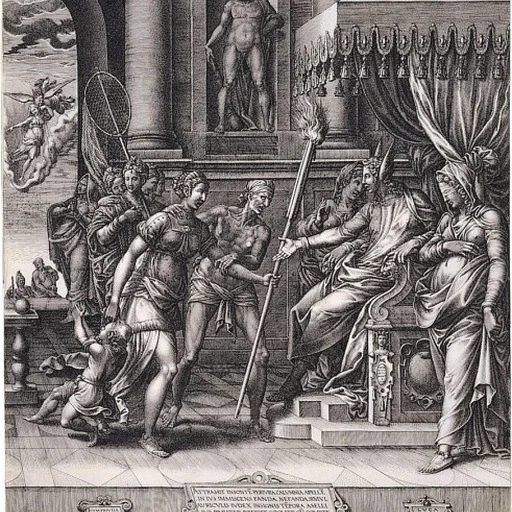
Artist
Giorgio Ghisi (1520 — 15 December 1582) was an Italian engraver from Mantua who also worked in Antwerp and in France.

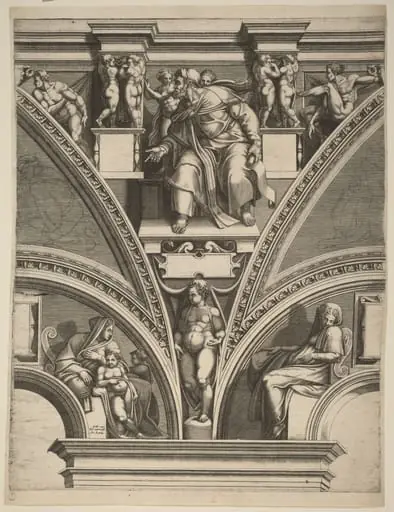
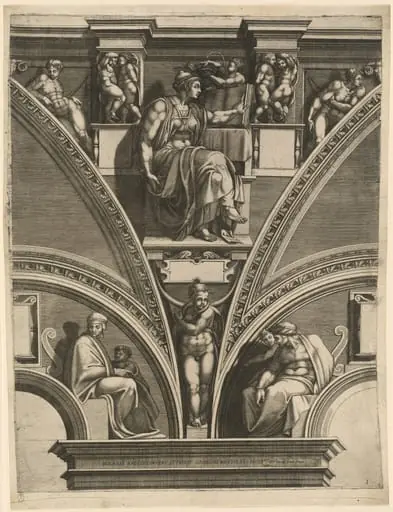
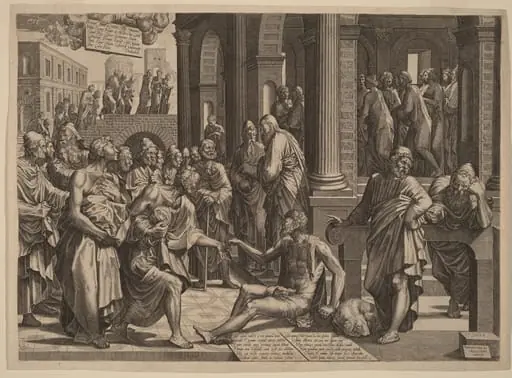 Apostles Peter and John Healing the Paralytic
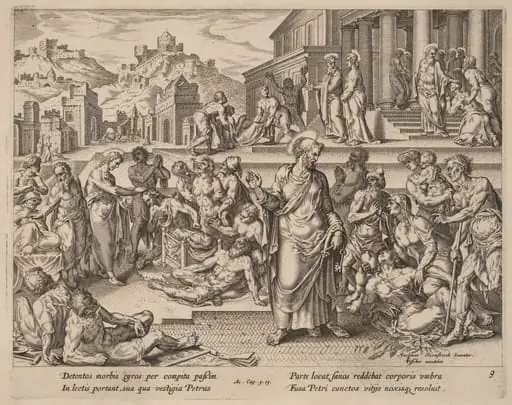 Saint Peter Healing the Sick with His Shadow
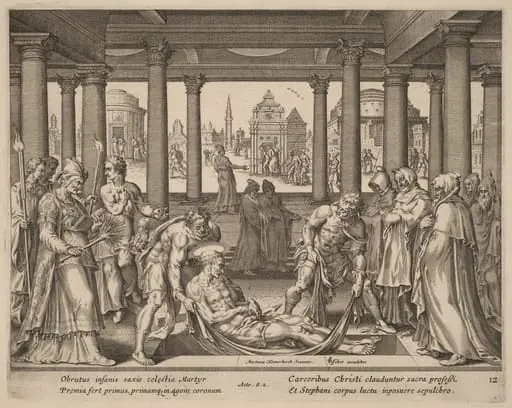 Devout Men Carrying Saint Stephen to His Burial
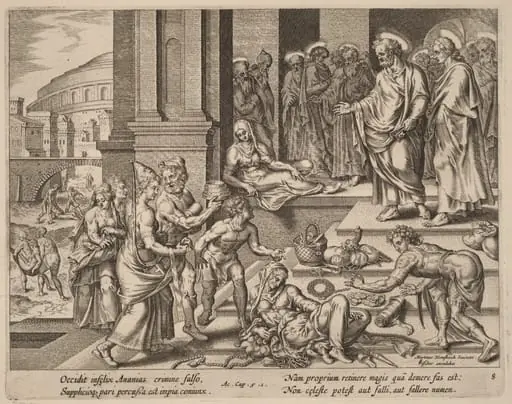 The Deaths of Ananias and Sapphira
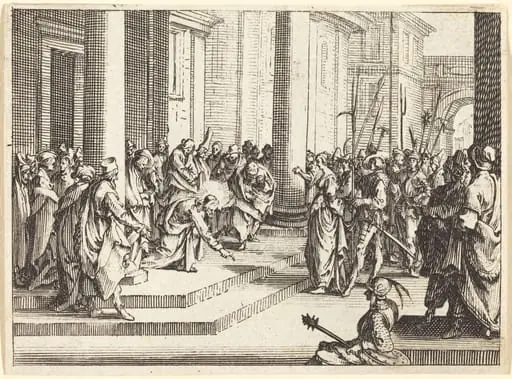 Christ and the Woman Taken in Adultery
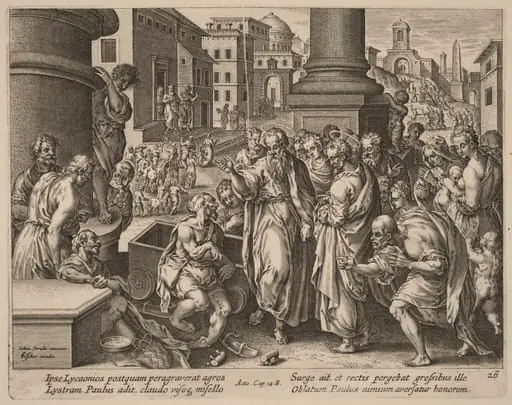 Saint Paul Heals the Lame Man at Lystra
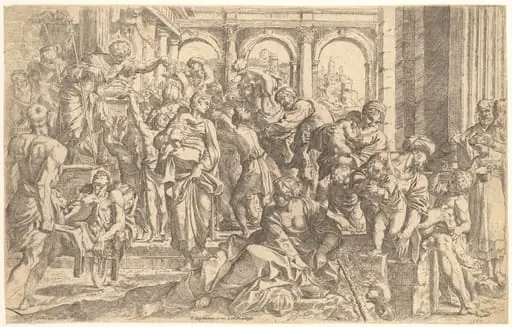 Saint Roch Distributing Alms
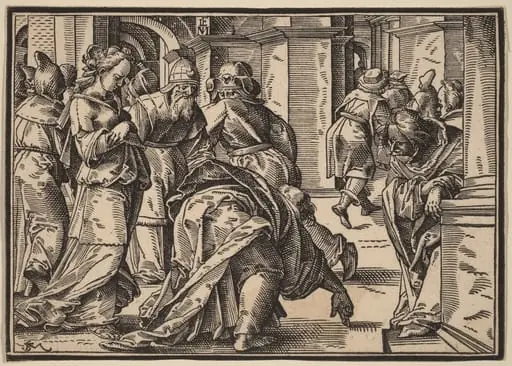 Christ Tells His Disciples of the Last Judgment
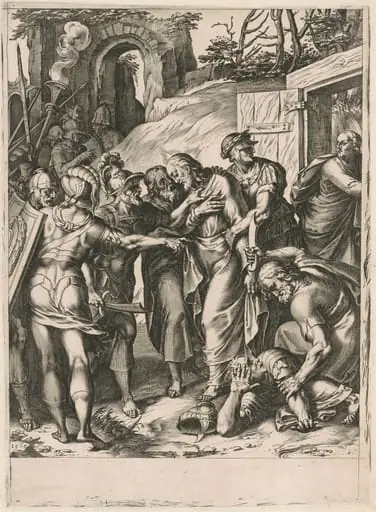 The Betrayal of Christ
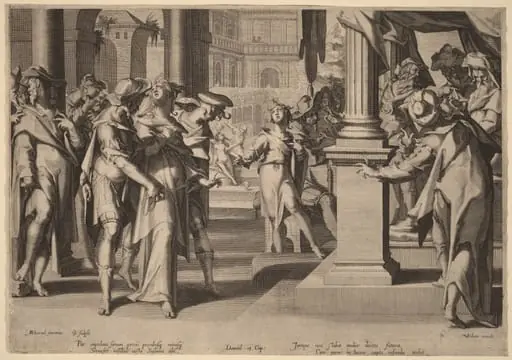 Suzannah before Daniel
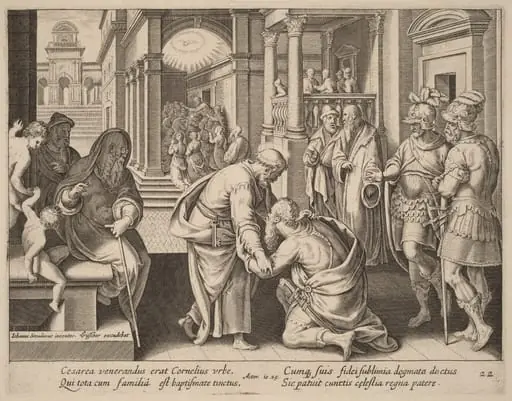 Cornelius Worshipping Saint Peter
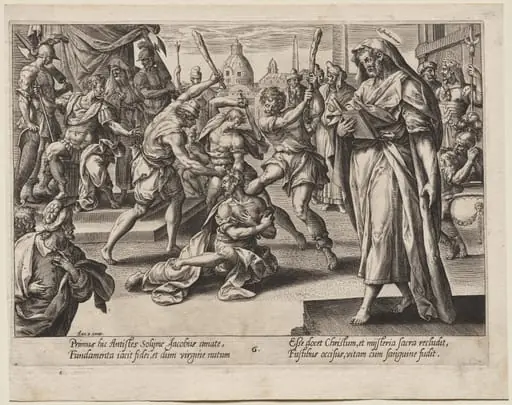 St. James the Less