Artwork
The Parable of the Good Samaritan
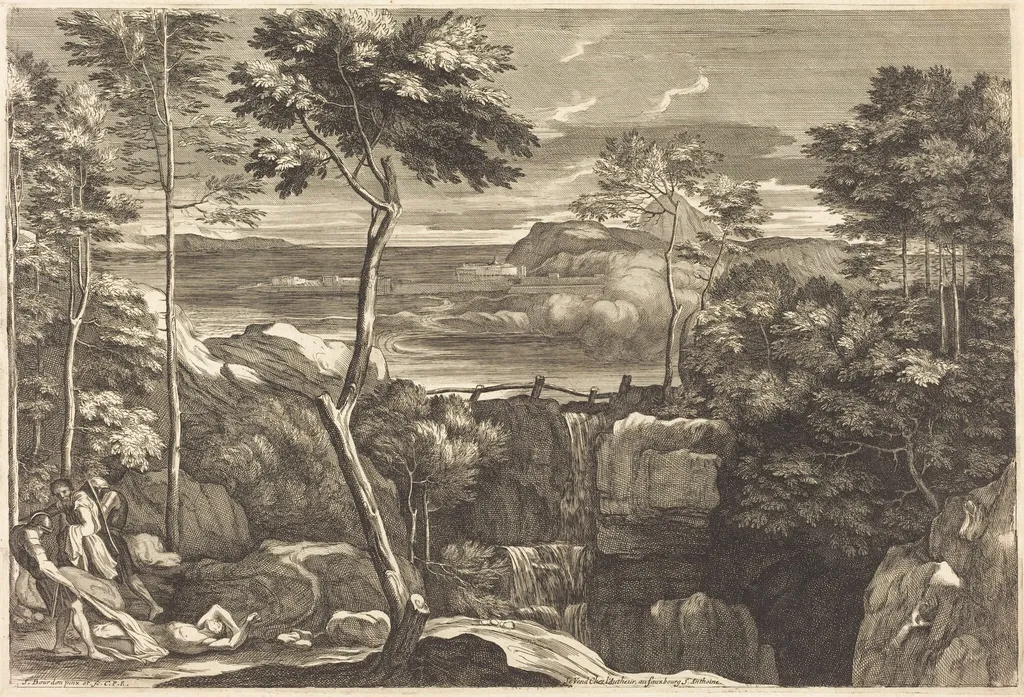
The Parable of the Good Samaritan is an ink print by the Baroque artist Sébastien Bourdon. It dates from 1644 and is held in the collection of the National Gallery of Art.
About this work
Overview
Though primarily known as a painter, Bourdon’s skill in engraving allowed him to reach broader audiences.
Sébastien Bourdon, a French artist active in the mid-17th century, produced this engraving in 1644 as part of his engagement with biblical narratives through printmaking. Though primarily known as a painter, Bourdon’s skill in engraving allowed him to reach broader audiences. The work captures a moment from the Gospel of Luke, rendered with precision and atmospheric detail, reflecting his command of linear technique and compositional balance.
Subject & Meaning
The scene depicts the moment a Samaritan tends to a wounded traveler abandoned on a roadside, as told in the Gospel of Luke. The narrative underscores compassion across social and religious divides, a theme resonant in post-Reformation Europe. Bourdon emphasizes the intimacy of the act—kneeling figure, outstretched hand—while the isolation of the setting reinforces the moral solitude of the deed.
Technique & Style
Bourdon employed fine, controlled lines to model form and texture across the composition. Cross-hatching builds shadow in the folds of garments and the roughness of tree bark, while delicate contours define the distant town and waterfall. The engraving’s tonal range emerges not from washes but from the density and direction of incised lines, a hallmark of intaglio printmaking that demands precision and patience.
History & Provenance
Created in 1644, the engraving likely circulated among collectors and religious institutions in France and the Netherlands, where biblical prints were widely appreciated. Bourdon’s reputation as both painter and printmaker lent credibility to his engraved works. Though specific early ownership records are sparse, its survival in institutional collections suggests enduring scholarly and artistic interest.
Context
In mid-17th-century Europe, religious imagery remained central to visual culture, even amid growing secular trends. Bourdon’s choice to illustrate this parable aligns with a broader interest in moral narratives that transcended denominational boundaries. His use of landscape to frame sacred action reflects contemporary Northern European print traditions, where nature served as both setting and symbolic layer.
Legacy
Bourdon’s engraving contributed to the dissemination of biblical stories through accessible, reproducible media. While less celebrated than his paintings, this work exemplifies the quiet influence of printmaking in shaping public understanding of scripture. Its technical clarity and emotional restraint influenced later engravers seeking to balance narrative clarity with aesthetic subtlety.
Artist & collection
Artist
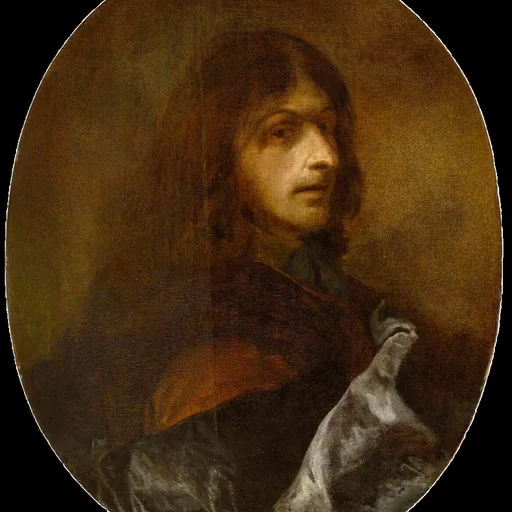
Sébastien Bourdon (French pronunciation: ; 2 February 1616 – 8 May 1671) was a French painter and engraver. His chef d'œuvre is The Crucifixion of St. Peter made for the cathedral of Notre Dame.

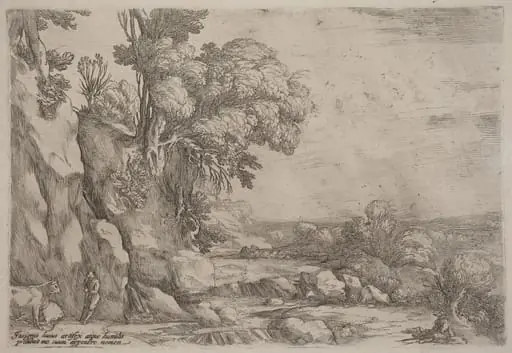 Landscape with Resting Herdsmen
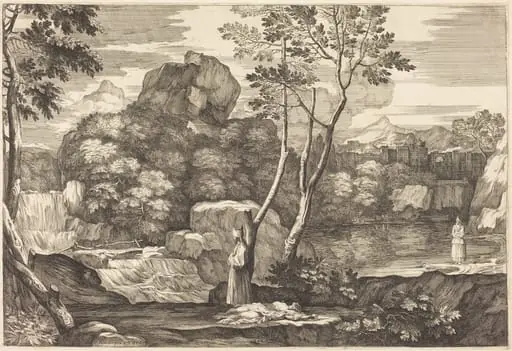 The Levite and the Priest Pass the Man Without Helping Him
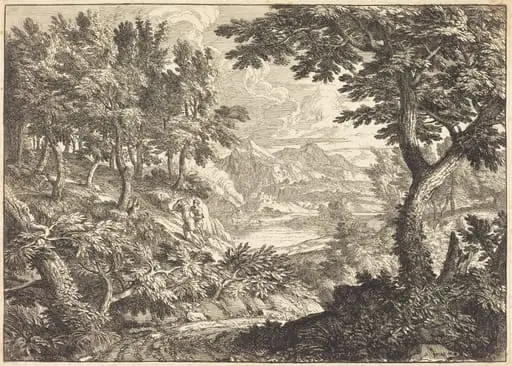 Landscape with Travelers
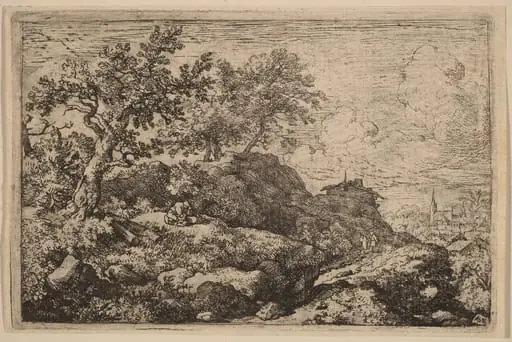 Two Peasants Seated on a Hill
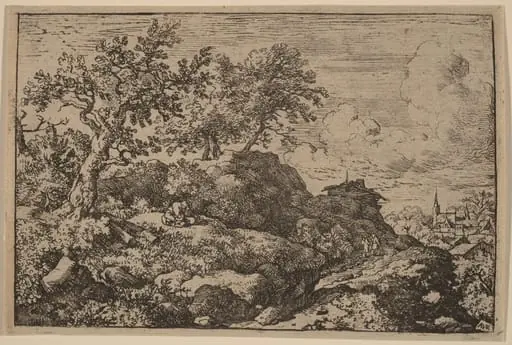 Two Peasants Seated on a Hill
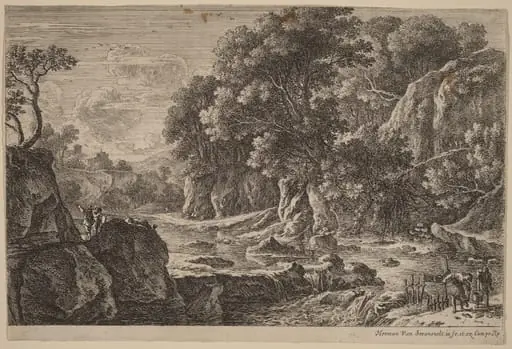 The Fishermen
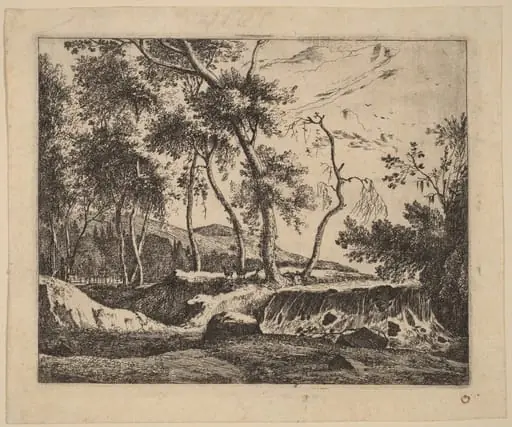 The Waterfall: pl.6
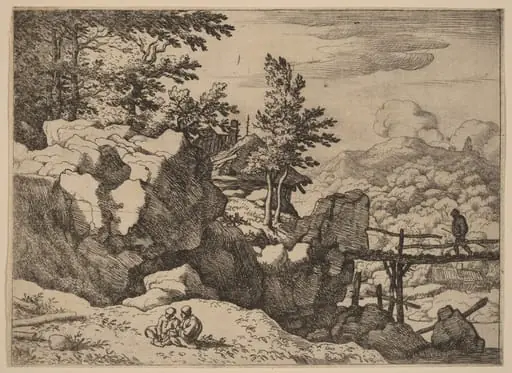 Man on a Small Wooden Bridge
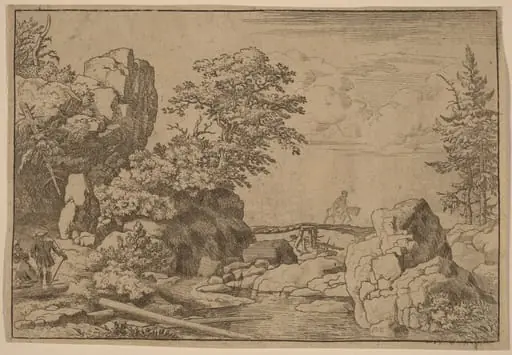 Horseman on a Bridge
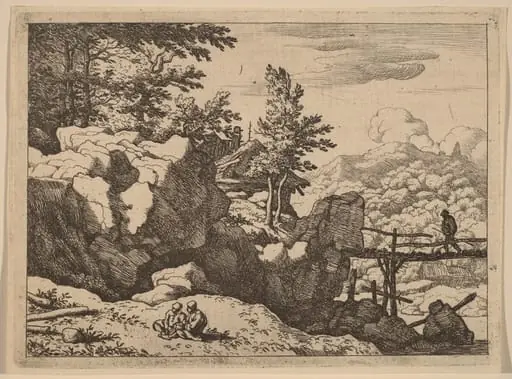 Man on a Small Wooden Bridge
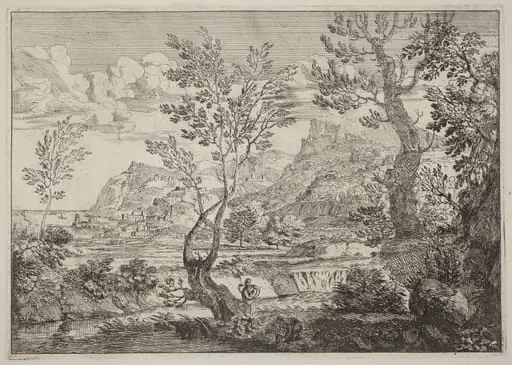 A Waterfall
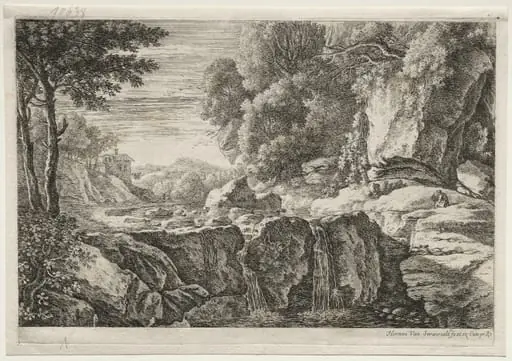 Four Landscapes: The Little Waterfall