Artwork
The Fishermen
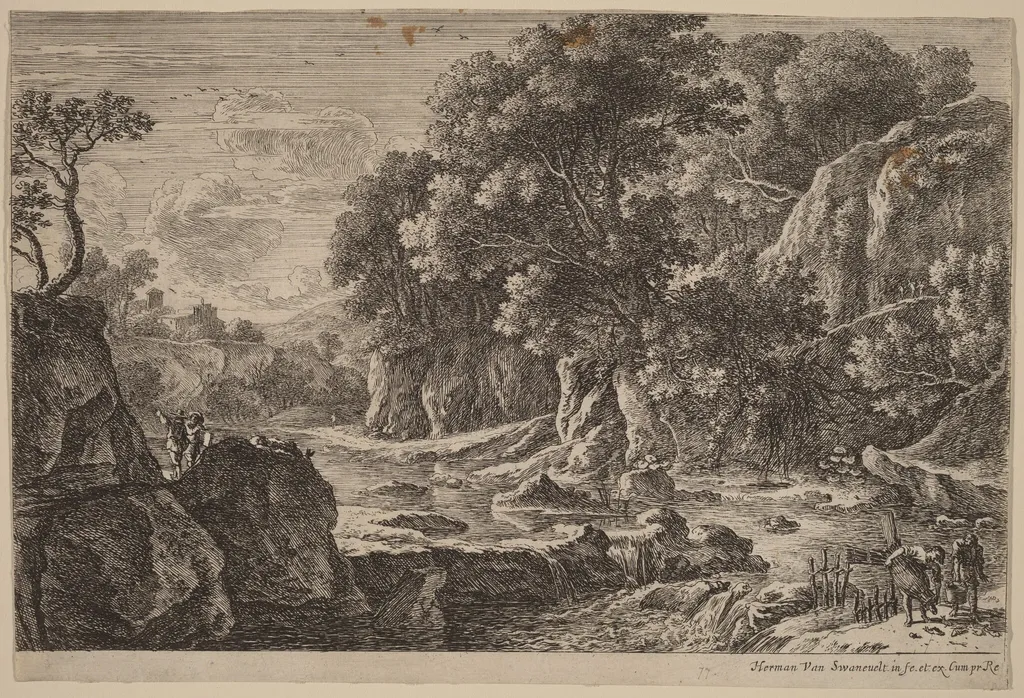
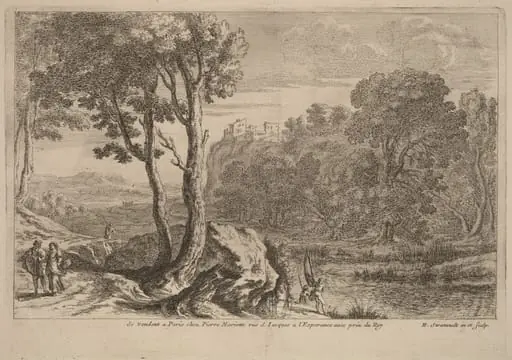
The Fishermen is an ink print by the Baroque artist Herman van Swanevelt. It dates from 1628 and is held in the collection of the National Gallery of Art.
About this work
Overview
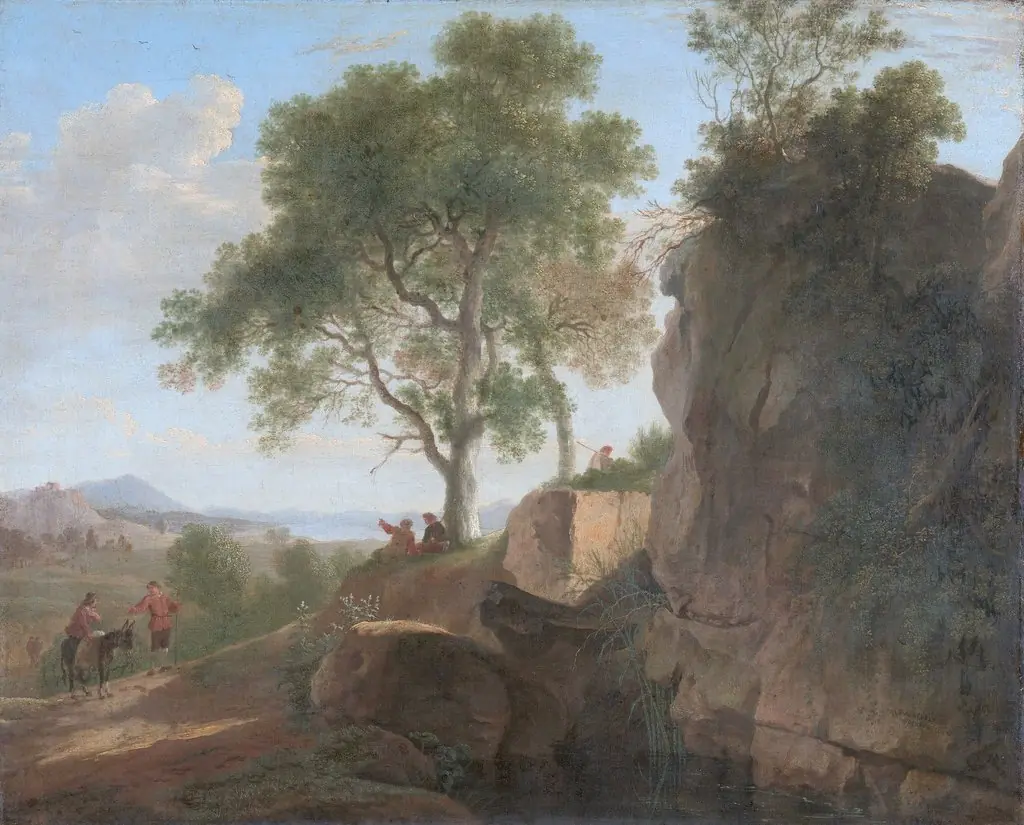
It depicts a quiet riverside scene with figures engaged in fishing along the water’s edge.
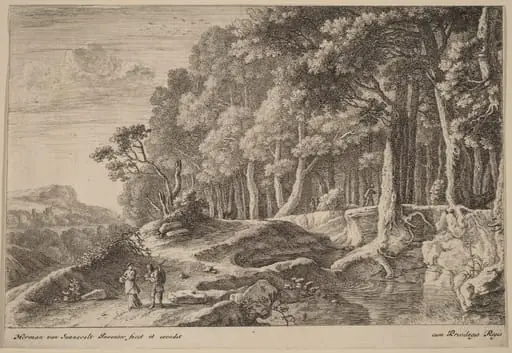
The Fishermen is an etching by Herman van Swanevelt, dated 1628. It depicts a quiet riverside scene with figures engaged in fishing along the water’s edge. The composition balances natural elements—rock formations, trees, and distant structures—with subtle human activity, creating a restrained yet evocative landscape. The work belongs to the early Baroque tradition of Northern European printmaking.
Subject & Meaning
The scene portrays laborers at work along a tranquil river, their small scale emphasizing the vastness of the natural environment. Rather than dramatizing action, van Swanevelt focuses on stillness and routine, suggesting harmony between human effort and the landscape. The absence of overt narrative invites contemplation of daily life in harmony with nature, a common theme in early 17th-century Dutch and Flemish prints.
Technique & Style
Van Swanevelt employed fine, controlled lines typical of etching to render texture in rocks, foliage, and water. Delicate hatching and varying line weights create atmospheric depth, while the cloudy sky is suggested through soft, graded tonal areas. The composition follows a horizontal rhythm, guiding the eye along the river’s path. The technique reflects the influence of Italianate landscape traditions adapted to Northern printmaking practices.
History & Provenance
Created in 1628, the etching likely originated during van Swanevelt’s time in Rome, where he absorbed Italian landscape conventions. Though few early records survive, the work entered broader circulation through print collections in the Netherlands and France. Its survival in institutional holdings suggests it was valued for its technical precision and quiet aesthetic, aligning with scholarly tastes of the period.
Context
In the 1620s, Dutch and Flemish artists increasingly turned to landscape as an independent subject, moving beyond religious or mythological themes. Van Swanevelt’s etching reflects this shift, blending Italianate compositional harmony with Northern attention to natural detail. It aligns with contemporaries like Jan van Goyen and Claude Lorrain, who explored mood and light in rural settings.
Legacy
The Fishermen exemplifies the quiet, observational mode of early Baroque landscape printmaking. While not widely celebrated in its time, it contributed to the development of landscape as a legitimate genre in print. Its influence is seen in later 17th-century Dutch etchers who refined similar themes of serenity and natural order, preserving its understated aesthetic in the broader canon of Northern European art.
Own this work as a print
Artist & collection

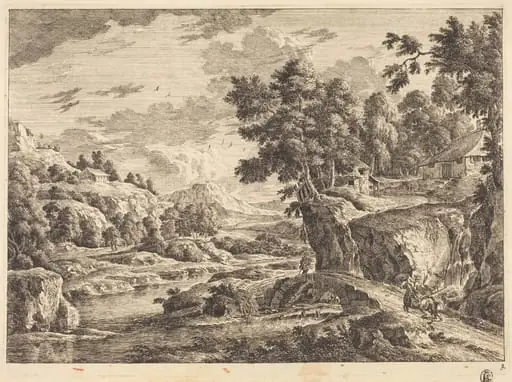 Landscape with a Bridge and Three Farm Buildings
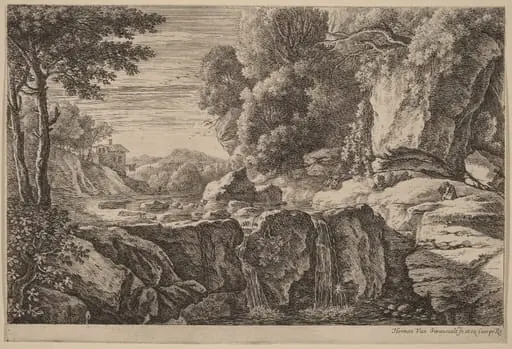 The Small Waterfall
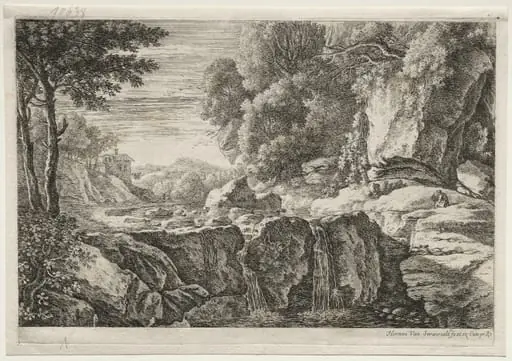 Four Landscapes: The Little Waterfall
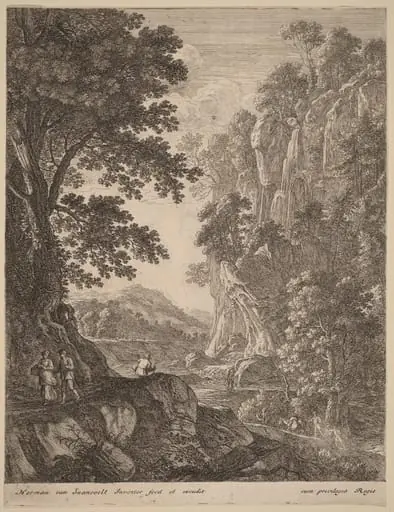 The Large Cascade
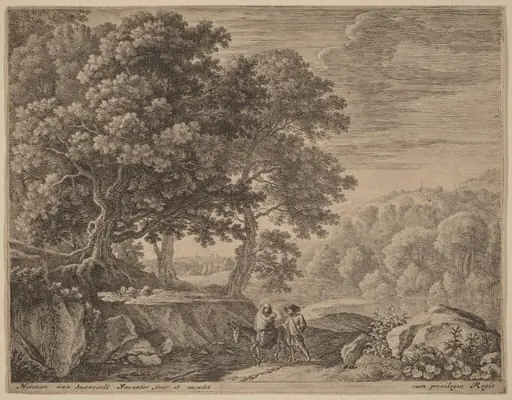 The Little Angels on the Hill
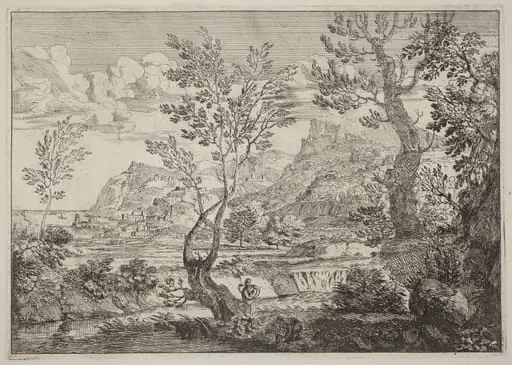 A Waterfall
 The Woman on the Hinny
 The Donkey Led to the River
 Apollo and a Nymph Leading a Lion
 View of the River Rhine
 Woods Bordered by a Stream
 The Fishermen