Artwork
The Levite and the Priest Pass the Man Without Helping Him
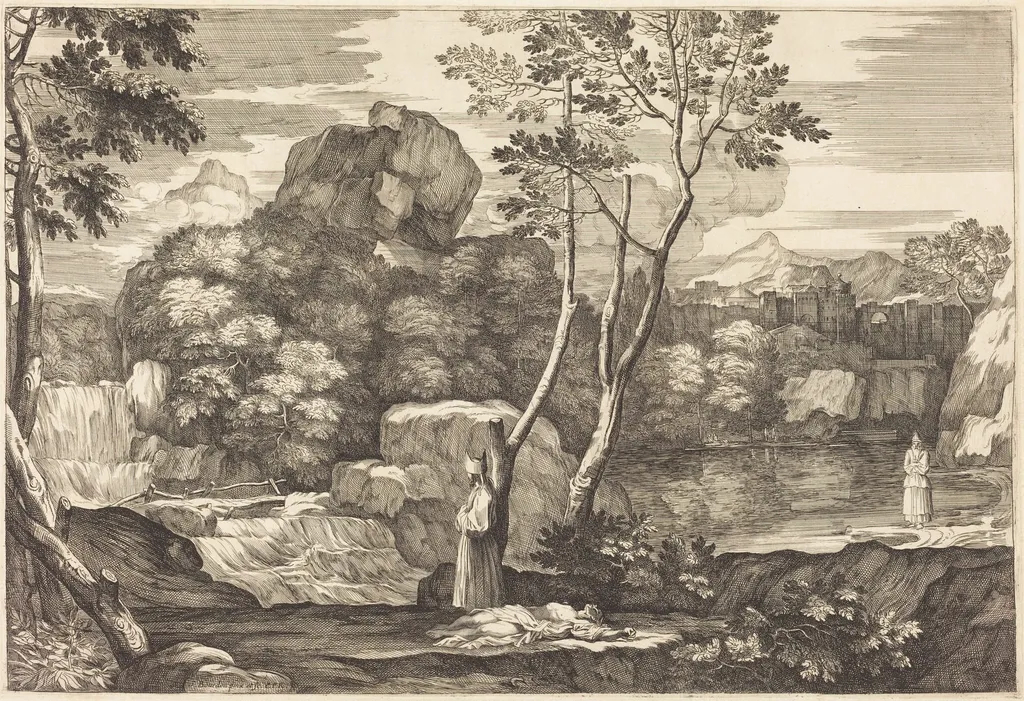
The Levite and the Priest Pass the Man Without Helping Him is an ink print by the Baroque artist Sébastien Bourdon. It dates from 1644 and is held in the collection of the National Gallery of Art.
About this work
Overview
Bourdon, trained in Paris and active in Rome, used the medium of engraving to translate biblical narrative into a finely detailed print.
Created in 1644 by French artist Sébastien Bourdon, this engraving illustrates a moment from the Gospel of Luke. Bourdon, trained in Paris and active in Rome, used the medium of engraving to translate biblical narrative into a finely detailed print. The work belongs to a series of religious subjects he produced during his career, reflecting his engagement with moral and spiritual themes through precise line work and compositional clarity.
Subject & Meaning
The scene depicts the parable of the Good Samaritan, in which a priest and a Levite, both figures of religious authority, overlook a wounded man lying beside a road. Their averted gaze and forward motion emphasize moral failure. The injured figure, passive and isolated, contrasts with the indifference of the passersby. The image invites reflection on duty, compassion, and the gap between religious status and ethical action.
Technique & Style
Bourdon employed fine, controlled lines typical of engraving to render texture and spatial depth. Shading is achieved through cross-hatching, defining the folds of robes, the contours of rocks, and the foliage of distant trees. The river and architecture in the background are rendered with subtle gradations, enhancing the sense of a real landscape. The composition directs attention to the central figures through careful placement and contrast of light and shadow.
History & Provenance
The engraving was produced during Bourdon’s mature period, following his time in Rome where he absorbed classical and Baroque traditions. It was likely made for a private or scholarly audience interested in religious imagery. While specific early ownership records are sparse, the work aligns with the broader 17th-century European trend of using prints to disseminate biblical stories beyond painted altarpieces.
Context
In mid-17th-century France, religious themes remained central to artistic production, even as secular interests grew. Bourdon’s engagement with biblical parables reflected a cultural emphasis on moral instruction through visual art. Engravings like this one served as accessible tools for personal devotion and theological discussion, circulating among clergy, educated elites, and print collectors across Europe.
Legacy
Bourdon’s engraving contributed to the visual vocabulary of the Good Samaritan parable in Northern European art. Though less widely known than painted versions, its precise execution and emotional restraint influenced later printmakers who sought to convey moral narratives with clarity. The work endures as an example of how engraving could convey complex human behavior through minimal yet deliberate detail.
Artist & collection
Artist
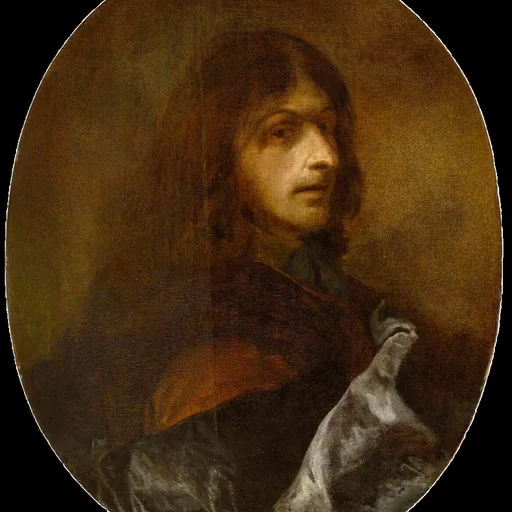
Sébastien Bourdon (French pronunciation: ; 2 February 1616 – 8 May 1671) was a French painter and engraver. His chef d'œuvre is The Crucifixion of St. Peter made for the cathedral of Notre Dame.

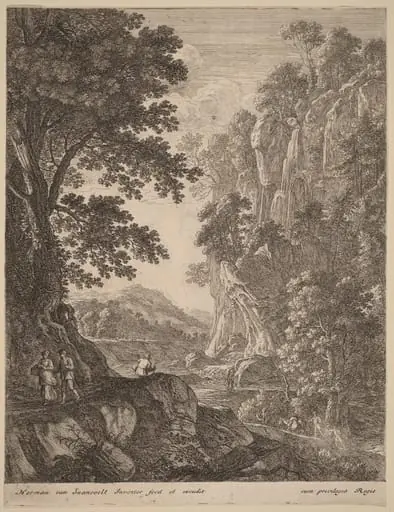 The Large Cascade
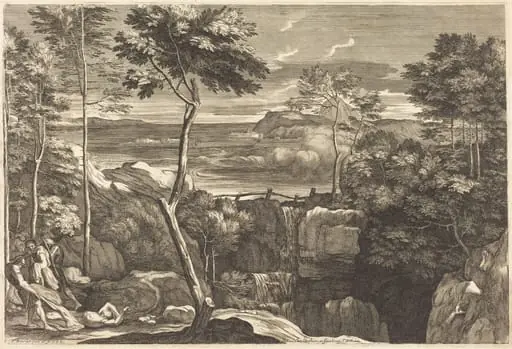 The Parable of the Good Samaritan
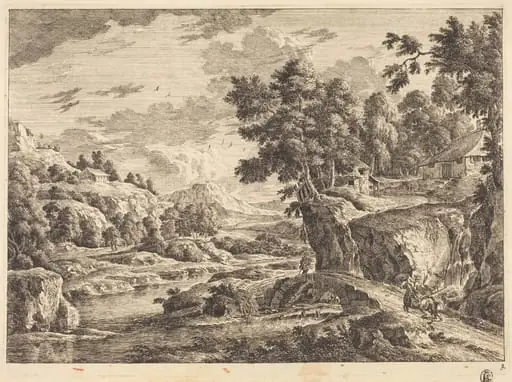 Landscape with a Bridge and Three Farm Buildings
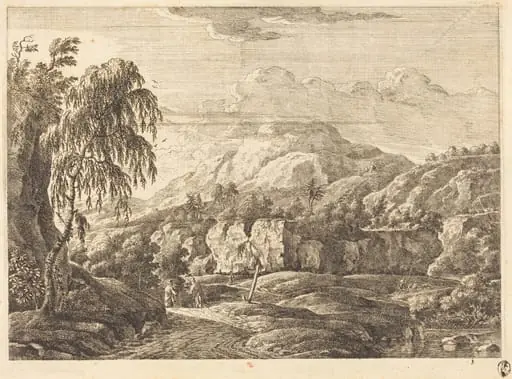 Landscape with Cross and Figures
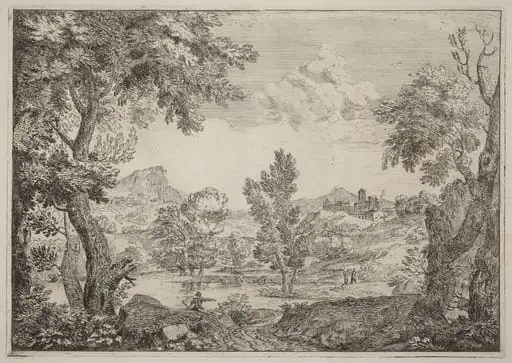 The Stream
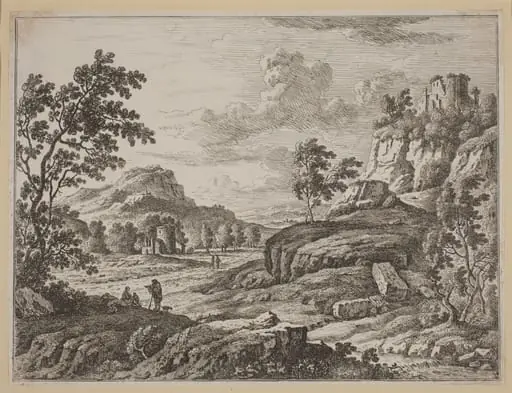 Landscape with Two Ruined Towers
 The Waterfall: pl.6
 Horseman on a Bridge
 The Small Waterfall
 River Landscape with a Passing Storm
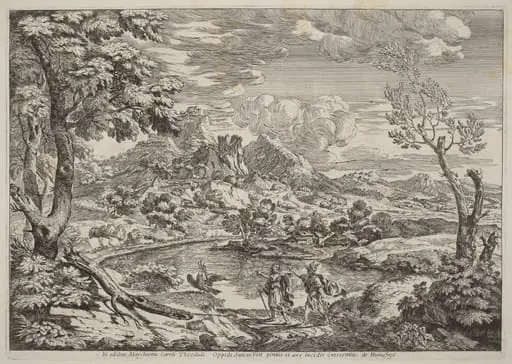 A Man Showing Mercury the Eagle of Jupiter
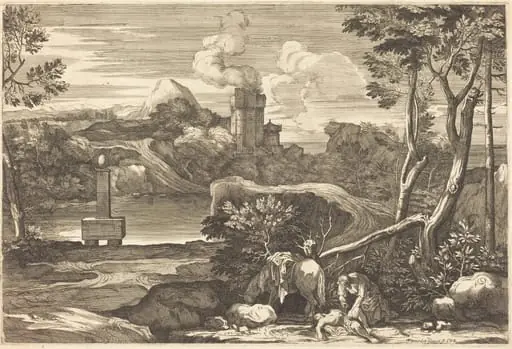 The Samaritan Pours Oil and Wine in the Wounds of a Man Left for Dead