Artwork
A Greek Priest, with Attendant
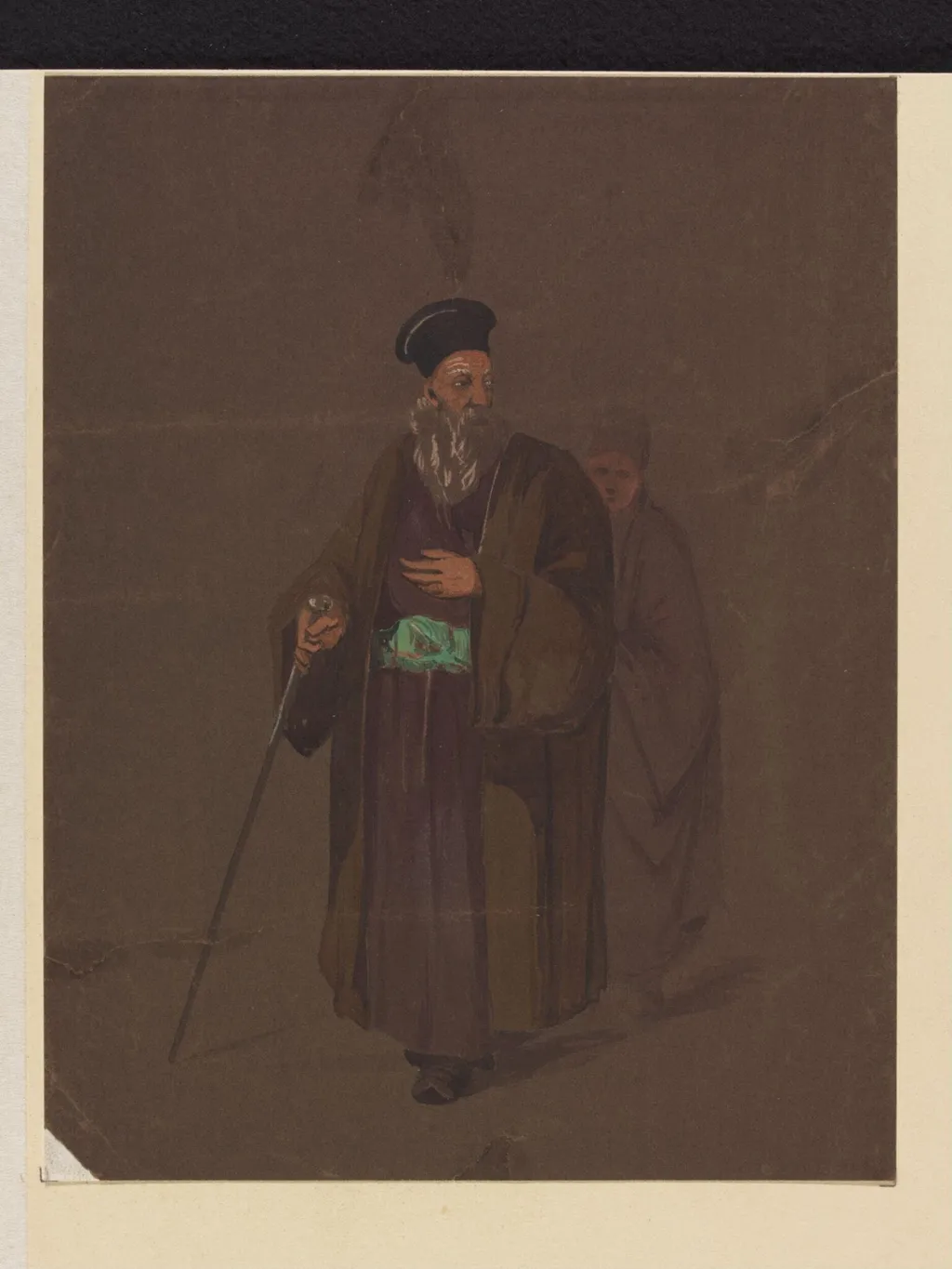
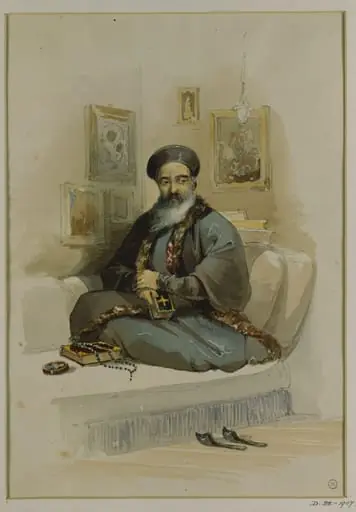
A Greek Priest, with Attendant is a watercolor work on paper by the Impressionist artist William Boutcher. It dates from 1855 and is held in the collection of the Victoria and Albert Museum.
About this work
Overview
Created in 1855 by William Boutcher, this watercolour portrays a Greek priest and his attendant in a quiet, unadorned setting. Executed with restrained pigments and fluid brushwork, the piece captures a moment of stillness rather than ceremonial grandeur. Its modest scale and intimate composition reflect a documentary impulse, typical of 19th-century travel sketches.
Subject & Meaning
The dynamic implies hierarchy and quiet devotion, emphasizing presence over narrative, evoking daily religious life without overt symbolism.
The central figure is an elderly priest, identified by his dark clerical robes and black hat, his long white beard and walking stick suggesting age and authority. Beside him, a younger attendant, partially obscured in shadow, leans forward with subdued posture. The dynamic implies hierarchy and quiet devotion, emphasizing presence over narrative, evoking daily religious life without overt symbolism.
Technique & Style
Boutcher employed loose, unpolished watercolour strokes to suggest form rather than define it. The palette is limited to earth tones, with soft lighting allowing shadows to merge seamlessly into the dark brown background. This approach avoids theatricality, favoring naturalism through tonal gradation and minimal detail, aligning with observational realism rather than idealized representation.
History & Provenance
The work remained in the artist’s family after his death, passing to his daughter, Mrs. Drewett. In 1970, Dr. R.D. Barnett acquired it and subsequently transferred it to Rodney Searight. The documented lineage reflects its status as a personal keepsake rather than a publicly exhibited piece, preserving its private, intimate character across generations.
Context
Boutcher’s sketch aligns with mid-19th-century European interest in the Eastern Mediterranean, particularly following Greek independence. While not a formal commission, the drawing reflects the era’s ethnographic curiosity—capturing local figures with dignity, yet without exoticism, as part of a broader trend of travel-based visual record-keeping.
Legacy
Though not widely exhibited, the watercolour endures as a quiet example of amateur ethnographic art from the period. Its preservation within private hands underscores its value as a personal record rather than a public artifact, offering insight into how Western observers engaged with Greek religious life through understated, direct observation.
Artist & collection
Artist
William Boutcher was a watercolor artist active around the mid-1800s. His *A Greek Priest, with Attendant* (about 1855) shows a solemn figure in traditional Greek dress, painted with delicate brushwork and muted tones.…

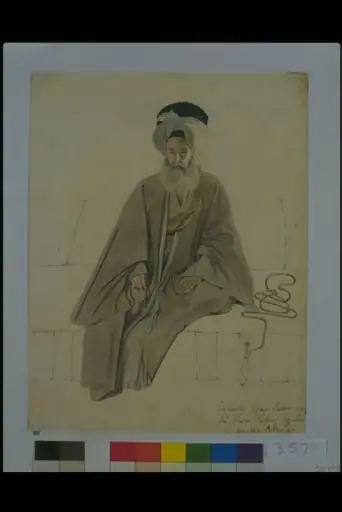 Mehmet Aga Salam
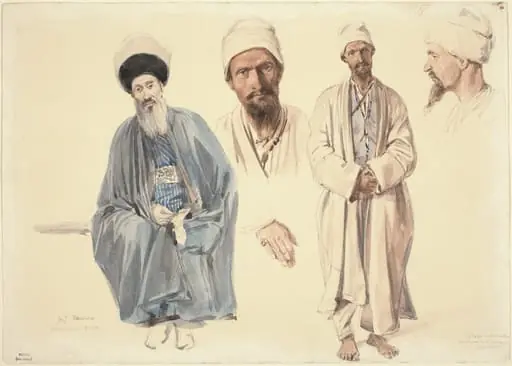 An Elderly Jew and a Muslim Tartar in the Crimea
![An Armenian[?], by Anonymous Greek artist](https://artifactworldgallery.com/img/anonymous-greek-artist--an-armenian--8a9ee8f2d8733d94-w320.webp) An Armenian[?]
An Armenian[?]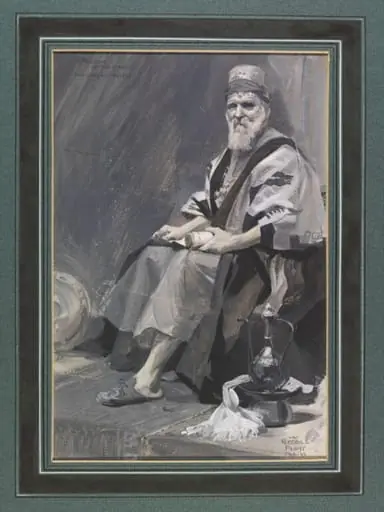 A reader of the Koran
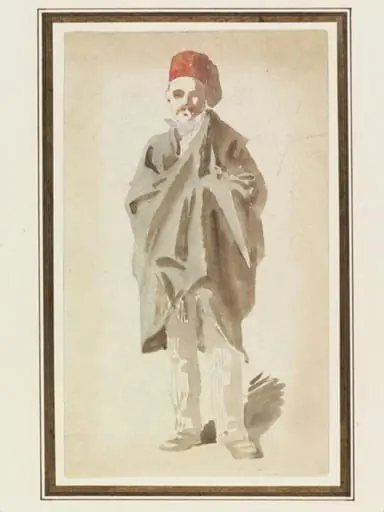 A man wearing a fez and wrapped in a long cloak
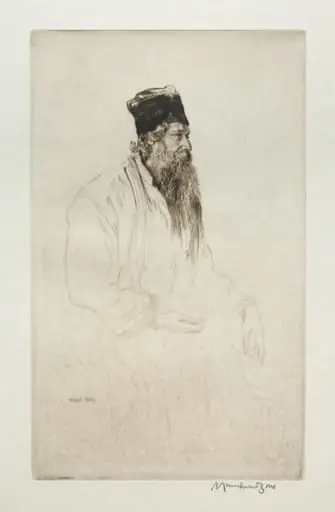 Rabindranath Tagore
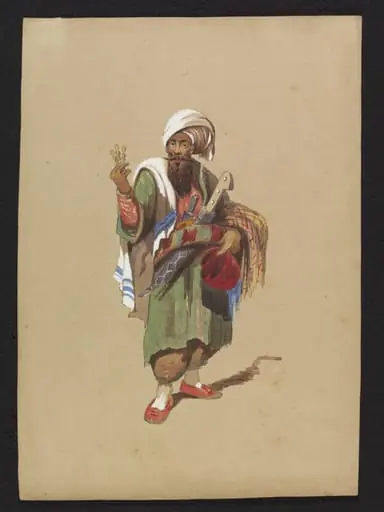 A seller of Fezes and Amber mouthpieces
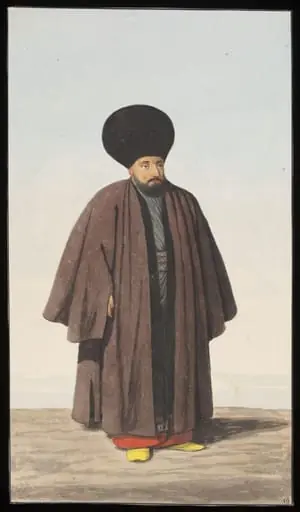 An Armenian official
 A Greek Priest
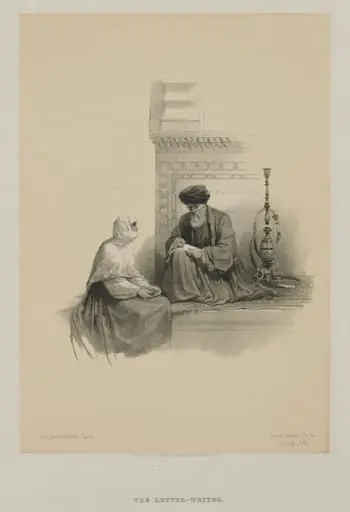 Egypt and Nubia, Volume III: The Letter-Writer, Cairo
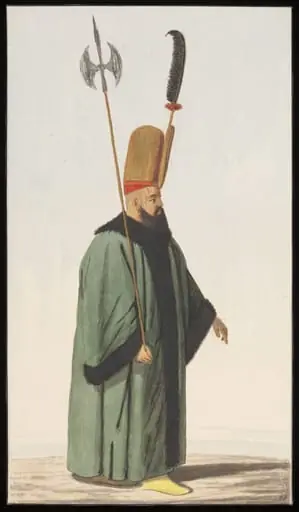 Yeniceriagasi, or General of the Janisseries
 H Beard Print Collection