Artwork
An Armenian official
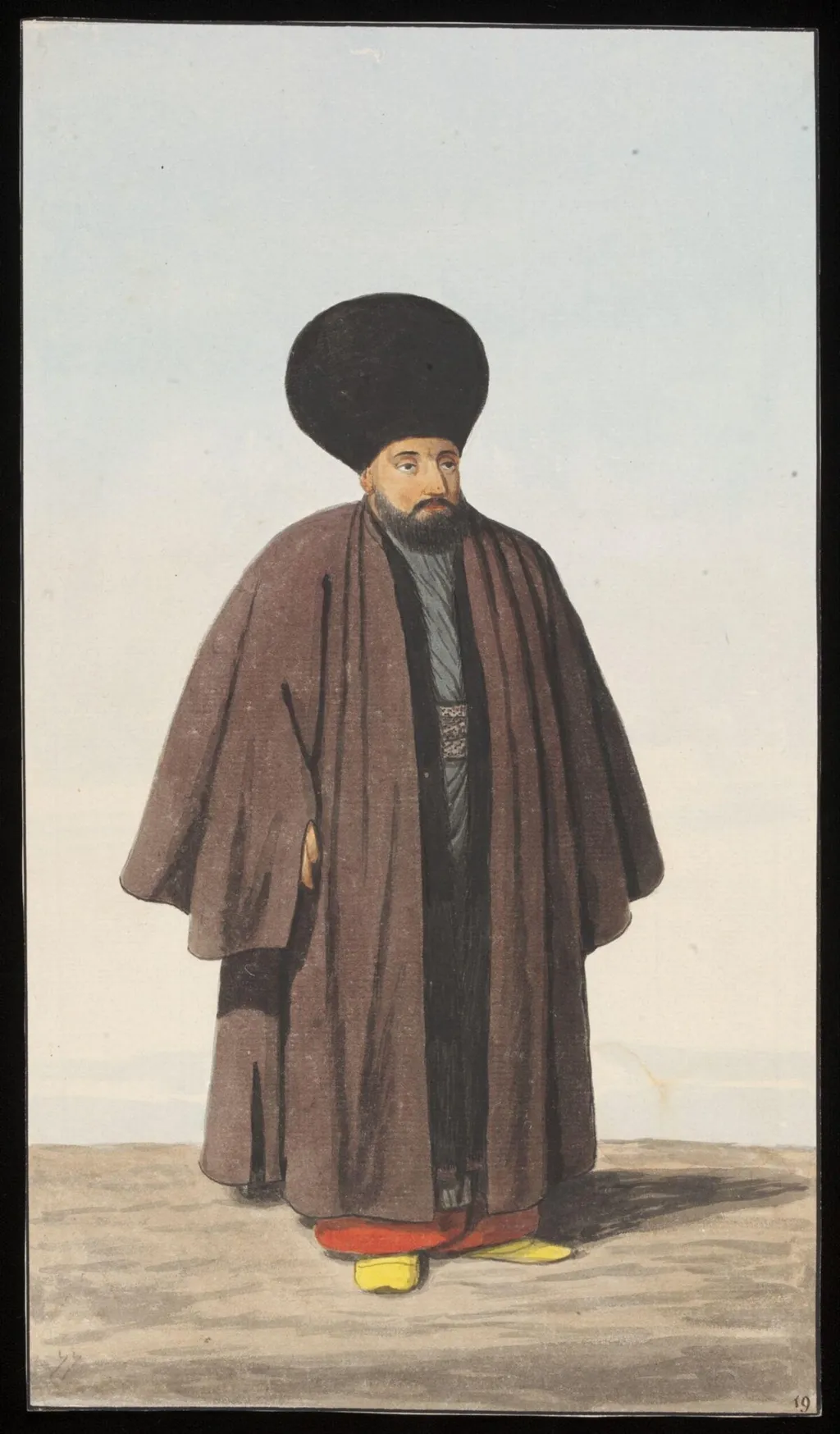
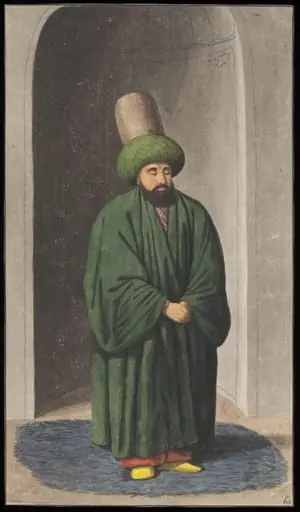
An Armenian official is a watercolor work on paper by the Romanticist artist Anonymous Greek artist. It dates from 1809 and is held in the collection of the Victoria and Albert Museum.
About this work
Overview
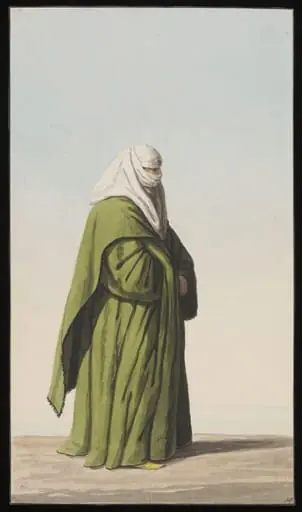
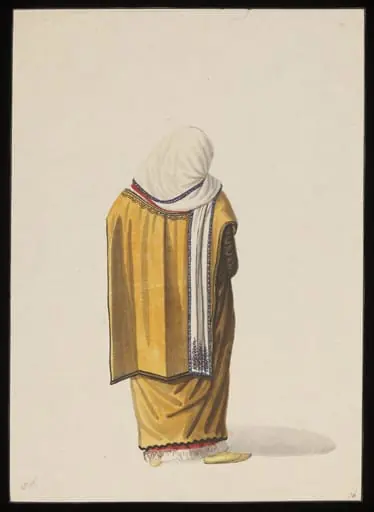
Created around 1810, the works were produced by an unnamed local artist, likely connected to the circle of Konstantin Kapidagli.
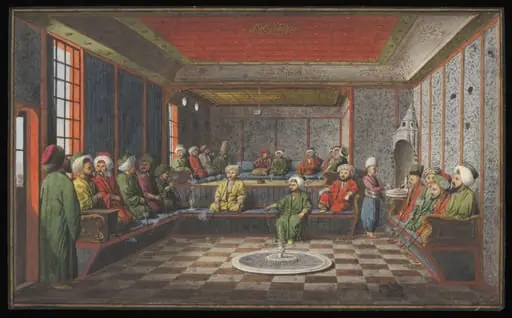
A series of watercolour drawings commissioned by British diplomat Stratford Canning during his early service in Istanbul captures Ottoman institutions, architecture, and daily life. Created around 1810, the works were produced by an unnamed local artist, likely connected to the circle of Konstantin Kapidagli. The collection was later acquired by the Victoria and Albert Museum in 1895 from Canning’s daughter, Charlotte.
Subject & Meaning
The drawings document the visual landscape of the Ottoman Empire as observed by a foreign diplomat. They include architectural studies, public spaces, and ceremonial scenes, reflecting both official curiosity and personal interest in cultural detail. Rather than idealized portrayals, the works function as observational records, offering insight into the material and social fabric of early 19th-century Istanbul.
Technique & Style
The artist employed a hybrid approach, blending the rich, layered watercolour and bodycolour techniques of Ottoman visual tradition with European conventions of linear perspective and spatial depth. The result is a precise yet luminous rendering of buildings and figures, where local aesthetic sensibilities meet the observational rigor of Western draftsmanship.
History & Provenance
Commissioned during Canning’s tenure as first secretary to the British mission in Istanbul, the drawings were made by a Greek-speaking artist active in the city. Charles Cockerell, who visited the embassy in 1810, encountered the artist and made copies of his architectural studies, now held by the British Museum. The original set remained in Canning’s family until its donation to the V&A in 1895.
Context
Canning’s commission occurred during a period of heightened European interest in Ottoman culture, driven by diplomatic, scholarly, and artistic exchange. While Western travelers often relied on sketches by local artisans, few such systematic collections survive. This series stands as a rare example of cross-cultural collaboration, where Ottoman technique served British documentation needs.
Legacy
The drawings remain a key visual archive of Istanbul’s urban and institutional life before widespread modernization. Though the artist’s identity remains unresolved, their work influenced contemporaries like Cockerell and contributed to the European understanding of Ottoman aesthetics. The collection’s preservation in the V&A ensures its continued role in historical and artistic research.
Artist & collection

![A Pasha travelling with his escort[?], by Anonymous Greek artist](https://artifactworldgallery.com/img/anonymous-greek-artist--a-pasha-travelling-with-his-escort--01de32b8fcf30843-w320.webp)
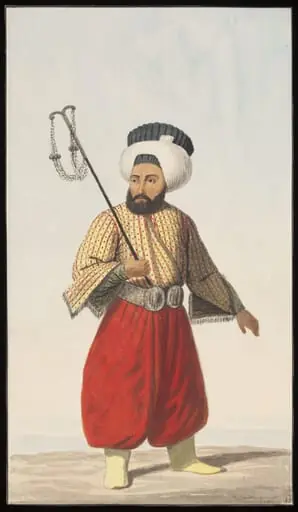
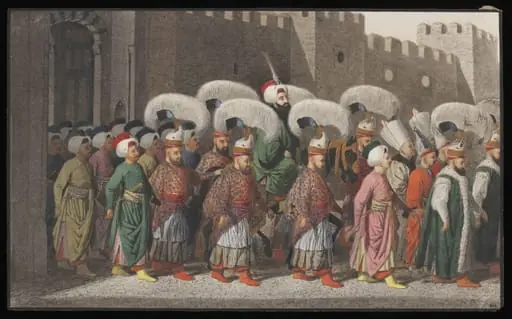
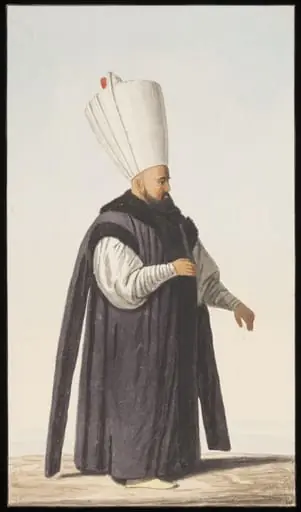
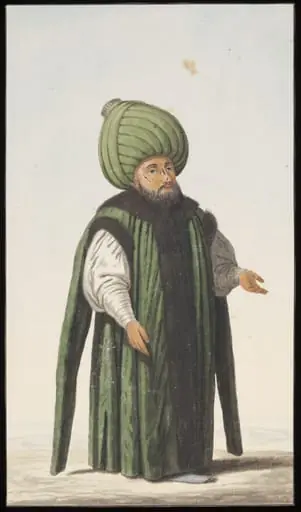 A senior Ottoman official
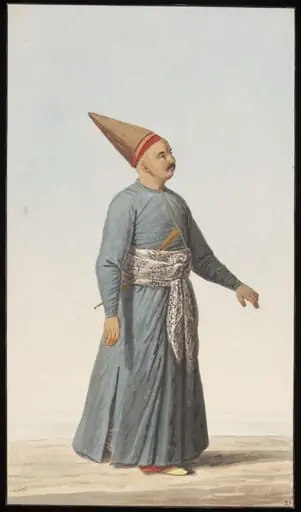 An official in the Sultan's palace
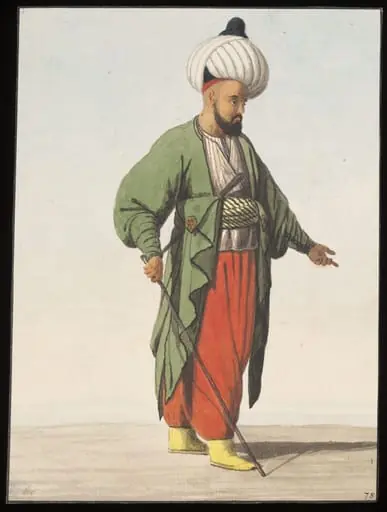 A Turkish official
![An Armenian[?], by Anonymous Greek artist](https://artifactworldgallery.com/img/anonymous-greek-artist--an-armenian--8a9ee8f2d8733d94-w320.webp) An Armenian[?]
An Armenian[?]![A Dervish[?], by Anonymous Greek artist](https://artifactworldgallery.com/img/anonymous-greek-artist--a-dervish--3c8916f5a95abb6a-w320.webp) A Dervish[?]
A Dervish[?]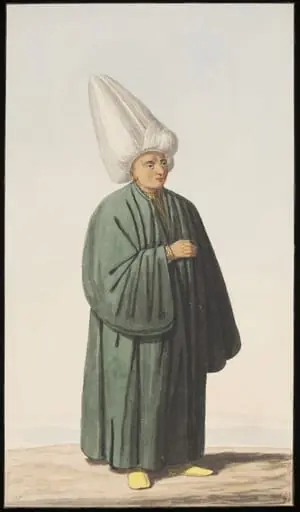 Sarayoglan, or page to the Sultan
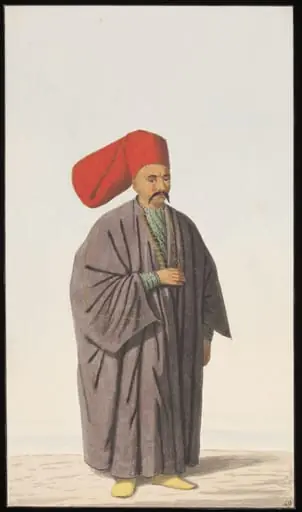 Bostancibasi, or member of the Imperial Guard
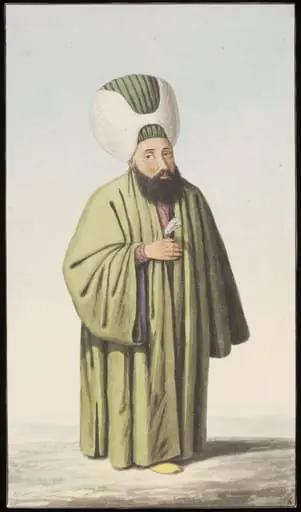 An Ottoman Military officer, possibly the Yeniçeriagasi, or Commander-in-chief of the Janissaries
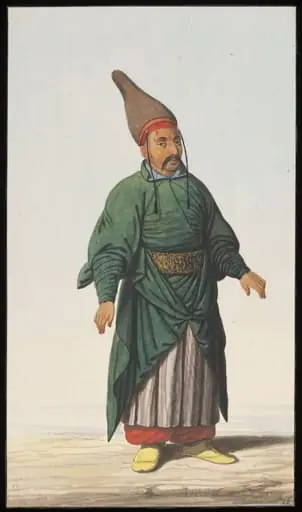 Sipahi Içoglani
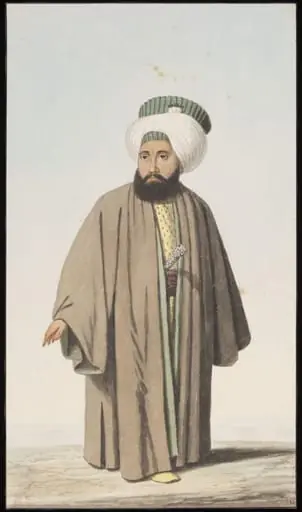 Defterdar, or Minister of Finance