Artwork
Flori pe fond galben
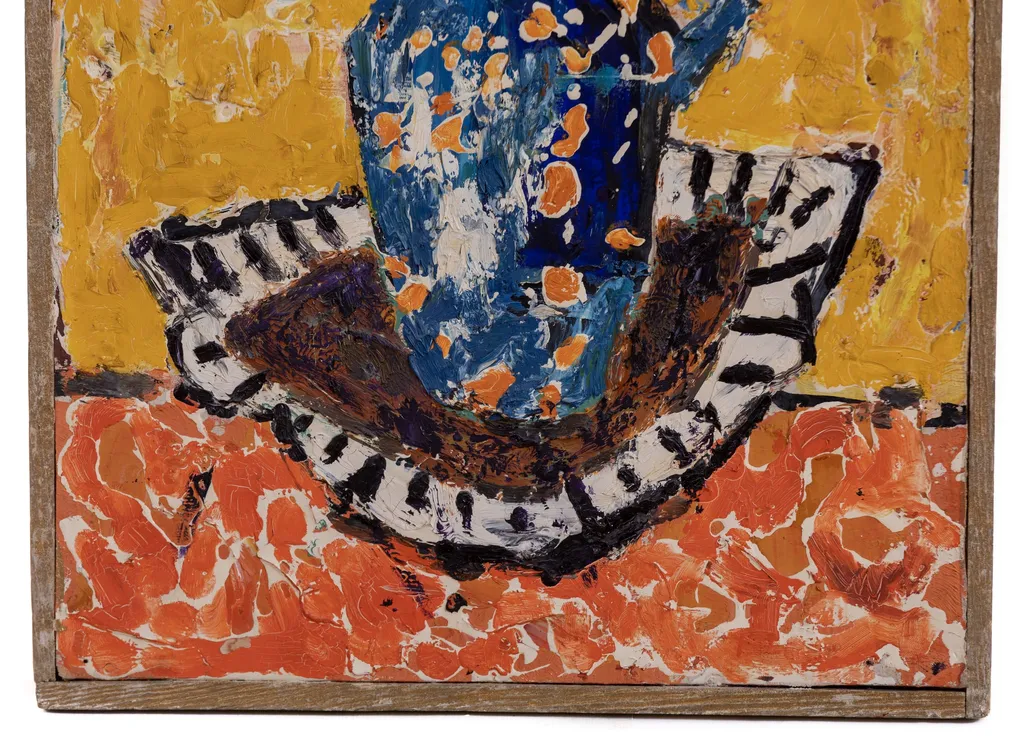
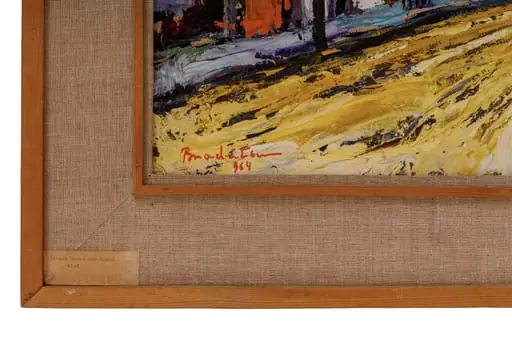
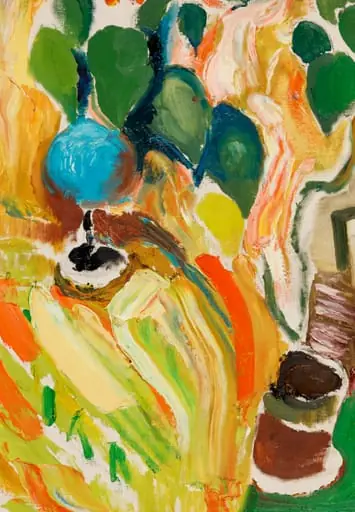
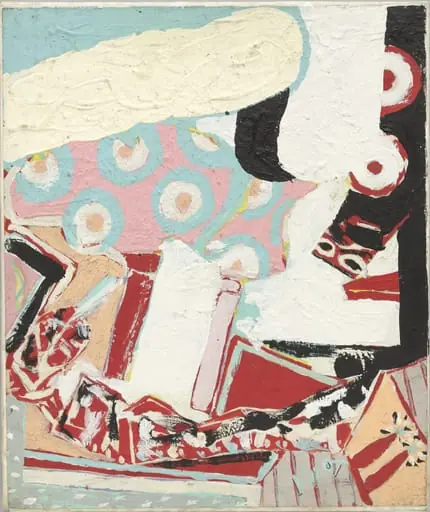
Flori pe fond galben is an unspecified painting by Brădățeanu Gheorghe. It is held in the collection of the Moldova National Museum Complex. This painting features a vivid yellow field as its backdrop, dominated by a dense, abstract central form rendered in dark pigment.
About this work
Overview
This painting features a vivid yellow field as its backdrop, dominated by a dense, abstract central form rendered in dark pigment.
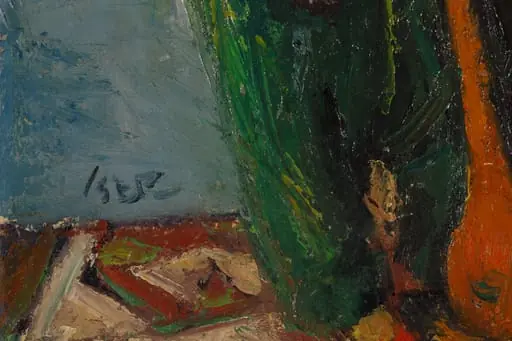
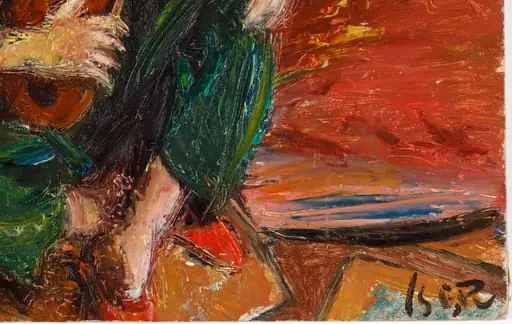
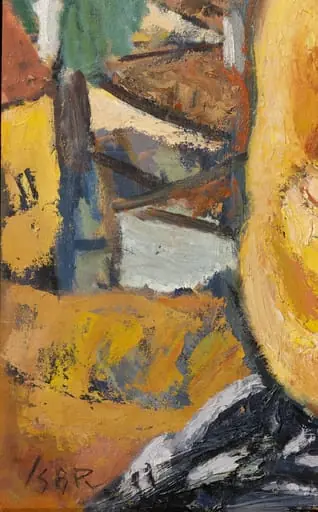
This painting features a vivid yellow field as its backdrop, dominated by a dense, abstract central form rendered in dark pigment. Surrounding it, alternating white and black stripes create a fragmented, irregular border. Below, chaotic strokes of orange and white suggest a textured surface, possibly fabric or ground. The work rejects naturalistic representation, prioritizing material presence over recognizable imagery.
Subject & Meaning
Though titled 'Flowers on a Yellow Background,' the forms bear no literal resemblance to botanical subjects. The title may serve as a conceptual anchor, inviting interpretation through association rather than depiction. The painting’s meaning emerges from its emotional weight and physicality—its agitation, density, and color contrasts evoke inner states rather than external reality.
Technique & Style
Thick, layered paint is applied with visible, forceful brushwork, creating a pronounced impasto effect. The surface is uneven, with ridges and depressions that catch light differently across the canvas. Colors are applied boldly and without smooth blending, emphasizing the artist’s physical engagement with the medium. The style prioritizes tactile presence over refinement or illusion.
History & Provenance
The work’s origin and early ownership are undocumented in available records. It appears to stem from a period when abstraction was being explored as a vehicle for emotional expression, though no specific exhibition history or collector lineage is confirmed. Its current location and acquisition details remain unspecified in public sources.
Context
Created during a time when artists were moving away from representational norms, this piece aligns with broader postwar tendencies toward expressive abstraction. It shares affinities with movements that valued gesture and materiality over depiction, such as Tachisme or early Abstract Expressionism, though it does not clearly belong to any single school.
Legacy
The painting contributes to a lineage of works that treat paint as a physical substance rather than a tool for representation. Its raw texture and emotional intensity influenced later artists interested in the body’s imprint on the canvas. While not widely exhibited, it remains a quiet example of mid-century abstraction’s material preoccupations.
Artist & collection
Artist
This artist painted scenes of daily life and calm landscapes in the mid-20th century.