Artwork
Untitled (The Dream of the Mogul?)
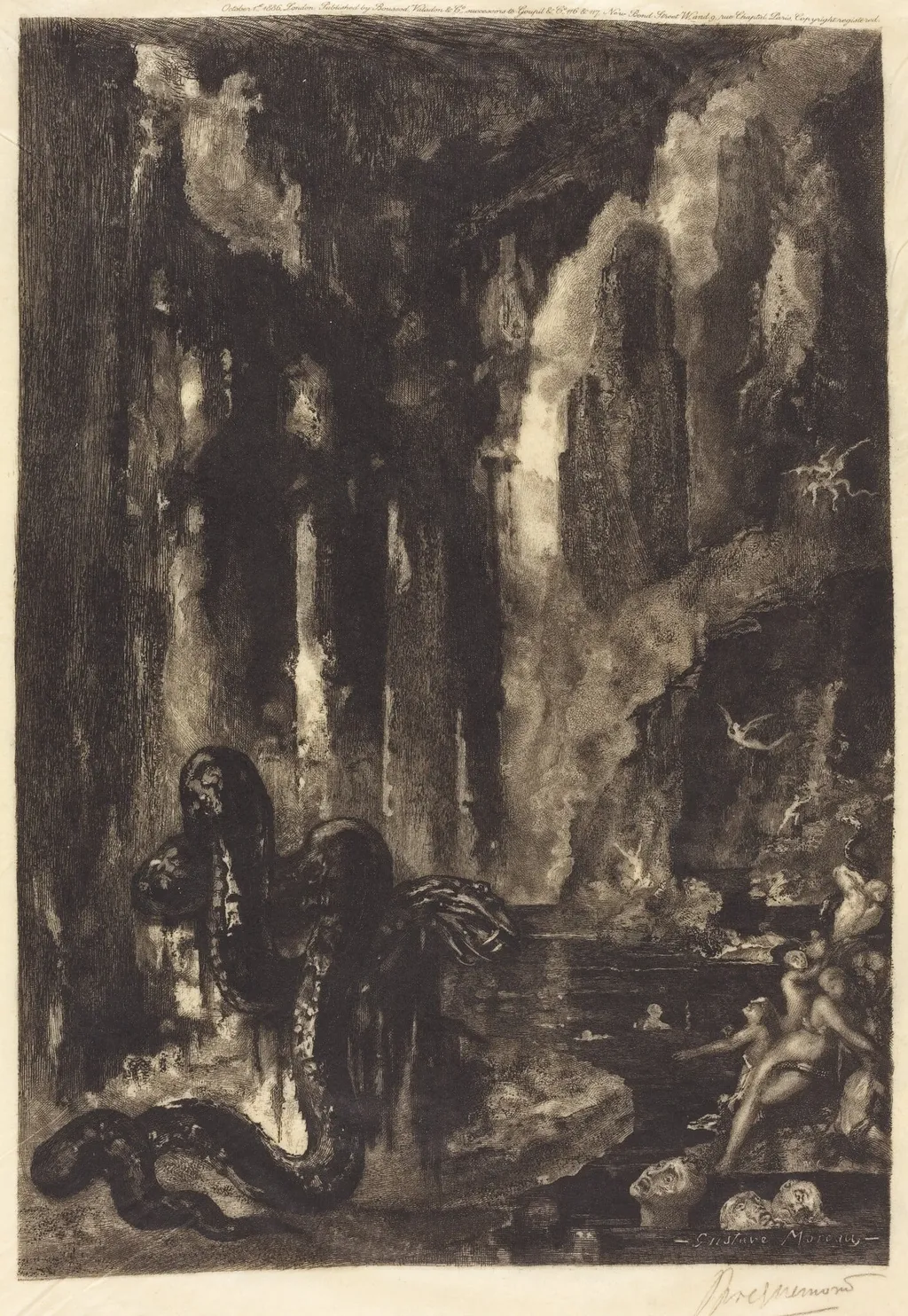
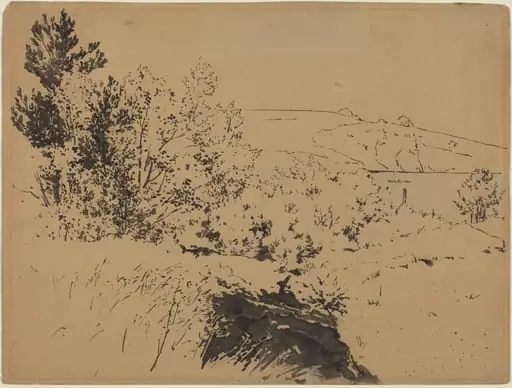
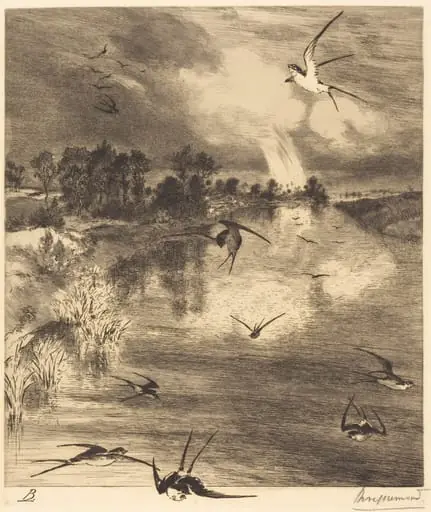
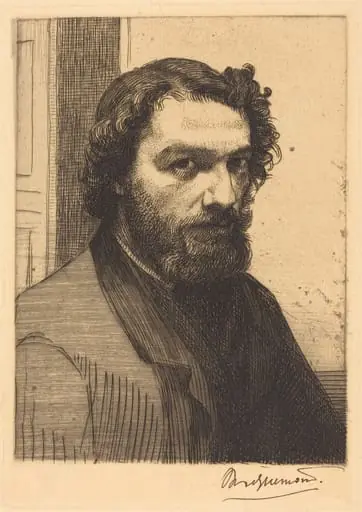
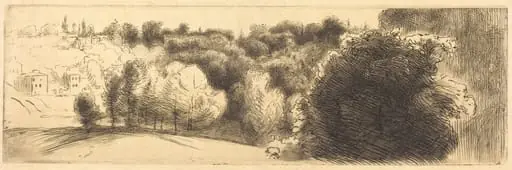
Untitled (The Dream of the Mogul?) is an ink print by the Impressionist artist Félix Bracquemond. It dates from 1886 and is held in the collection of the National Gallery of Art. Félix Henri Bracquemond produced this etching on vellum in 1886, part of his later exploration of printmaking techniques.
About this work
Overview
Unlike his earlier decorative work, this piece leans into atmospheric narrative, using the delicate texture of vellum to enhance the subtlety of ink lines.
Félix Henri Bracquemond produced this etching on vellum in 1886, part of his later exploration of printmaking techniques. Unlike his earlier decorative work, this piece leans into atmospheric narrative, using the delicate texture of vellum to enhance the subtlety of ink lines. It reflects his sustained interest in the expressive potential of etching, distinct from his contributions to ceramics or his association with the Impressionist circle.
Subject & Meaning
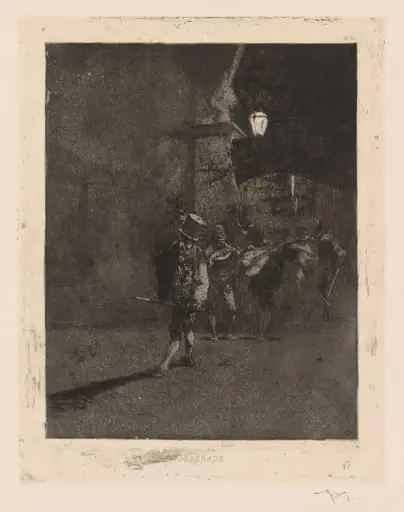
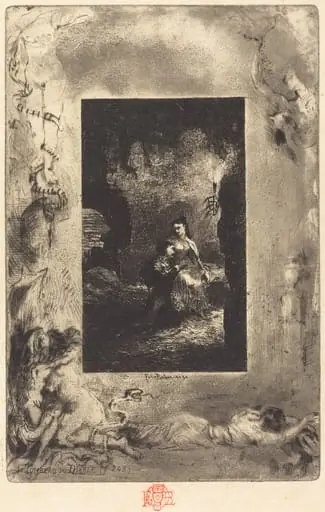
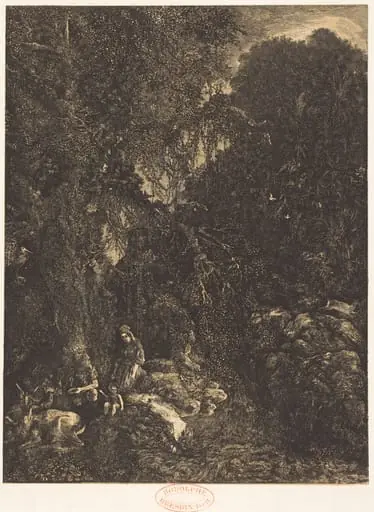
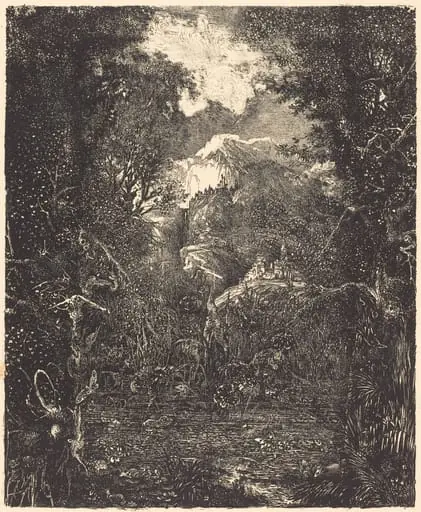
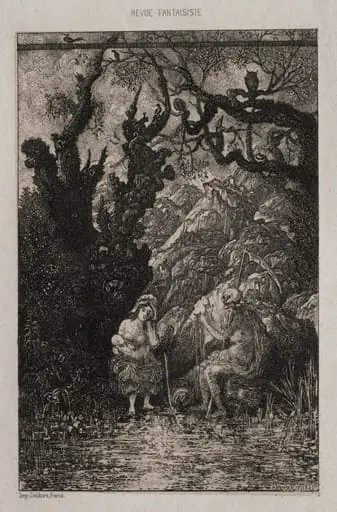
A robed figure, adorned with a turban-like headdress, stands motionless beside a body of water, facing distant mountains. A serpent coils at their feet, introducing an enigmatic element that resists clear interpretation. The scene evokes introspection rather than storytelling, suggesting a moment of solitude or symbolic transition. The title, appended later, hints at Orientalist fantasy, though the image remains deliberately ambiguous in its reference.
Technique & Style
Bracquemond employed fine etching lines to render texture in the figure’s cloak, the roughness of cliffs, and the soft gradation of clouds. The use of vellum, rather than paper, allowed for greater precision and a luminous quality in the ink’s absorption. The composition balances sparse detail with expansive negative space, emphasizing stillness. Birds in the upper sky and the serpent below introduce subtle contrasts in scale and symbolism.
History & Provenance
Created in 1886, the work emerged during a period when Bracquemond was increasingly focused on private, experimental prints rather than public commissions. It was not widely exhibited in his lifetime and remained in private collections until the 20th century. Its current attribution as 'The Dream of the Mogul?' is speculative, likely added by a later collector or curator to frame its exoticized imagery.
Context
Bracquemond’s engagement with Japonisme influenced his compositional economy and interest in non-Western motifs, though this piece diverges from direct Japanese references. His work in this era responded to broader European fascination with the Orient, yet his approach remained restrained, avoiding overt exoticism. The print aligns with contemporaneous trends in Symbolist and Aestheticist circles, favoring mood over narrative clarity.
Legacy
Though less known than his wife Marie or his contemporaries, Bracquemond’s etchings like this one contributed to the reevaluation of printmaking as a serious artistic medium in late 19th-century France. His technical precision and quiet, introspective imagery influenced later printmakers seeking alternatives to bold Impressionist brushwork. This work endures as a quiet example of his personal, introspective phase.
Artist & collection

Artist
Félix Henri Bracquemond (French pronunciation: ; 22 May 1833 – 29 October 1914) was a French painter, etcher, and printmaker.