Artwork
Faust
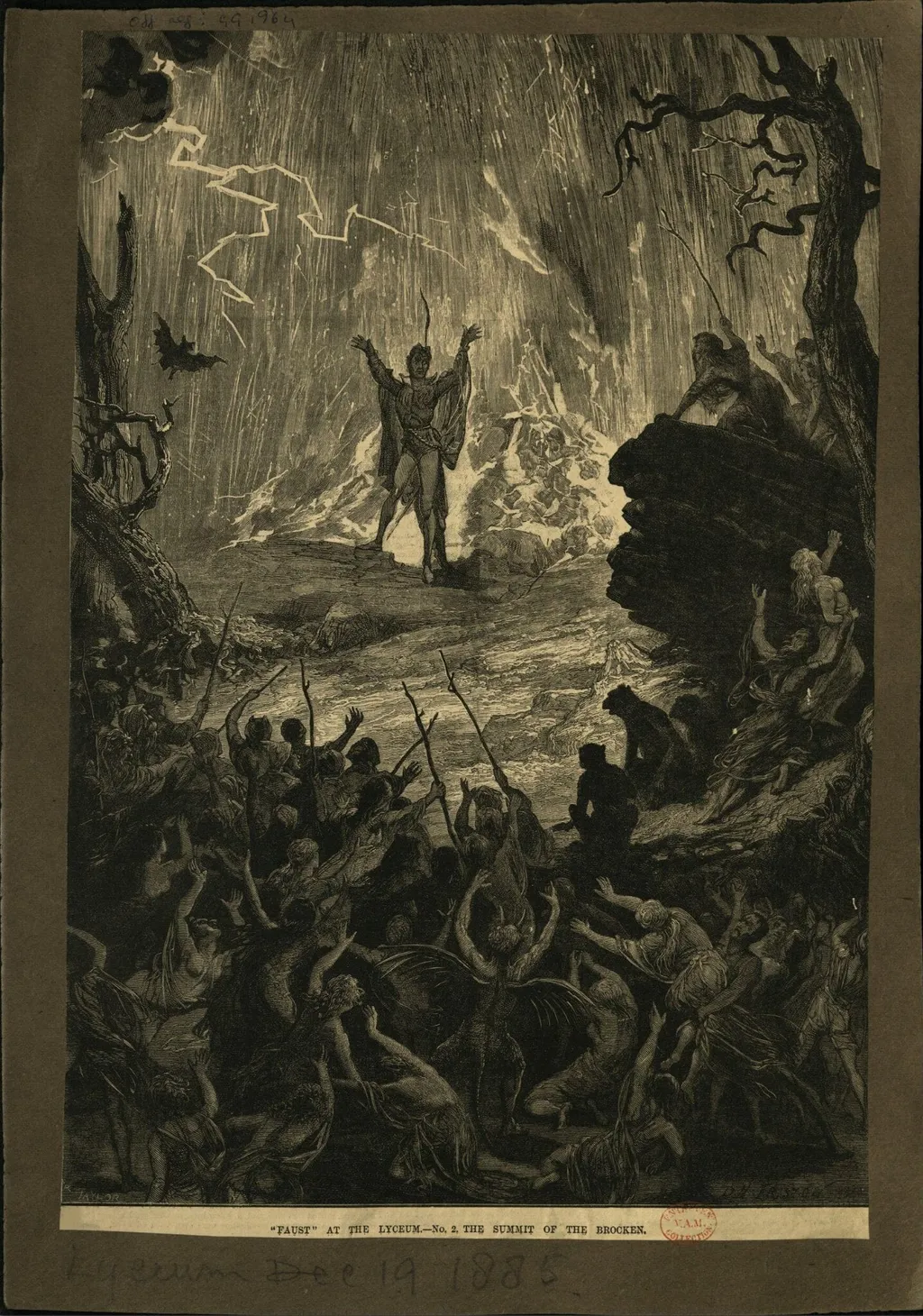
Faust is a print by the Impressionist artist Unknown. It dates from 1886 and is held in the collection of the Victoria and Albert Museum.
About this work
Overview
Created as a theatrical souvenir, it illustrates a scene from Hell featuring Mephistopheles, portrayed by Henry Irving.
This print captures a moment from the 1885–1888 stage production of Faust at London’s Lyceum Theatre. Created as a theatrical souvenir, it illustrates a scene from Hell featuring Mephistopheles, portrayed by Henry Irving. The image serves as a visual record of a widely attended and long-running adaptation of Goethe’s tale, reflecting the era’s fascination with dramatic spectacle and literary adaptation on the Victorian stage.
Subject & Meaning
The scene depicts Mephistopheles in the infernal realm, embodying the cunning, seductive force that drives Faust’s downfall. Rather than emphasizing religious terror, the portrayal leans into theatrical grandeur, aligning with the production’s emphasis on visual drama. The figure’s presence underscores themes of temptation and moral consequence, rendered through costume and staging rather than literal symbolism.
Technique & Style
The print employs detailed line work and tonal contrasts typical of late 19th-century theatrical illustrations. It captures the elaborate costumes and stylized set design of the Lyceum production, prioritizing clarity and dramatic effect over naturalism. The composition directs attention to Mephistopheles as the central figure, framed by shadowy, otherworldly architecture to heighten the supernatural atmosphere.
History & Provenance
Produced during the Lyceum’s three-year run of Faust, the print was likely distributed to audiences or used in promotional materials. It documents a landmark production led by Henry Irving as actor-manager, whose influence shaped British theatre in the 1880s. The image preserves the visual identity of a performance that helped elevate George Alexander’s status as a leading actor of his generation.
Context
This production emerged during a period when Shakespearean and literary adaptations dominated London’s commercial theatre. Irving’s Lyceum was known for its lavish, historically informed stagings, and Faust was part of a broader trend of bringing epic narratives to the stage with technical innovation. The play’s success reflected public appetite for moral allegories framed through spectacle.
Legacy
The print endures as evidence of how literature was reimagined for the Victorian stage. It preserves the visual language of a production that influenced later theatrical design and actor training. While the performance itself is no longer extant, such prints remain key sources for understanding the aesthetics and cultural priorities of late 19th-century British theatre.
Artist & collection

 Domestic Scene
 Giacomo and Cardinal Marco, investing Andrea, Abbot of San Zeno, with his Benefice
 The Nymph of Fontainebleau
 Portrait of a Woman
 Madonna and Child with Saints in the Enclosed Garden
 Venus and Minerva
 Family Group of Four on Sofa
 Wall painting from Room H of the Villa of P. Fannius Synistor at Boscoreale
 Untitled (The Dream of the Mogul?)
 H Beard Print Collection
 The Evening Star
 The Vintages!: The Abandoned Vine
 H Beard Print Collection
 Paradise Lost: Adam and Eve Driven out of Paradise
 Dream of Gediminas
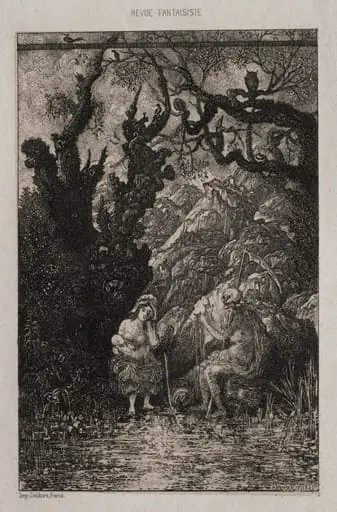 Death and the Young Mother
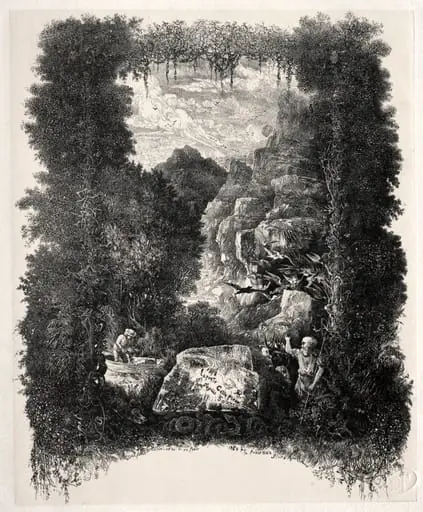 First frontispiece for Fables and Fairy-Tales by Thierry-Faletans
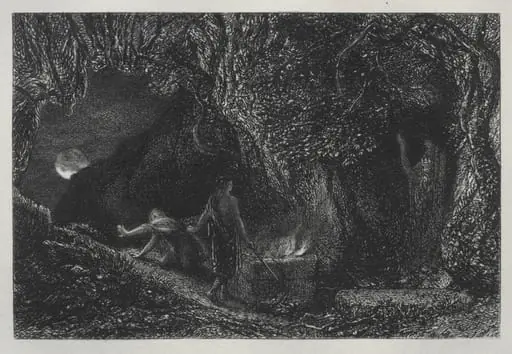 The Sepulchre