Artwork
Tagwerker (Day Laborer)
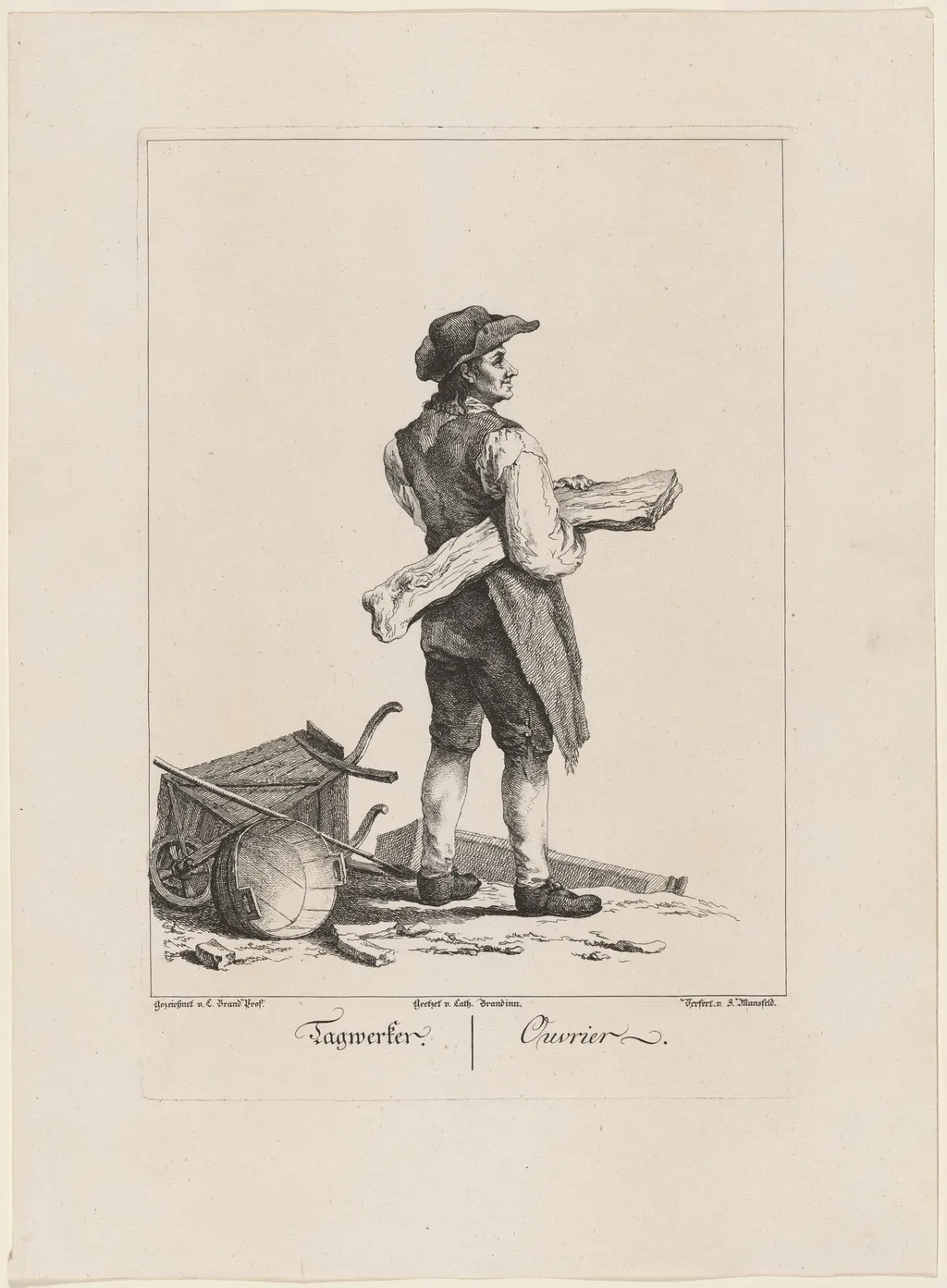
Tagwerker (Day Laborer) is an ink print by the Romanticist artist Catherine Brandinn. It dates from 1775 and is held in the collection of the National Gallery of Art.
About this work
Overview
Catherine Brandinn’s 1775 print, titled *Tagwerker* (Day Laborer), is executed as an engraving combined with etching on laid paper. The monochrome image captures a solitary figure in a moment of repose, his posture and the surrounding implements suggesting the fatigue of manual work. The composition is rendered in stark contrasts, emphasizing the physicality of the scene.
Subject & Meaning
The central figure is a man dressed in period work attire, bearing a heavy wooden board under one arm while supporting a shovel with the other. A tipped wheelbarrow and scattered tools lie nearby, indicating a break after a demanding shift. By labeling the piece *Tagwerker*, Brandinn foregrounds the everyday laborer, offering a realistic glimpse into 18th‑century manual employment.
Technique & Style
Brandinn employed a hybrid process, beginning with engraving to outline the composition, then using acid‑based etching to develop finer details and tonal variation. The laid paper surface enhances the texture of the lines, while the interplay of deep shadows and crisp edges creates a gritty, tactile atmosphere that underscores the subject’s toil.
History & Provenance
Created in 1775, the print is among the few surviving works attributed to Brandinn, a relatively obscure German printmaker of the late Enlightenment period. It entered public collections through 19th‑century acquisitions by regional museums, where it has been cited in studies of labor representation in pre‑industrial European art.
Artist & collection