Artwork
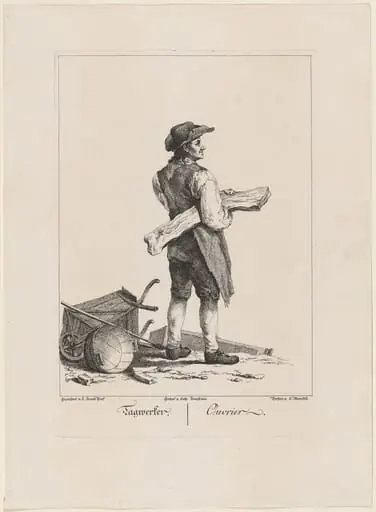
Strohschneider (Straw Cutter)
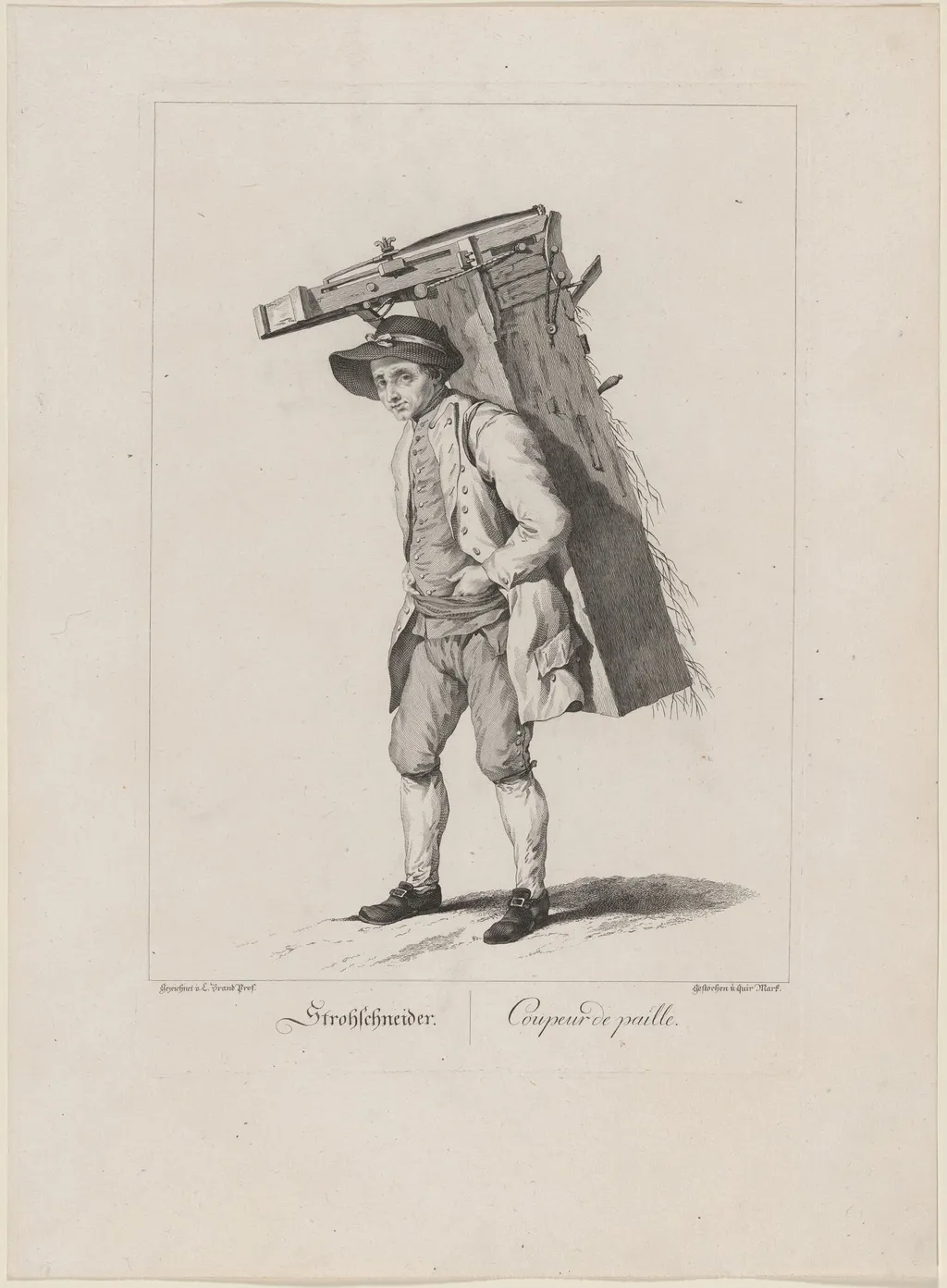
Strohschneider (Straw Cutter) is an ink print by the Romanticist artist Quirin Mark. It dates from 1775 and is held in the collection of the National Gallery of Art.
About this work
Overview
Created in 1775, this print by Quirin Mark combines engraving and etching on laid paper. It depicts a solitary figure burdened with a large bundle of straw, rendered with precise line work that emphasizes the physical weight of the load.
Subject & Meaning
The central figure is a laborer identified by the inscription as a "Straw Cutter," a trade common in the 18th‑century countryside yet seldom represented in visual art. His posture—one hand on his hip, shoulders hunched—conveys the effort inherent in manual agricultural work.
Technique & Style
Mark employs a hybrid of engraving’s crisp incisions and etching’s softer tonal qualities. The fine, controlled lines delineate the man's clothing—a simple jacket, knee‑length breeches, and a wide‑brimmed hat—while the texture of the straw and the worn shoes benefit from the subtle gradations achievable through acid‑etched areas.
History & Provenance
The print originates from the late Baroque period in Central Europe, a time when printmaking served both documentary and decorative purposes. Though specific ownership records are scarce, the work is catalogued among Mark’s known prints and appears in several 19th‑century collections of German folk imagery.
Context
In the broader visual culture of the era, depictions of rural laborers were rare, with most prints focusing on aristocratic or mythological subjects. Mark’s choice to portray a straw cutter provides insight into the everyday lives of the lower classes, aligning with a modest trend toward genre scenes in German printmaking.
Artist & collection

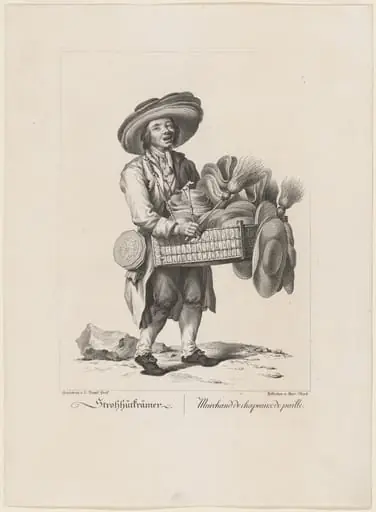 Strohhütkrämer (Straw Hat Seller)
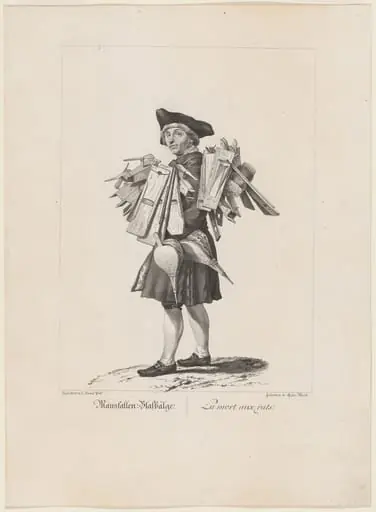 Mausfallen! Blasbälge! (Death to Mice)
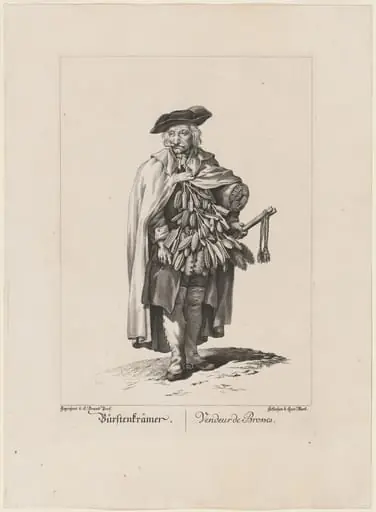 Bürstenkrämer/Vendeur de Brosses (Brush Seller)
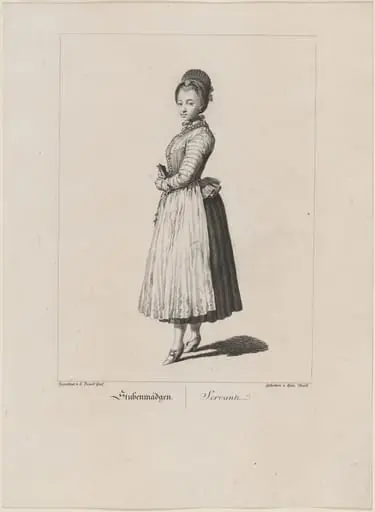 Stubenmädgen (Servant Girl)
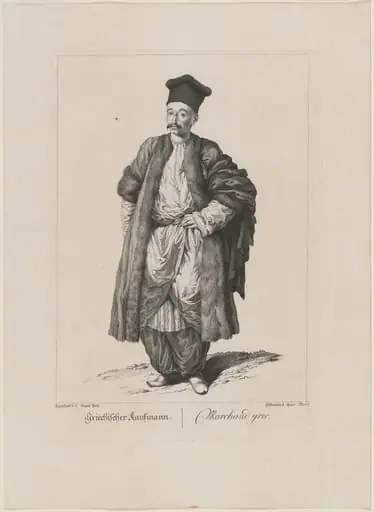 Griechischer Kaufman (Greek Merchant)
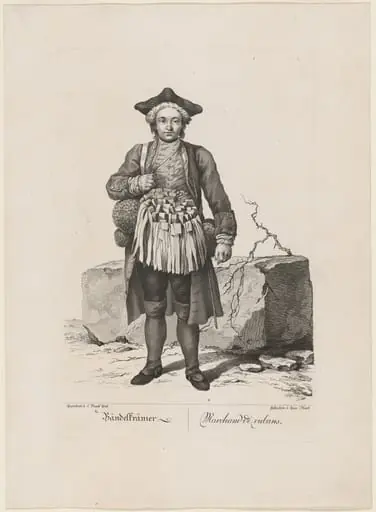 Bändelkrämer (Ribbon Seller)
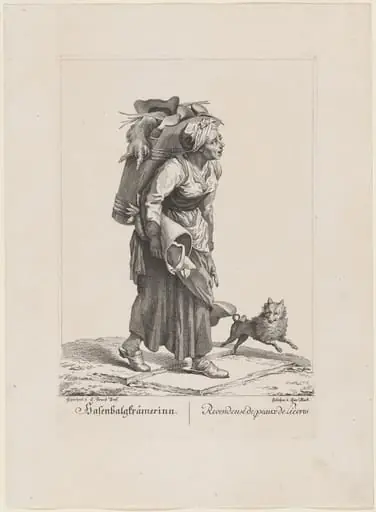 Hasenbalgkrämerinn/Revendeuse de peaux de Lièvres (Seller of Hares' Skins)
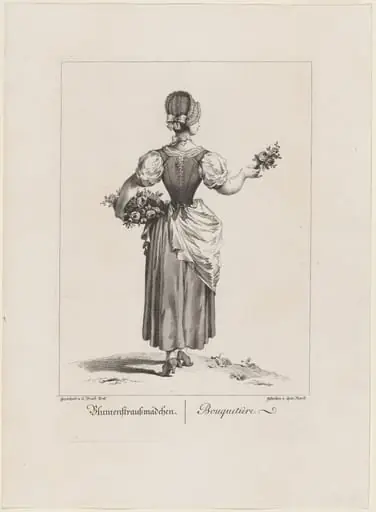 Blumenstraussmädchen (Flower Seller)