Artwork
Poine! Poine! (Cheese Curd Seller)
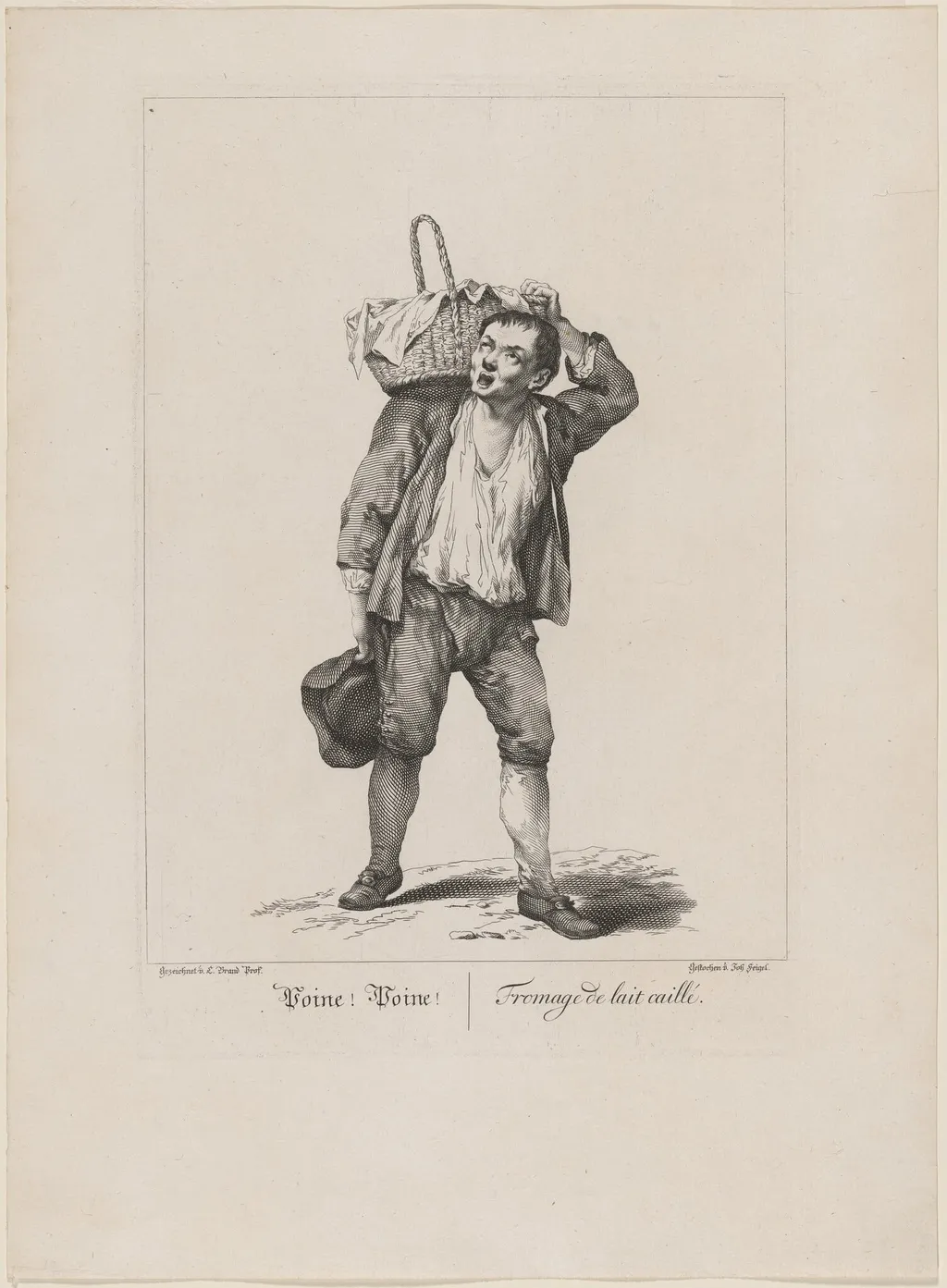
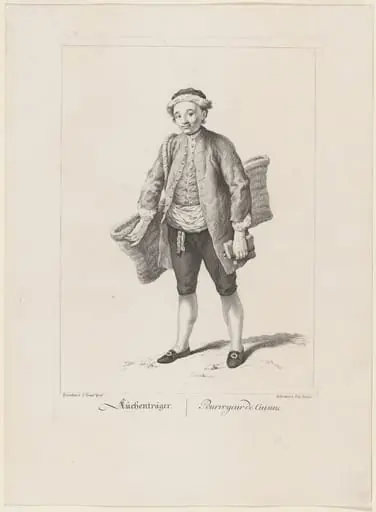
Poine! Poine! (Cheese Curd Seller) is an ink print by the Romanticist artist Johann Feigel. It dates from 1775 and is held in the collection of the National Gallery of Art.
About this work
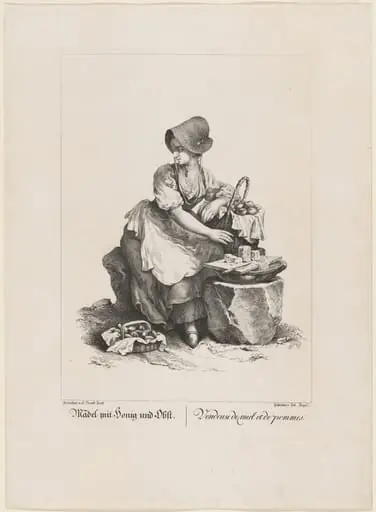
The image is rendered in a detailed and realistic style, with intricate lines and shading that give the scene a sense of depth and texture.
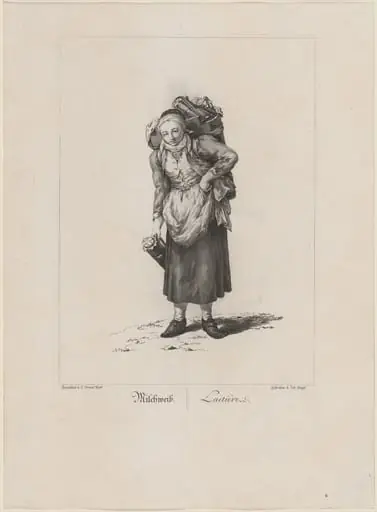
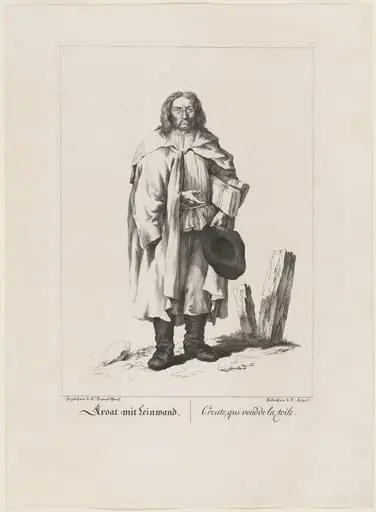
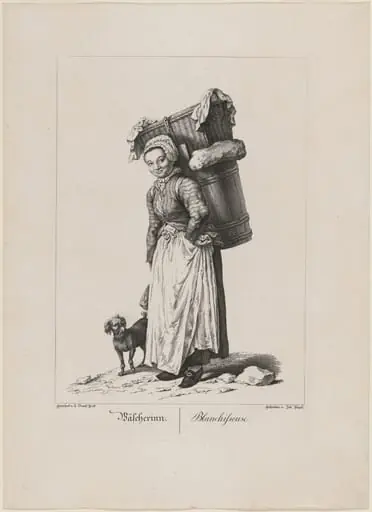
This image depicts a man carrying a large basket on his back, with one hand resting on his head and the other holding a hat. He is dressed in a loose-fitting shirt, shorts, and shoes, and appears to be in motion.
The man's attire and the basket suggest that he may be a vendor or laborer, possibly selling goods from the basket. The image is rendered in a detailed and realistic style, with intricate lines and shading that give the scene a sense of depth and texture.
The image is an engraving with etching on laid paper, created by Johann Feigel in 1775. It is part of the Romanticism movement and is held at the National Gallery of Art, Washington. If you're interested in learning more about this style of art, you might want to explore the technique of etching.
Overview
Johann Feigel’s 1775 print, titled *Poine! Poine!* and commonly identified as the Cheese Curd Seller, presents a solitary figure in mid‑stride. Rendered on laid paper, the work combines engraving and etching to depict a man burdened with a sizable basket, his posture suggesting both labor and commerce.
Subject & Meaning
The central character appears to be a itinerant vendor, his loose shirt, short trousers and sturdy shoes indicating a working‑class occupation. One hand steadies a hat while the other supports his head, a pose that conveys fatigue or contemplation as he moves through an undefined space, hinting at the everyday realities of 18th‑century street trade.
Technique & Style
Feigel employs a hybrid of engraving’s precise line work and the softer tonal qualities of etching, allowing for intricate detailing of fabric folds and basket texture. The use of laid paper contributes a subtle grain that interacts with the fine cross‑hatching, creating depth and a tactile sense of surface that aligns with the realistic tendencies of the period.
History & Provenance
Created in 1775, the print entered the collection of the National Gallery of Art in Washington, D.C., where it remains on view. Its acquisition reflects the institution’s interest in works that document quotidian life and the technical experimentation of late‑Baroque and early‑Romantic printmakers.
Context
Although often linked to Romanticism for its emphasis on the individual’s experience, the image also resonates with the Enlightenment’s growing interest in documenting social classes. By focusing on a humble cheese‑curd seller, Feigel contributes to a broader visual record of market scenes that were gaining attention in European art of the late 18th century.
Artist & collection