Artwork
Tătari fugăriți de polonezi
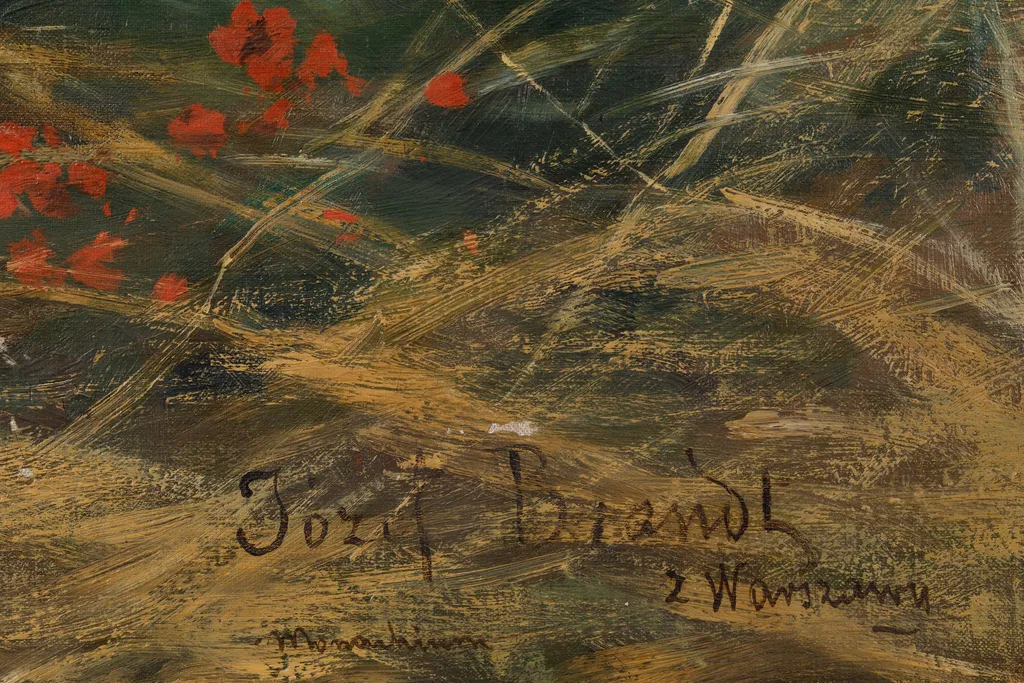
Tătari fugăriți de polonezi is a print by Iosif Brandt. It dates from 1850 and is held in the collection of the National Museum of Art of Romania.
About this work
Overview
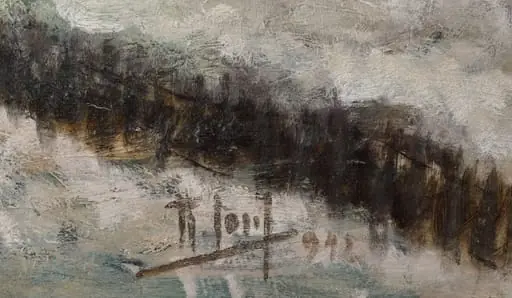
Painted around 1850 by Iosif Brandt, this image depicts a moment of violent displacement, rendered with aggressive brushwork and dense layers of pigment.
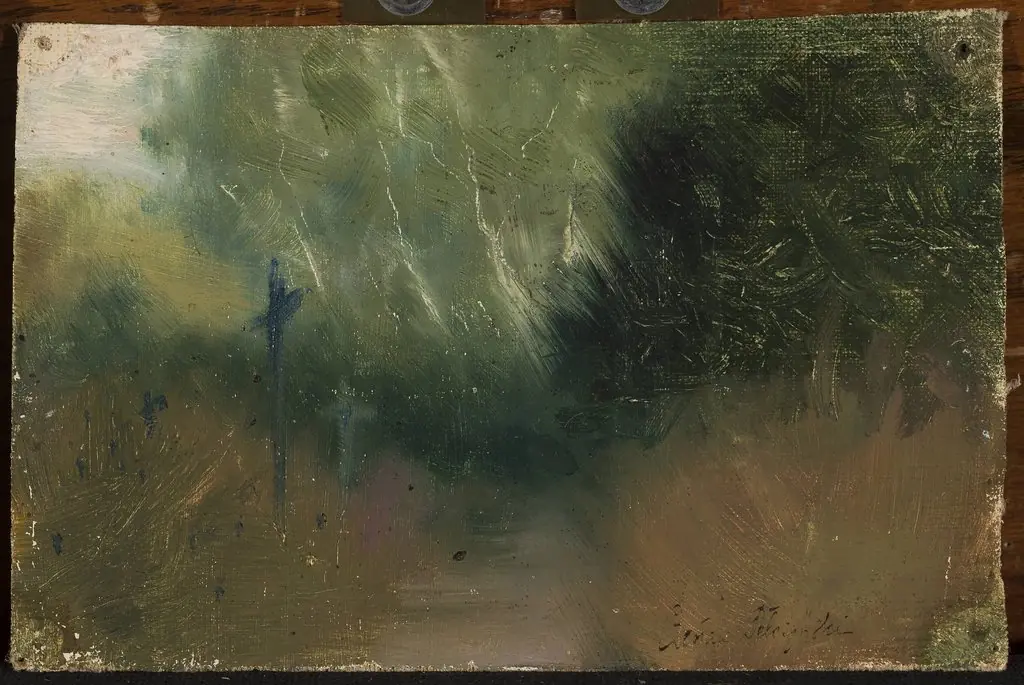
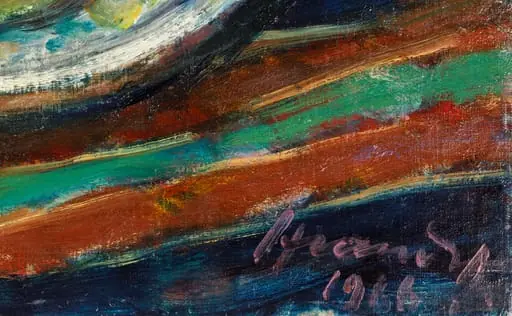
Painted around 1850 by Iosif Brandt, this image depicts a moment of violent displacement, rendered with aggressive brushwork and dense layers of pigment. The composition conveys motion and disorder through fragmented forms and a limited palette dominated by earth tones, with vivid red accents breaking through the gloom. The surface is built up in thick, scraped strokes, suggesting urgency and emotional intensity.
Subject & Meaning
The scene portrays Tatars fleeing from Polish forces, capturing a moment of chaos and retreat. The figures are not individually defined but suggested through gestural marks, emphasizing collective turmoil rather than individual identity. The stark red elements—possibly flowers or fabric—contrast with the somber surroundings, hinting at life amid destruction, or the bloodshed of conflict.
Technique & Style
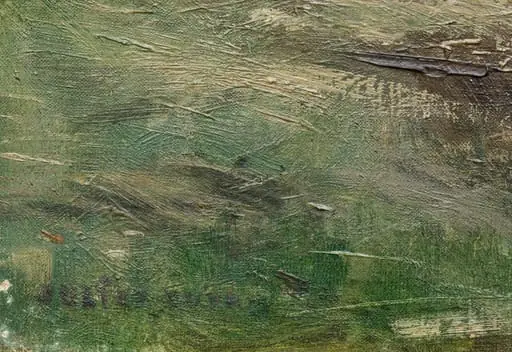
Brandt employed impasto extensively, applying paint thickly and scraping it across the surface to create a tactile, almost sculptural texture. Brushstrokes are rapid and directional, contributing to a sense of movement and instability. The palette is restrained—browns, greens, and blacks—with the reds deliberately jarring, drawing attention without romanticizing the violence.
History & Provenance
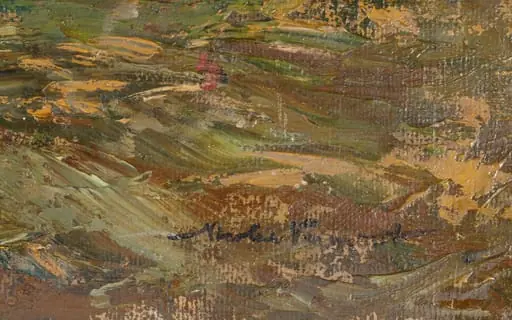
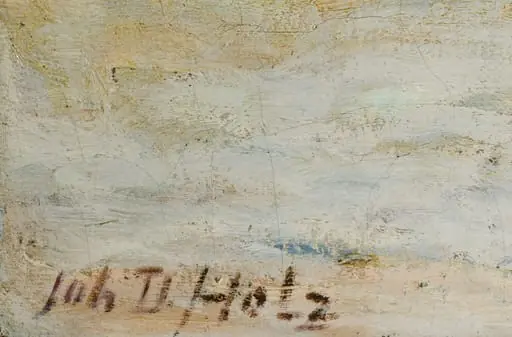
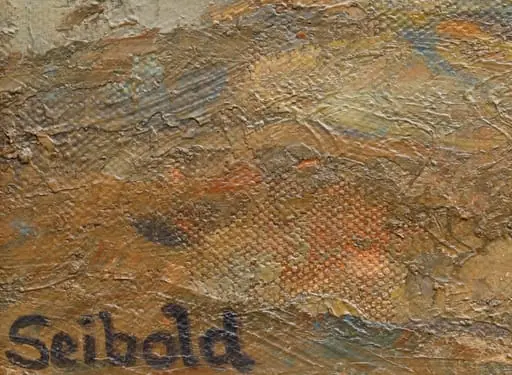
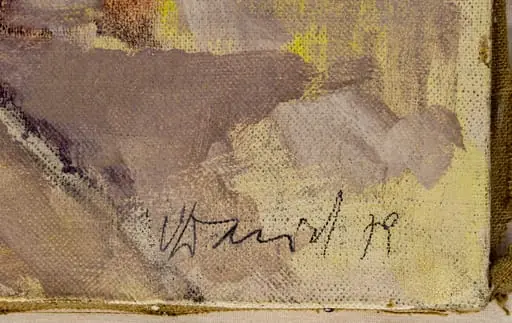
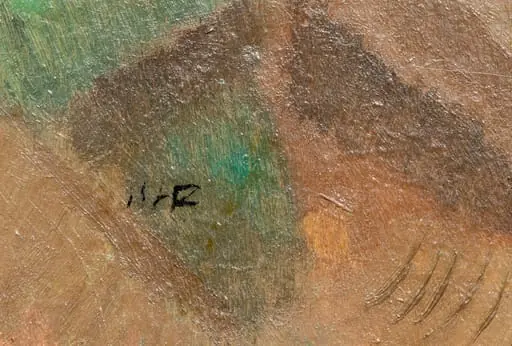
The work originates from Brandt’s early period, likely produced during his formative years in Romania before he gained wider recognition. Its intimate scale and raw execution suggest it may have been a personal study or sketch rather than a commissioned piece. The signature, clearly visible in the corner, aligns with his known practice of marking works with minimal flourish.
Context
Created during a time of shifting borders and ethnic tensions in Eastern Europe, the painting reflects contemporary anxieties about displacement and cultural conflict. While not a documented historical record, it channels the atmosphere of unrest following uprisings and territorial reconfigurations in the mid-19th century, resonating with local narratives of survival and loss.
Legacy
Though not widely exhibited, the piece exemplifies Brandt’s early engagement with emotional realism and material experimentation. Its raw technique anticipates later expressive trends in Eastern European art, influencing artists who sought to convey trauma through physical paint handling rather than narrative clarity.
Artist & collection
Artist
Iosif Brandt kept a loaded dueling pistol on his desk—not for threats, but because he’d once dueled over a painting.