Artwork
The Black Cat
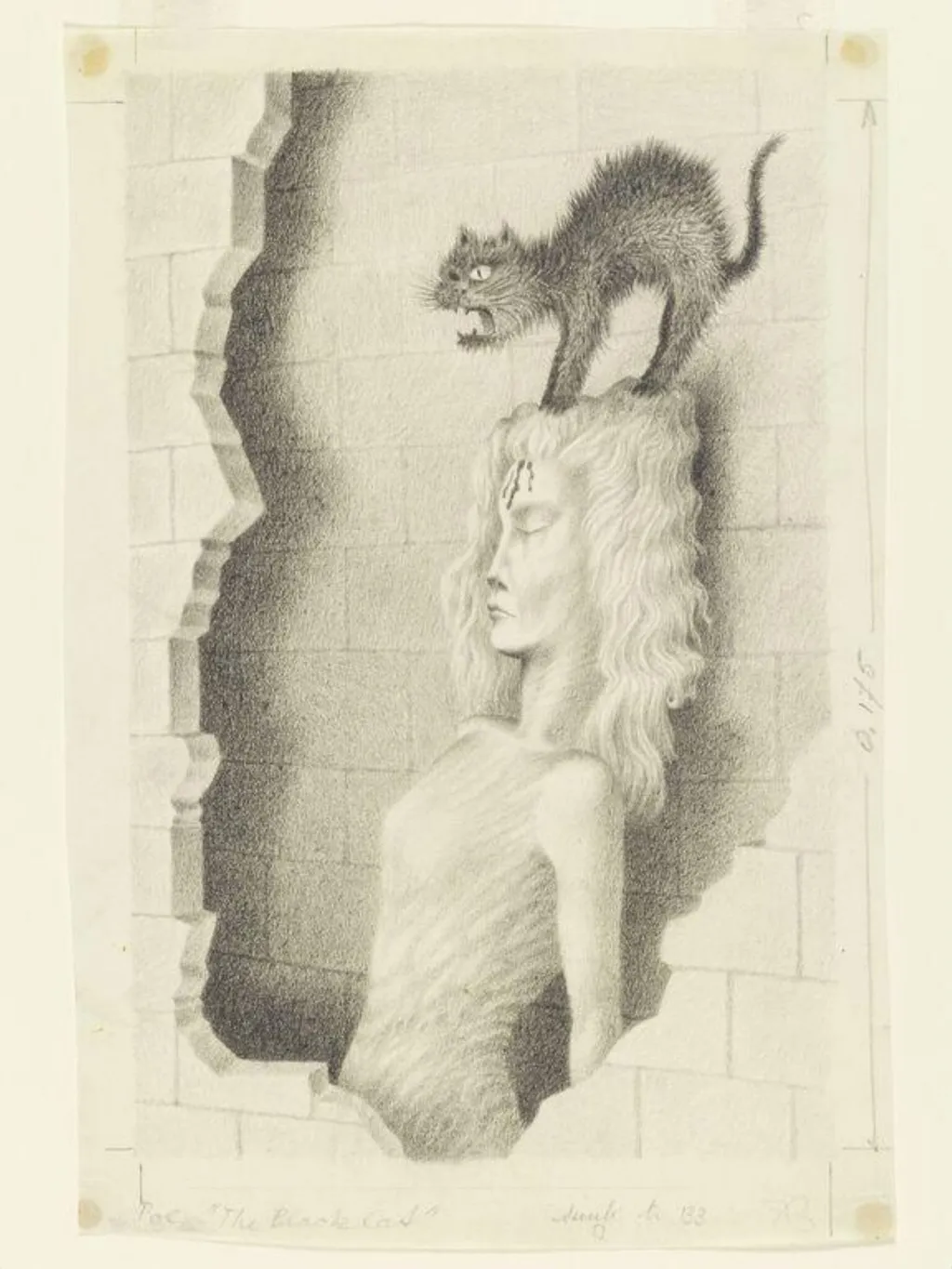
The Black Cat is a drawing by Rolf Brandt. It dates from 1945 and is held in the collection of the Victoria and Albert Museum.
About this work
He trained as an actor but loved drawing and collages, even mixing in Dada and Surrealist ideas.
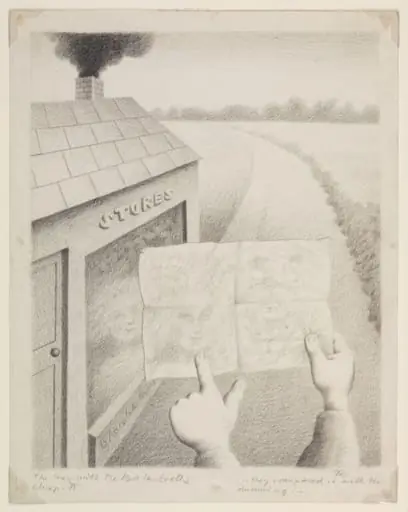
Rolf Brandt’s drawing *The Black Cat* shows a dark, spooky scene for an Edgar Allan Poe story. Made around 1945, it’s a simple drawing but full of eerie mood.
Brandt came to London from Hamburg in the 1930s. He trained as an actor but loved drawing and collages, even mixing in Dada and Surrealist ideas.
This piece is part of a creepy anthology called *Come Not Lucifer*.
Look up the artist: Brandt, Rolf.
Overview
Rolf Brandt, a German-born artist and actor who settled in London in the early 1930s, produced this delicate ink drawing as part of a 1945 anthology titled “Come Not Lucifer.” Though trained in theater, he devoted significant energy to visual art, particularly drawing and collage. His work for this collection responded to Poe’s dark narrative with a restrained, atmospheric style that echoed his earlier exposure to Dada and Surrealism in Germany.
Subject & Meaning
The drawing illustrates Poe’s “The Black Cat,” capturing the story’s psychological unease through sparse, haunting imagery. A solitary feline looms in shadow, its presence charged with dread rather than literal representation. The composition avoids overt horror, instead evoking guilt and irrational fear through ambiguity and negative space, mirroring postwar anxieties about unseen trauma and moral collapse.
Technique & Style
Brandt employed fine, linear ink strokes to construct an atmosphere of quiet tension. The drawing is minimally detailed, relying on contrast and suggestion rather than elaboration. His approach recalls Bauhaus-influenced formalism and Surrealist economy, where emotional weight arises from what is omitted. The monochrome palette and deliberate fragility of line reinforce the work’s introspective, unsettling tone.
History & Provenance
Created in 1945 for John Westhouse’s anthology “Come Not Lucifer,” the drawing was one of several illustrations Brandt produced for the volume, which compiled macabre and romantic tales. It was not exhibited publicly at the time but circulated within literary circles. Brandt’s dual identity as actor and visual artist meant his illustrations were often overlooked in art historical narratives until later reassessments of mid-century British graphic work.
Context
The drawing emerged in the immediate aftermath of World War II, a period marked by collective trauma and a renewed interest in psychological narratives. Brandt’s Surrealist-inflected imagery resonated with a public grappling with hidden horrors, both personal and societal. His work, though rooted in Poe’s 19th-century fiction, subtly absorbed the emotional residue of recent global conflict, transforming literary horror into a contemporary allegory.
Legacy
Brandt’s illustrations for “Come Not Lucifer” remain among his most recognized visual works, though he never pursued fine art as a primary career. His integration of European avant-garde sensibilities into British literary illustration contributed to a quieter, postwar shift toward psychological depth in graphic storytelling. The drawing endures as a quiet example of how displaced artists translated existential unease into restrained visual language.
Artist & collection
Artist
German draftsman Rolf Brandt drew everyday scenes in the mid-1940s, leaving two surviving drawings in ink and wash.

 Untitled
 Untitled
 Untitled
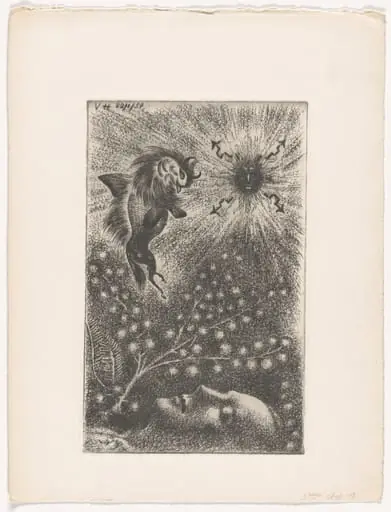 Untitled
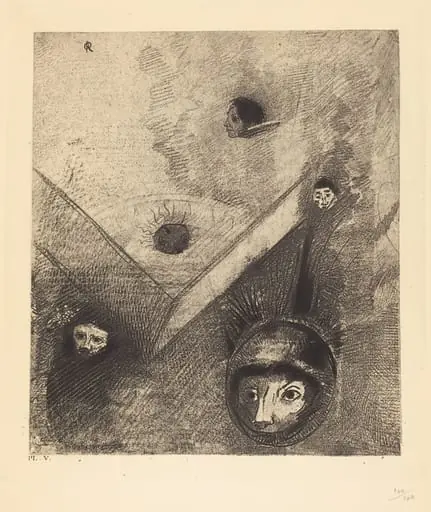 Sur le fond de nos nuits dieu de son doigt savant dessine un cauchemar multiforme et sans treve (On backdrop of our nights God with His knowing finger traces a multiform implacable nightmare)
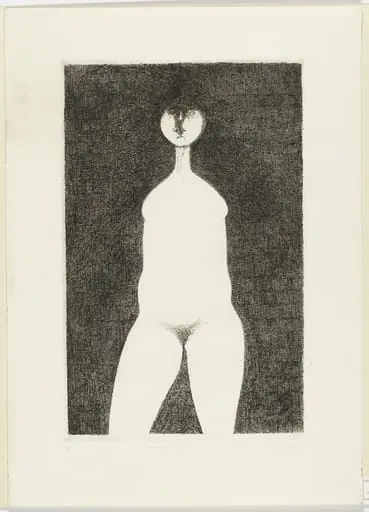 Untitled
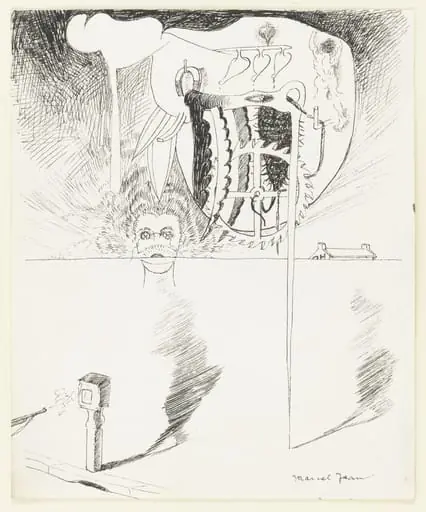 Untitled
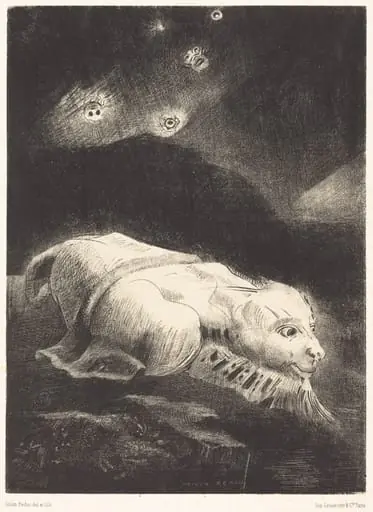 Quand s'eveillait la Vie au Fon de la matiere obscure (When life was awakening in the depths of obscure matter)
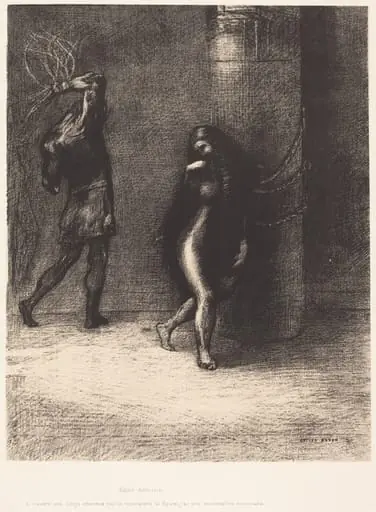 Saint-Antoine...A travers ses longs cheveux qui lui couvraient la figure, j'ai cru reconnaitre Ammonaria (Saint Anthony: "Beneathe her long hair , which covered her face, I thought I recognized Ammonaria)
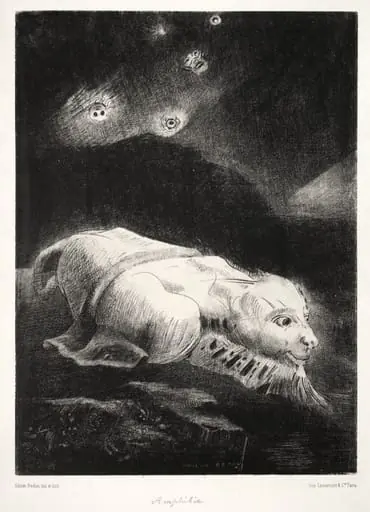 When Life Was Awakening in the Depths of Obscure Matter
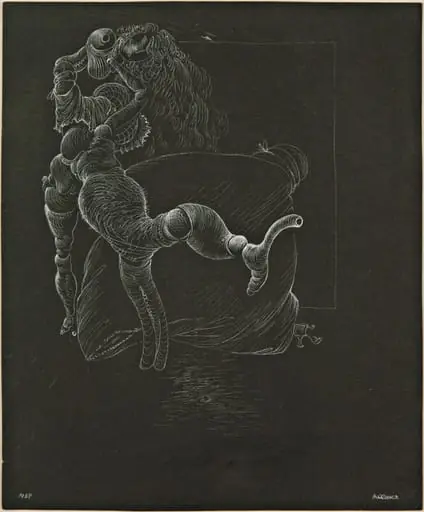 Untitled
 The Shop