Artwork
Untitled
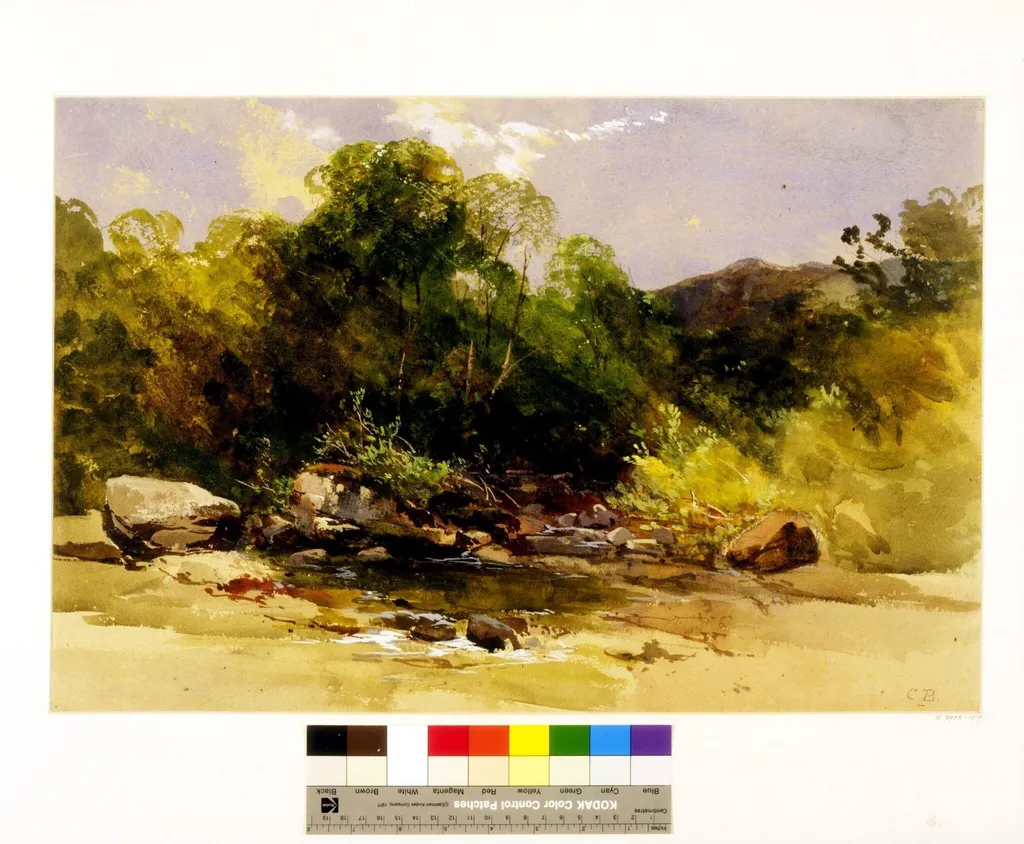
Untitled is a drawing by the Romanticist artist Charles Branwhite. It dates from 1817 and is held in the collection of the Victoria and Albert Museum.
About this work
Overview
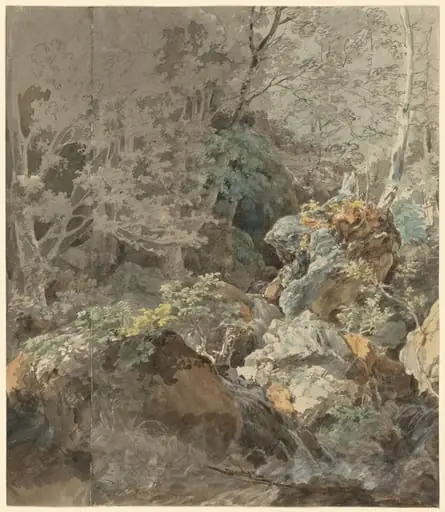
A watercolor drawing by Charles Branwhite captures a quiet rural stream winding over mossy stones, framed by dense woodland. The composition emphasizes stillness and natural flow, with no human presence to disrupt the scene. Soft atmospheric tones suggest early morning or late afternoon light, enhancing the sense of calm isolation.
Subject & Meaning
The subject is a secluded watercourse in a wooded valley, rendered without narrative or symbolic figures. The absence of people or structures underscores a focus on nature’s quiet endurance. The scene reflects an appreciation for untouched landscapes, aligning with 19th-century ideals of nature as a refuge from industrialization.
Technique & Style
Branwhite employed delicate watercolor washes to model rock surfaces and foliage, using layered transparency to suggest depth. The sky transitions subtly from pale yellow to lavender, creating a hazy horizon. Brushwork is restrained, favoring soft edges and muted tones over dramatic contrast, characteristic of quiet Romantic landscape traditions.
History & Provenance
The drawing dates from the mid-19th century, a period when British artists increasingly turned to intimate natural scenes. Branwhite, active in the southwest of England, produced numerous works for private collectors. This piece likely originated as a study or personal exercise, preserved for its tonal harmony rather than public display.
Context
Created during the height of Romanticism, the work shares affinities with contemporaries who favored subdued, contemplative landscapes over grand vistas. Unlike dramatic Alpine scenes popularized by Turner, Branwhite’s focus on modest, local topography reflects a regional sensibility rooted in English rural observation.
Legacy
Though not widely exhibited, Branwhite’s drawings contribute to a broader archive of British watercolor practice that valued quiet observation. His work remains a quiet example of how landscape art, beyond the monumental, sustained a reverence for everyday natural forms in an era of rapid change.
Own this work as a print
Artist & collection


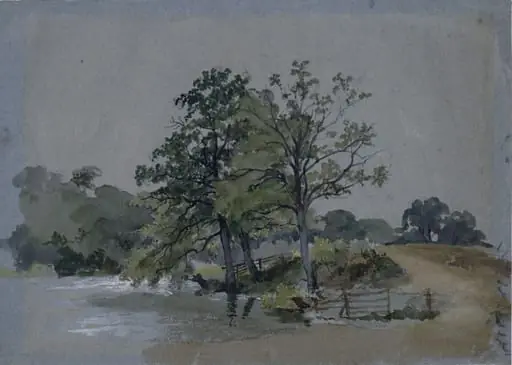 Trees by a River
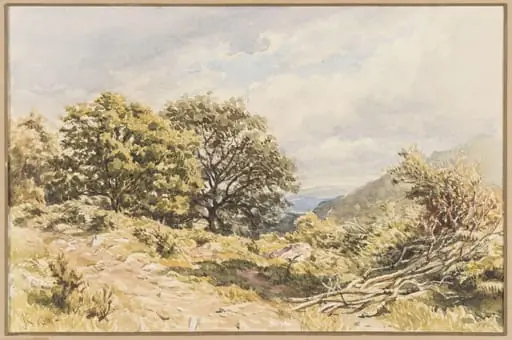 A Woody Bit, North Wales
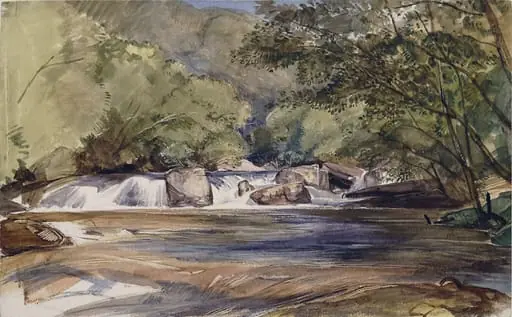 A Pool and Scottish River
 Waterfalls in a Mountain Forest
 View in the Lake District
 On the Ausable
 A Mountain Tarn
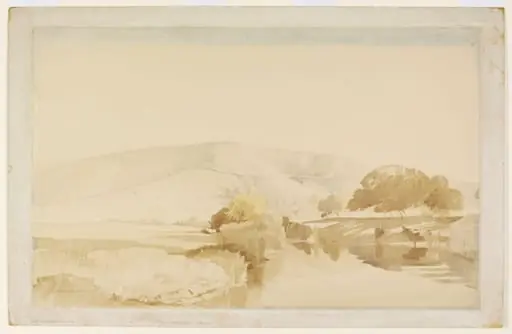 The Southdown, Underhill Road; Ditchling Beacon, from the Meadows near Westmeston
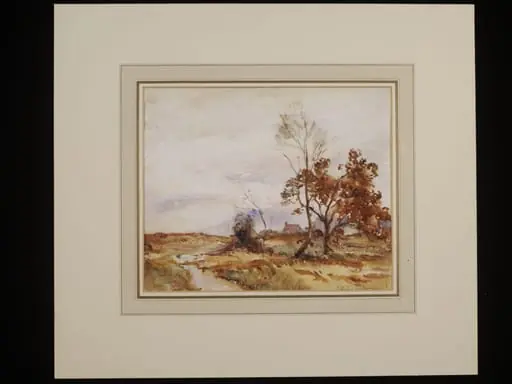 Landscape
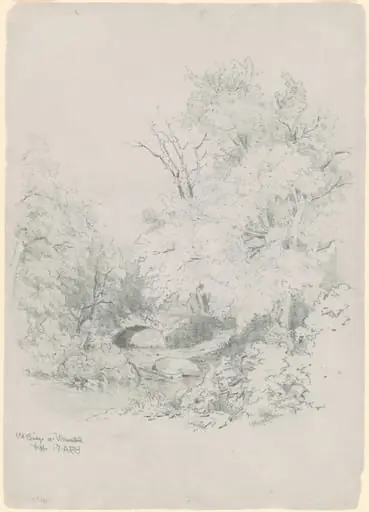 Old Bridge at Weaverton
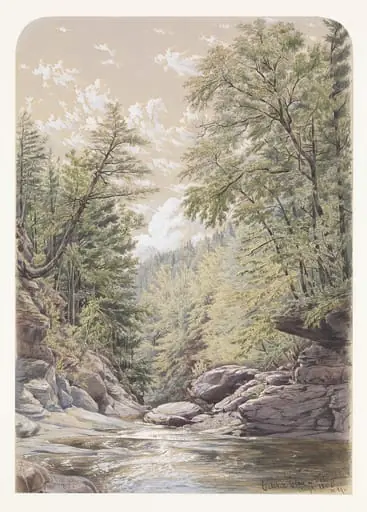 Catskill Clove in Palingsville
![Rocks Along a Lakeshore [recto], by John William Casilear](https://artifactworldgallery.com/img/john-william-casilear--rocks-along-a-lakeshore-recto--b93b7ece126b330b-w320.webp) Rocks Along a Lakeshore [recto]
Rocks Along a Lakeshore [recto]