Artwork
The Southdown, Underhill Road; Ditchling Beacon, from the Meadows near Westmeston
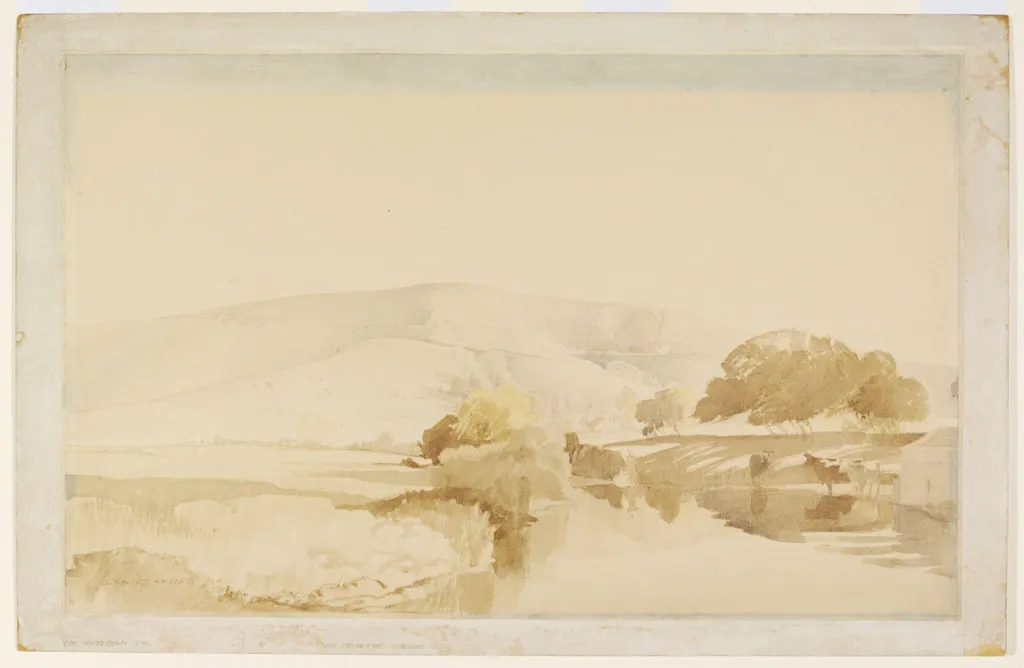
The Southdown, Underhill Road; Ditchling Beacon, from the Meadows near Westmeston is a watercolor work on paper by the British Romanticist artist Charles Knight. It dates from 1940 and is held in the collection of the Victoria and Albert Museum.
About this work
Overview
Commissioned during World War II, the initiative sought to visually archive rural and architectural scenes deemed at risk from conflict or urban change.
Created in 1940, this watercolour by Charles Knight is one of over 1,500 works produced for the Recording Britain project. Commissioned during World War II, the initiative sought to visually archive rural and architectural scenes deemed at risk from conflict or urban change. Knight’s contribution captures a quiet stretch of the South Downs, reflecting the project’s broader aim to sustain cultural memory through traditional artistic methods during a time of national upheaval.
Subject & Meaning
The scene portrays the landscape near Westmeston, with Ditchling Beacon rising in the distance and a meandering path guiding the viewer through undulating fields. The composition emphasizes stillness and continuity, highlighting the enduring character of the English countryside. By focusing on unassuming rural topography rather than monuments or landmarks, Knight underscores the quiet resilience of everyday landscapes under threat from wartime disruption and modernization.
Technique & Style
Knight employed delicate watercolour washes to render soft gradients of light and terrain, avoiding sharp lines in favor of subtle transitions. The muted sky and earth tones unify the composition, while the sparse grouping of trees and winding path provide structure without intrusion. His brushwork is restrained, conveying texture through layering rather than detail, reinforcing the tranquil, contemplative mood of the scene.
History & Provenance
The work was produced under the auspices of the Pilgrim Trust, directed by Sir Kenneth Clark, as part of a wartime effort to preserve Britain’s visual heritage. After completion, it entered the collection of the Victoria and Albert Museum, where it remains among the core holdings of the Recording Britain archive. Its preservation reflects the project’s success in safeguarding regional imagery that might otherwise have been lost to wartime destruction or neglect.
Context
During the early 1940s, Britain faced widespread disruption, and cultural institutions sought to affirm national identity through art. The Recording Britain project responded by commissioning artists to document landscapes and vernacular architecture, particularly in areas vulnerable to bombing or development. Knight’s painting aligns with this mission, offering a quiet counterpoint to wartime imagery by affirming the value of ordinary, unspoiled rural spaces.
Legacy
The Recording Britain collection, including Knight’s watercolour, continues to serve as a historical record of pre-war English countryside aesthetics. Its significance lies not in dramatic flair but in its faithful, unembellished observation. Today, these works inform studies of wartime cultural policy and regional identity, offering insight into what was deemed worth preserving during a period of profound uncertainty.
Artist & collection

Artist
Charles Knight was a British landscape painter and stained-glass artist, best remembered for his watercolour paintings of the landscapes of Sussex.

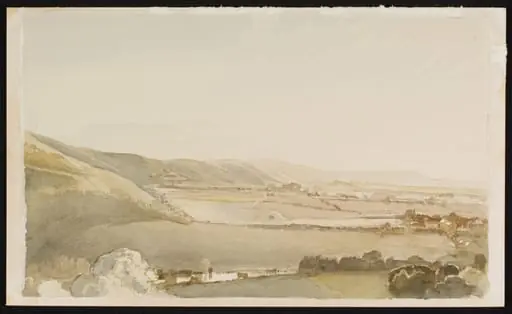 The Southdown, Underhill Road: Westwards from Poynings
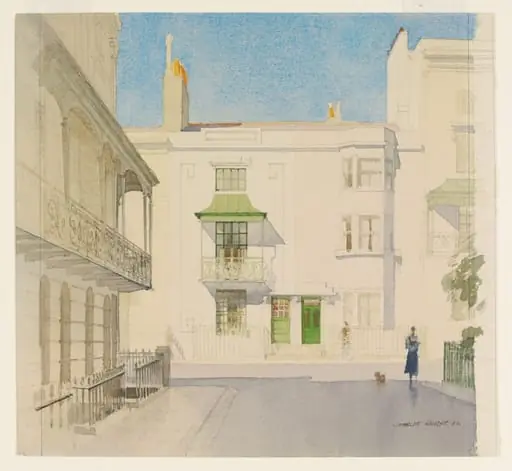 Regency Brighton: Houses in Russell Square, Sussex
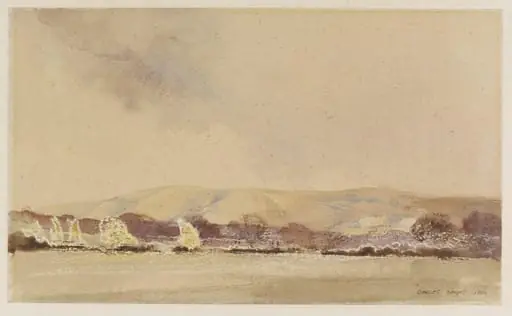 Fields and Woods South of Ditchling
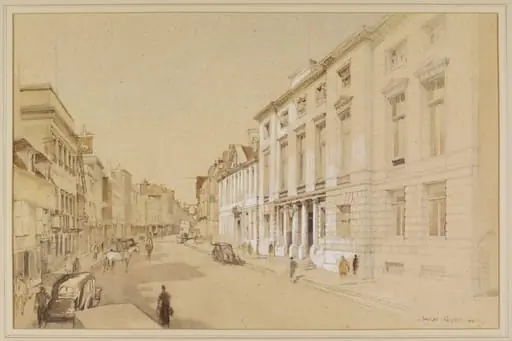 The County Hall and High Street, Lewes
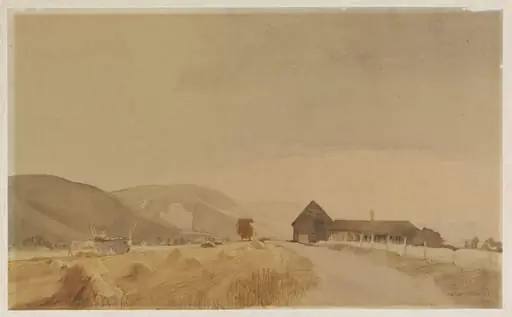 The Southdown, Underhill Road; Wickhurst Barn near Poynings looking Westwards
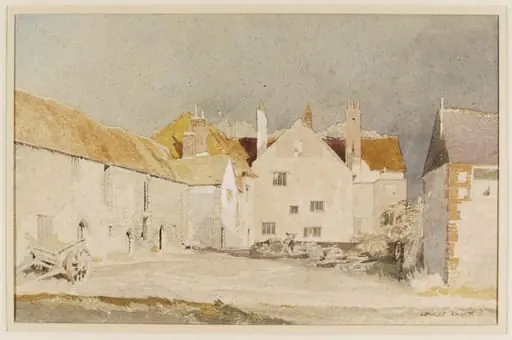 Hangleton Manor, near Brighton
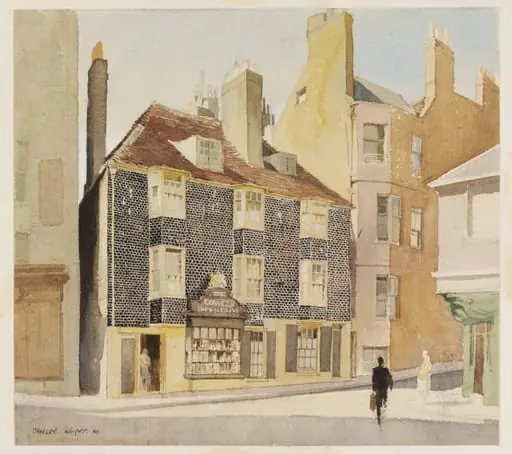 House and Shop in Pool Valley, Brighton
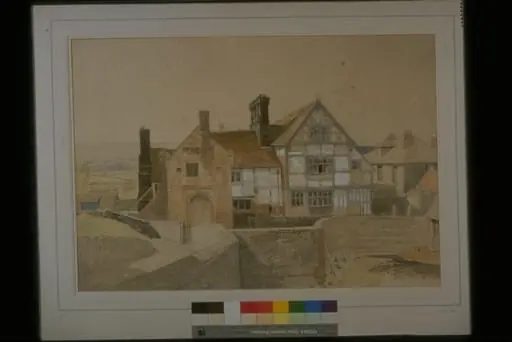 Anne of Cleves' House (North Elevation), Ditchling, Sussex
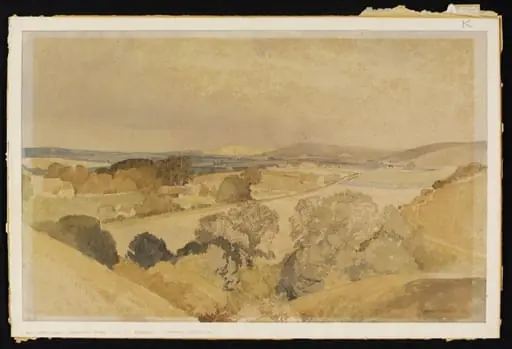 The Southdown, Underhill Road; Edburton, and the Road Eastwards
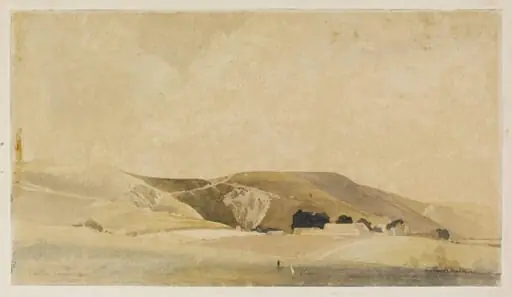 The Southdown, Underhill Road: Porching Farm from Fulking
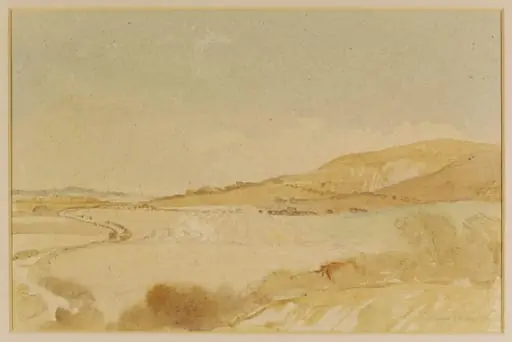 The Southdown, Underhill Road; Clayton to Westmeston
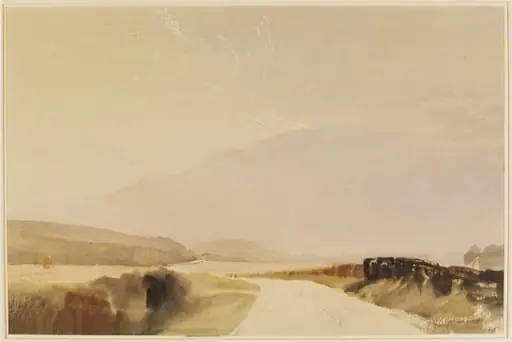 The Southdown, Underhill Road; Westwards towards Clayton
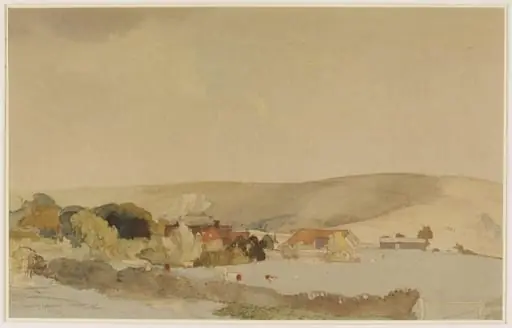 The Southdown, Underhill Road; Westmeston Place
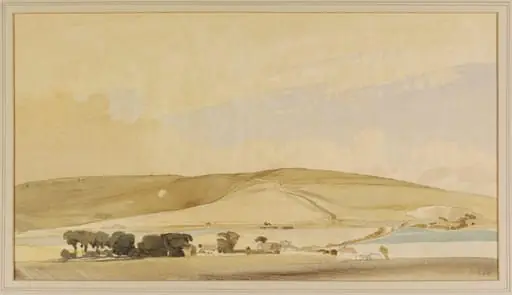 The Southdown, Underhill Road; In the Cuckmere Valley at Milton Street