Artwork
Scenă de interior
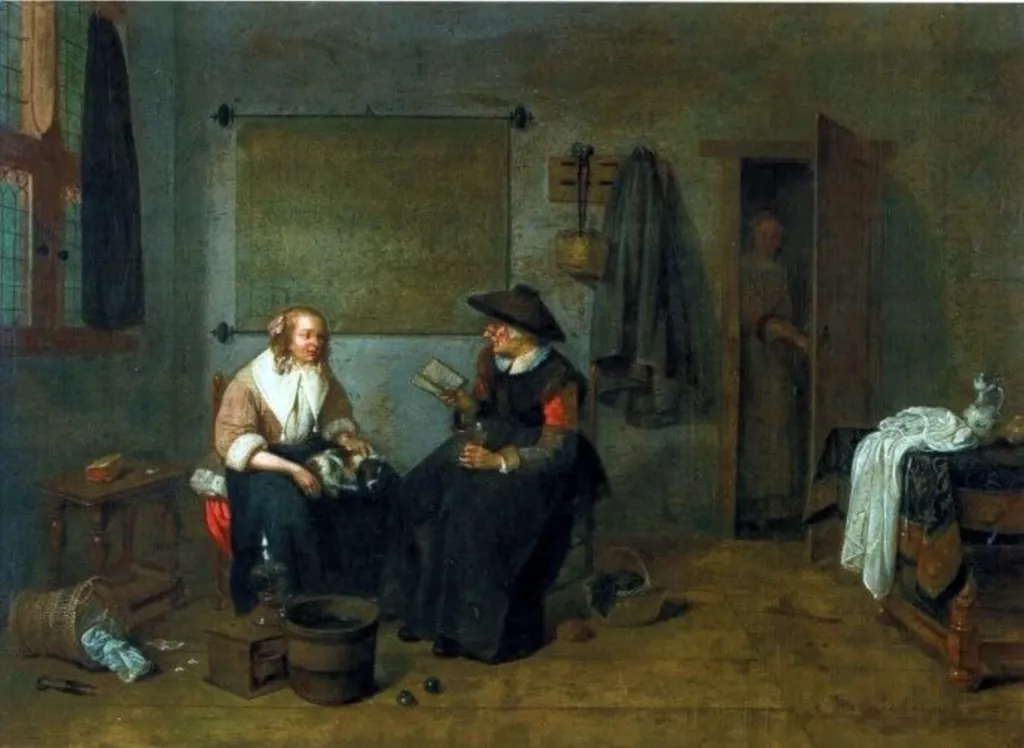
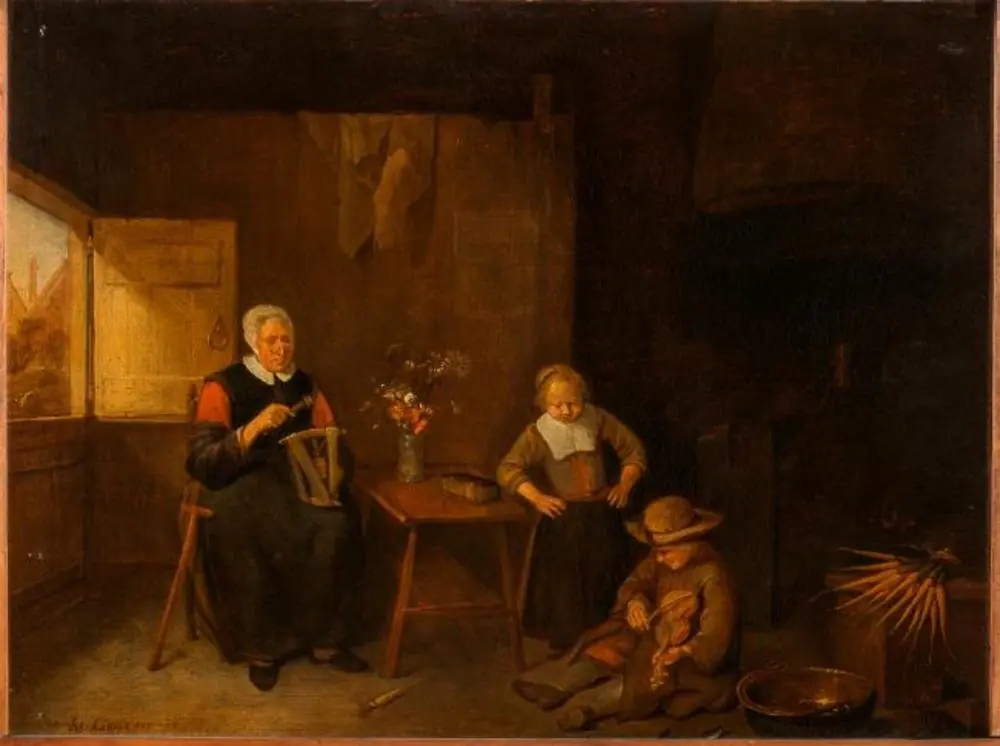
Scenă de interior is an unspecified painting by the Baroque artist Quiringh Gerritzs van Brekelemkamp. It dates from 1660 and is held in the collection of the National Museum of Art of Romania.
About this work
Overview
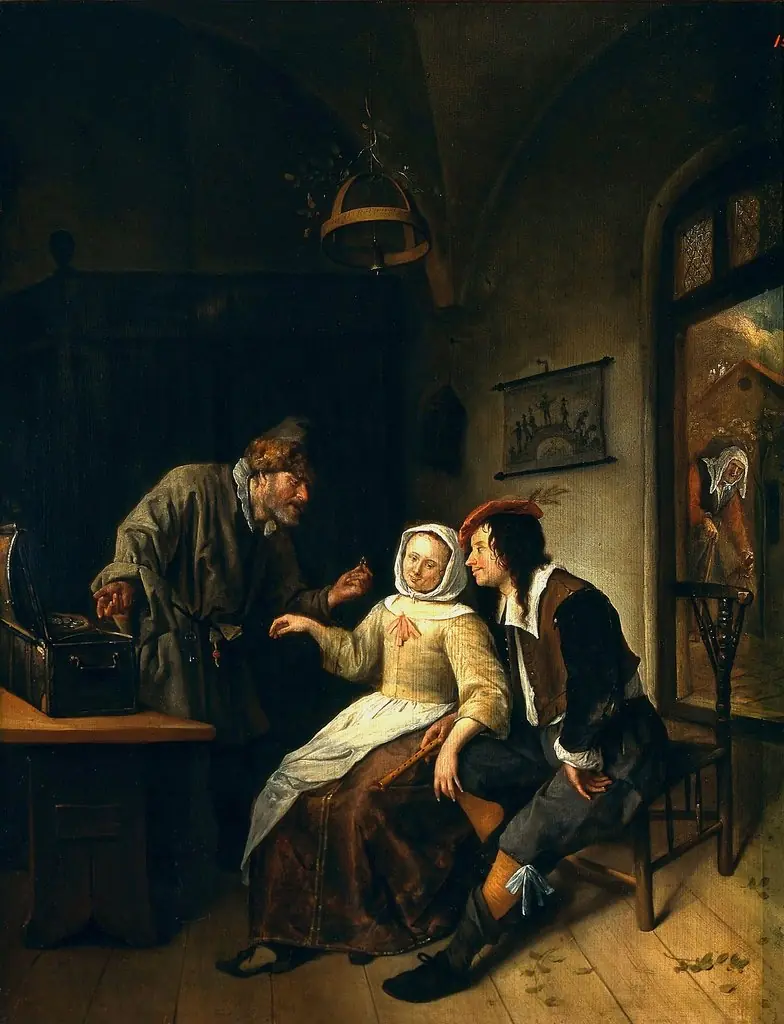
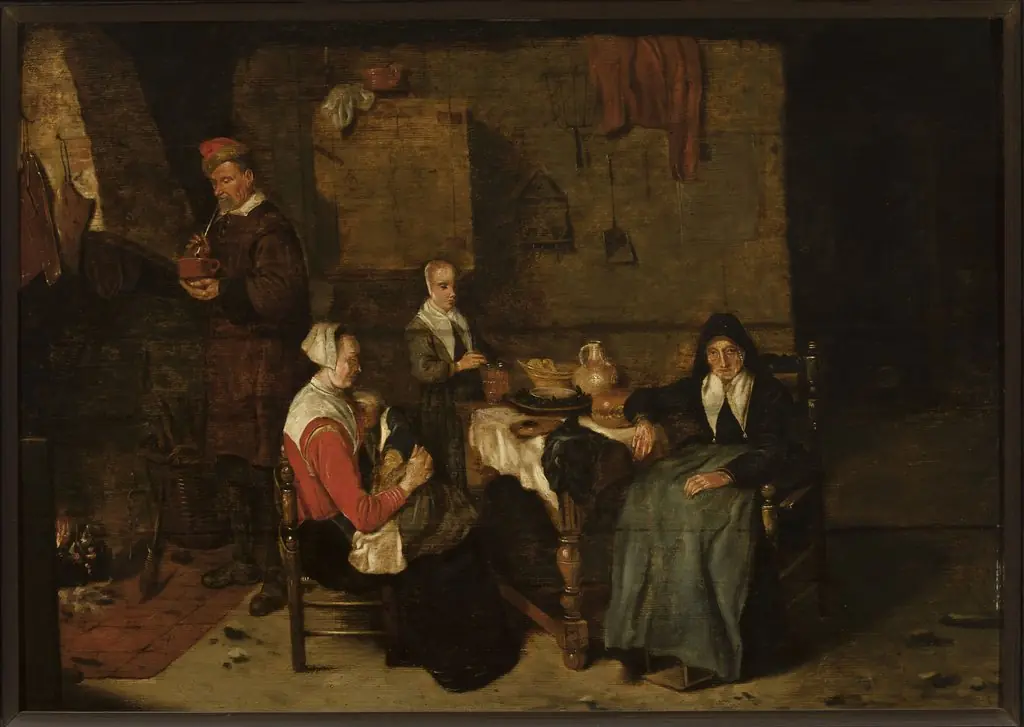
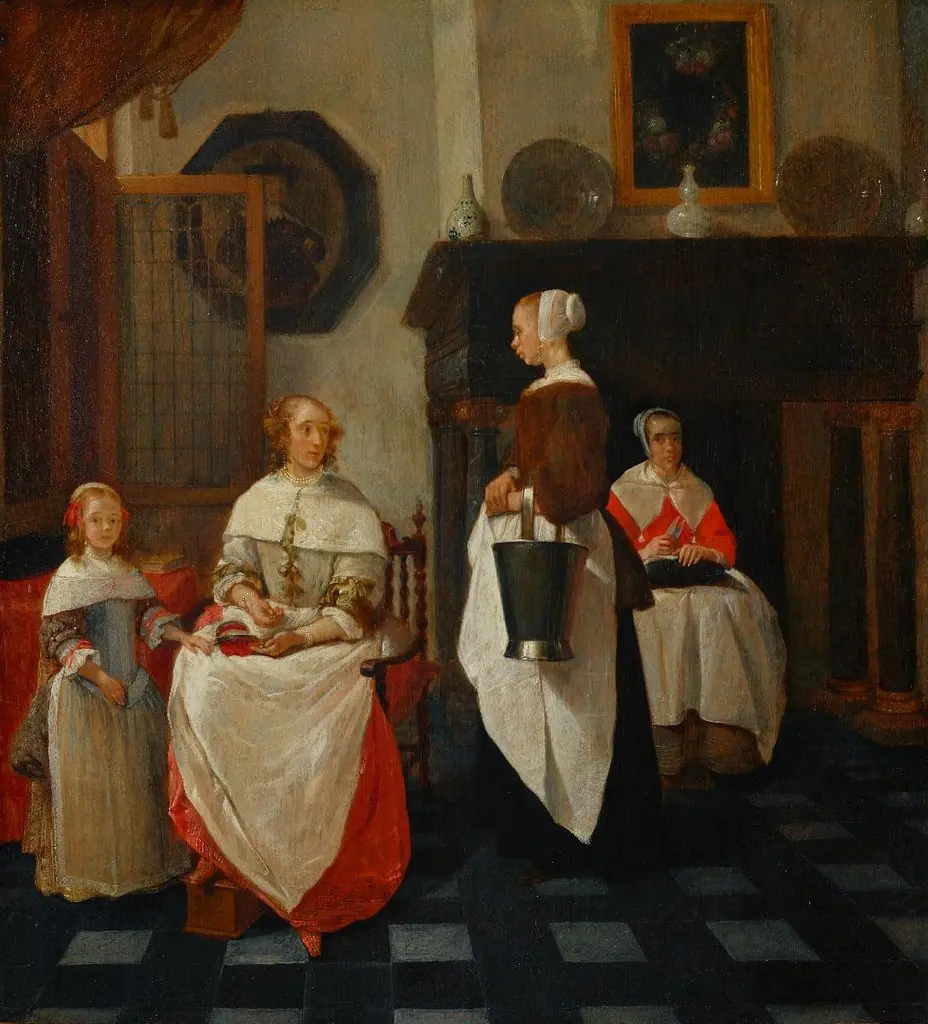
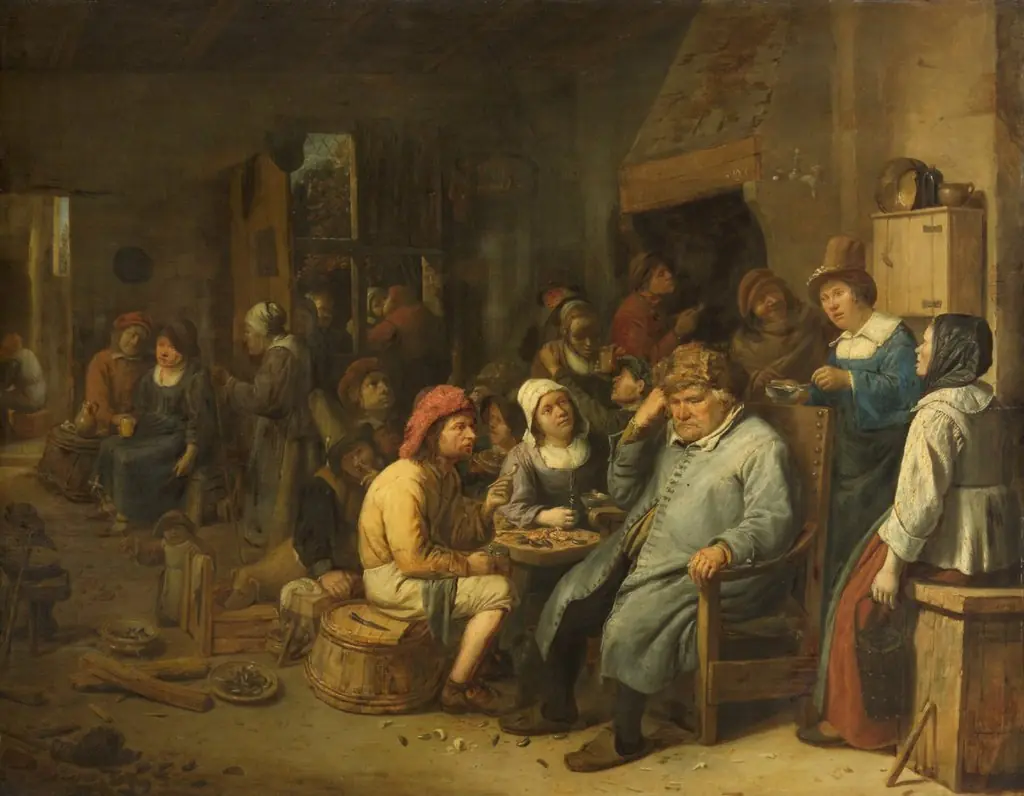
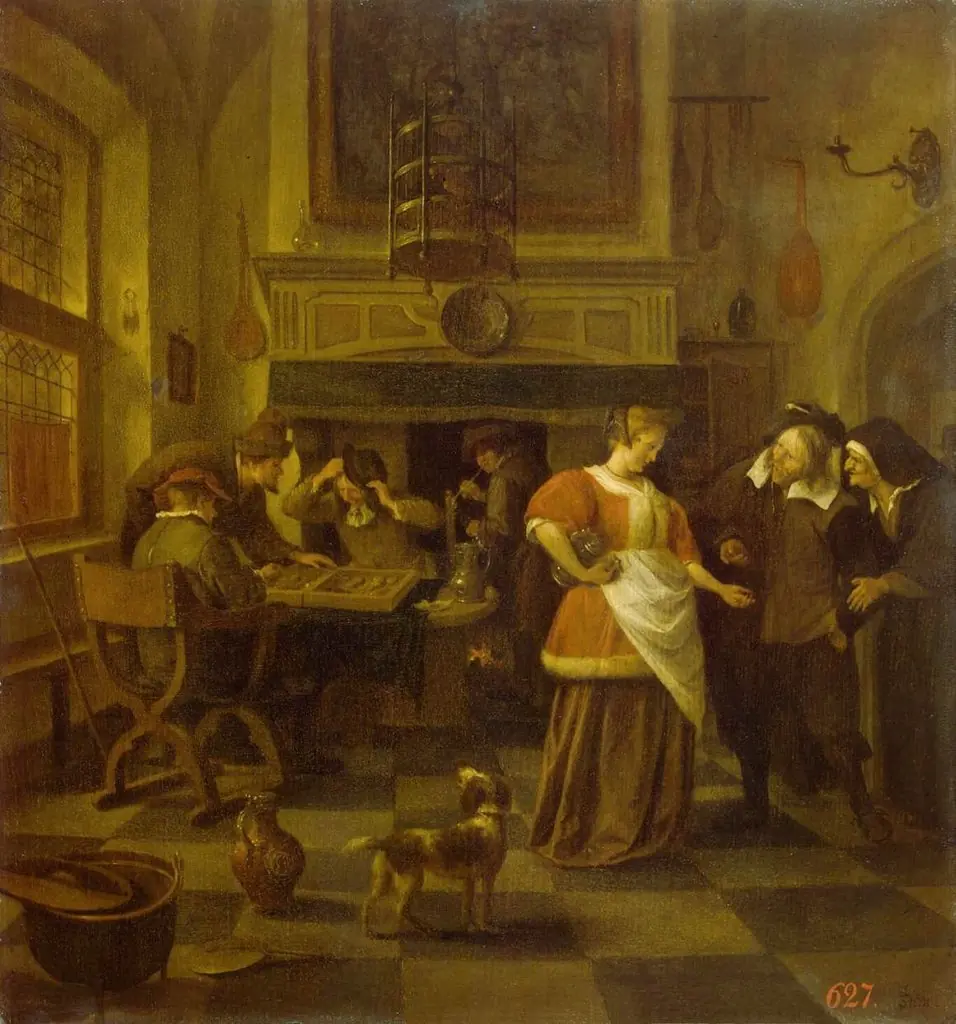
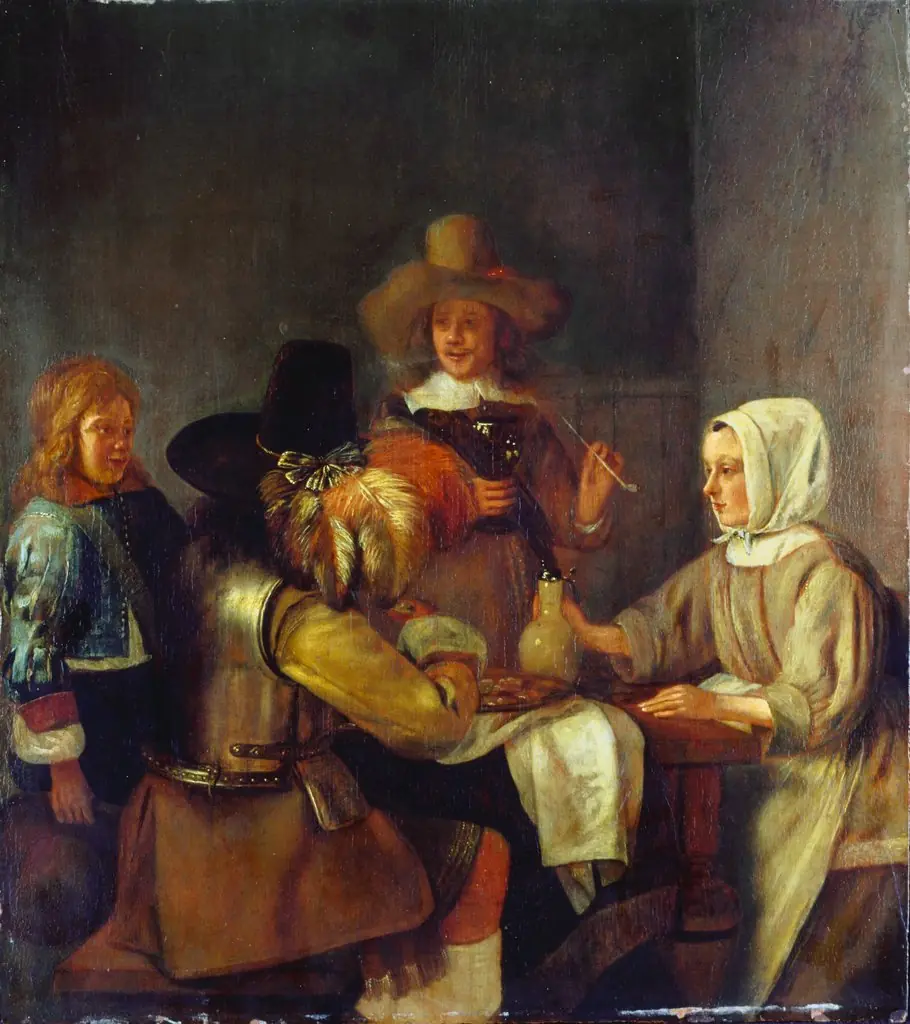
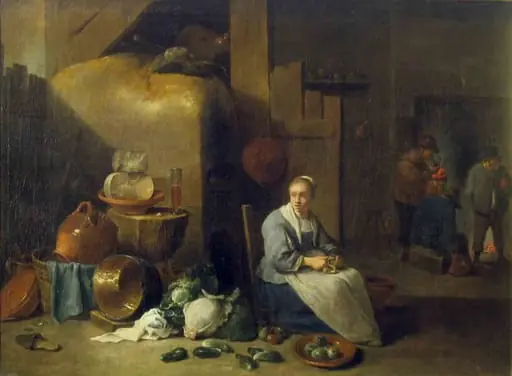
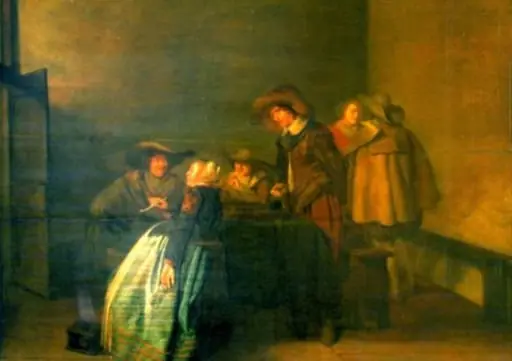
Scenă de interior, painted by Quiringh Gerritzs van Brekelemkamp in 1660, depicts a modest interior scene. Two figures occupy a dimly lit room: a woman on the left cradles a cat, while a man seated beside her reads from a book. The composition is anchored by everyday objects—a basket, a barrel, and a table covered with a simple cloth—set against plain walls illuminated by a narrow window.
Subject & Meaning
The work captures a quiet, domestic moment, emphasizing the routine of daily life rather than grand narrative.
The work captures a quiet, domestic moment, emphasizing the routine of daily life rather than grand narrative. The woman's relaxed posture and the man's absorbed reading suggest a shared, unremarkable intimacy. The presence of the cat adds a touch of domestic comfort, while the scattered household items reinforce the lived-in atmosphere, inviting viewers to contemplate ordinary existence in the 17th‑century setting.
Technique & Style
Executed in the Baroque period, the painting employs chiaroscuro to model forms within the limited light entering through a small window. The muted palette and modest detailing of clothing convey a sense of realism. Loose brushwork in the background contrasts with the more defined rendering of the figures, creating a subtle depth that guides the eye toward the central interaction.
History & Provenance
Created in 1660, Scenă de interior is attributed to the Dutch painter Quiringh Gerritzs van Brekelemkamp, whose oeuvre includes several genre scenes of everyday life. The work’s provenance prior to its current location is not extensively documented, but it has been referenced in catalogues of 17th‑century Dutch interior genre paintings.
Artist & collection
Artist
Quiringh Gerritzs van Brekelemkamp
This Dutch painter spent his career tucked inside Amsterdam’s narrow houses, peering into rooms where people sat, ate, or mumbled to themselves.