Artwork
Beech Forest
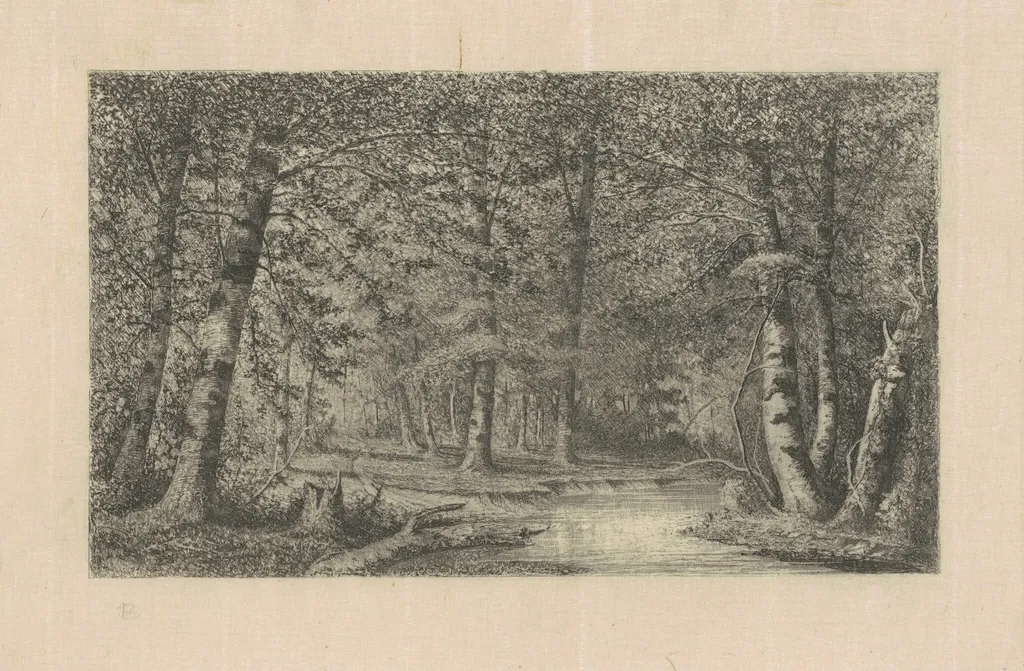
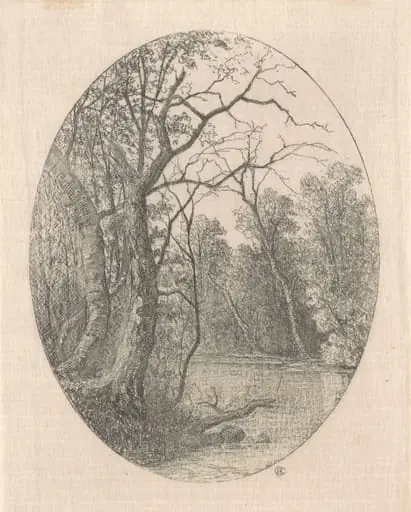
Beech Forest is an ink print by the Impressionist artist Carl C. Brenner. It dates from 1880 and is held in the collection of the National Gallery of Art.
About this work
Overview
Beech Forest is a black-and-white etching on laid paper produced around 1880 by American printmaker Carl C. Brenner. The work measures roughly the size of a standard sheet of paper and is executed entirely in ink, presenting a quiet woodland scene without any color.
Subject & Meaning
The composition depicts a narrow track winding through a stand of mature beech trees. Their interlacing branches form a vaulted canopy, while a modest stream threads the center of the view, bordered by fallen logs and scattered roots. The interplay of light and shadow suggests a tranquil, contemplative atmosphere, inviting the viewer to linger within the forest’s calm.
Technique & Style
Brenner employed the traditional intaglio process, incising fine lines into a copper plate before inking and pressing it onto laid paper.
Brenner employed the traditional intaglio process, incising fine lines into a copper plate before inking and pressing it onto laid paper. The delicate line work captures the texture of bark, leaves, and water, while cross‑hatching creates depth and conveys the dappled light filtering through the canopy. The overall effect is a precise yet atmospheric rendering typical of late‑19th‑century American etching.
History & Provenance
Created circa 1880, Beech Forest belongs to the period when Brenner was actively producing landscape prints for the American art market. The print has appeared in several private collections and was documented in early catalogues of Brenner’s work, though its exact ownership trail remains limited to exhibition records from the early 1900s.
Context
The etching reflects a broader 19th‑century fascination with the American wilderness, aligning with contemporaneous movements that emphasized natural scenery as a source of national identity. Brenner’s choice of beech—a tree more common in European forests—adds an element of transatlantic botanical interest, bridging American and European landscape traditions.
Own this work as a print
Artist & collection

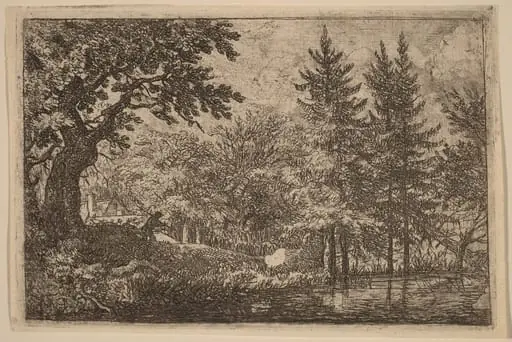 Fir Trees at the Water
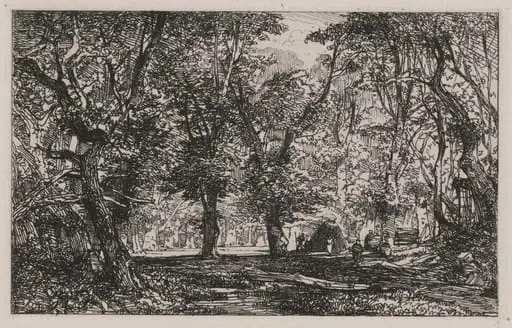 View from a Forest Stream Into a Clearing
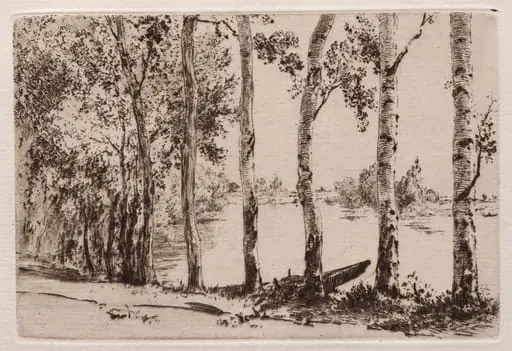 Aspens on the Bank of the Seine
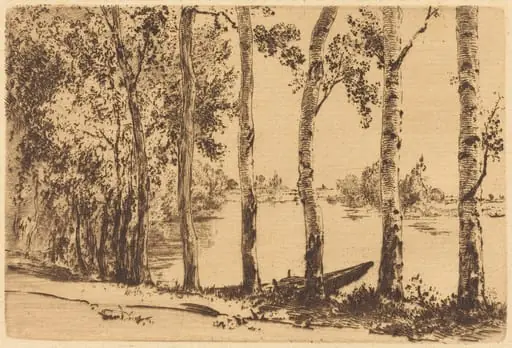 Trembles au bord de la Seine (Aspens on the Banks of the Seine)
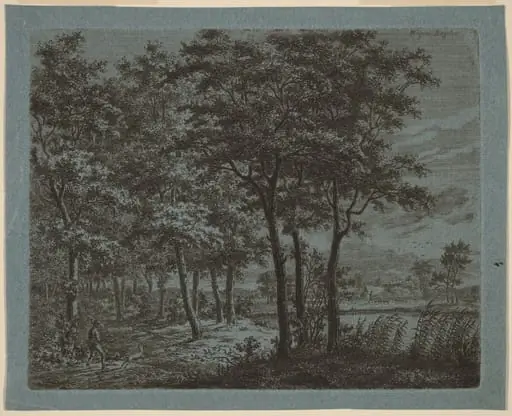 Landscape with a Peasant Carrying Firewood
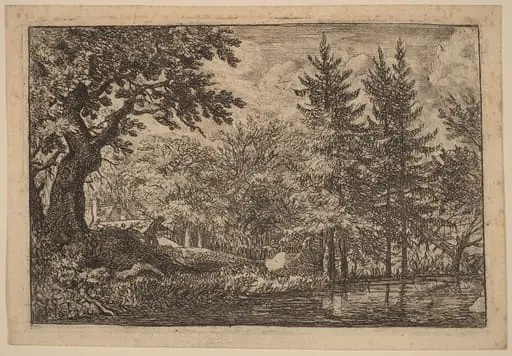 Fir Trees at the Water
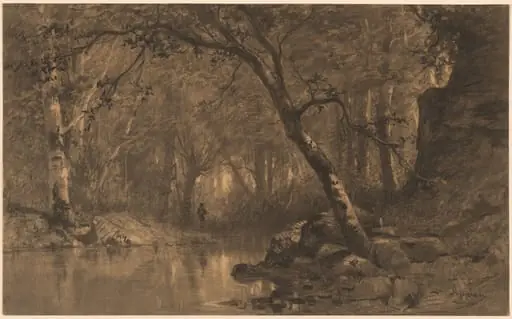 A Woodland River with a Fisherman
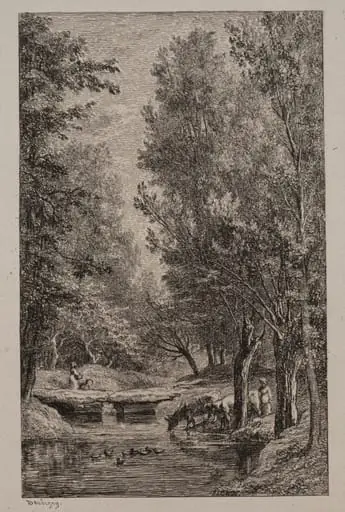 Brook in the Val Mondois
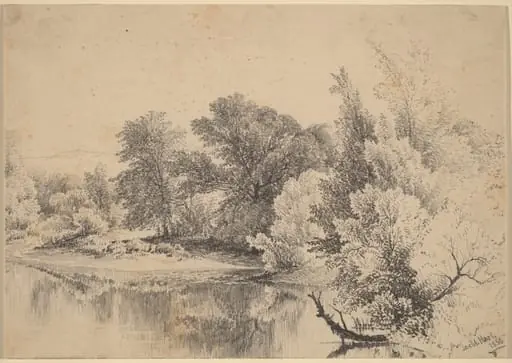 Pond Edge
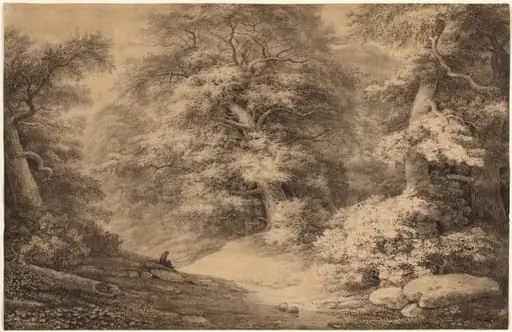 A Beech Wood with a Resting Traveler