Artwork
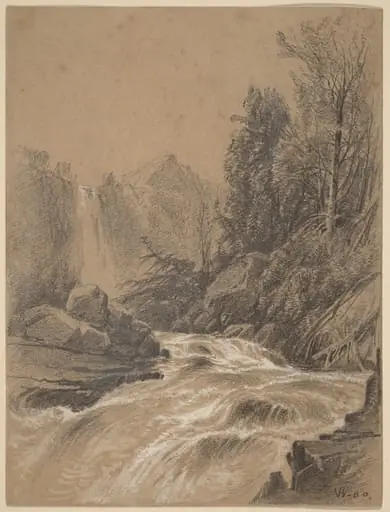
Waterfall, Cumberland Mountains
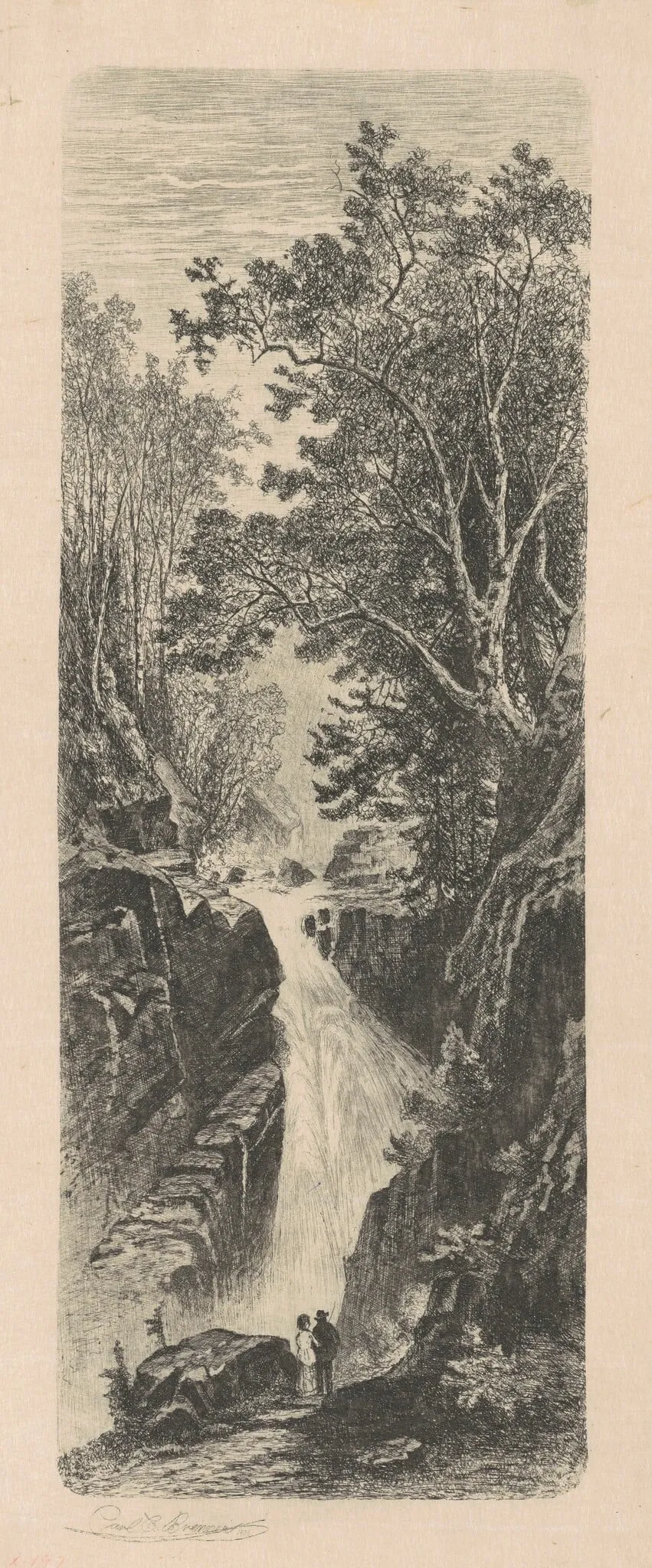
Waterfall, Cumberland Mountains is an ink print by the Impressionist artist Carl C. Brenner. It dates from 1880 and is held in the collection of the National Gallery of Art. Carl C.
About this work
Overview
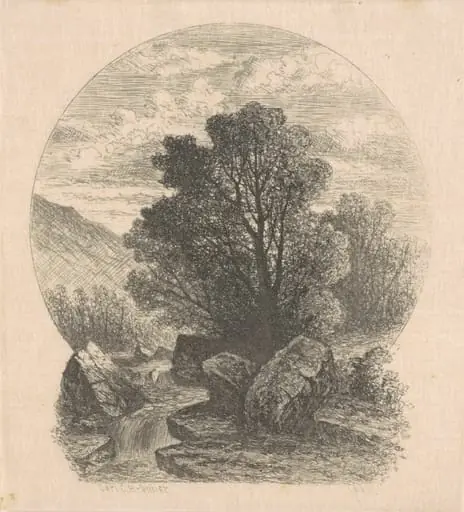
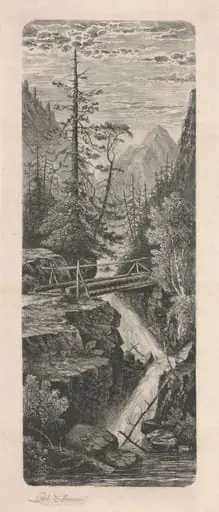
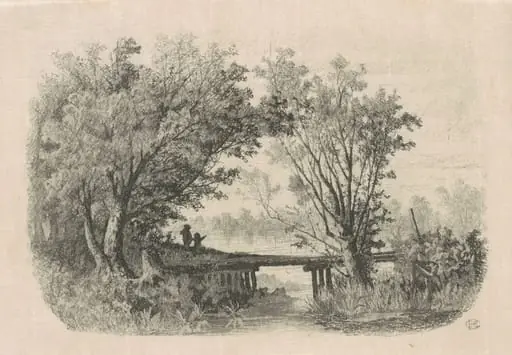
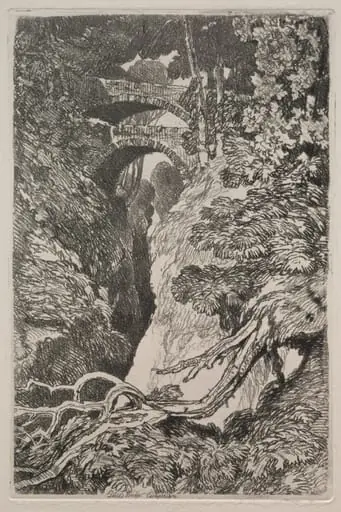
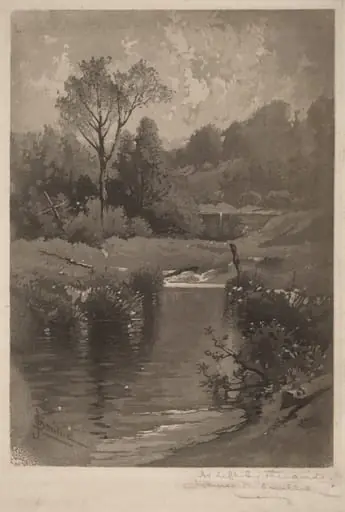
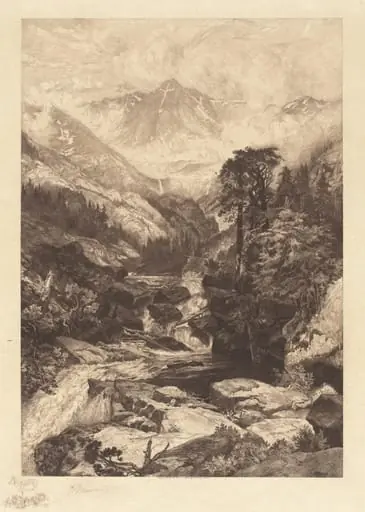
Carl C. Brenner’s 1880 etching titled *Waterfall, Cumberland Mountains* presents a monochrome landscape of a narrow cascade descending rocky cliffs into a wooded valley. The composition is framed by trees on both sides, their branches extending upward, while two diminutive figures stand at the base, gazing at the falling water.
Subject & Meaning
The print captures a moment of quiet observation, juxtaposing the dynamic motion of the waterfall with the stillness of the surrounding forest. The presence of the two small figures emphasizes human scale against nature’s grandeur, inviting contemplation of the relationship between people and the untamed American wilderness.
Technique & Style
Executed in black ink on laid paper, Brenner employs fine, cross‑hatching lines to render the mist rising from the cascade and the texture of the craggy rocks. The delicate line work creates tonal variation, giving depth to the foliage and a sense of movement despite the absence of color.
Context
Created during a period when American artists were increasingly documenting regional landscapes, this etching reflects the 19th‑century fascination with the Cumberland Mountains as a symbol of rugged, unspoiled terrain. Brenner’s work aligns with contemporary printmakers who used etching to convey detailed, atmospheric scenes of the natural world.
Artist & collection