Artwork
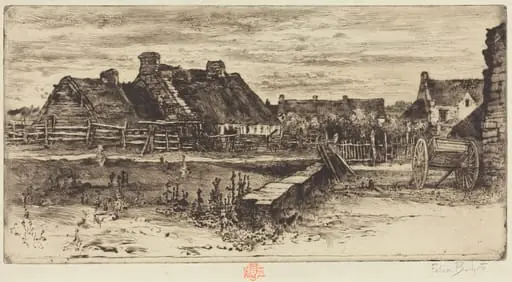
Entrée du Village
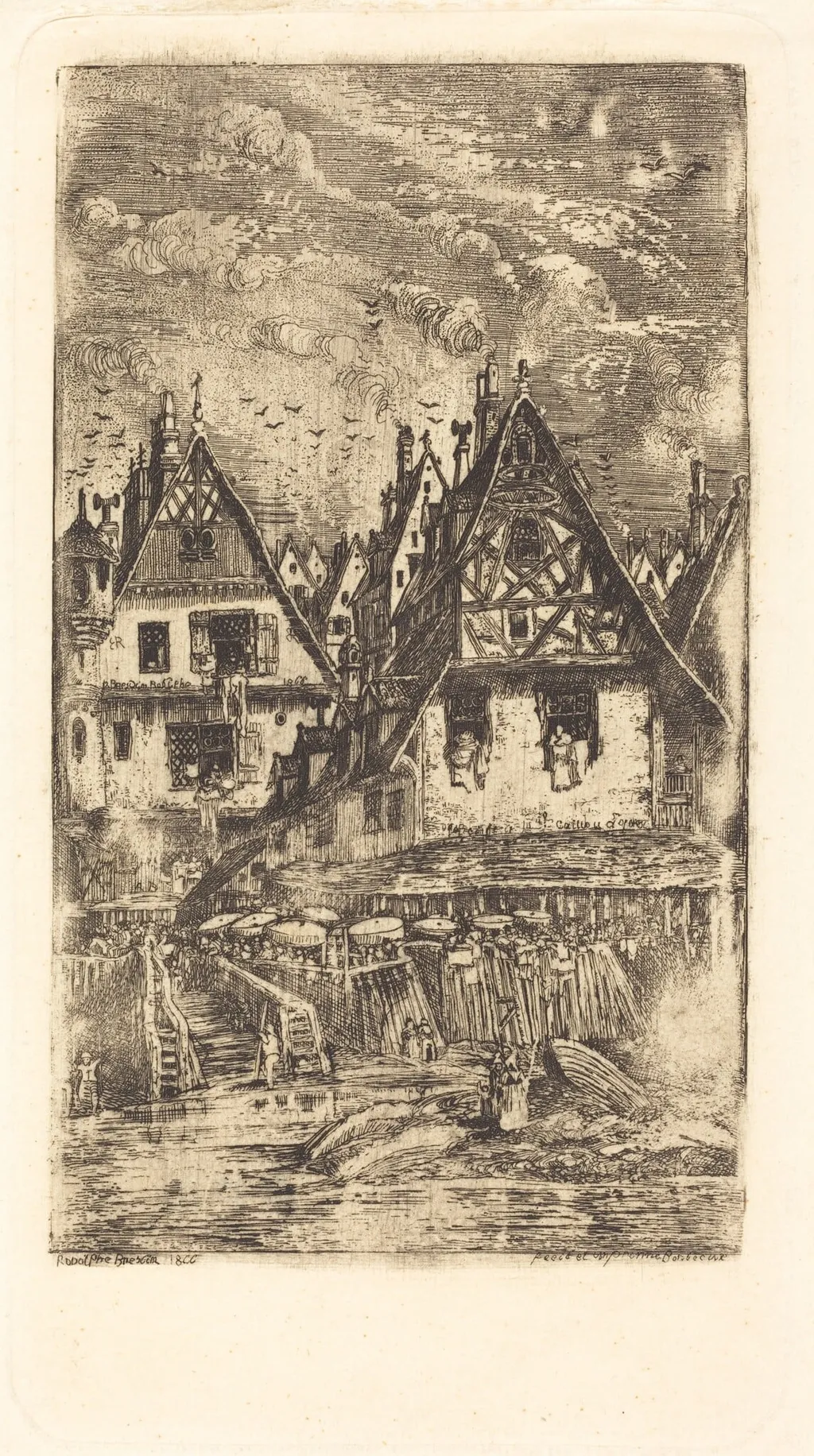
Entrée du Village is an ink print by the Impressionist artist Rodolphe Bresdin. It dates from 1866 and is held in the collection of the National Gallery of Art.
About this work
Overview
Entrée du Village is a black-and-white etching created by French artist Rodolphe Bresdin in 1866. The print captures a serene rural scene at the entrance of a village, populated with figures engaged in everyday activities amidst traditional architecture and a natural setting.
Subject & Meaning
The etching portrays a quiet, idyllic village entrance, reflecting Bresdin's affinity for depicting rural and working-class life, likely influenced by his experiences among such communities in France and beyond.
Technique & Style
Characterized by Bresdin's distinctive, finely wrought style, the etching utilizes fine lines to convey light, shadow, texture, and movement, as seen in the rippling water, illuminated roofs, and dotted sky with birds.
History & Provenance
Created in 1866 by Rodolphe Bresdin, a draughtsman and engraver known for his detailed works and unconventional life, associating with literary figures in Paris before wandering through France and Canada.
Context
The work reflects mid-19th-century rural French life, capturing architectural details such as steep-roofed, small-windowed wooden houses and narrow canals, inhabited by people going about their daily routines.
Legacy
While specific legacy details of *Entrée du Village* are not provided, Bresdin's overall body of work, including this etching, contributes to the broader appreciation of 19th-century French printmaking and its capacity to document everyday life.
Artist & collection

Artist
Rodolphe Bresdin (12 August 1822 – 11 January 1885) was a French draughtsman and engraver.

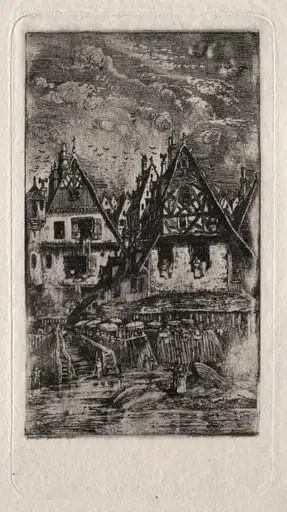 Marketplace with Parasols
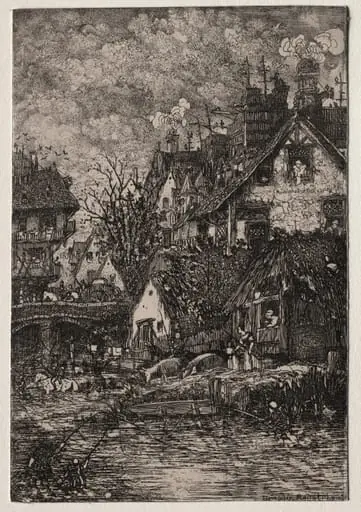 Entrance to a Village
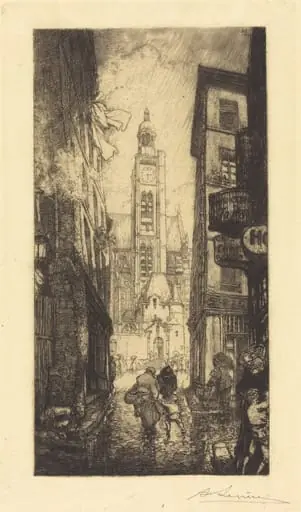 Rue de la Montagne-Sainte-Genevieve, Paris
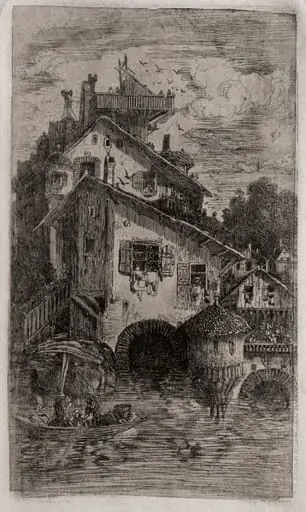 The Mill
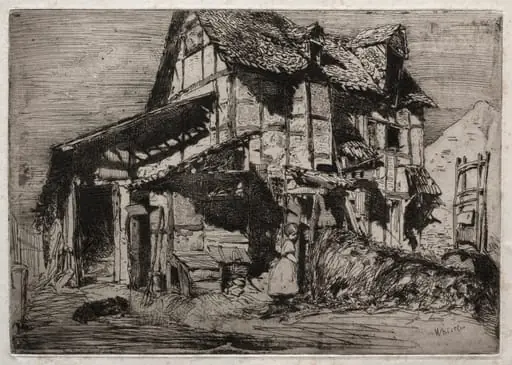 Twelve Etchings from Nature: The Unsafe Tenement
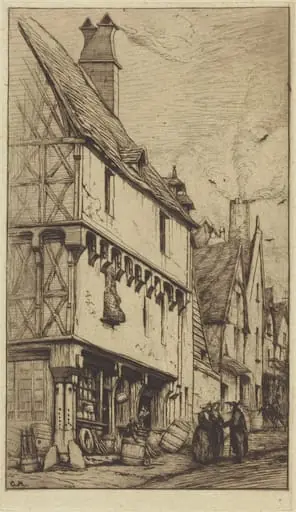 Ancienne habitation à Bourges, dite "La Maison du Musicien" (An Old House at Bourges, Sometimes Called the "Musician's House")
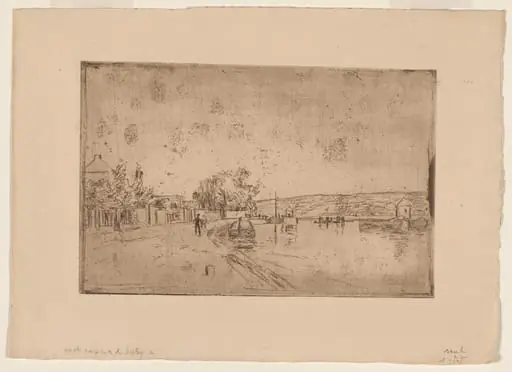 On the Banks of the Loing: The Canal Bank
 Untitled
 Bridge, Amsterdam
 La Rue des Toiles, à Bourges
 Rue des Toiles, Bourges
 Les Grandes Chaumières