Artwork
The Mill
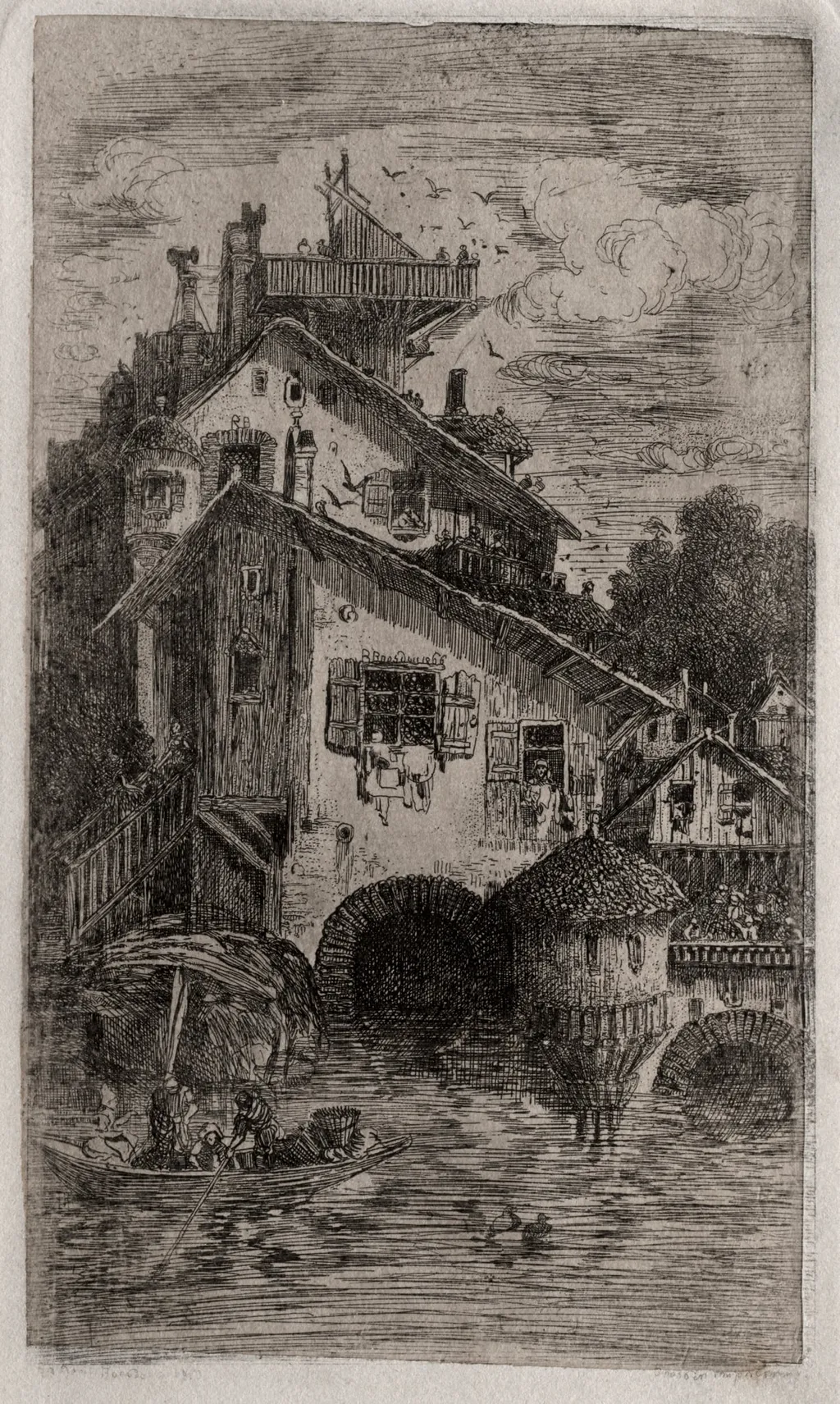
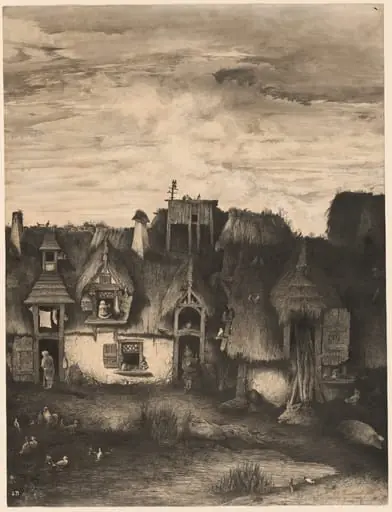
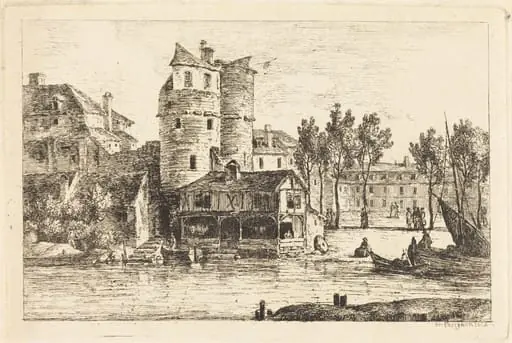
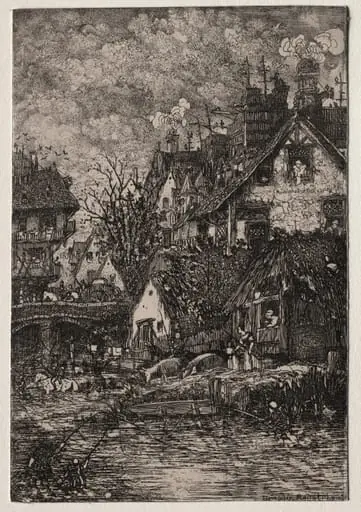
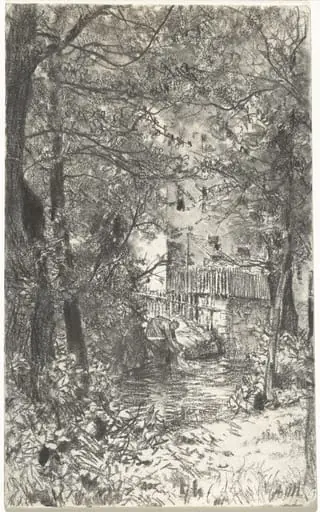
The Mill is a print by the Impressionist artist Rodolphe Bresdin. It dates from 1866 and is held in the collection of the Cleveland Museum of Art.
About this work
Overview
Unlike oil paintings of the period, this piece relies on fine linear engraving to convey form and atmosphere, emphasizing texture over color.
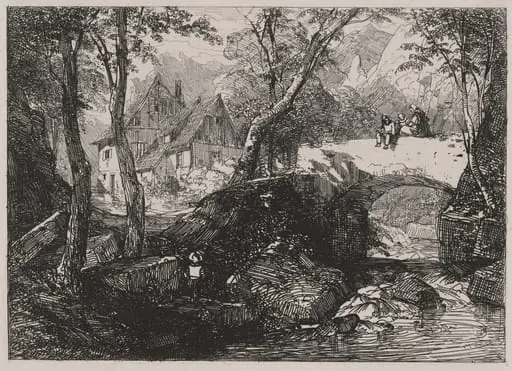
Created in 1866 by Rodolphe Bresdin, The Mill is a detailed etching that captures a quiet rural scene centered on a stone mill. The work is part of the collection at The Cleveland Museum of Art. Unlike oil paintings of the period, this piece relies on fine linear engraving to convey form and atmosphere, emphasizing texture over color. The composition balances architectural precision with natural elements to evoke stillness.
Subject & Meaning
The scene depicts a functioning water mill, its structure anchored by a stone bridge crossing a narrow stream. Surrounding trees frame the building, suggesting isolation and self-sufficiency. The absence of human figures enhances the sense of quiet endurance. The mill, a symbol of industrial labor in a pastoral setting, is rendered not as a monument but as an integrated part of the landscape, reflecting a contemplative view of rural life.
Technique & Style
Bresdin employed intricate etching techniques, using fine lines and cross-hatching to model light and shadow. The contrast between dense black areas and delicate, open spaces creates a dramatic chiaroscuro effect. The architecture is rendered with meticulous precision, while the foliage and water are suggested through rhythmic, fluid strokes. This method prioritizes tonal depth over realism, aligning with Romantic-era printmaking traditions rather than Impressionist approaches.
History & Provenance
The Mill was produced in 1866 during a period when Bresdin was refining his printmaking style after years of experimentation. It entered The Cleveland Museum of Art’s collection in the 20th century, acquired as part of a broader effort to preserve 19th-century French graphic art. Its survival in good condition reflects careful handling and its status as a significant example of Bresdin’s mature work.
Context
Bresdin worked in relative isolation from mainstream art movements, favoring etching over painting. While contemporaries like Daubigny painted similar landscapes in oil, Bresdin’s choice of printmaking allowed for greater control over tone and detail. His work responded less to Impressionism and more to the Gothic and Romantic traditions, drawing inspiration from medieval architecture and literary symbolism prevalent in French artistic circles of the 1860s.
Legacy
Though not widely known during his lifetime, Bresdin’s prints, including The Mill, gained recognition among collectors and printmakers in the late 19th and early 20th centuries. His technical rigor influenced later artists interested in the expressive potential of etching. The work remains a key example of how detailed graphic art could convey emotional depth without color or broad brushwork.
Artist & collection

Artist
Rodolphe Bresdin (12 August 1822 – 11 January 1885) was a French draughtsman and engraver.

![The Terrace [lower right], by Canaletto](https://artifactworldgallery.com/img/canaletto--the-terrace-lower-right--a2ffdcfd2694be26-w320.webp)