Artwork
The Good Samaritan (Le Bon Samaritain)
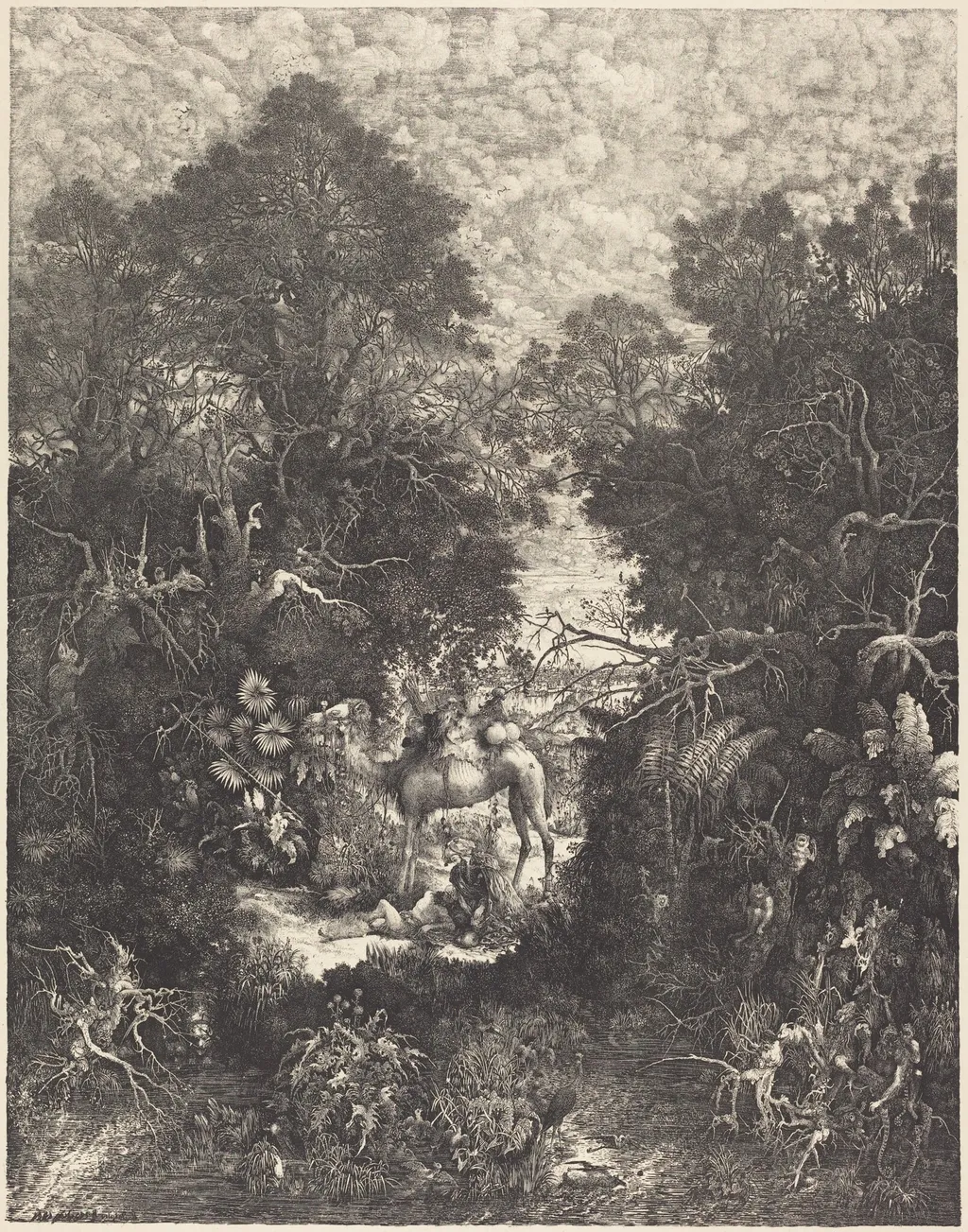
The Good Samaritan (Le Bon Samaritain) is an ink print by the Impressionist artist Rodolphe Bresdin. It dates from 1861 and is held in the collection of the National Gallery of Art.
About this work
Overview
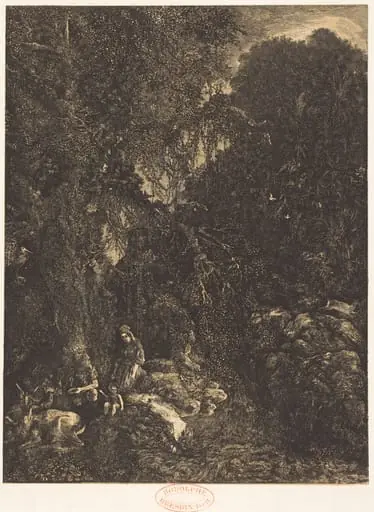
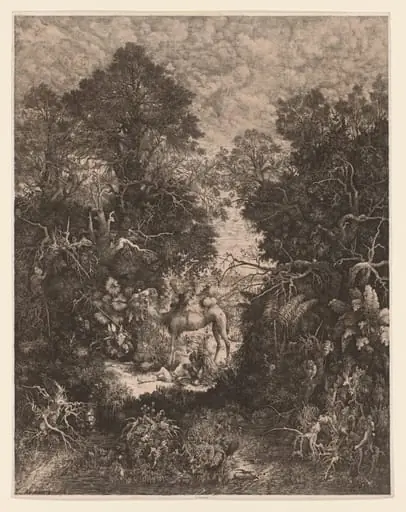
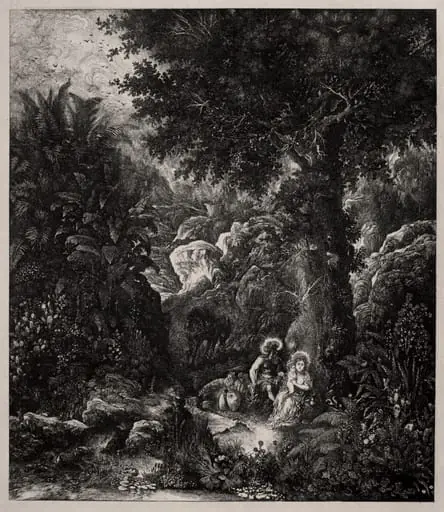
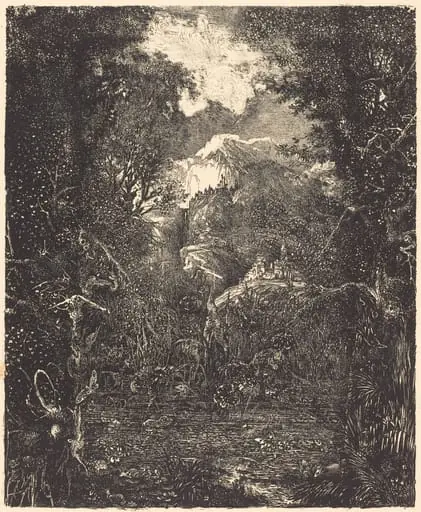
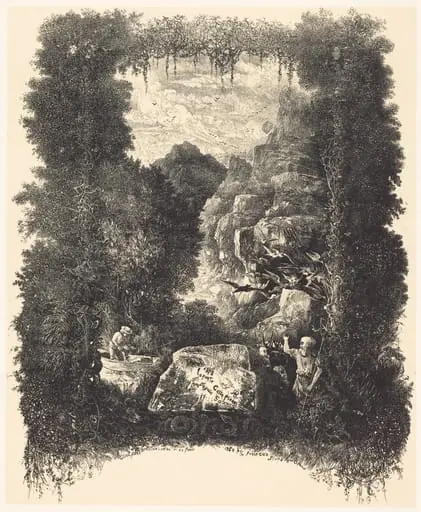
Rodolphe Bresdin's *The Good Samaritan* (1861) is a lithograph that interprets the well-known biblical parable. Characterized by the artist's meticulous and dense rendering style, the print captures a moment of compassion on a serene, naturalistic backdrop.
Subject & Meaning
The print faithfully depicts the parable's core elements: a Samaritan aids an injured man on a road, surrounded by lush vegetation. The scene conveys a sense of calm and emphasizes the parable's message of kindness and assistance.
Technique & Style
Bresdin employed lithography to achieve intricate textures and details, particularly in the foliage and figures. This method draws the viewer's attention to the scene's nuances, enhancing the overall sense of serenity and emotional depth.
History & Provenance
Created in 1861 by French artist Rodolphe Bresdin (1822-1887), the work reflects his association with Paris's bohemian circle, though specific provenance details for *The Good Samaritan* are not provided here.
Context
Bresdin's work within the broader 19th-century French art scene, alongside figures like Baudelaire and Hugo, suggests an alignment with themes of social consciousness and the role of art in conveying moral narratives.
Artist & collection

Artist
Rodolphe Bresdin (12 August 1822 – 11 January 1885) was a French draughtsman and engraver.