Artwork
Comedie de la Mort
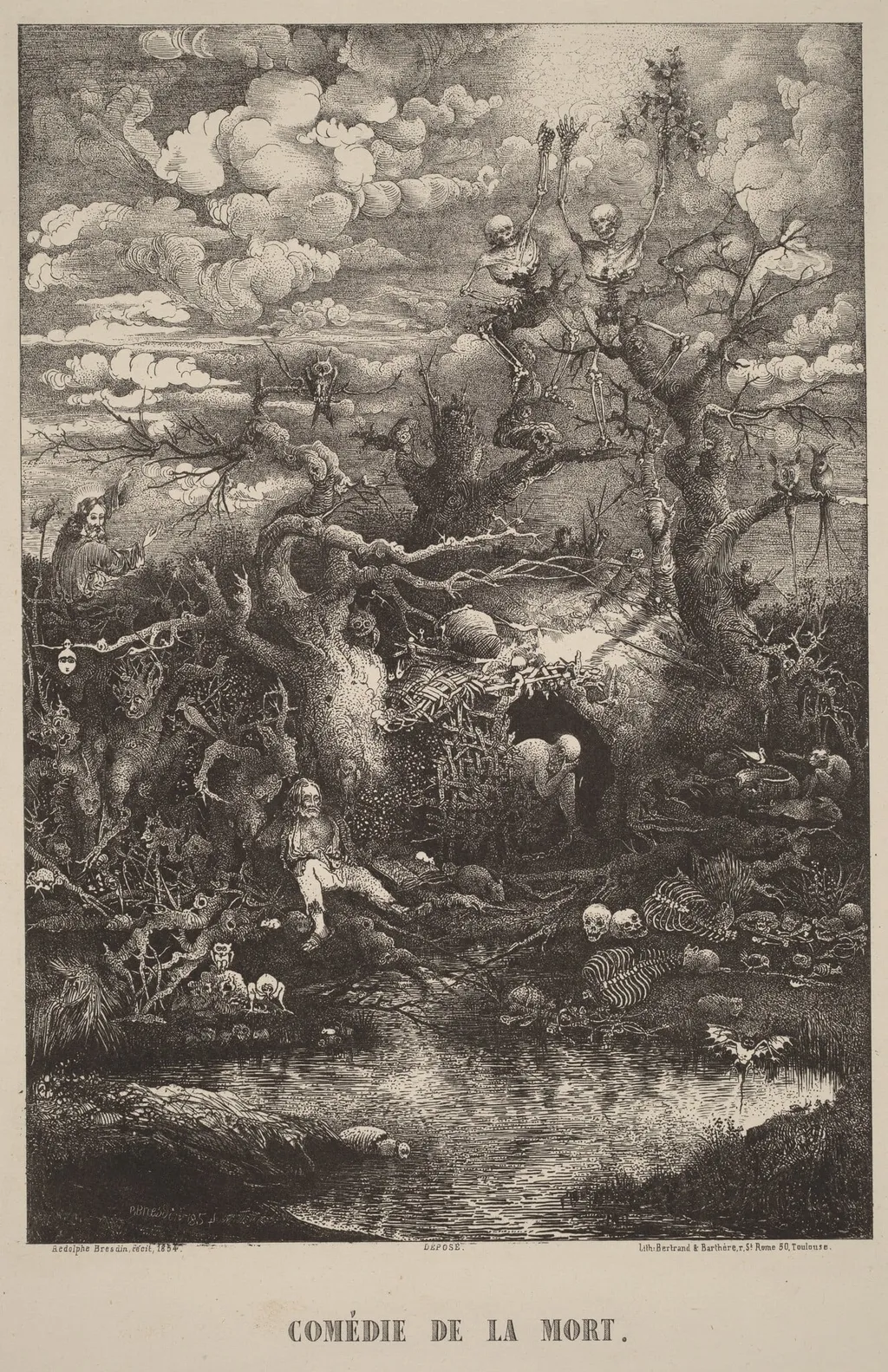
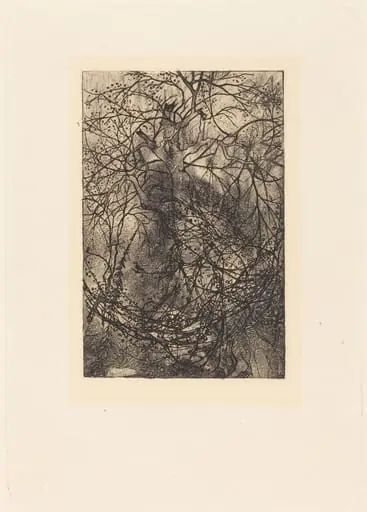
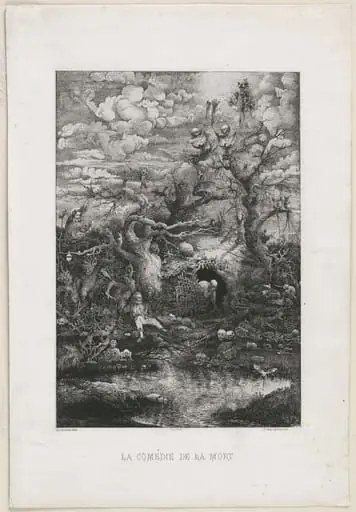
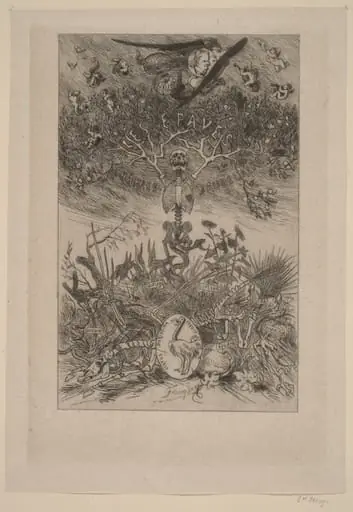
Comedie de la Mort is an ink print by the Impressionist artist Rodolphe Bresdin. It dates from 1854 and is held in the collection of the National Gallery of Art.
About this work
The image features a dark and mysterious scene with a large tree at its center, surrounded by various figures and objects.
This painting, titled Comedie de la Mort, is a lithograph created by Rodolphe Bresdin in 1854. The image features a dark and mysterious scene with a large tree at its center, surrounded by various figures and objects. The tree appears to be dead, with bare branches stretching towards the sky. In the foreground, a figure is seen sitting on a rock, looking up at the tree. The background is filled with clouds and a sense of gloom.
The painting is an allegory, representing the cycle of life and death. The tree, once full of life, now stands as a symbol of mortality. The figure in the foreground may represent the artist himself, contemplating the fleeting nature of life.
To learn more about the artist's use of lithography, explore the technique of lithography next.
Overview
Rodolphe Bresdin, a French draughtsman and engraver active in the mid‑19th century, produced the lithographic print *Comedie de la Mort* in 1854. The work exemplifies his reputation for densely detailed, imaginative imagery and reflects the somber, allegorical tone that characterises much of his output.
Subject & Meaning
The composition centres on a stark, leafless tree whose twisted branches reach upward against a cloudy sky. A solitary figure seated on a rock gazes at the arboreal form, suggesting contemplation of mortality. The dead tree functions as a visual metaphor for the transience of life, while the surrounding figures and objects amplify the work’s macabre, theatrical atmosphere.
Technique & Style
Executed as a lithograph, the print showcases Bresdin’s meticulous line work and layered shading, creating a dense, almost labyrinthine surface. His handling of light and shadow heightens the gloom, and the intricate detailing of the surrounding elements underscores his penchant for fantastical, allegorical scenes.
History & Provenance
Bresdin, born in 1822, moved within the bohemian circles of Paris, interacting with literary figures such as Charles Baudelaire and Victor Hugo. His peripatetic life—travel to Toulouse and an unsuccessful attempt to settle in Canada with his family—inform the restless, wandering quality evident in his prints, including this 1854 lithograph.
Context
*Comedie de la Mort* emerges from a period when French artists were exploring symbolism and the darker aspects of the human condition. The work aligns with contemporary pre‑Romantic interests in death, the supernatural, and the theatrical, resonating with the literary preoccupations of Bresdin’s Parisian acquaintances.
Artist & collection

Artist
Rodolphe Bresdin (12 August 1822 – 11 January 1885) was a French draughtsman and engraver.