Artwork
An Offering to Pan
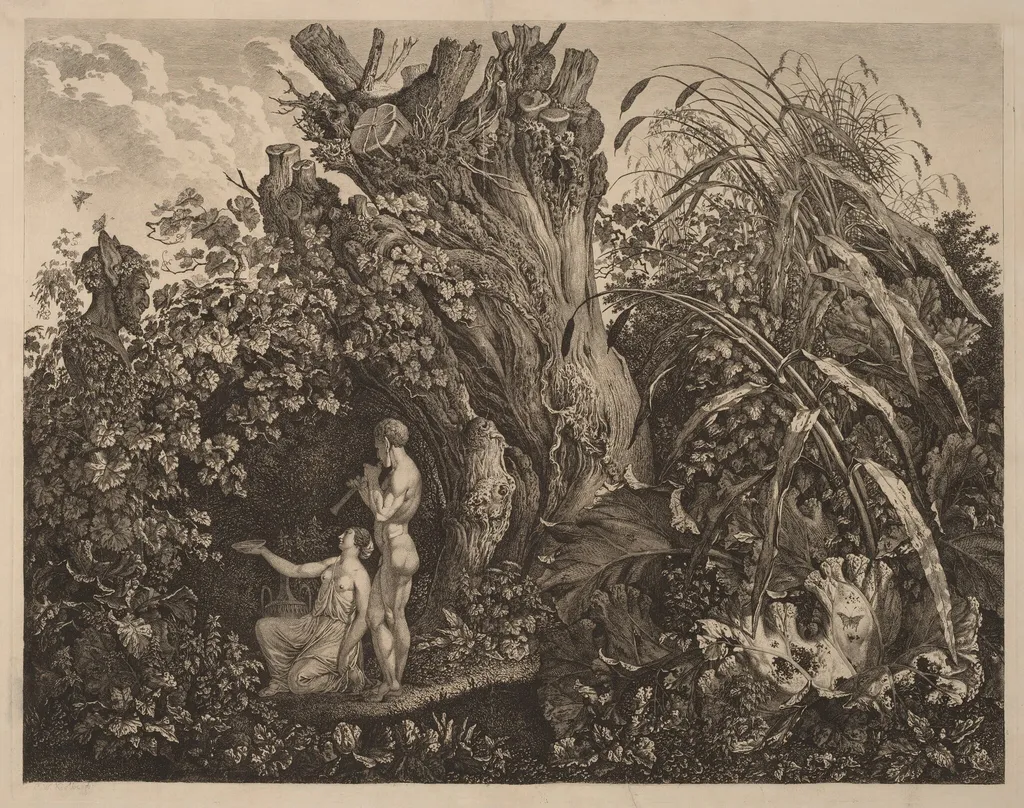
An Offering to Pan is an ink print by the Romanticist artist Carl Wilhelm Kolbe. It is held in the collection of the National Gallery of Art.
About this work
Overview
Carl Wilhelm Kolbe’s print An Offering to Pan, executed around 1810, is an etching on laid paper. The work presents a compact, densely detailed woodland scene populated by two unclothed figures engaged in a ritual gesture, set against a sky mottled with light clouds. The composition reflects the artist’s interest in mythic subject matter and naturalistic observation.
Subject & Meaning
The image depicts a nude male figure holding a pipe, likely a reference to the god Pan, while a second figure kneels and presents a small offering. The tangled forest, thick vines, and blooming flora create a setting reminiscent of ancient pastoral myths, suggesting a moment of reverence or communion between humanity and the wild, divine forces of the woods.
Technique & Style
Kolbe employed the etching process on laid paper, allowing for fine, incisive lines that delineate each leaf, bark texture, and cloud formation. The crisp linear quality emphasizes the intricate foliage and the anatomy of the figures, while the tonal variations achieved through acid biting and subsequent shading give the scene depth and a sense of atmospheric light.
History & Provenance
Created circa 1810, An Offering to Pan belongs to the early nineteenth‑century German printmaking tradition. While specific ownership records are scarce, the work has been catalogued in several collections of Kolbe’s prints, reflecting his reputation as a skilled draftsman and his engagement with classical themes during the Romantic period.
Artist & collection


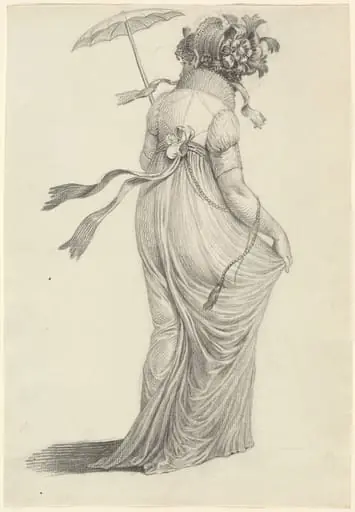 A Fashionable Young Woman Seen from Behind
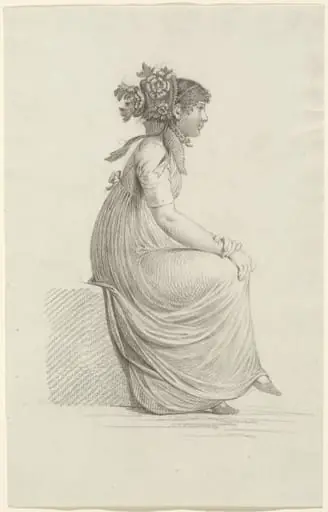 A Seated Young Woman Wearing a Fashionable Hat
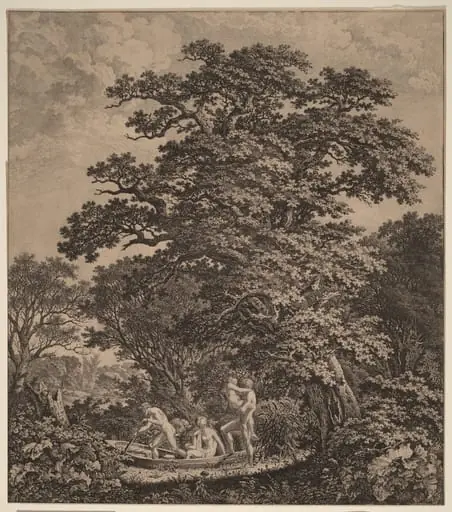 Landscape with Nudes Boarding a Boat
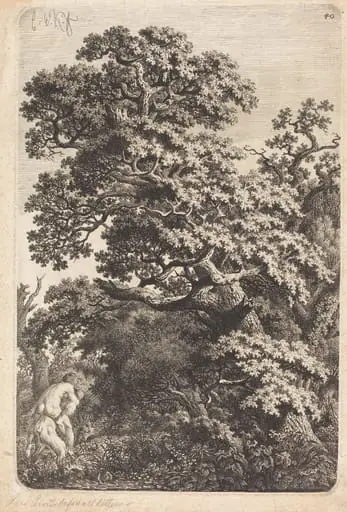 Satyr and Nymph in a Swamp
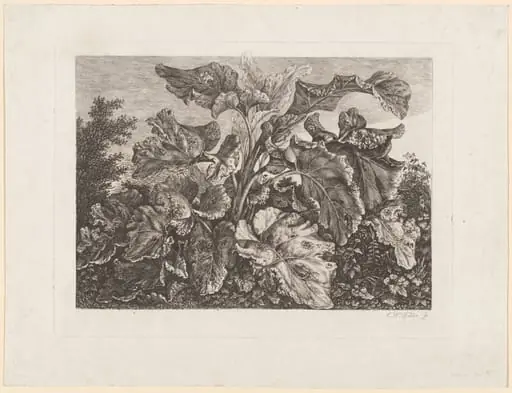 Plant Study with Burdock
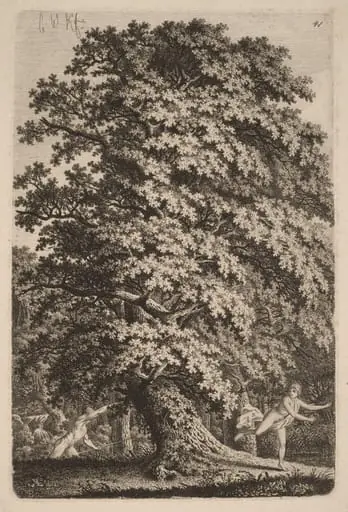 A Large Oak Tree in Gehölz. A Young Man with a Spear Follows a Young Girl.
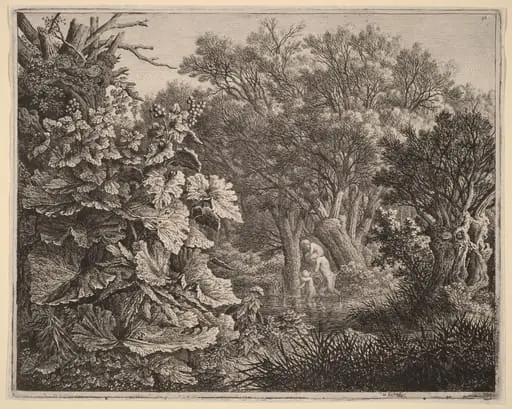 Landscape with Large Leaves and Three Satyrs
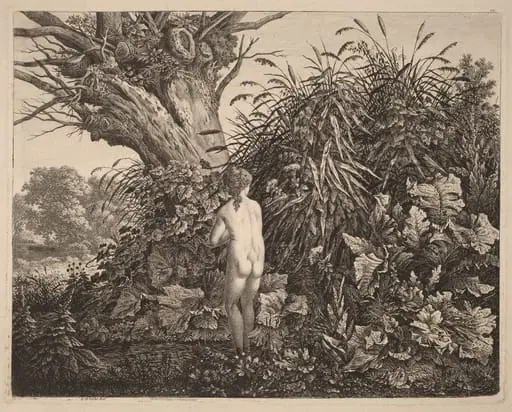 Bathing Maiden
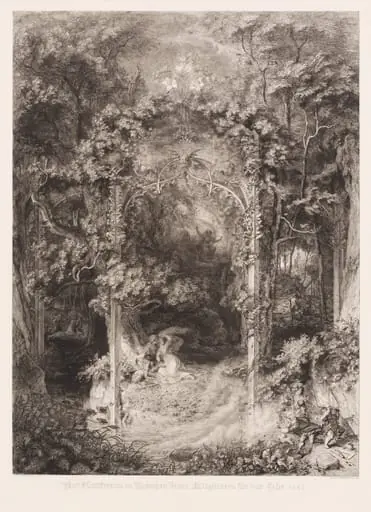 Das Waldfräulein (The Lady of the Forest)
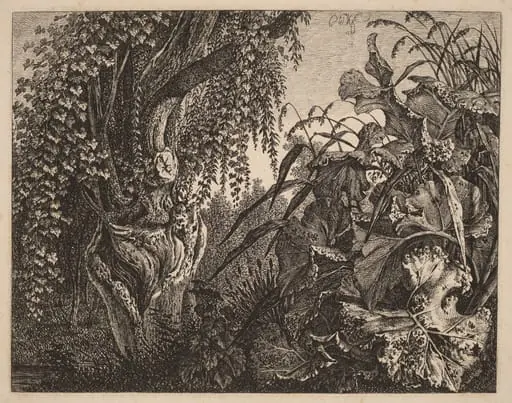 A Thicket; a Gnarled Willow Tree at Left, a Thicket of Vegetation at Right
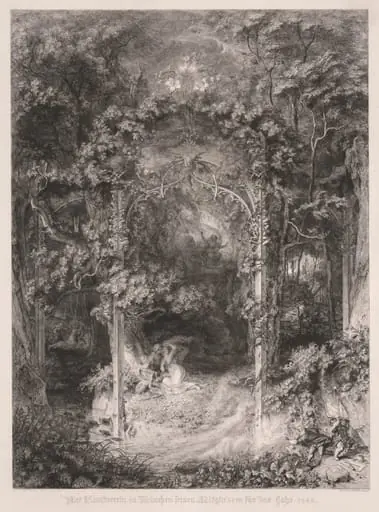 The Forest Maiden
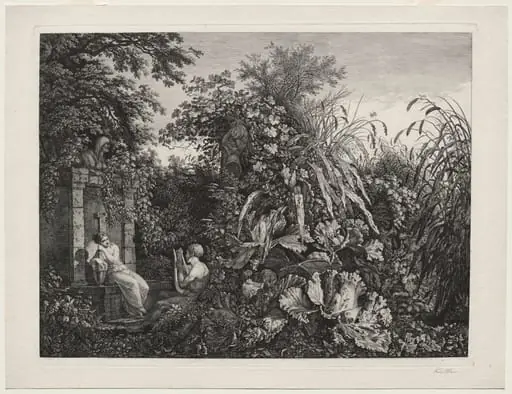 Youth Playing a Lyre to a Maiden by a Fountain
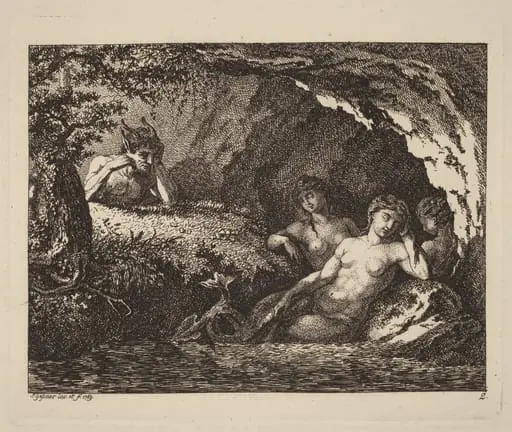 Three Sleeping Sprites with a Satyr
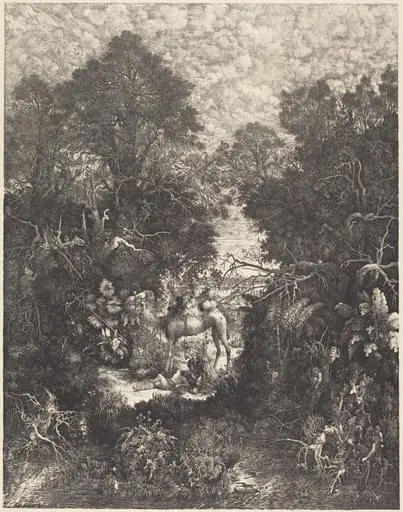 The Good Samaritan (Le Bon Samaritain)
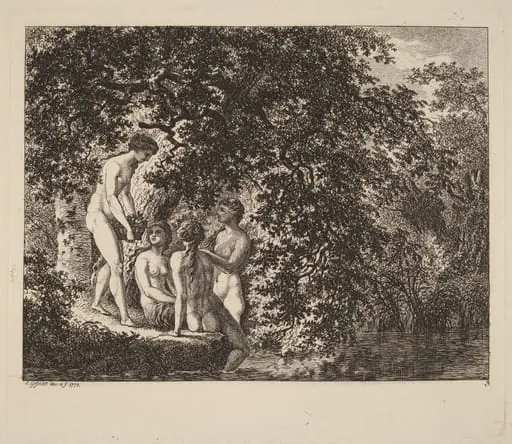 Girl Carrying a Basket of Fruit
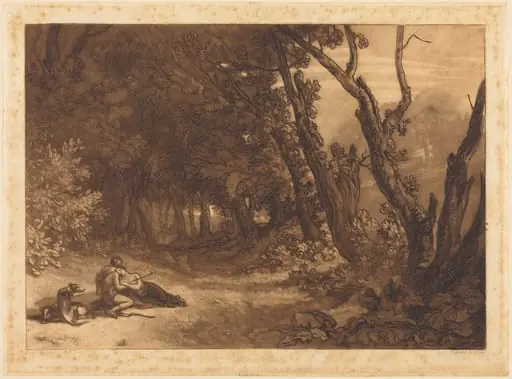 Procris and Cephalus
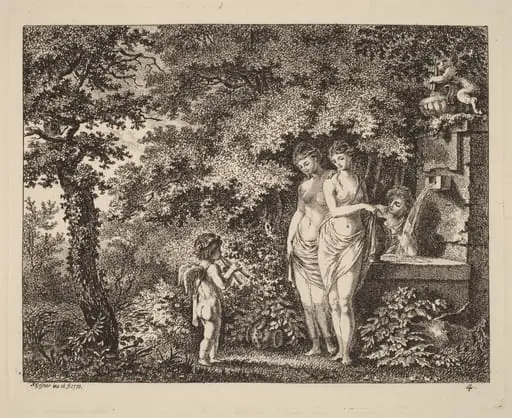 Eros with Three Girls at a Fountain
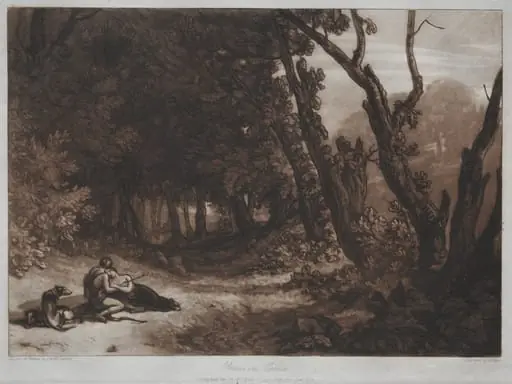 Liber Studiorum: Procris and Cephalus