Artwork
Portret de femeie
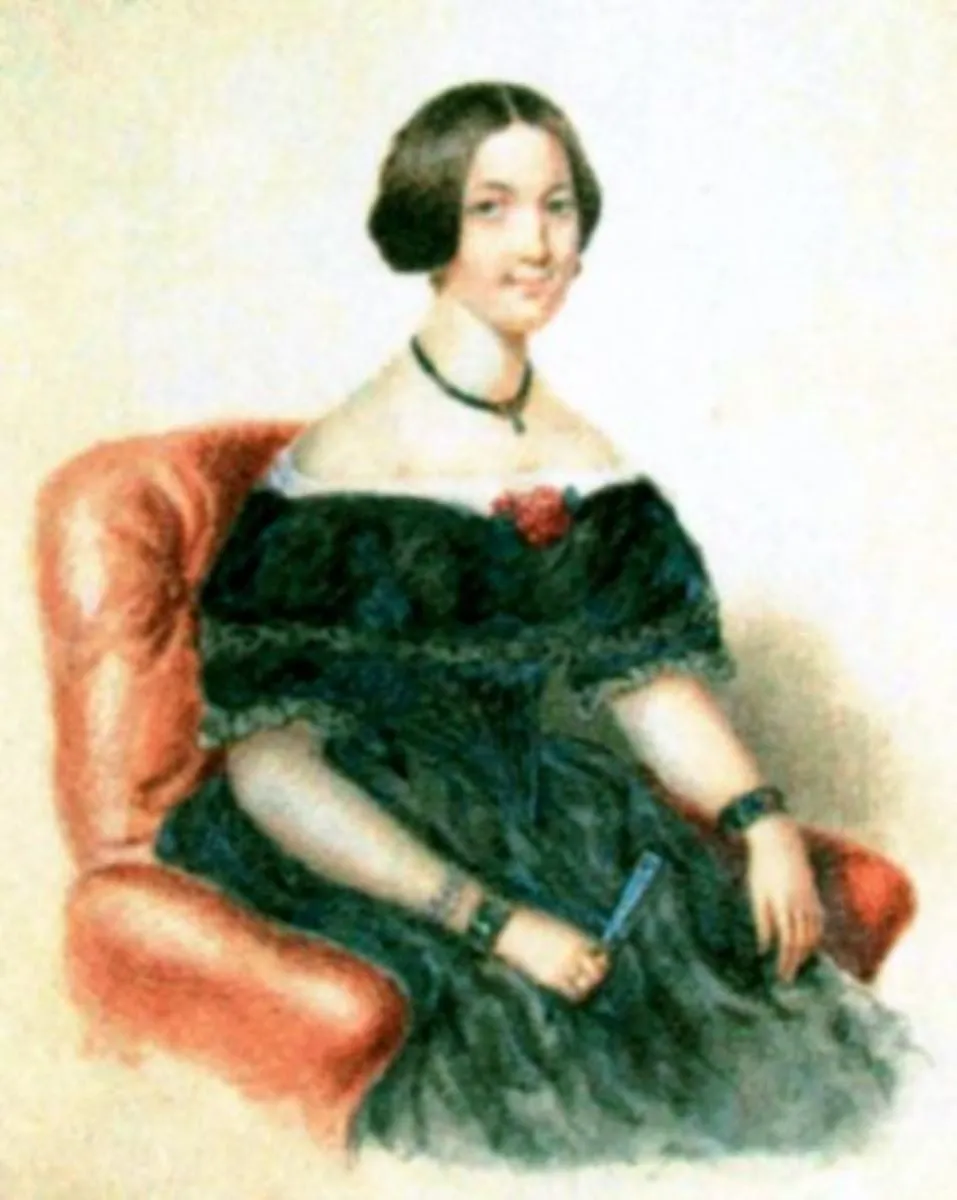
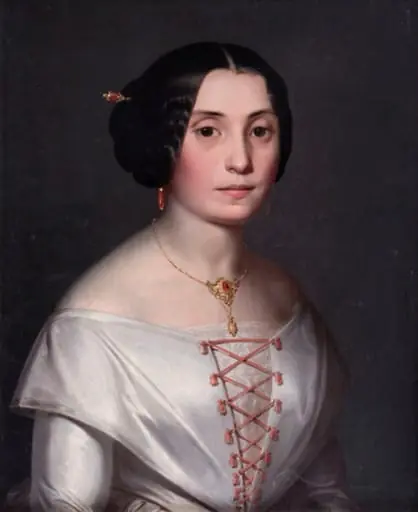
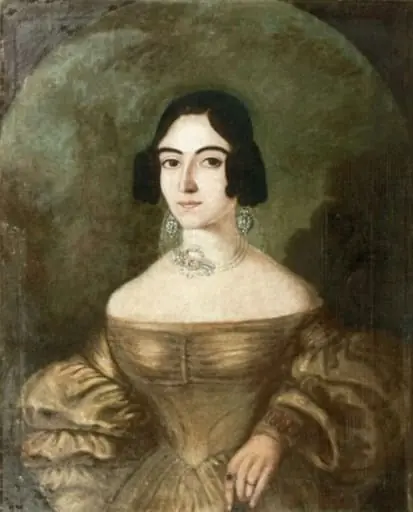
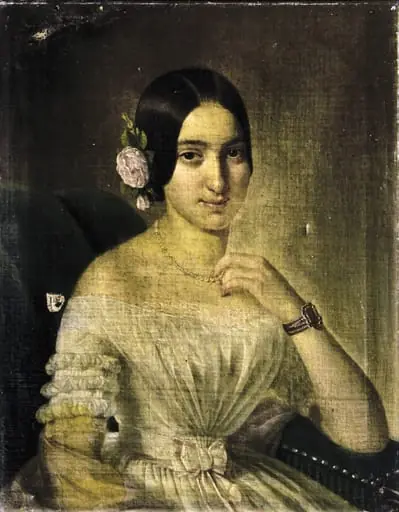
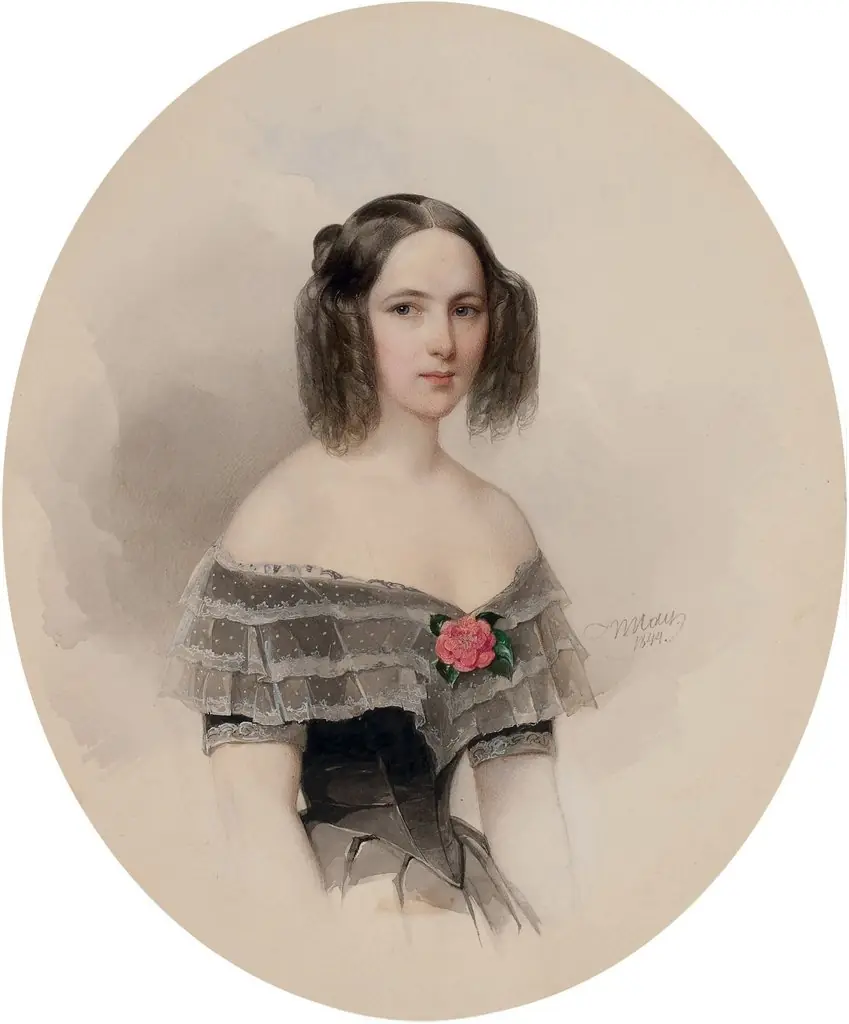
Portret de femeie is an unspecified painting by the Romanticist artist Henriette de Brevillier. It dates from 1844 and is held in the collection of the Colecție particulară - Arad.
About this work
Overview
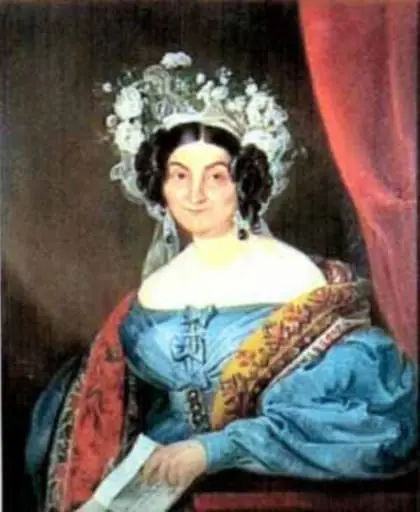
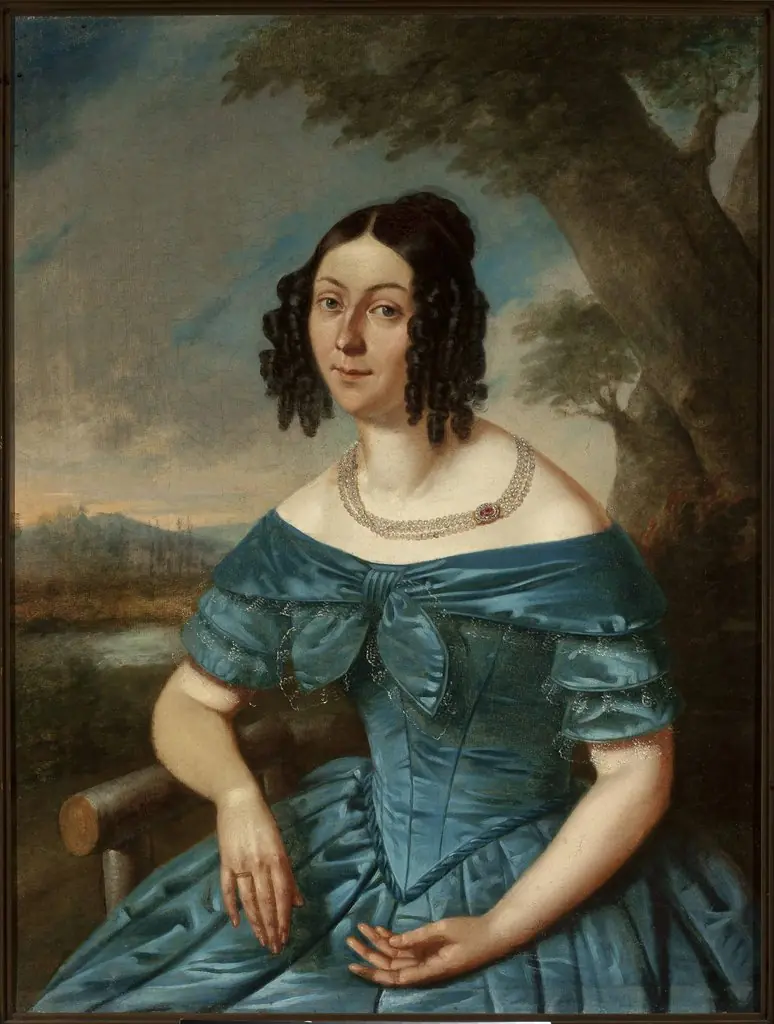
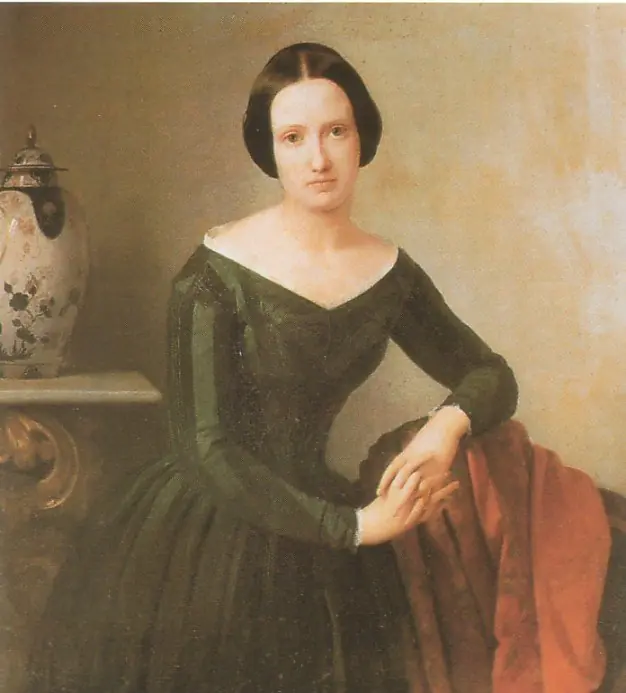
Painted in 1844 by Henriette de Brevillier, this portrait depicts a seated woman in quiet repose. Executed in oil, the work is part of the Museum of Ethnography’s collection. Its restrained composition and intimate scale reflect a personal, rather than ceremonial, approach to portraiture, emphasizing the subject’s demeanor over social status.
Subject & Meaning
The woman, dressed in a dark green gown with a white collar and a slender waist ribbon, holds a small, indistinct object in her right hand. Her neatly pinned hair and composed posture suggest modesty and self-possession. The absence of symbolic attributes or elaborate setting directs attention to her inner stillness, aligning with Romantic ideals of individual introspection and quiet dignity.
Technique & Style
Soft, blended brushwork and diffused lighting model the woman’s face with subtle gradations, avoiding harsh contours. The plain, pale background isolates her form, enhancing the focus on her expression and attire. The dress is rendered with restrained detail, its elegance emerging from fabric folds rather than ornamentation, reinforcing a sense of understated refinement.
History & Provenance
The painting has been held by the Museum of Ethnography since at least the late 19th century. Its origins as a private commission are unrecorded, and little is known of the sitter’s identity. The work’s survival and preservation suggest it was valued within its original context, though its current institutional placement reflects later scholarly interest in domestic portraiture.
Context
Created during the height of Romanticism, the portrait aligns with period tendencies toward emotional restraint and psychological depth in portraiture. Unlike grand historical or aristocratic images, this work captures an ordinary moment, reflecting Romanticism’s broader turn toward the personal and the everyday, particularly in the work of female artists navigating limited public platforms.
Legacy
Though not widely exhibited or studied, the portrait contributes to the understated body of 19th-century female-authored portraiture. Its preservation in an ethnographic museum, rather than a fine arts institution, raises questions about how gender, genre, and social context influenced the categorization of artistic work during and after the artist’s lifetime.
Artist & collection
Artist
Henriette de Brevillier painted portraits in the 1800s, a time when fewer women artists had formal training.