Artwork
Capriccio Derived from Salvator Rosa's "Figurine"
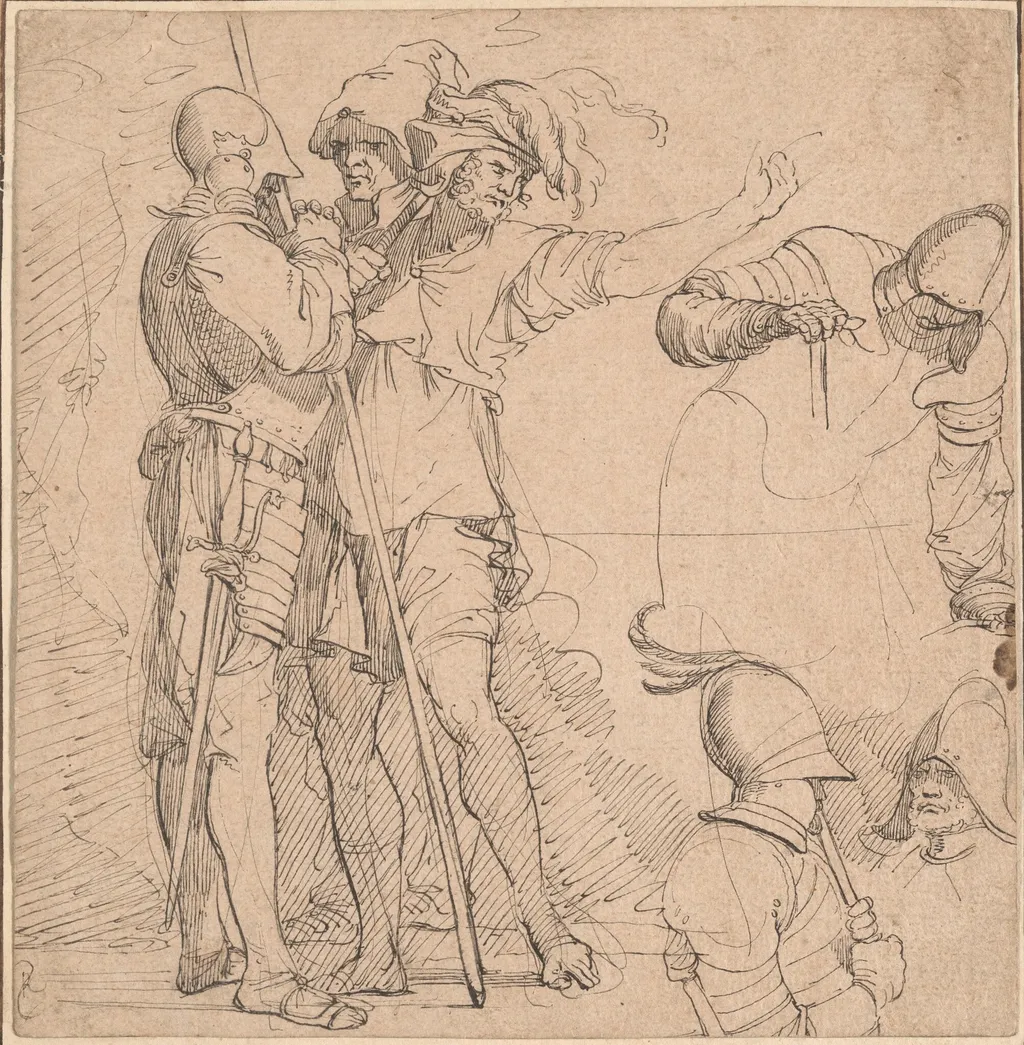
Capriccio Derived from Salvator Rosa's "Figurine" is an ink drawing by the Romanticist artist British 18th Century. It dates from 1701 and is held in the collection of the National Gallery of Art. The work is a pen-and-ink drawing on wove paper, later mounted on an older support.
About this work
Overview
The work is a pen-and-ink drawing on wove paper, later mounted on an older support. Executed in black ink, the piece presents a compact composition of four male figures caught in a moment of heightened tension. The central figure, distinguished by a long coat and hat, gestures emphatically while the surrounding men respond with sticks or swords, their faces rendered in stark, angular lines.
Subject & Meaning
The scene suggests a confrontational encounter, perhaps a skirmish or a dramatic narrative episode, though the precise story remains ambiguous. The figures’ rough physiognomies and aggressive postures convey a sense of conflict or travel, inviting viewers to infer a moment of struggle or negotiation among travelers or combatants.
Technique & Style
The artist employs rapid, sketchy strokes that emphasize movement and emotional intensity. Cross‑hatching builds tonal depth, while the loose, expressive line work gives the figures a dynamic, unfinished quality. The background is largely absent, reduced to faint indications of sky or ground, focusing attention on the gestural interaction of the characters.
Artist & collection

Artist
This artist left small, precise pictures from 18th-century Britain—buildings, faces, and landscapes etched or drawn in ink and chalk.

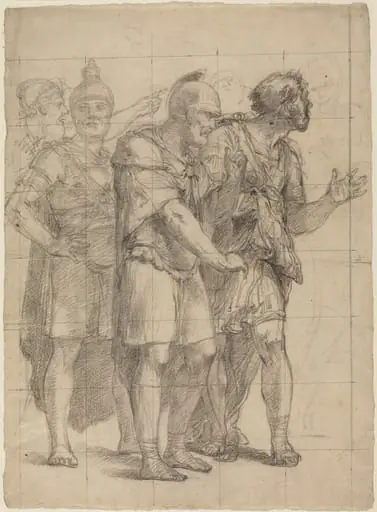 Four Standing Warriors
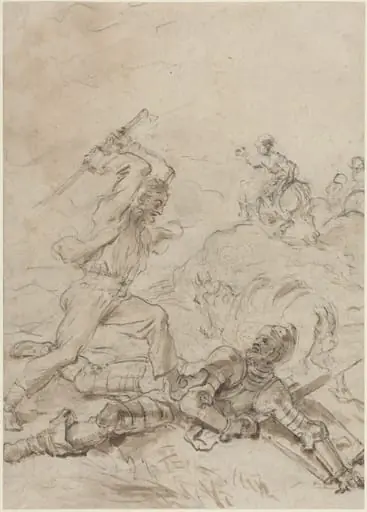 The Muleteer Attacking Don Quixote as He Lies Helpless on the Ground
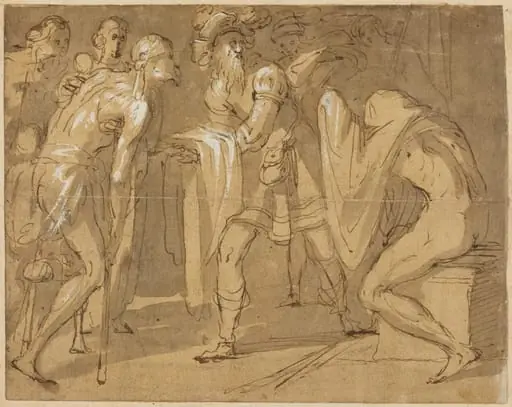 Saint Homobono
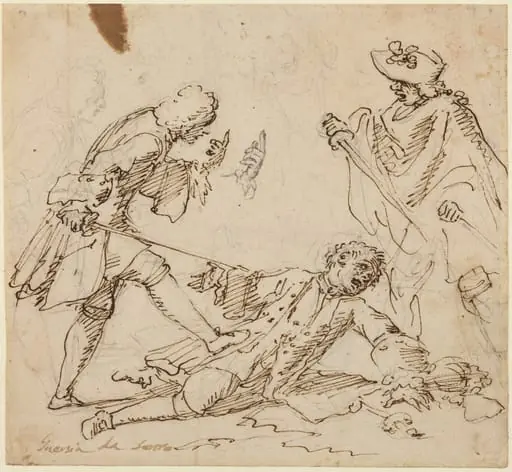 Three Men Fighting
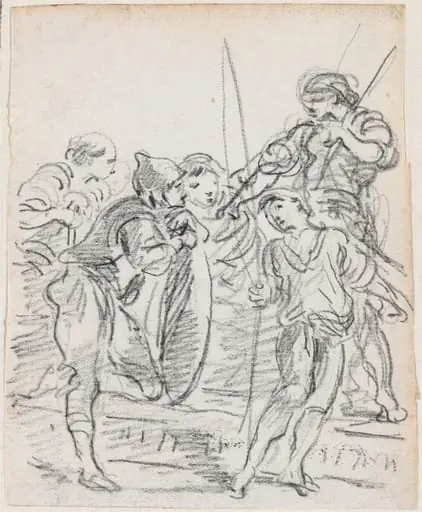 Group of Male Figures Conversing
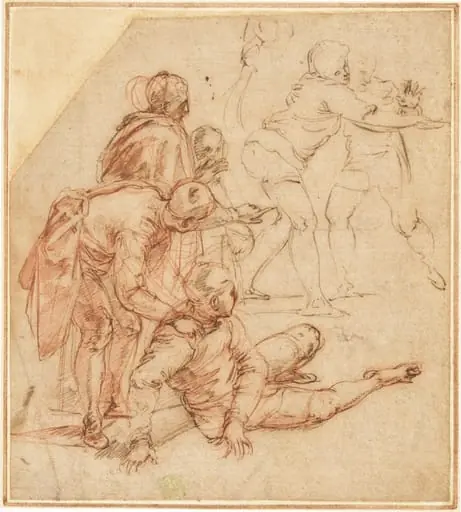 Spectators Amazed
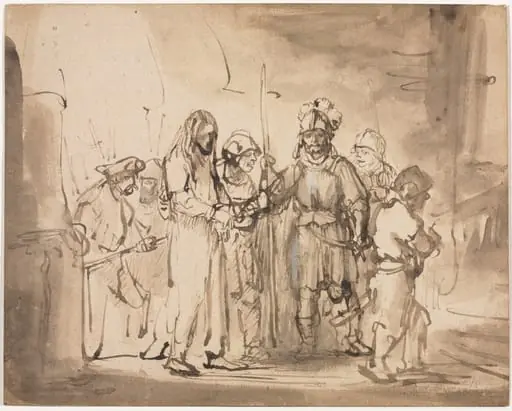 Christ Taken before Caiaphas
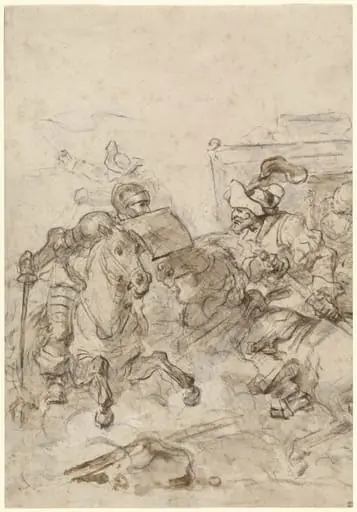 Don Quixote Attacking the Biscayan
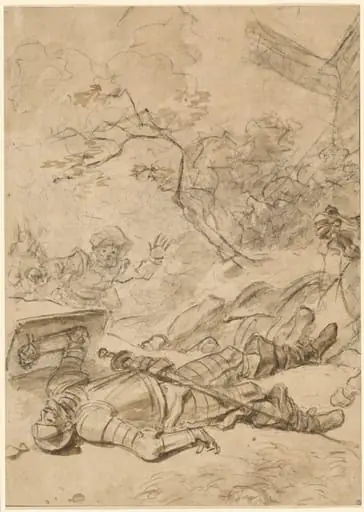 Don Quixote Defeated by the Windmill
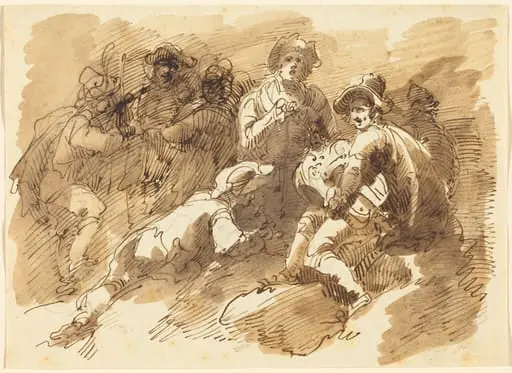 A Convivial Gathering with a Man Playing a Hurdy-Gurdy
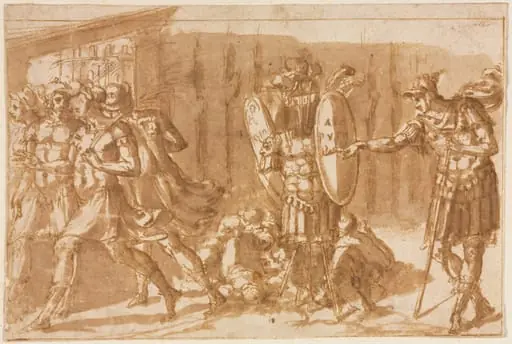 Victorious Soldiers with Trophy
 Crucifixion of Saint Peter