Artwork
Group of Male Figures Conversing
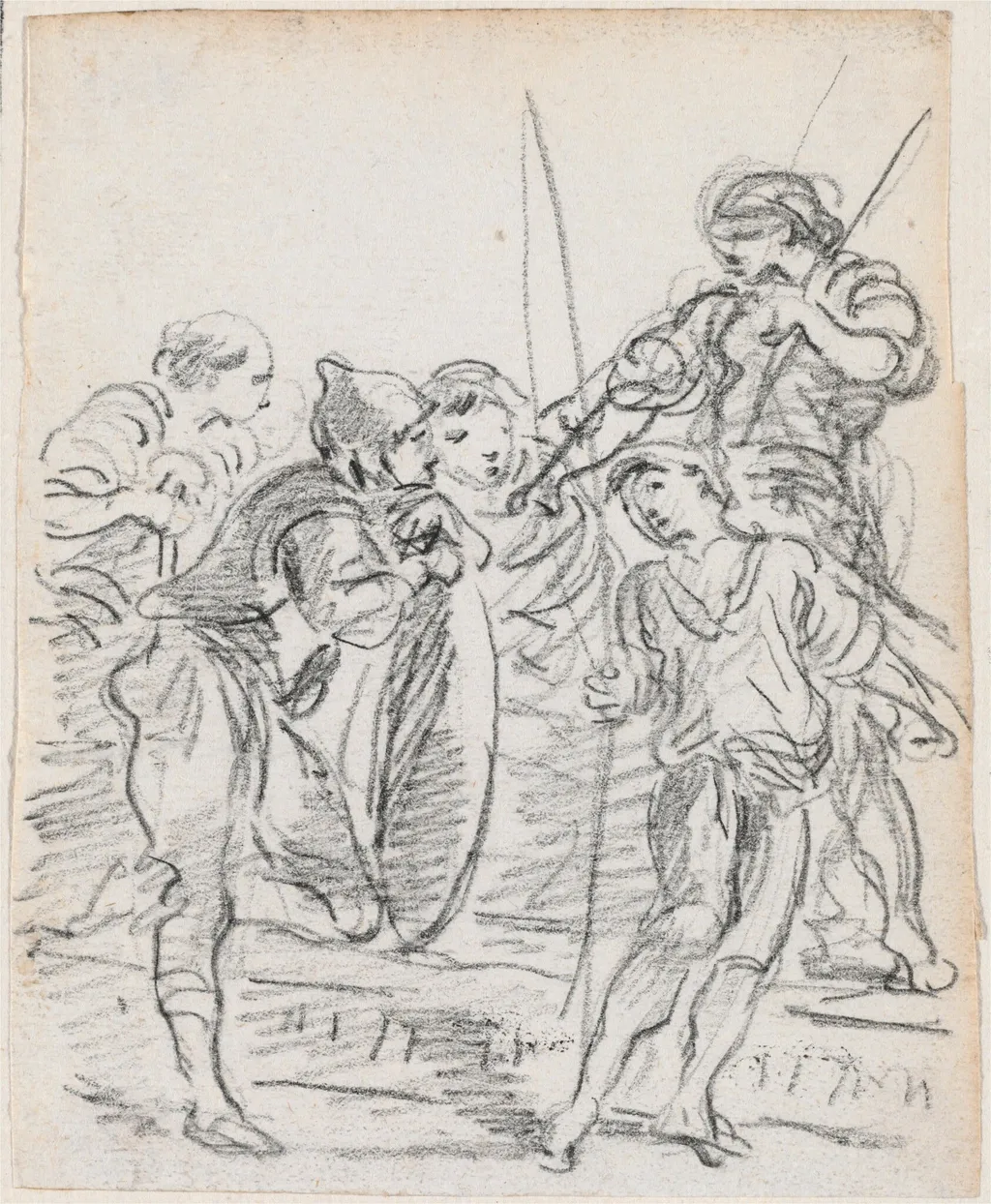
Group of Male Figures Conversing is a chalk drawing by the Romanticist artist Hubert Robert. It dates from 1760 and is held in the collection of the National Gallery of Art.
About this work
Overview
Created around 1760 by Hubert Robert, this drawing is a study in black chalk on laid paper, capturing a cluster of men in animated conversation.
Created around 1760 by Hubert Robert, this drawing is a study in black chalk on laid paper, capturing a cluster of men in animated conversation. Though Robert is best known for his architectural fantasies and ruins, this early work reveals his interest in human interaction and gesture. The absence of a defined setting and the unfinished quality suggest it was made as a preparatory exercise, not a polished composition.
Subject & Meaning
The figures, rendered without individualized faces, function as archetypes of dialogue rather than specific persons. Their dynamic postures—gesturing arms, leaning torsos, and clustered formation—convey the urgency of exchange. The focus on movement and interaction, rather than identity or narrative, points to Robert’s exploration of social energy, a theme that would later inform his atmospheric landscapes.
Technique & Style
Executed in loose, rapid strokes of black chalk, the drawing emphasizes fluidity over precision. The lack of shading or background isolates the figures, heightening the sense of motion. The chalk’s granular texture and uneven pressure create a tactile immediacy, reflecting the artist’s direct observation and spontaneous response to the scene, typical of academic figure studies of the period.
History & Provenance
This work originates from Robert’s formative years in Rome, where he studied classical ruins and sketched from life. Though no documented provenance traces its early ownership, its style aligns with other surviving studies from his time in Italy before he returned to France in the 1760s. It likely remained in his personal collection or studio until later acquisition.
Context
In mid-18th-century France, drawing was central to artistic training, especially for those preparing for the Prix de Rome. Robert’s sketch reflects the academic emphasis on capturing human movement and expression, even as he began to shift from classical rigidity toward more expressive, emotionally charged compositions that would later align with emerging Romantic sensibilities.
Legacy
Though overshadowed by his later architectural fantasies, this drawing illustrates Robert’s foundational skill in figural observation. Its emphasis on gesture and transient emotion anticipates Romanticism’s privileging of feeling over ideal form. As a surviving example of his preparatory process, it offers insight into the evolution of his artistic priorities before he fully embraced landscape as his primary subject.
Artist & collection
Artist
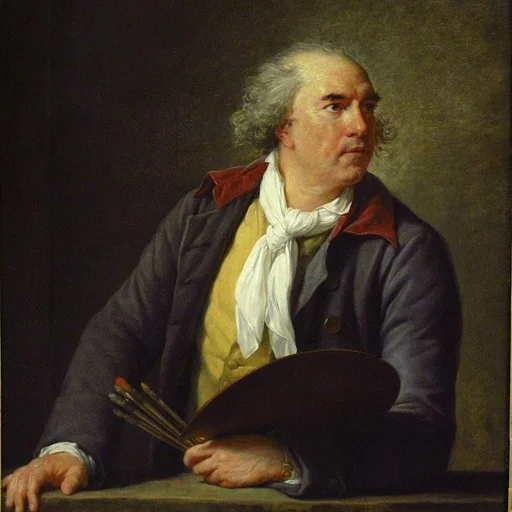
Hubert Robert (French pronunciation: ; 22 May 1733 – 15 April 1808) was a French painter in the school of Romanticism, noted especially for his landscape paintings and capricci, or semi-fictitious picturesque depictions of ruins in Italy…

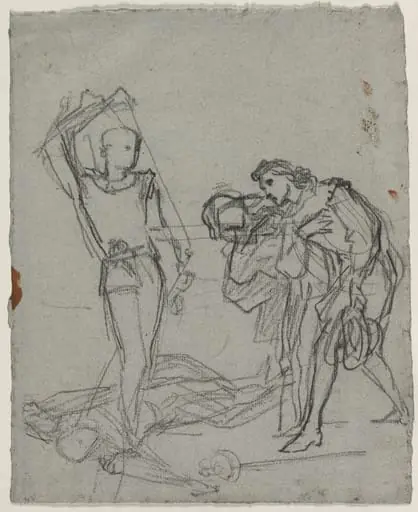 Duel after the Masked Ball (recto)
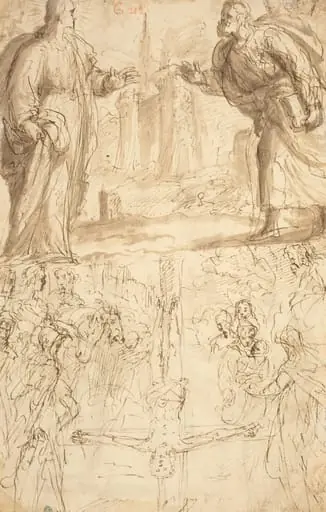 Crucifixion of Saint Peter
 The Ascension of the Virgin
![Biblical Scene [verso], by Sebastiano Ricci](https://artifactworldgallery.com/img/sebastiano-ricci--biblical-scene-verso--d33f1e2abb3d29f7-w320.webp) Biblical Scene [verso]
Biblical Scene [verso] Don Quixote and Sancho Panza Witness the Attack on Rocinante
 Victorious Soldiers with Trophy
 Capriccio Derived from Salvator Rosa's "Figurine"
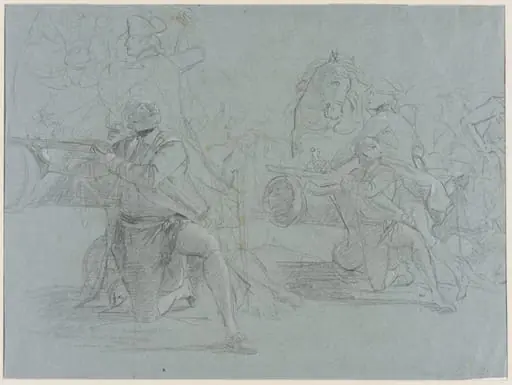 Study for 'The Siege of Gibraltar'
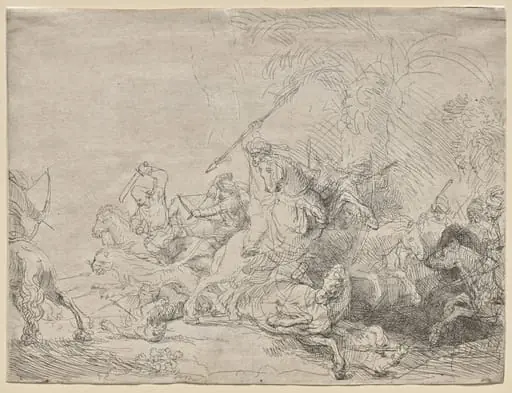 The Large Lion Hunt
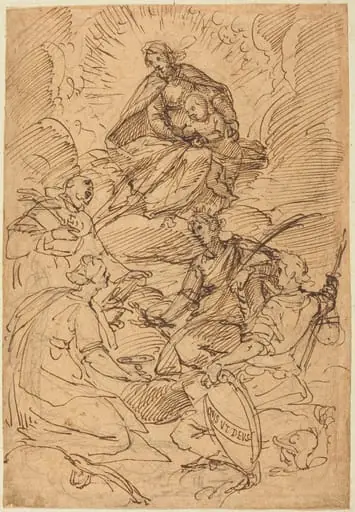 The Madonna and Child in Glory Adored by Saints
![Female Figure (Penitent Magdalene?) [verso], by Donato Creti](https://artifactworldgallery.com/img/donato-creti--female-figure-penitent-magdalene-verso--b0756d00ad6853a6-w320.webp) Female Figure (Penitent Magdalene?) [verso]
Female Figure (Penitent Magdalene?) [verso]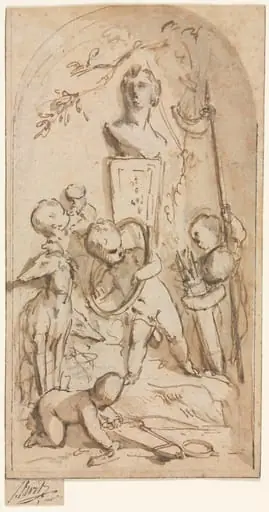 Bust of Diana with Putti and Hunting Attributes