Artwork
In the Red Clay Region
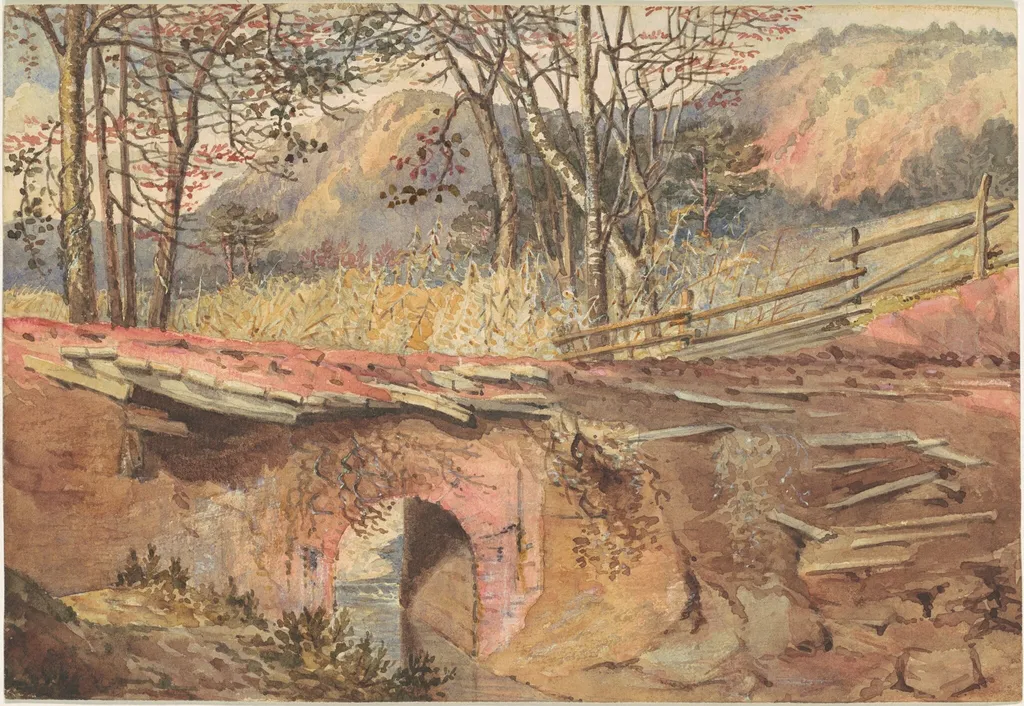
In the Red Clay Region is a graphite drawing by the Romanticist artist British 19th Century. It dates from 1801 and is held in the collection of the National Gallery of Art.
About this work
Overview
This watercolor drawing on wove paper depicts a desolate landscape in a red clay region, centered on a weathered stone bridge spanning a dry riverbed.
This watercolor drawing on wove paper depicts a desolate landscape in a red clay region, centered on a weathered stone bridge spanning a dry riverbed. The bridge, with its splintered wooden railings and eroded stonework, suggests long-term exposure to the elements. Bare trees with gnarled roots anchor the scene, their trunks rising from the rust-colored soil. The palette is muted, dominated by ochres, russets, and dull greens, reinforcing a sense of arid stillness.
Subject & Meaning
The scene conveys quiet decay and resilience. The crumbling bridge, once a functional crossing, now stands as a relic, its structure barely holding against time and erosion. The sparse vegetation and parched earth imply a harsh, unforgiving environment. There is no human presence, yet the traces of human intervention—the bridge, the cleared path—hint at past activity, now reclaimed by nature and neglect.
Technique & Style
The artist employed watercolor over graphite to build subtle layers of tone, using glazing to deepen shadows and suggest texture in the clay and stone. Dry brushwork captures the grit of the soil and the fractured surfaces of the bridge. The paint’s slight fading indicates prolonged exposure, possibly intentional, to evoke the passage of time. The graphite underdrawing guides the composition with restrained precision, avoiding excess detail in favor of atmospheric suggestion.
History & Provenance
The work’s origin is tied to regional studies in the American South, likely created during field sketches in the early 20th century. Its paper and medium align with practices of artists documenting rural landscapes before widespread photography. The faded condition suggests it was not stored in controlled conditions, possibly carried in sketchbooks or displayed in unregulated environments, contributing to its current state of gentle deterioration.
Context
This drawing reflects a broader interest among American artists in the early 1900s in capturing the overlooked rural landscapes of the South. It responds to a shift away from idealized pastoral scenes toward honest depictions of environmental hardship and architectural decay. The red clay region, with its distinctive geology and economic struggles, became a subject of documentary interest for artists seeking authenticity over romanticism.
Legacy
Though not widely exhibited, the work contributes to a quiet archive of regional American drawing that prioritizes observation over drama. Its restrained technique and unembellished subject matter influenced later generations of realist watercolorists who valued material honesty. The piece endures as a record of place, not as a celebrated artifact, but as a quiet testament to the endurance of land and structure under slow erosion.
Own this work as a print
Artist & collection

Artist
This artist’s short life left behind a quiet obsession with water—whether the churn of a mill wheel, the choppy waves off England’s south coast, or the way light bounces off pond lilies.



 Gravel Pit at Hampstead, 1855
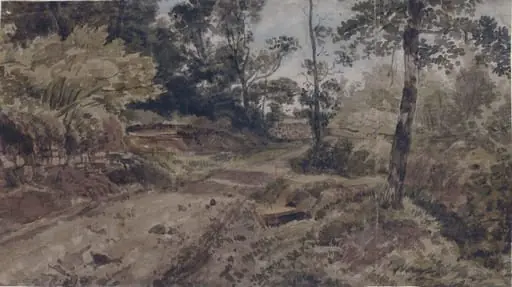 View at Cheshunt, Hertfordshire
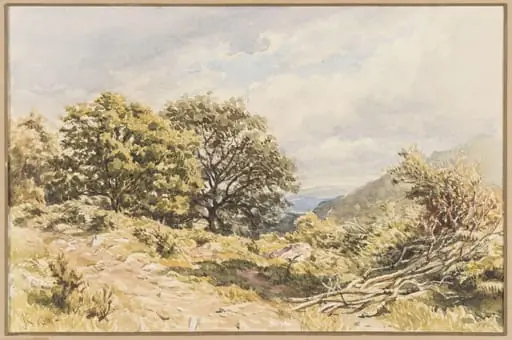 A Woody Bit, North Wales
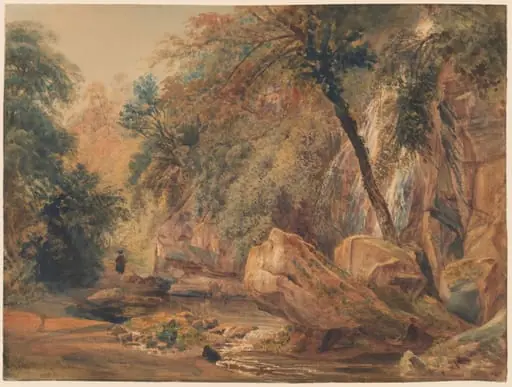 Waterfall in the Dingle at Badger Hall
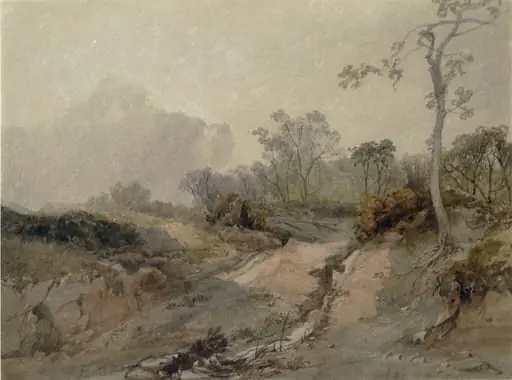 Landscape with Rutted Track
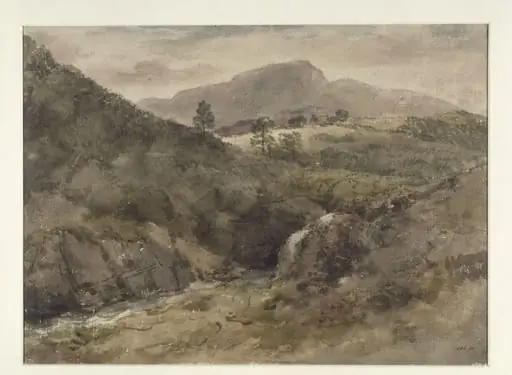 View in the Lake District
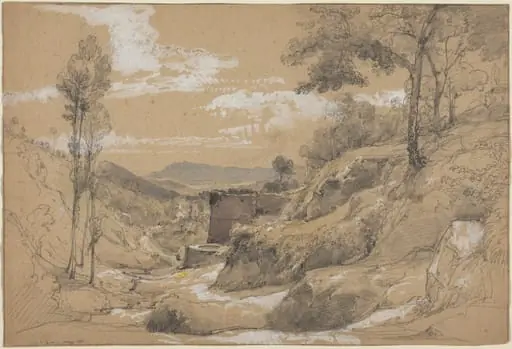 Corpo di Cava
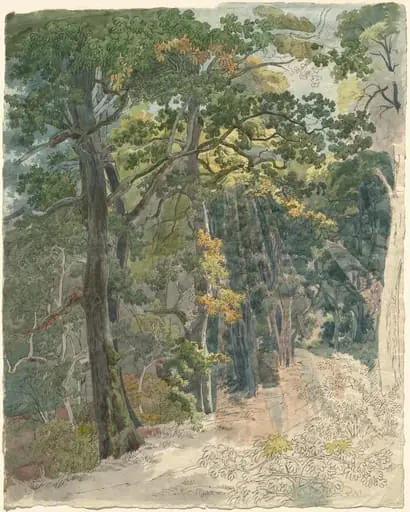 Rays of Sunlight Striking a Woodland Path
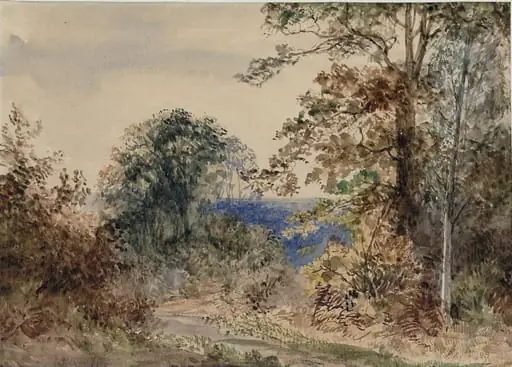 Study from Nature
 Eel Bucks at Goring
 Sun and Rain in the Serpentara near Olevano
 The Sabine Hills and Rocca Santo Stefano, Seen from Civitella