Artwork
Gravel Pit at Hampstead, 1855
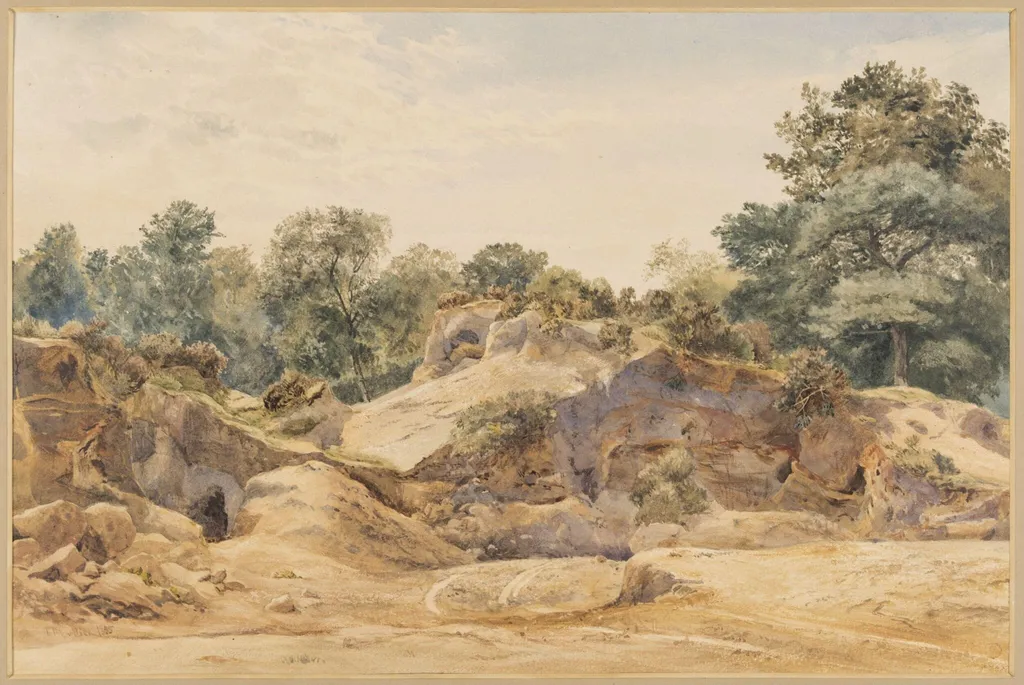
Gravel Pit at Hampstead, 1855 is a watercolor work on paper by the British Romanticist artist Thomas Frederick Collier. It dates from 1855 and is held in the collection of the Victoria and Albert Museum.
About this work
Overview
Thomas Frederick Collier created this watercolour in 1855, depicting a secluded gravel pit in Hampstead.
Thomas Frederick Collier created this watercolour in 1855, depicting a secluded gravel pit in Hampstead. The work is signed and dated by the artist, confirming its origin. Rendered in delicate washes, it captures a modest, unpopulated landscape with quiet precision. The medium’s transparency allows subtle gradations of light and shadow to define the terrain, reflecting Collier’s interest in naturalistic observation over dramatic effect.
Subject & Meaning
The scene portrays an abandoned quarry site, its rugged stones and sparse vegetation suggesting human use long past. No figures or structures interrupt the stillness, emphasizing solitude and the quiet reclamation of land by nature. The absence of activity invites contemplation rather than narrative, aligning with mid-19th century interests in unidealized, everyday landscapes as subjects worthy of artistic attention.
Technique & Style
Collier employed light, layered watercolour washes to suggest texture and atmosphere. Dry grass and rocky outcrops are rendered with minimal detail, relying on tonal contrasts and the paper’s reserve to indicate sunlight. The hazy sky and soft-edged trees contrast with the sharp, angular stones, creating a sense of depth without heavy outline. His approach favors atmospheric effect over precise rendering, characteristic of amateur watercolourists of the period.
History & Provenance
The work was completed in 1855, during a period when Collier was actively sketching the outskirts of London. Its survival suggests it was retained within private collections, though no public exhibition history is documented. As a small-scale watercolour, it likely served as a personal study rather than a commercial piece, reflecting the artist’s routine engagement with local topography.
Context
In mid-19th century England, watercolour was widely practiced by amateur and professional artists alike, particularly for landscape studies. Hampstead’s rural edges attracted sketchers drawn to its undisturbed terrain. Collier’s work fits within this tradition, aligning with contemporaries who valued direct observation over studio composition, capturing transient light and quiet places before urban expansion altered them.
Legacy
Collier’s watercolours, including this one, remain largely outside major institutional collections, indicating limited public recognition during his lifetime. His oeuvre survives primarily in private hands and regional archives. While not influential in broader art movements, his works offer a modest but valuable record of everyday English landscapes as seen through the eyes of a dedicated local observer.
Own this work as a print
Artist & collection
Artist
Thomas Frederick Collier painted quiet, detailed watercolours of English trees and landscapes in the 1850s.


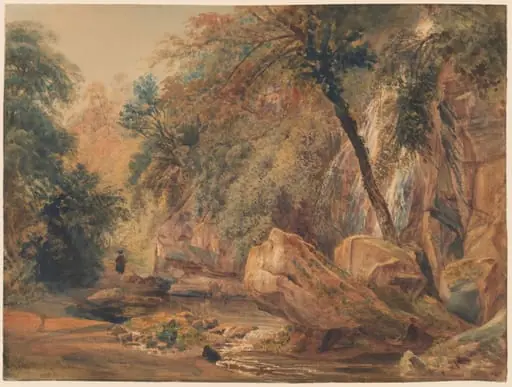 Waterfall in the Dingle at Badger Hall
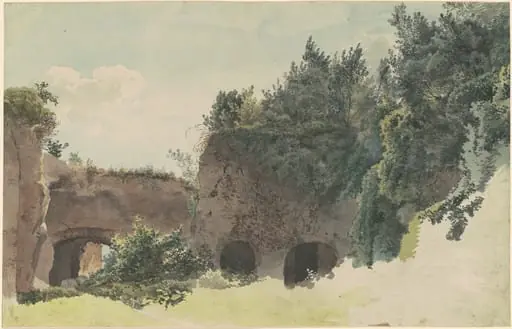 Ancient Roman Ruins Overgrown with Trees and Bushes
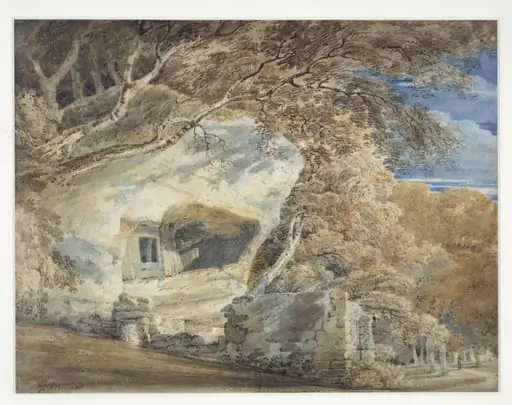 Warkworth Hermitage, Northumberland
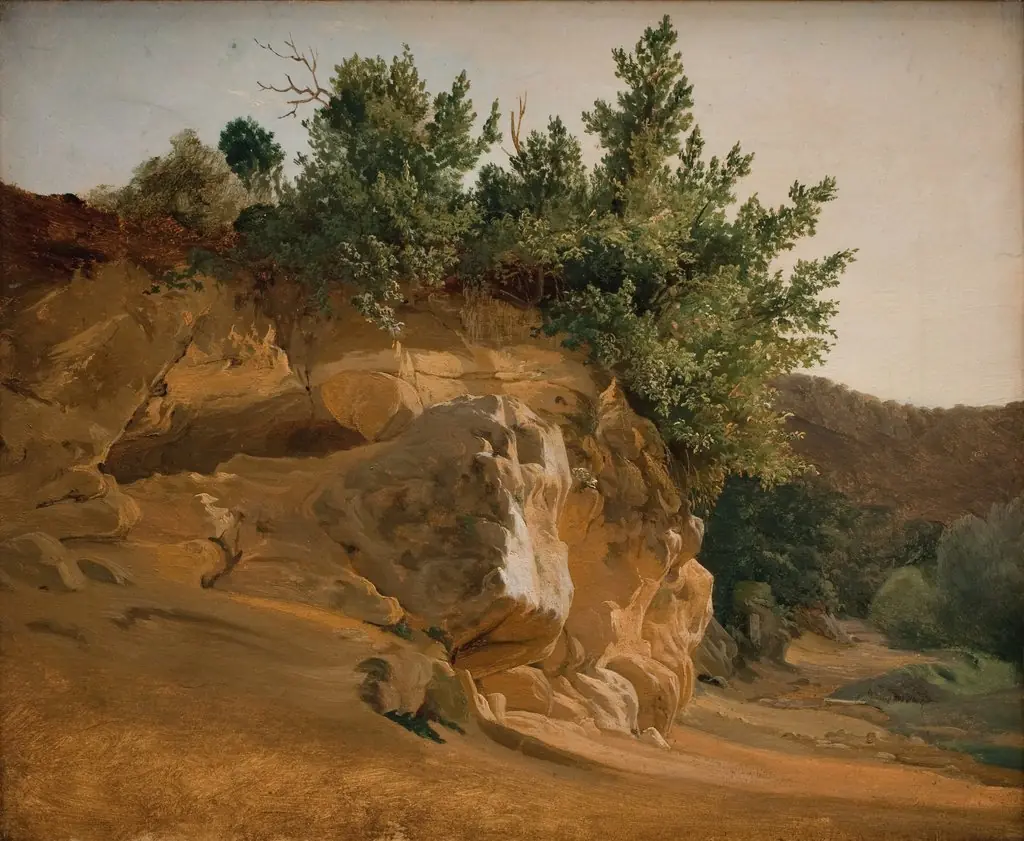 Italian Mountain Landscape with Overgrown Rock, probably near Olevano
 Italian Mountain Landscape with Overgrown Rock, probably near Olevano
 Landscape (recto)
 A Woody Bit, North Wales
 Landscape with Rutted Track
 Landscape
 The Sabine Hills and Rocca Santo Stefano, Seen from Civitella
 A View across the Inn Valley to the Alps and Neubeuern