Artwork
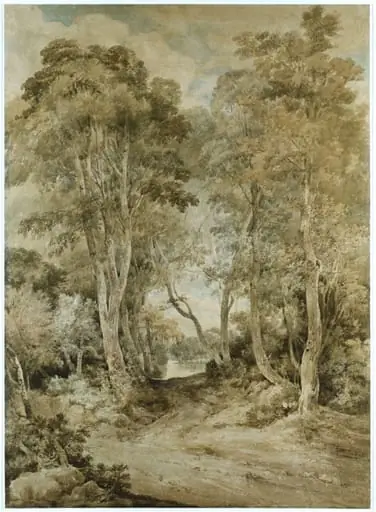
Rays of Sunlight Striking a Woodland Path
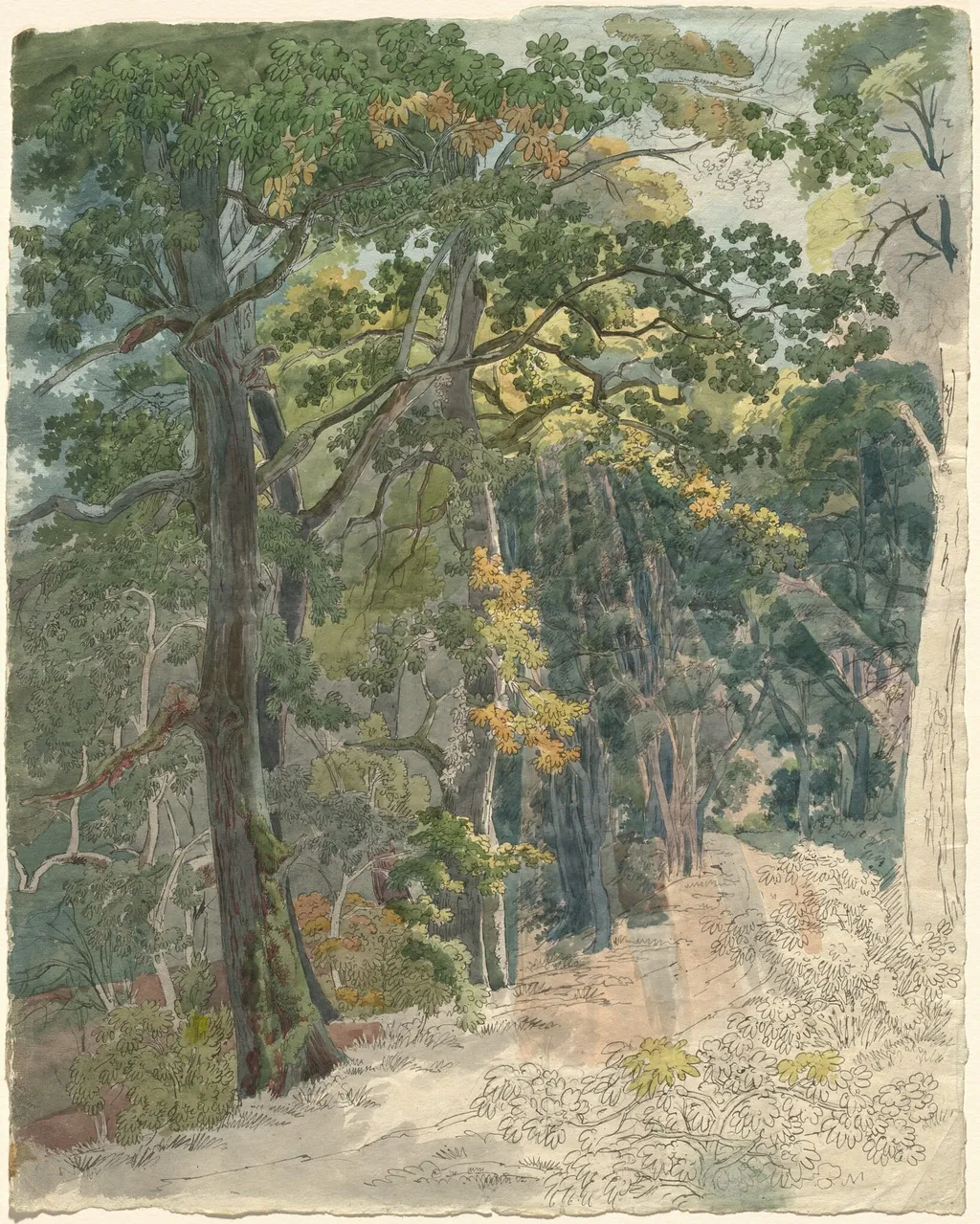
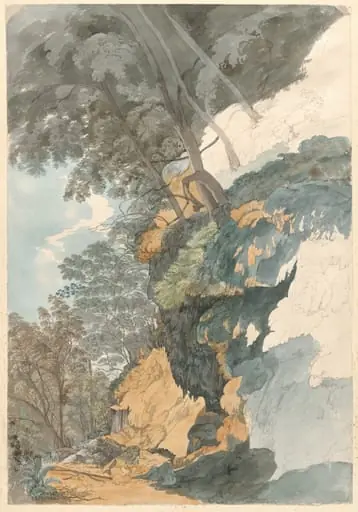
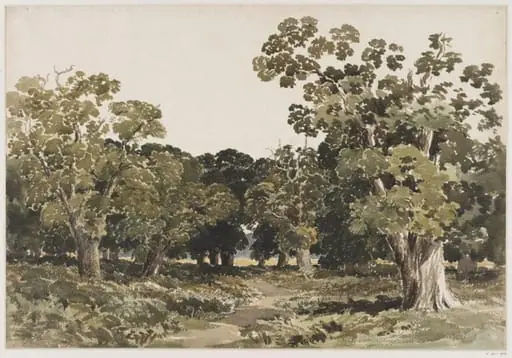
Rays of Sunlight Striking a Woodland Path is an ink drawing by the Romanticist artist Friedrich Salathé. It dates from 1815 and is held in the collection of the National Gallery of Art.
About this work
Overview
The composition emphasizes quiet naturalism, with no human figures or overt narrative, focusing instead on the interplay of light and vegetation.
Created around 1815, this drawing by Friedrich Salathé combines watercolor, pen, and black ink over graphite on wove paper. It depicts a secluded woodland path illuminated by dappled sunlight. The composition emphasizes quiet naturalism, with no human figures or overt narrative, focusing instead on the interplay of light and vegetation. The medium allows for subtle tonal transitions, enhancing the atmosphere of stillness and immersion.
Subject & Meaning
The scene presents an unpopulated forest path winding into the distance, framed by dense, leafy trees. The absence of figures invites contemplation rather than storytelling. The sunlight, carefully rendered in patches, suggests transience and the quiet rhythm of nature. The work conveys a sense of solitude and reverence for the natural world, typical of early 19th-century Romantic sensibilities that valued emotional response to landscape.
Technique & Style
Salathé employed layered watercolor washes to build depth and luminosity, using glazing techniques to achieve soft gradations of green and brown. Pen and ink defined the structural elements of branches and undergrowth, while graphite underdrawing guided the composition. The delicate handling of light and shadow, with minimal detail in the distance, creates a hazy, atmospheric effect that enhances the sense of depth and quiet movement.
History & Provenance
The work dates from Salathé’s early career, a period when he was actively engaged in landscape studies in Switzerland and southern Germany. Though little documented, it likely originated as a plein air sketch, later refined in the studio. Its survival in good condition suggests it was preserved within private collections, possibly by patrons interested in topographical or Romantic landscape art during the early 1800s.
Context
Created during the rise of Romanticism in German-speaking regions, the drawing aligns with contemporaries like Caspar David Friedrich, who emphasized nature’s emotional resonance. Unlike grand vistas, Salathé’s intimate woodland scene reflects a shift toward personal, quiet observation. The use of watercolor—then gaining favor for its immediacy—mirrored broader trends among artists seeking to capture transient natural effects with sensitivity and precision.
Legacy
While not widely exhibited or reproduced, the work exemplifies the quiet precision of early 19th-century Swiss and German watercolorists. It contributes to the understanding of how landscape drawing evolved from topographical record to expressive medium. Its restrained technique and focus on light continue to inform studies of naturalism in pre-industrial European art, offering insight into the aesthetic values of its time.
Artist & collection


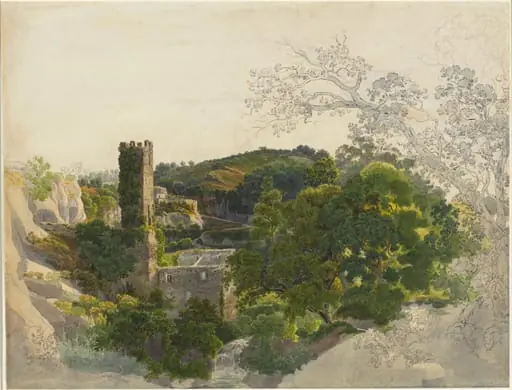
![Tower of a Fortified House [recto], by Friedrich Salathé](https://artifactworldgallery.com/img/friedrich-salathe--tower-of-a-fortified-house-recto--123693842ba6a52f-w320.webp)
![Grove of Trees [verso], by Friedrich Salathé](https://artifactworldgallery.com/img/friedrich-salathe--grove-of-trees-verso--4013b539bd981a94-w320.webp)