Artwork
Landscape
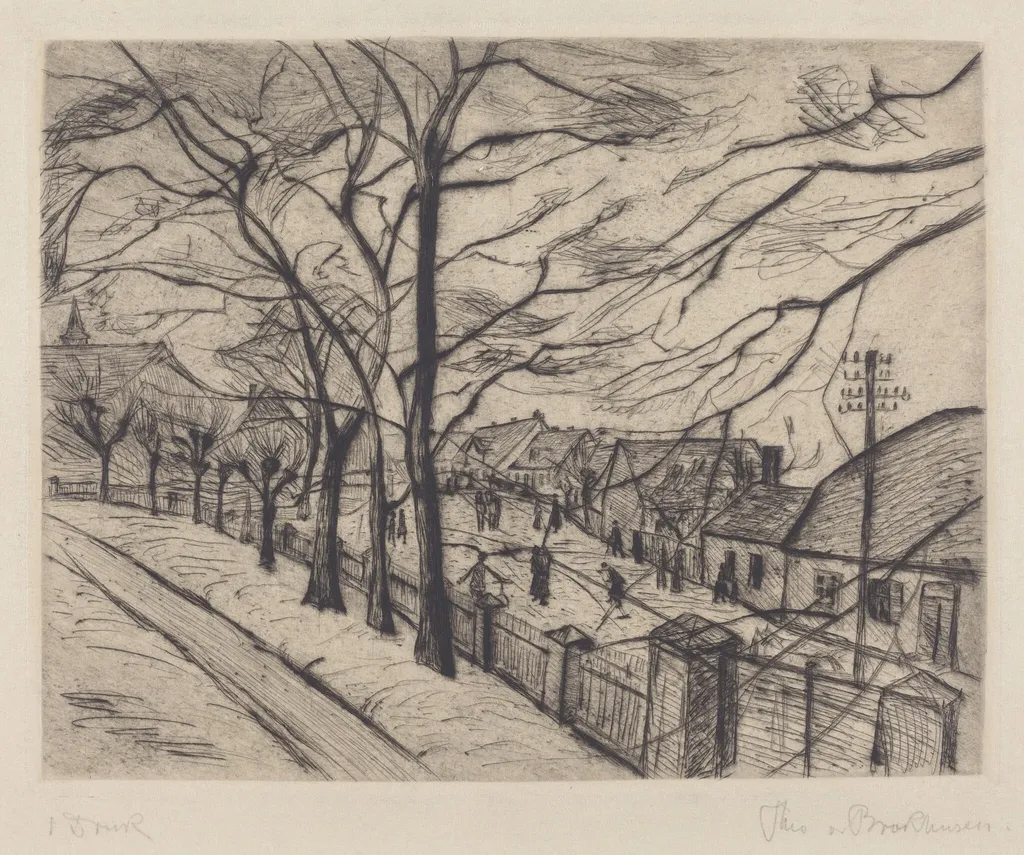
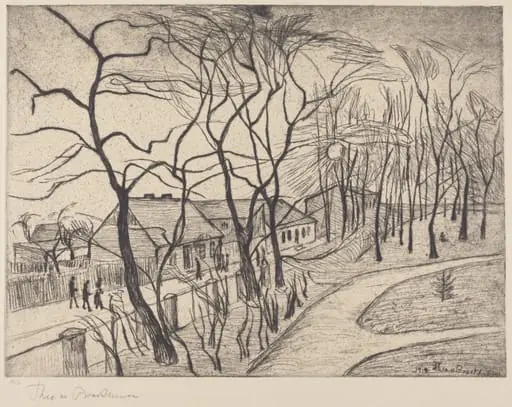
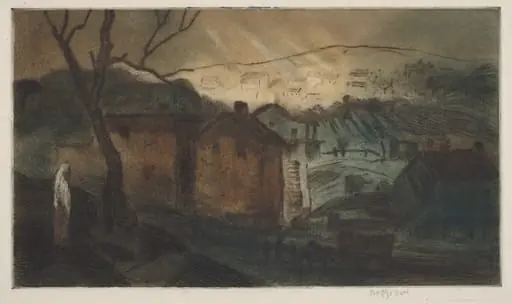
Landscape is an ink print by the Impressionist artist Theo von Brockhusen. It dates from 1900 and is held in the collection of the National Gallery of Art.
About this work
Overview
Created in 1900, this etching by Theo von Brockhusen captures a quiet rural scene through the precise lines and tonal gradations characteristic of the medium. Unlike painted landscapes, the work relies on incised lines and inked impressions to convey texture and depth, offering a restrained yet evocative view of everyday surroundings.
Subject & Meaning
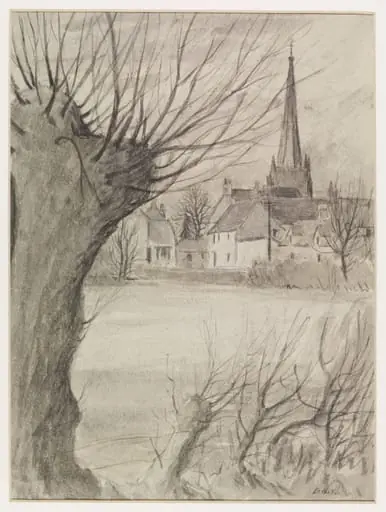
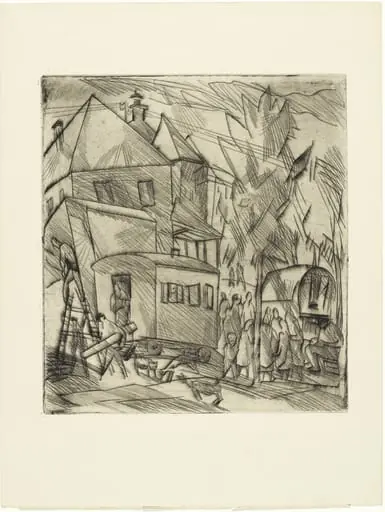
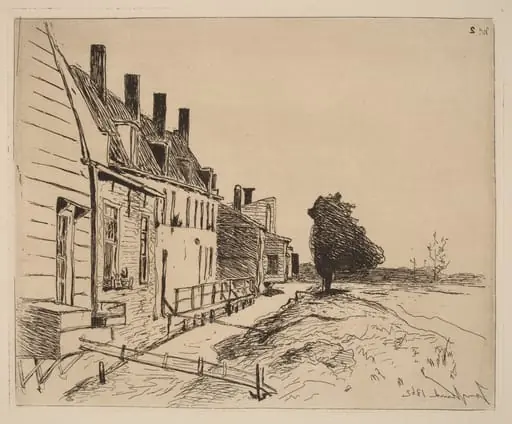
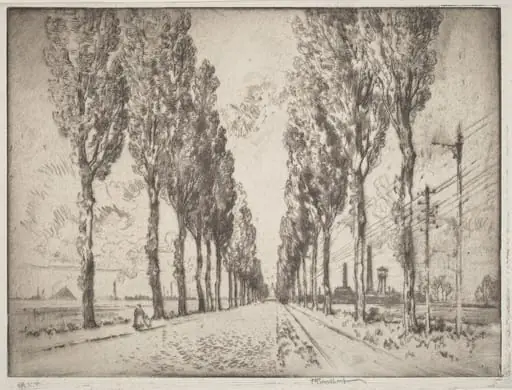
The composition centers on a lone, angular tree in the foreground, its limbs reaching upward and directing attention diagonally across the scene. Behind it, a cluster of modest dwellings and a path with faint figures suggest a tranquil village life. The absence of dramatic action and the subdued palette invite a meditative response, emphasizing stillness over narrative.
Technique & Style
Brockhusen employed etching to build atmosphere through fine, controlled lines and varying densities of ink. The muted palette of grays and browns emerges from the plate’s bitten surfaces, with lighter areas left unetched to suggest distant buildings and sky. The technique allows for subtle transitions between light and shadow, enhancing the scene’s quiet realism.
History & Provenance
The work dates from the early phase of Brockhusen’s career, when he was actively engaged with German printmaking circles. While specific ownership records are limited, the piece aligns with the broader interest in intimate, non-idealized landscapes among late 19th- and early 20th-century German artists seeking alternatives to academic grandeur.
Context
In the years around 1900, many European artists turned from grand historical themes to everyday scenes, influenced by realism and early modernist sensibilities. Brockhusen’s etching reflects this shift, valuing quiet observation over spectacle. Its focus on ordinary architecture and pedestrian activity mirrors broader cultural interests in domestic and rural life.
Legacy
Though not widely exhibited today, the etching remains a representative example of early 20th-century German printmaking. It contributes to an understudied body of work that prioritized technical restraint and emotional subtlety, influencing later generations of printmakers who valued quietude and material precision over bold expression.
Own this work as a print
Artist & collection