Artwork
Landscape
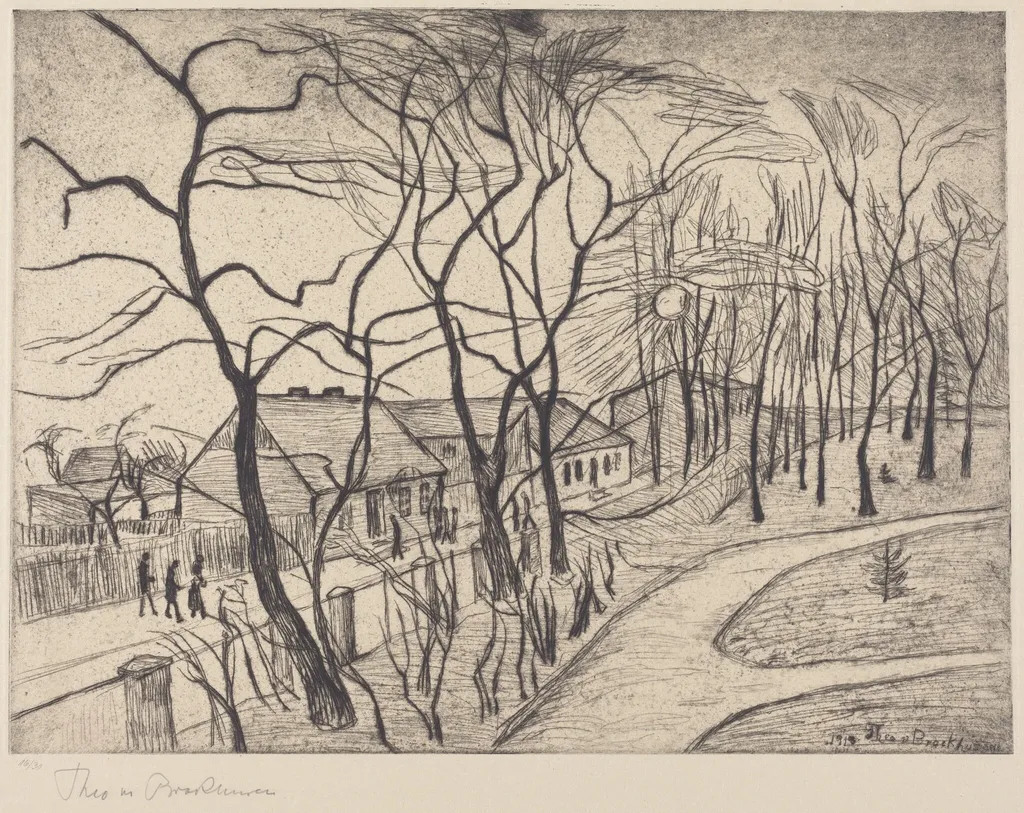
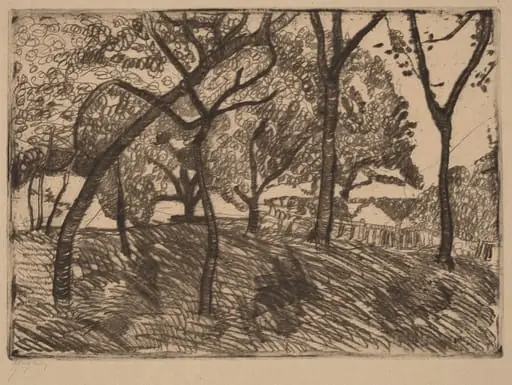
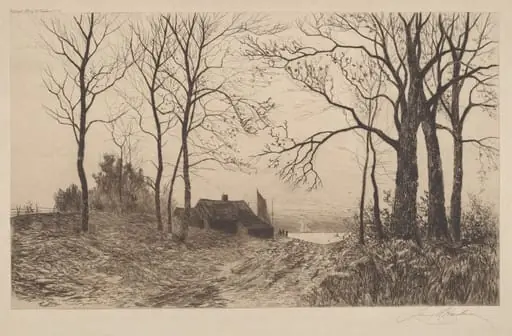
Landscape is an ink print by the Impressionist artist Theo von Brockhusen. It dates from 1900 and is held in the collection of the National Gallery of Art.
About this work
Overview
Created in 1900 by Theo von Brockhusen, this etching presents a quiet rural scene at twilight. The composition centers on skeletal trees with intricate, winding branches, a narrow path, a low fence, and a distant structure. A low-hanging moon provides subtle illumination, guiding the viewer’s eye through the muted tones and delicate line work that define the print’s atmospheric quality.
Subject & Meaning
The scene depicts a solitary, unpopulated landscape with minimal human presence—just a few figures walking along a path.
The scene depicts a solitary, unpopulated landscape with minimal human presence—just a few figures walking along a path. The bare trees and quiet architecture suggest a transitional moment, perhaps autumn or early winter. The moon’s faint glow evokes stillness and introspection, reinforcing a mood of solitude rather than narrative action, aligning with late 19th-century interests in quiet, everyday nature.
Technique & Style
Brockhusen employed fine, controlled etching lines to render texture and depth, particularly in the tangled branches and the suggestion of wind. The tonal range is restrained, relying on ink density and line density rather than heavy shading. This approach bridges Impressionist sensitivity to light and Realist attention to natural detail, avoiding dramatic contrast in favor of nuanced observation.
History & Provenance
The work originates from Brockhusen’s early period, when he was actively engaged with German printmaking circles. Though not widely exhibited during his lifetime, it reflects the broader interest among Central European artists in intimate landscape studies. Its survival as a single impression suggests limited circulation, likely retained within private collections or artist networks.
Context
In the turn-of-the-century German art scene, etching experienced a revival as artists sought alternatives to painting’s dominance. Brockhusen’s work aligns with contemporaries who turned to print for its intimacy and directness. Landscape themes were favored for their capacity to convey mood without overt symbolism, resonating with broader cultural shifts toward personal, observational art.
Legacy
While not widely recognized today, this etching exemplifies the quiet, technical precision of early 20th-century German printmakers. It contributes to a lesser-known but significant body of work that prioritized atmosphere over spectacle. Its preservation offers insight into how artists of the time used print media to explore the emotional potential of ordinary landscapes.
Artist & collection


![A Lonely Farm [Hawkridge], by Robert Polhill Bevan](https://artifactworldgallery.com/img/robert-polhill-bevan--a-lonely-farm-hawkridge--6b5607c9f673bdc2-w320.webp)