Artwork
A View Near Rome
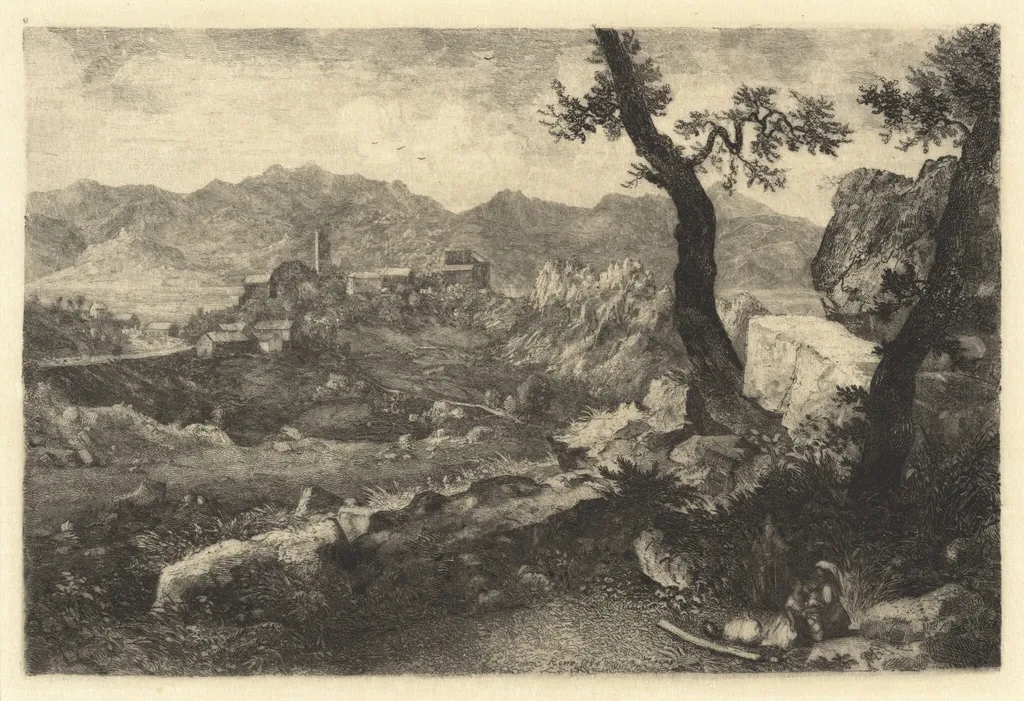
A View Near Rome is an ink print by the Impressionist artist George Loring Brown. It dates from 1854 and is held in the collection of the National Gallery of Art.
About this work
Overview
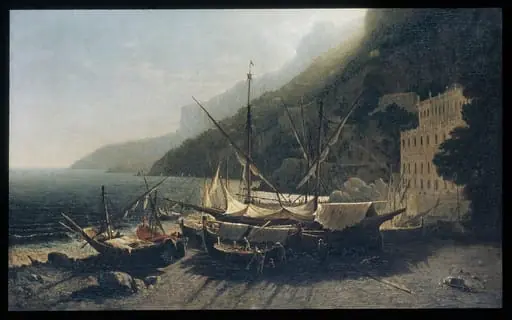
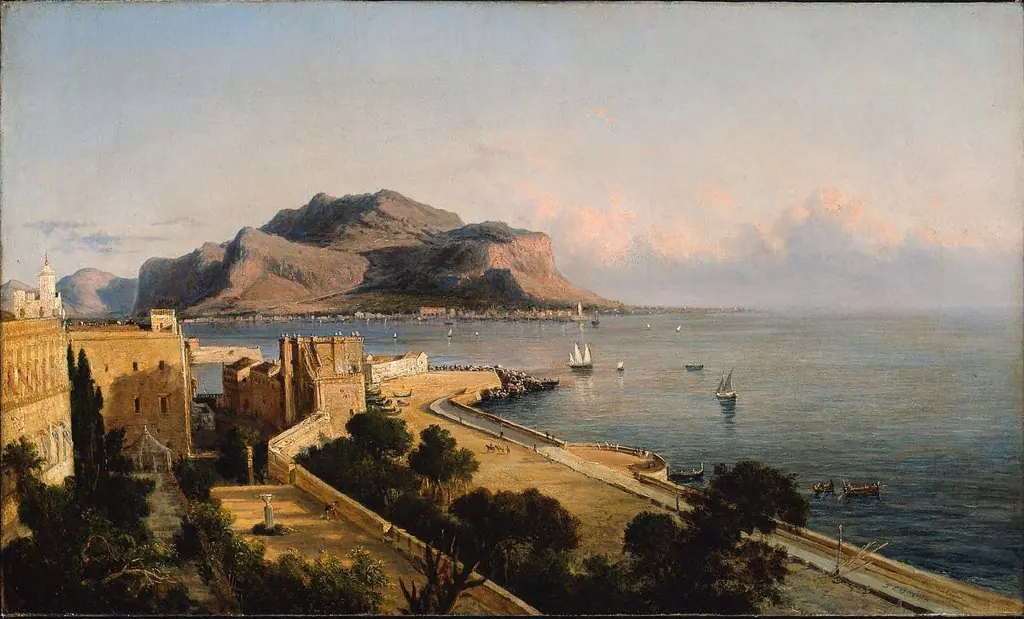
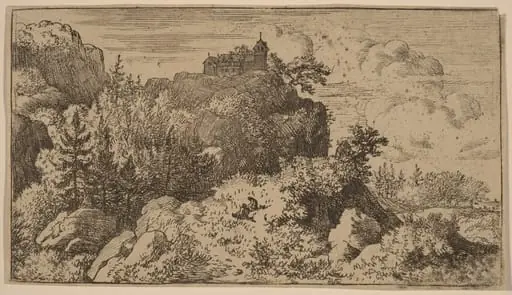
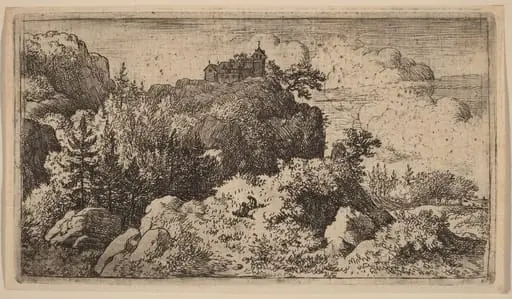
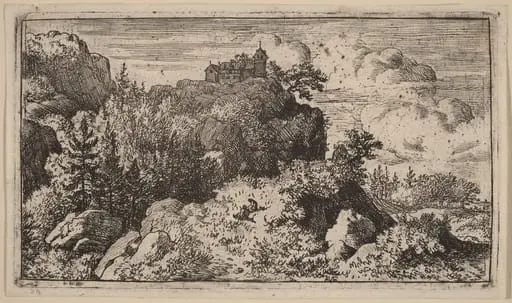
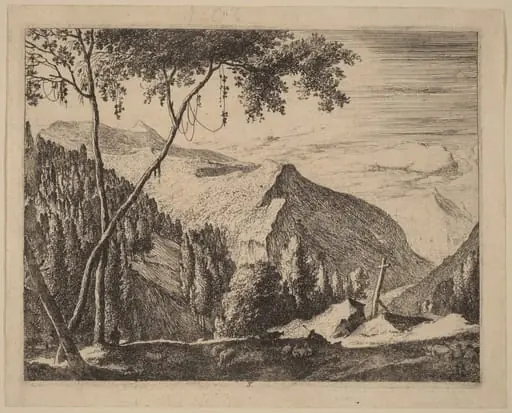
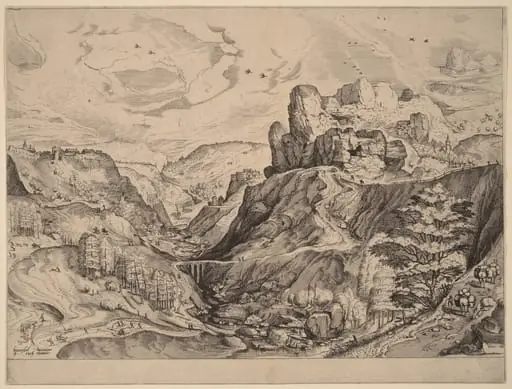
Created in 1854, A View Near Rome is a black-and-white etching by American artist George Loring Brown. Executed on laid paper, the work captures a tranquil rural landscape near the Italian capital. The composition emphasizes quietude through subtle tonal contrasts and meticulous line work, reflecting the artist’s interest in topographical accuracy and atmospheric depth.
Subject & Meaning
The scene depicts a gentle valley with rolling terrain, scattered stone structures, and a meandering stream that draws the eye toward distant mountains. Trees and rocky outcrops frame the path, suggesting a quiet, undisturbed countryside. The absence of human figures reinforces a sense of solitude, evoking contemplation rather than narrative, typical of 19th-century topographical prints.
Technique & Style
The use of hatching and cross-hatching creates subtle gradations of light and shadow, enhancing the illusion of depth without relying on washes.
Brown employed fine, controlled etching lines to render textures—individual leaves, pebbles, and distant ridges are articulated with precision. The use of hatching and cross-hatching creates subtle gradations of light and shadow, enhancing the illusion of depth without relying on washes. The restrained palette and linear clarity reflect the influence of European landscape traditions adapted to American printmaking practices.
History & Provenance
The print was made during Brown’s travels in Italy, part of a broader trend among American artists seeking inspiration abroad in the mid-19th century. It was likely produced for private collectors or as part of a series documenting European scenery. No major institutional provenance is documented, but it appears in several American collections focused on 19th-century prints.
Context
In the 1850s, American artists increasingly turned to Europe for subject matter, particularly Italy’s classical and pastoral landscapes. Etching, once a reproductive medium, was being revived as a vehicle for original expression. Brown’s work aligns with this shift, blending topographical detail with the romantic sensibility of the era, though without overt drama or idealization.
Legacy
Though not widely exhibited today, A View Near Rome exemplifies the quiet, observational approach of mid-century American printmakers. It contributes to the historical record of how U.S. artists engaged with European scenery, offering a restrained alternative to the grandeur of Hudson River School painting. Its legacy lies in its technical discipline and its quiet documentation of a moment in transatlantic artistic exchange.
Own this work as a print
Artist & collection
Artist
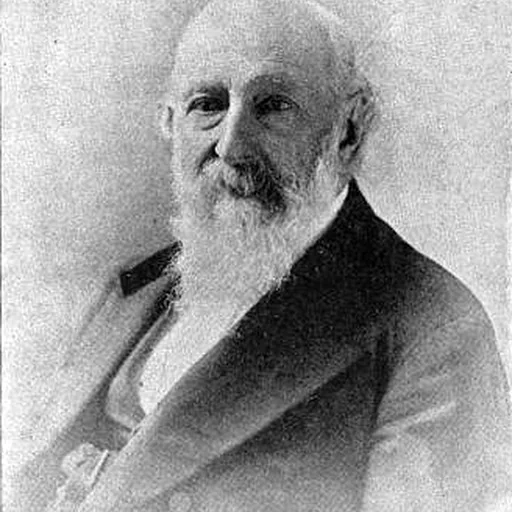
George Loring Brown was born in Boston on February 2, 1814, and began his career apprenticed to the wood engraver Alonzo Hartwell, later working as an illustrator of children's books.