Artwork
Alpine Landscape
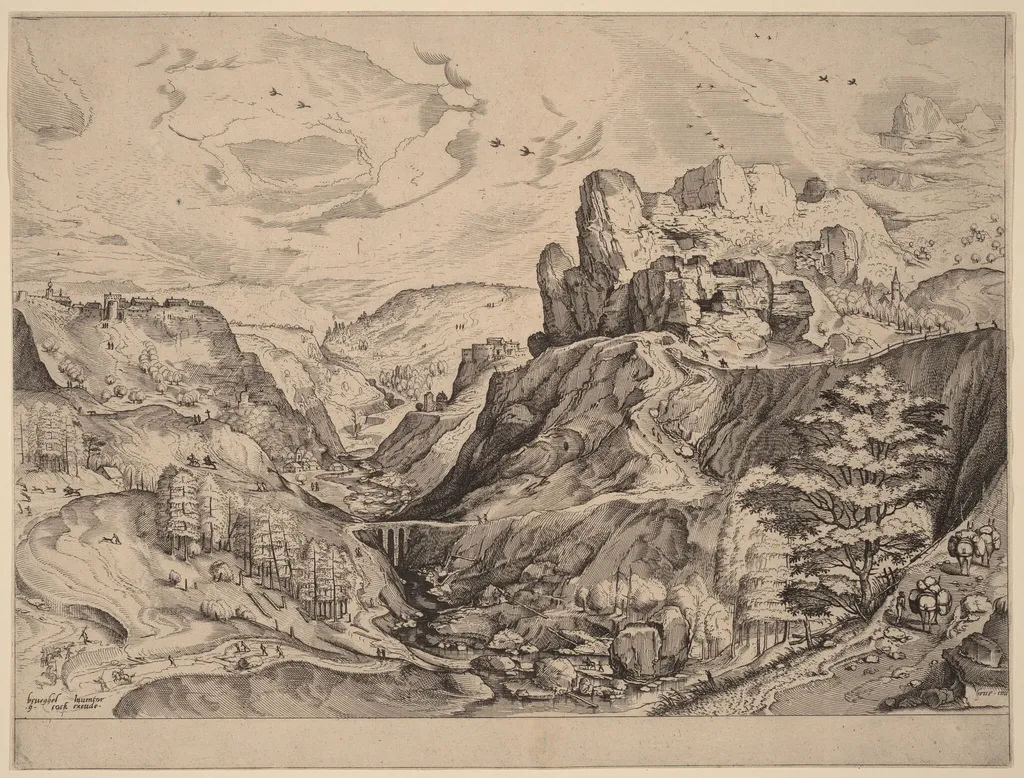
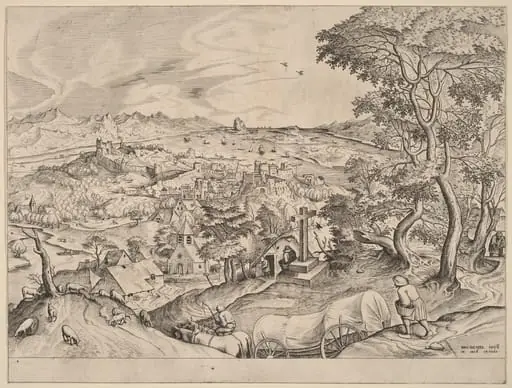
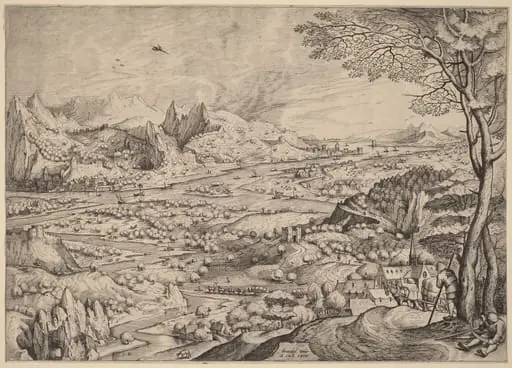
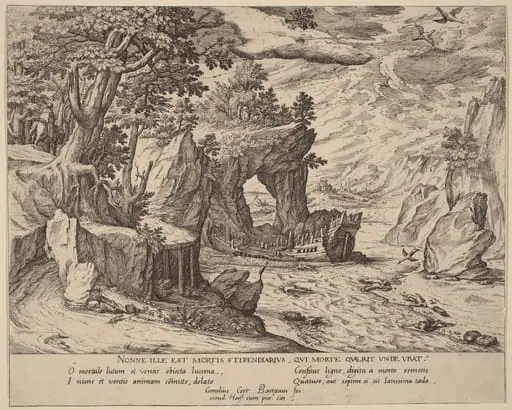
Alpine Landscape is an ink print by the Renaissance artist Lucas van Doetechum. It dates from 1556 and is held in the collection of the National Gallery of Art.
About this work
Overview
Created around 1556, the print titled Alpine Landscape is an etching and engraving on laid paper by the German artist Lucas van Doetechum. Executed as a single sheet, the work presents a rugged mountain scene rendered through the precise incisions of the artist’s metal plate, offering a view of highland terrain that reflects the early modern interest in topographical representation.
Subject & Meaning
The composition depicts a jagged chain of peaks crowned with cloud‑filled skies, a winding valley below, and a river threading through the landscape. Small dwellings cling to the slopes, suggesting human habitation within an otherwise wild environment. The inclusion of birds in flight adds a sense of movement, while the overall arrangement emphasizes the majesty and isolation of alpine terrain.
Technique & Style
Van Doetechum employed the etching process, incising fine lines into a copper plate that were then inked and transferred to paper. The delicate hatching conveys texture in rock faces, foliage, and water, while the engraving elements reinforce structural outlines. The combination of these methods yields a nuanced tonal range, characteristic of mid‑16th‑century printmaking.
History & Provenance
The work is known from a limited number of impressions, typical for prints of this period, and has been catalogued among van Doetechum’s early output. Its survival on laid paper indicates careful handling, and the piece has appeared in several collections of Northern Renaissance prints, reflecting its role in disseminating landscape imagery across Europe.
Artist & collection


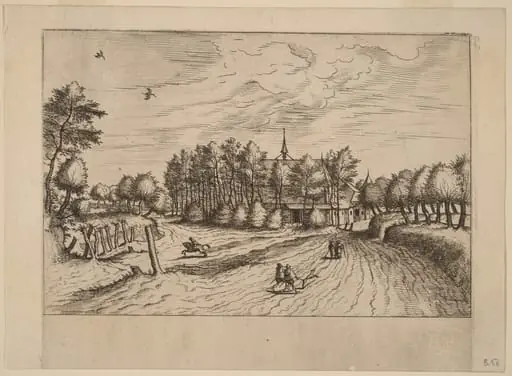
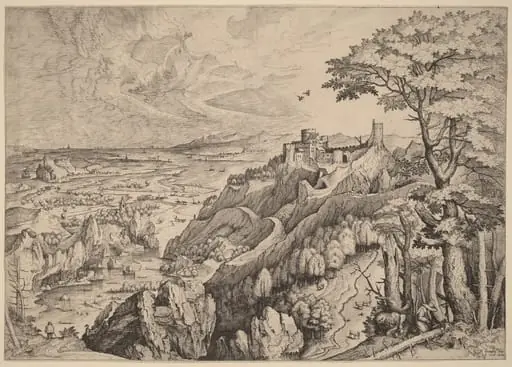 S. Hieronymus in Deserto (Saint Jerome in the Desert)
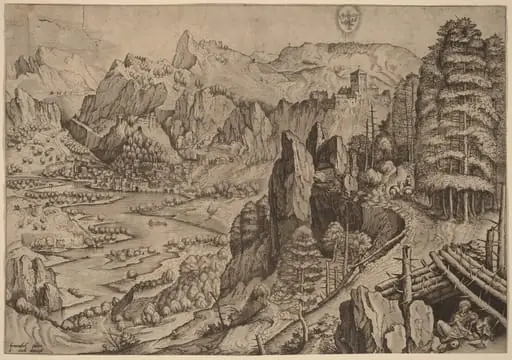 Magdalena Poenitens (The Penitent Magdalene)
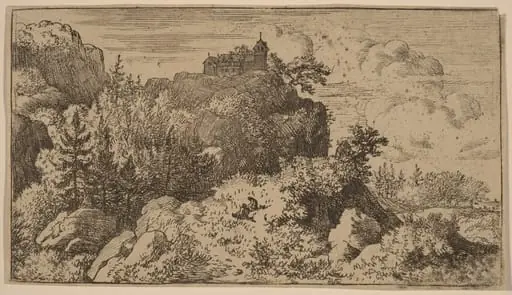 Firs in the Defile
 Solicitudo Rustica (Rustic Concerns)
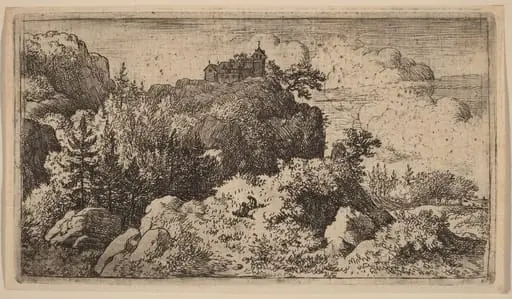 Firs in the Defile
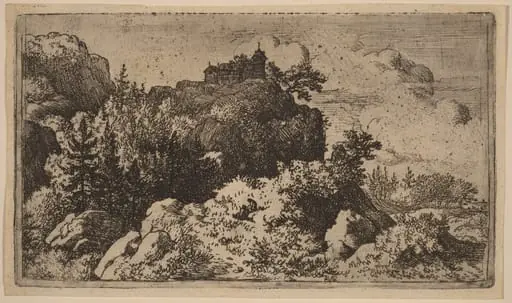 Firs in the Defile
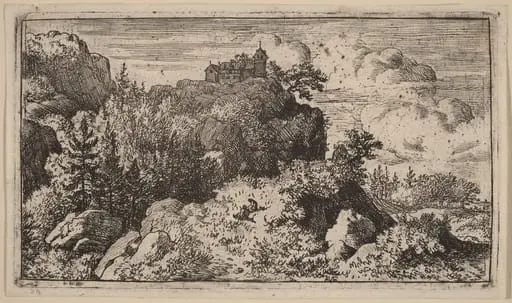 Firs in the Defile
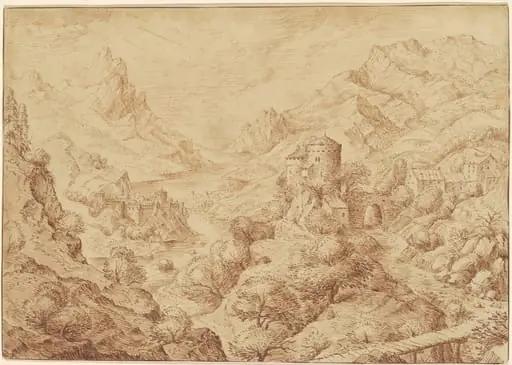 Panoramic River Landscape
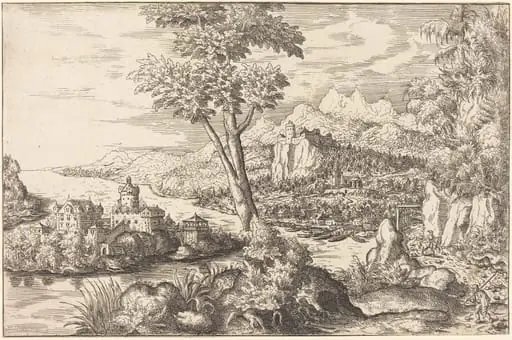 Landscape with Three Men
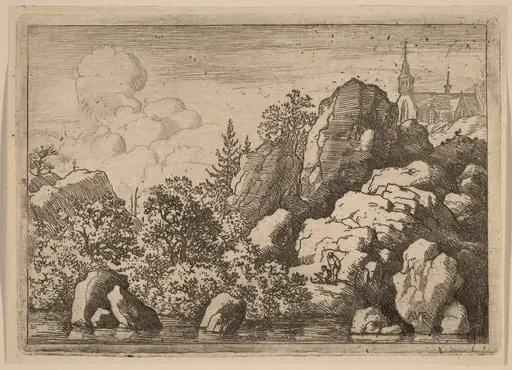 Church on a Hill
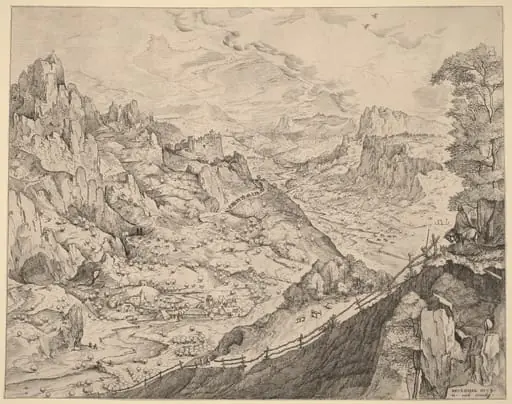 Large Alpine Landscape
 After the Shipwreck