Artwork
Firs in the Defile
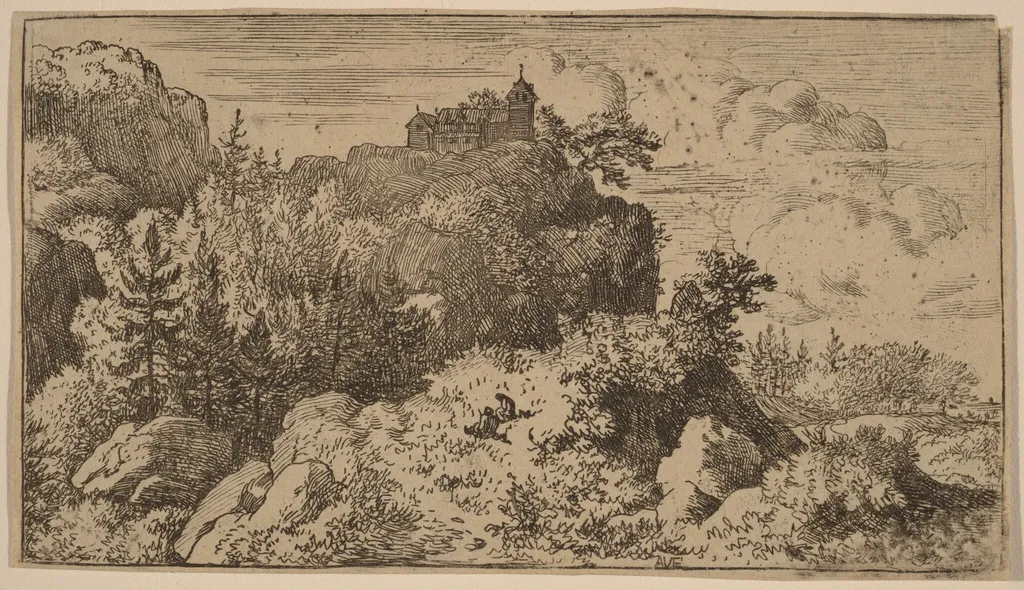
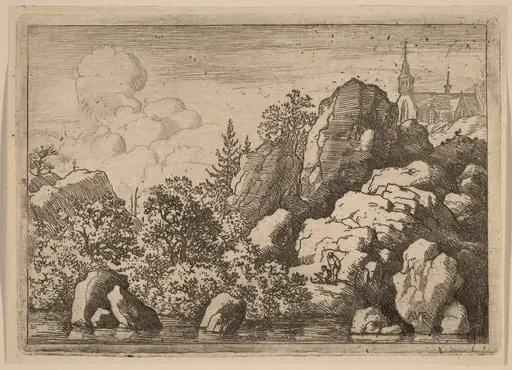
Firs in the Defile is an ink print by the Baroque artist Allart van Everdingen. It dates from 1650 and is held in the collection of the National Gallery of Art.
About this work
Overview
Around 1650 the Dutch artist Everdingen produced a print titled *Firs in the Defile*. Executed as an etching combined with drypoint, the work presents a compact, densely wooded scene set on a steep, rocky slope. The composition is dominated by tangled firs and a faint glimpse of a small tower or church rising above the treeline.
Subject & Meaning
The image captures a rugged natural environment, emphasizing the harshness of the terrain through crowded, gnarled trees and jagged rock faces. A modest architectural element—likely a church or watchtower—peeks through the foliage, suggesting human presence amid an otherwise untamed landscape.
Technique & Style
Everdingen employed fine, incised lines characteristic of drypoint to render texture on the plate, producing the rough bark of the firs and the craggy surfaces of the stones. The etching component provides broader tonal areas, while the drypoint adds crisp, velvety edges that enhance the sense of depth and atmospheric density.
History & Provenance
Everdingen, active during the Dutch Golden Age, was noted for both painting and printmaking, especially etchings and mezzotints. *Firs in the Defile* belongs to his series of landscape prints that circulated among collectors in the mid‑17th century, though specific ownership records for this particular impression are scarce.
Context
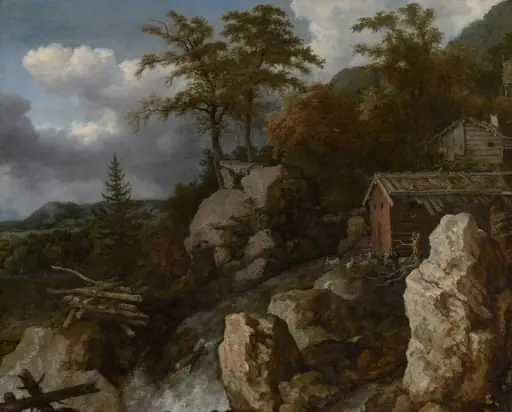
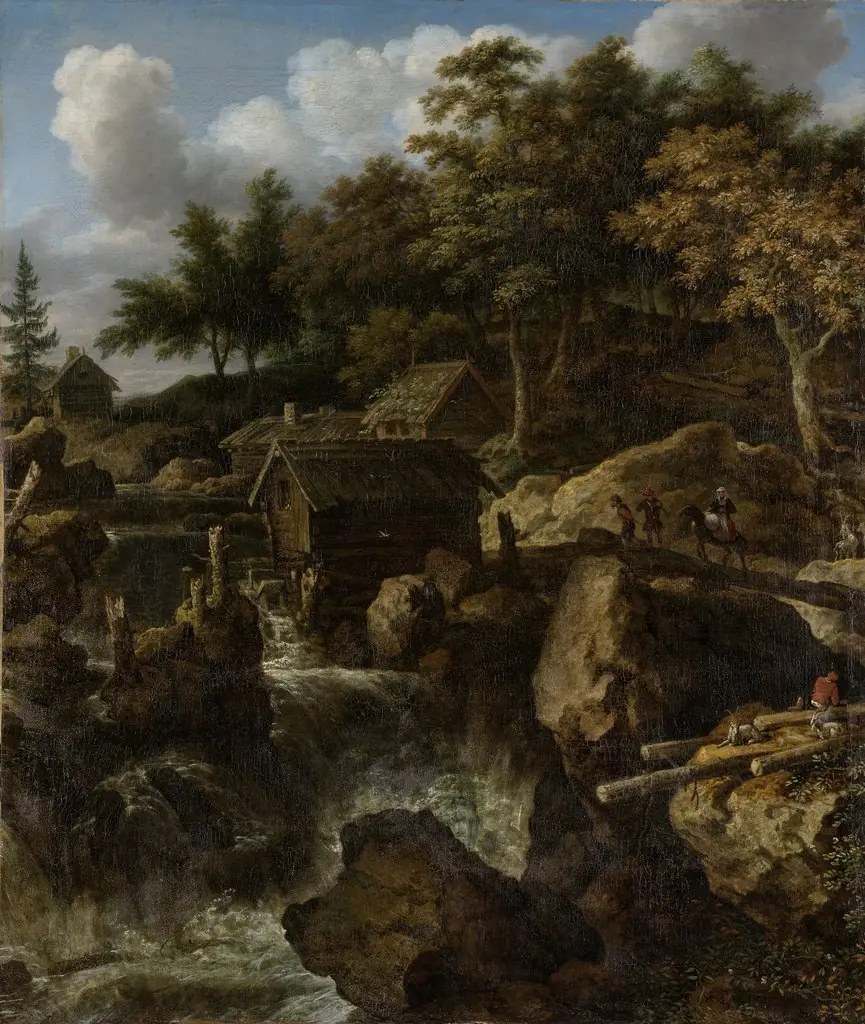
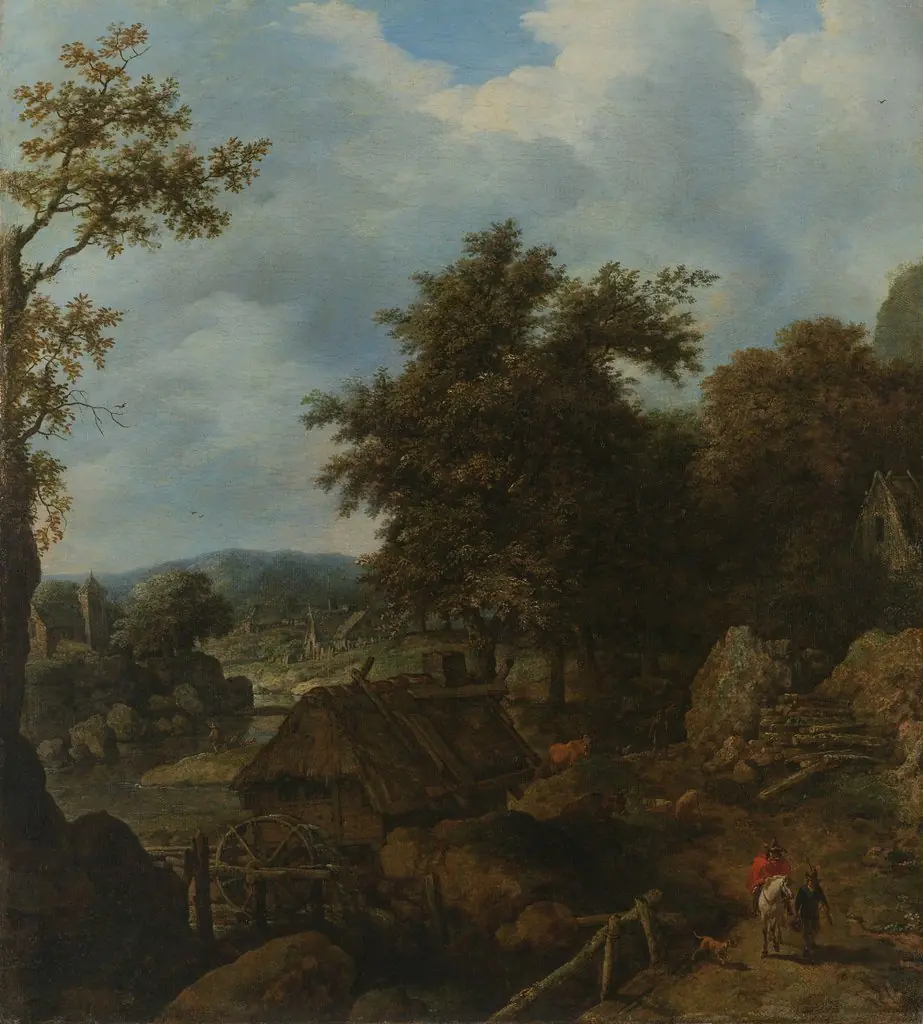
The work reflects the 17th‑century Dutch fascination with detailed, naturalistic landscapes, a genre that often blended realistic observation with subtle moral or spiritual undertones, as hinted by the solitary church silhouette within the wild setting.
Artist & collection
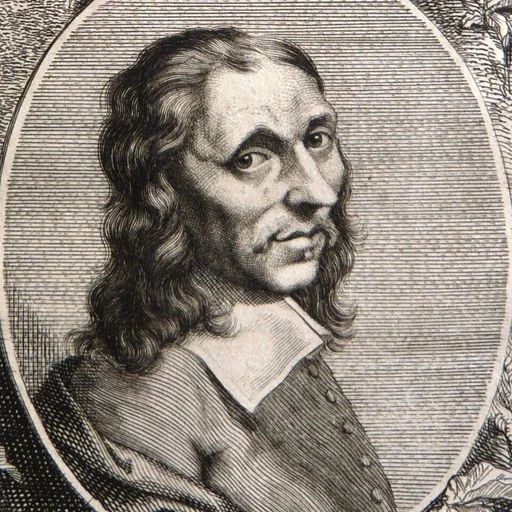
Artist
Allaert van Everdingen (Dutch pronunciation: ; bapt. 18 June 1621 – 8 November 1675 (buried)), was a Dutch Golden Age painter and printmaker in etching and mezzotint.