Artwork
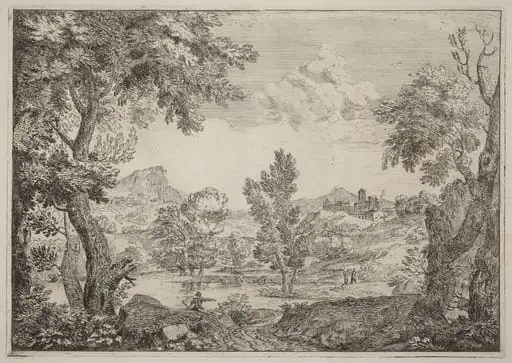
View Near Rome
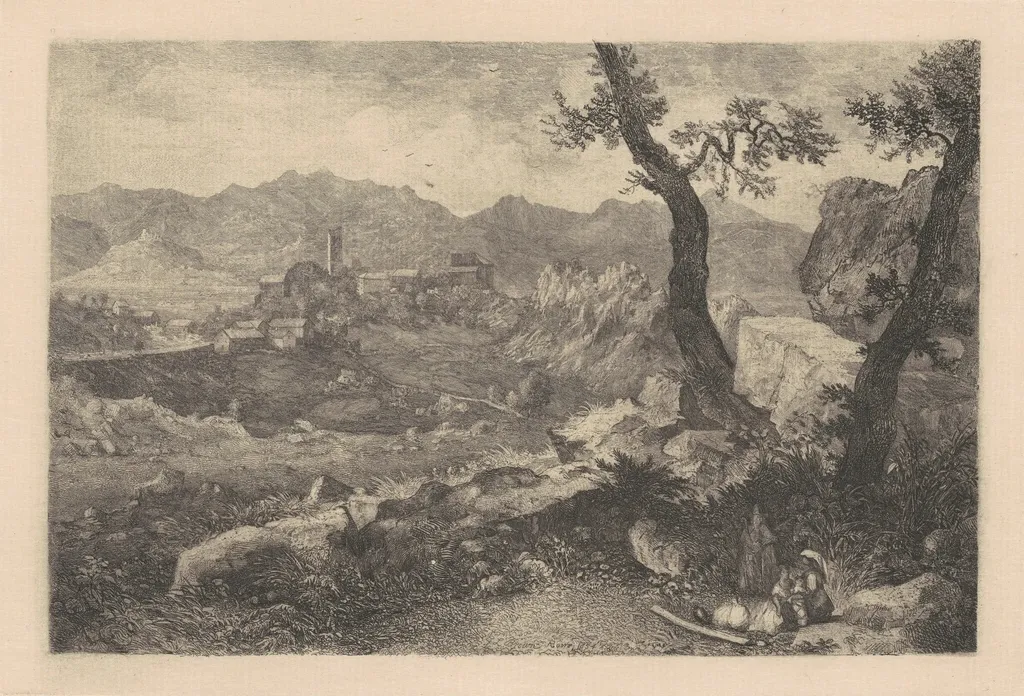
View Near Rome is an ink print by the Impressionist artist George Loring Brown. It dates from 1854 and is held in the collection of the National Gallery of Art.
About this work
Overview
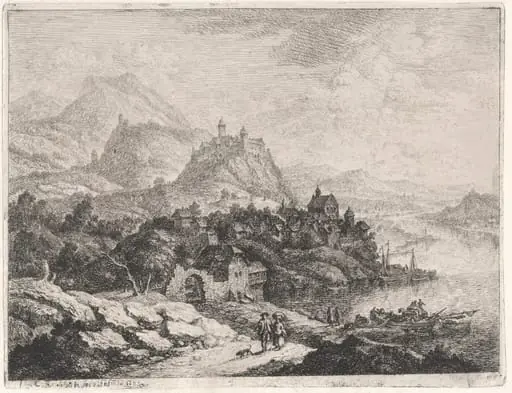
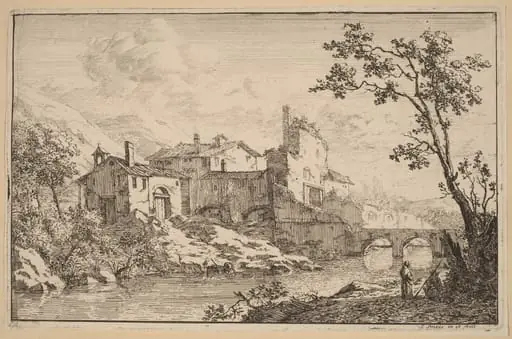
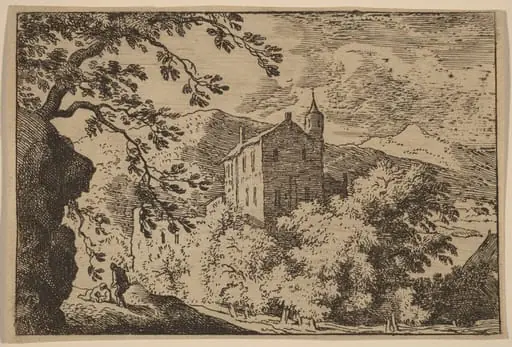
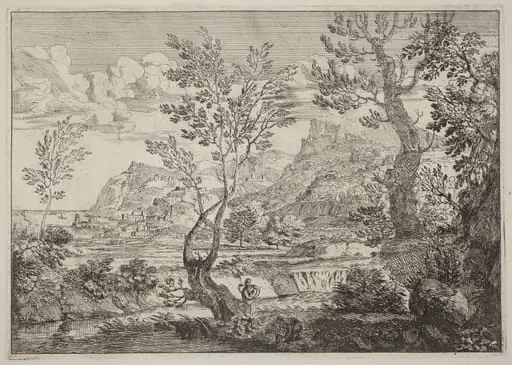
George Loring Brown’s 1854 print, titled View Near Rome, is an etching executed on laid paper using black ink. The work presents a tranquil rural landscape, rendered in monochrome, that captures a hillside scene with grazing sheep, a modest village perched on a slope, and a solitary, leaf‑less tree set against rocky ground.
Subject & Meaning
The composition depicts a peaceful pastoral setting near Rome, where a small settlement clings to the mountainside and a lone tower rises above the rooftops. The presence of sheep and the barren tree suggest a quiet, perhaps seasonal moment, emphasizing the harmony between human habitation and the surrounding natural environment.
Technique & Style
Brown employed the etching process, incising fine lines into a metal plate before printing onto paper. The delicate hatching conveys textures such as woolly fleece, bark, and the undulating terrain, while the contrast of deep blacks and lighter tones creates depth. The restrained palette and meticulous line work reflect the artist’s command of the medium.
History & Provenance
Created in the mid‑nineteenth century, the print reflects Brown’s interest in Italian scenery, a common theme among American landscape artists of the period. While specific ownership records are limited, the work has appeared in several collections of 19th‑century American prints, illustrating its continued relevance to scholars of transatlantic landscape art.
Own this work as a print
Artist & collection
Artist
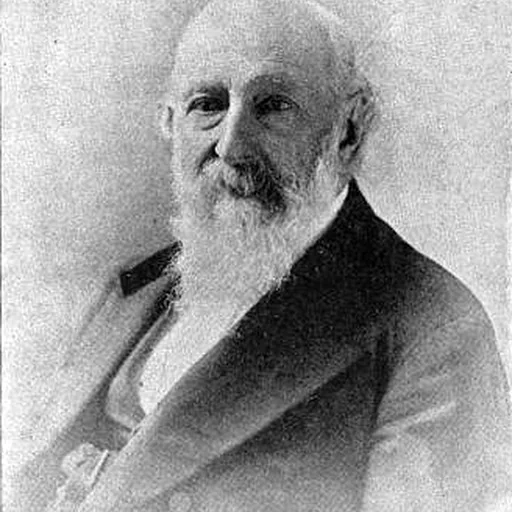
George Loring Brown was born in Boston on February 2, 1814, and began his career apprenticed to the wood engraver Alonzo Hartwell, later working as an illustrator of children's books.