Artwork
Cain after the murder of Abel
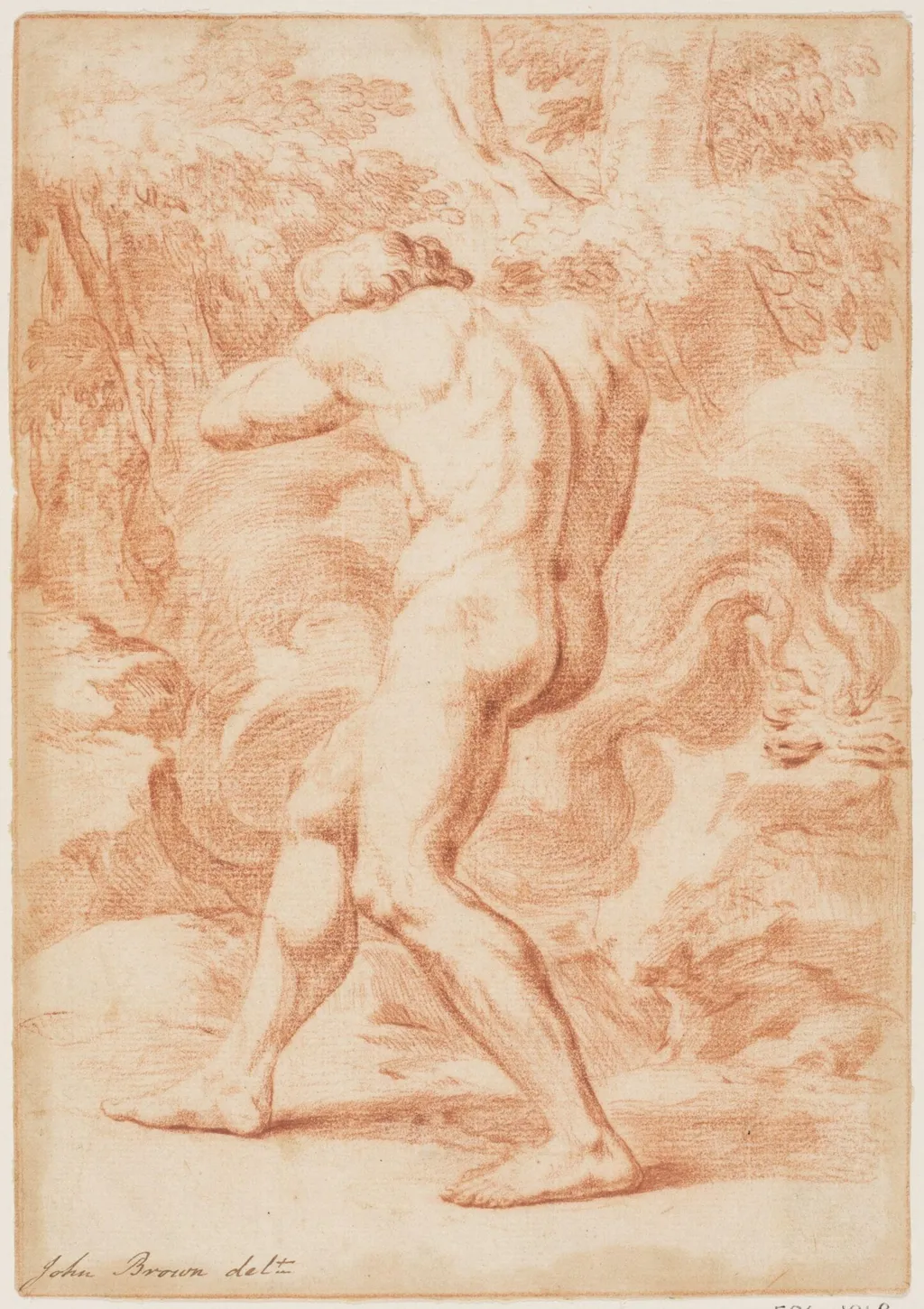
Cain after the murder of Abel is a drawing by the Romanticist artist John Brown. It dates from 1761 and is held in the collection of the Victoria and Albert Museum.
About this work
Overview
Cain after the murder of Abel is a drawing created circa 1761 by John Brown, now part of the Victoria and Albert Museum's collection.
Subject & Meaning
The drawing portrays a figure, identifiable as Cain, retreating from a prone body, presumably Abel. Cain's hunched posture, bowed head, and self-embracing arms visually convey profound guilt and remorse, capturing a moment of intense emotional turmoil.
Technique & Style
Executed in a simple yet evocative manner, the drawing features a subdued background of trees and foliage, focusing attention on the figures. The somber, reflective atmosphere aligns with pre-Romantic sensibilities, emphasizing emotional depth over detailed ornamentation.
History & Provenance
Created around 1761 by John Brown, the work's history prior to its acquisition by the Victoria and Albert Museum is not detailed here.
Context
While stylistically preceding the full bloom of Romanticism, the drawing's emphasis on intense personal emotion and somber natural settings anticipates key themes of the movement.
Legacy
The drawing's impact or influence on subsequent artists is not specified, though it remains a notable example of 18th-century artistic exploration of biblical themes with psychological depth.
Own this work as a print
Artist & collection
Artist
John Brown made a single surviving drawing, titled *Cain after the murder of Abel*, around 1761.

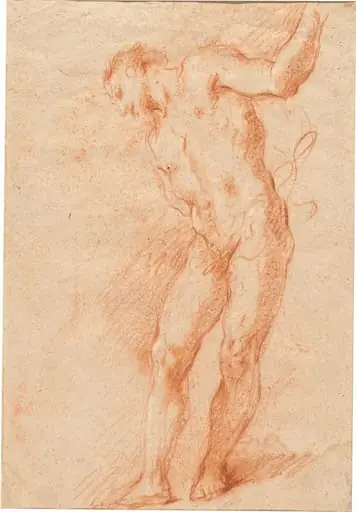 Male Nude
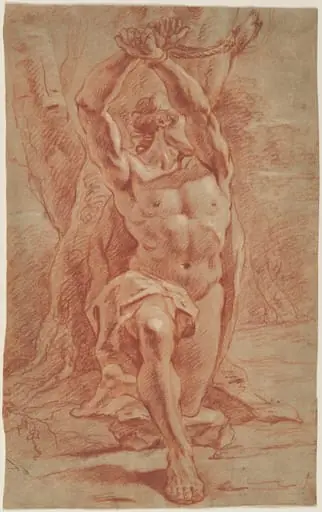 Kneeling Man Bound to a Tree
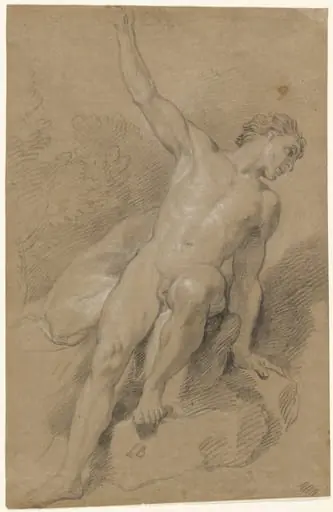 Male Nude Seated on Rocks
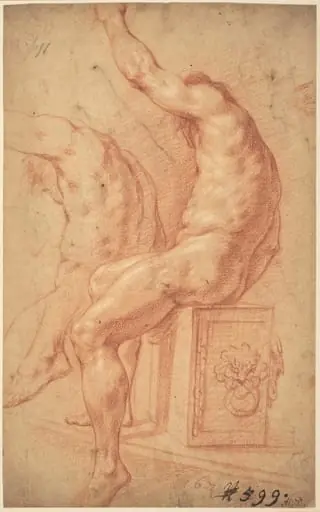 A Seated Nude
![The Borghese Gladiator, back view [plate 29], by François Perrier](https://artifactworldgallery.com/img/francois-perrier--the-borghese-gladiator-back-view-plate-29--e76fdd1927ce2d52-w320.webp) The Borghese Gladiator, back view [plate 29]
The Borghese Gladiator, back view [plate 29]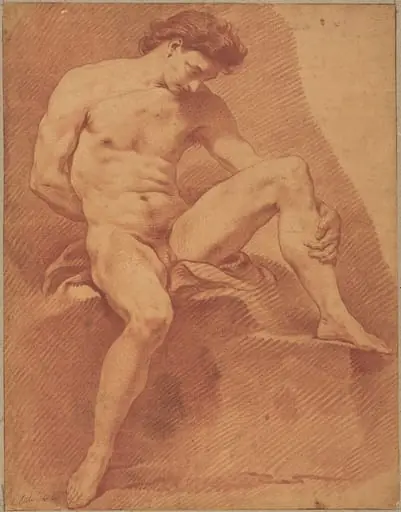 A Seated Male Nude
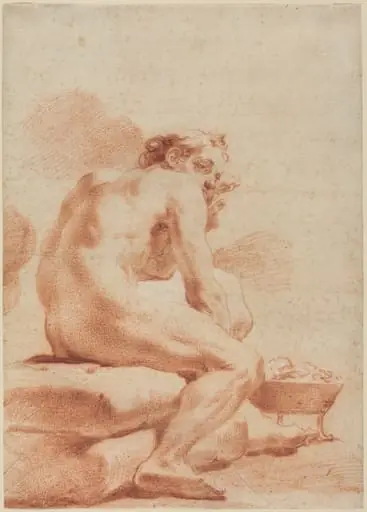 A Young Man Warming Himself at a Brazier
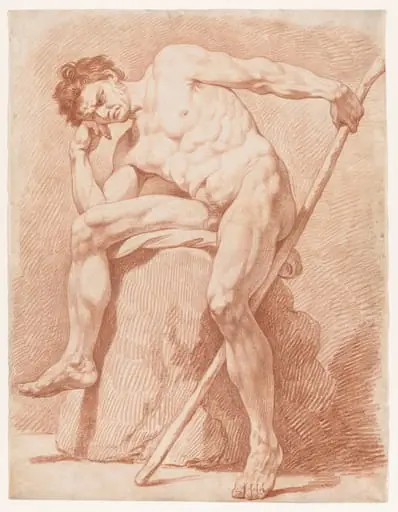 Academy of a Seated Nude Holding a Staff
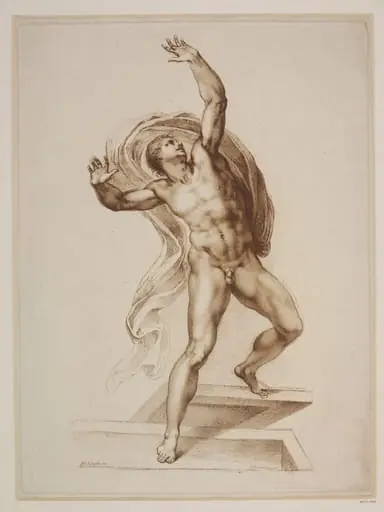 Figure from The Last Judgment
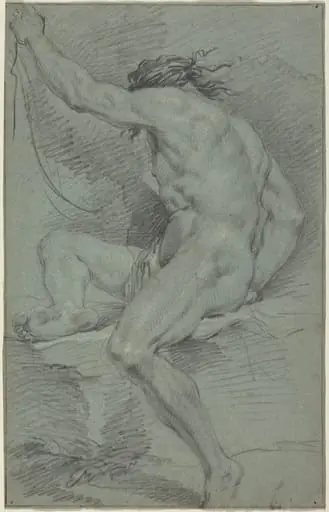 Nude Figure (academic study)
![Nude Male Figure [recto], by Italian 17th Century](https://artifactworldgallery.com/img/italian-17th-century--nude-male-figure-recto--f1cc965df272e72c-w320.webp) Nude Male Figure [recto]
Nude Male Figure [recto]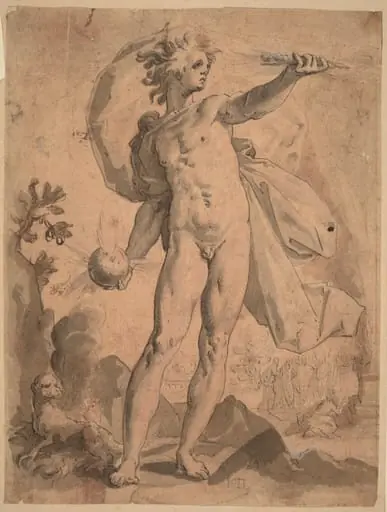 Ignis
Ignis