Artwork
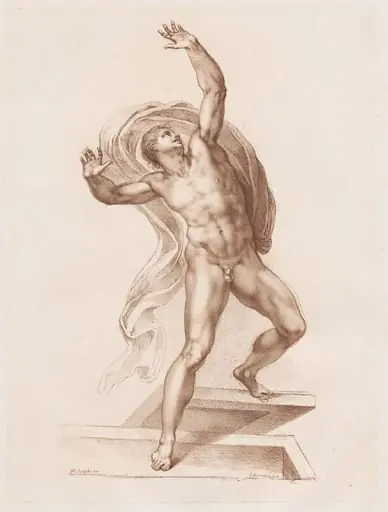
The Borghese Gladiator, back view [plate 29]
![The Borghese Gladiator, back view [plate 29], by François Perrier, ink, 1638](https://artifactworldgallery.com/img/francois-perrier--the-borghese-gladiator-back-view-plate-29--e76fdd1927ce2d52-w1024.webp)
The Borghese Gladiator, back view [plate 29] is an ink print by the Baroque artist François Perrier. It dates from 1638 and is held in the collection of the National Gallery of Art.
About this work
Overview
François Perrier, a French artist active in the early 17th century, produced this etching in 1638 as part of a series documenting classical sculptures.
François Perrier, a French artist active in the early 17th century, produced this etching in 1638 as part of a series documenting classical sculptures. The print captures the rear view of the Borghese Gladiator, a Roman statue believed to replicate a Hellenistic bronze. Executed on laid paper, the work belongs to Perrier’s first published collection, designed to preserve and disseminate ancient forms for the use of contemporary artists and connoisseurs.
Subject & Meaning
The sculpture depicts a male figure in dynamic tension, right arm drawn back as if preparing to hurl a projectile, left foot raised in motion. The pose suggests athletic exertion, rooted in Hellenistic traditions of portraying the human body in action. Perrier’s focus on the back view emphasizes musculature and posture, reflecting a scholarly interest in anatomical precision rather than narrative drama.
Technique & Style
Perrier employed etching to render fine linear details and subtle tonal gradations, enhancing the sculptural volume of the figure. Shading follows the contours of the back, shoulders, and legs to accentuate muscular definition. The sparse background—minimal trees and rugged terrain—directs attention to the form, consistent with 17th-century artistic pedagogy that prioritized study of the nude over environmental context.
History & Provenance
The etching was included in Perrier’s 1638 publication, *Segmenta nobilium signorum et statuarum*, a systematic record of surviving antiquities. This collection circulated among artists and collectors in France and beyond, helping to standardize classical references in Baroque training. The Borghese Gladiator, then in the Borghese collection in Rome, was a favored subject for such reproductions due to its preserved condition and expressive pose.
Context
In mid-17th-century France, artists increasingly turned to Roman sculpture as models for ideal form. Perrier’s prints responded to this trend, offering accessible, accurate depictions of antiquities when travel to Italy was difficult. His work bridged Italian Renaissance ideals and French academic practice, reinforcing the role of classical precedent in shaping contemporary artistic standards.
Legacy
Perrier’s etchings, including this one, became reference tools for generations of French artists. By translating three-dimensional sculpture into two-dimensional prints, he facilitated the transmission of classical anatomy and composition. His method influenced later academic drawing curricula and contributed to the enduring presence of Roman statuary in European art education.
Own this work as a print
Artist & collection
Artist
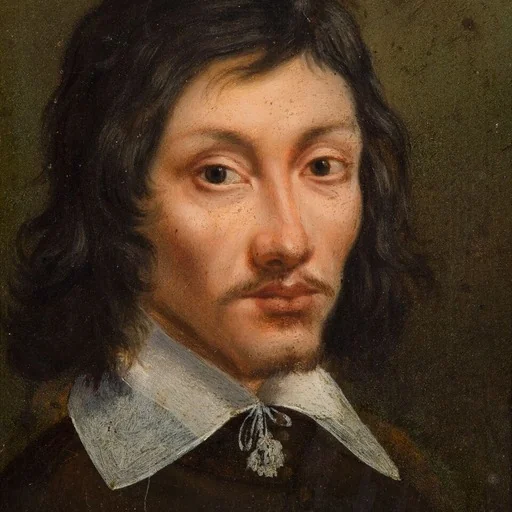
François Perrier (French pronunciation: ; 1590–1650) was a French painter, draftsman, and printmaker.

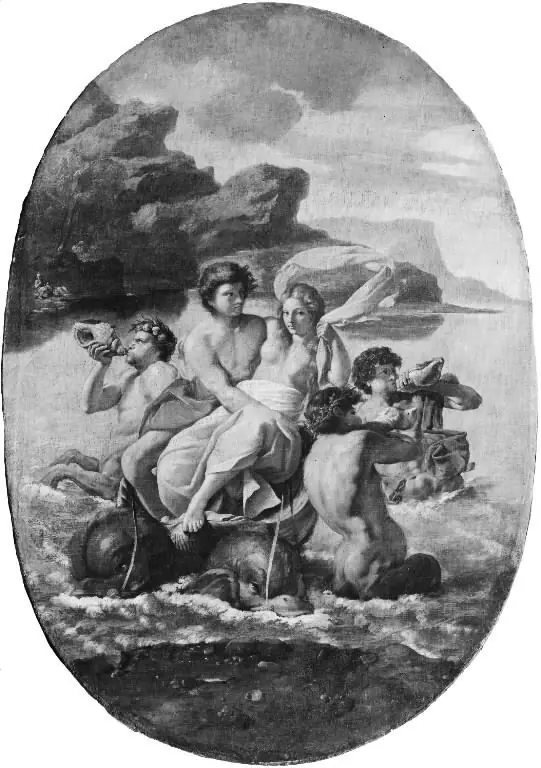 Acis and Galathea
![The Farnese Hercules, seen from behind [plate 4], by François Perrier](https://artifactworldgallery.com/img/francois-perrier--the-farnese-hercules-seen-from-behind-plate-4--075576b9459929be-w320.webp) The Farnese Hercules, seen from behind [plate 4]
The Farnese Hercules, seen from behind [plate 4]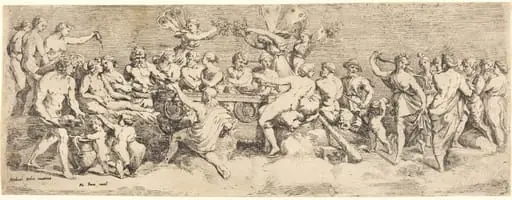 The Wedding Feast of Cupid and Psyche
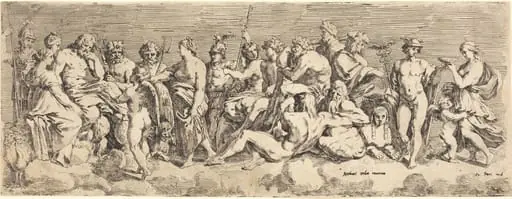 The Admission of Psyche to Olympia
![A Nude Fighting Man, side view, turned to left [plate 27], by François Perrier](https://artifactworldgallery.com/img/francois-perrier--a-nude-fighting-man-side-view-turned-to-left-plate-27--39122f796b85b2fb-w320.webp) A Nude Fighting Man, side view, turned to left [plate 27]
A Nude Fighting Man, side view, turned to left [plate 27]![The Borghese Gladiator, front view [plate 26], by François Perrier](https://artifactworldgallery.com/img/francois-perrier--the-borghese-gladiator-front-view-plate-26--5b649a5fe8c2f305-w320.webp) The Borghese Gladiator, front view [plate 26]
The Borghese Gladiator, front view [plate 26]![The Farnese Hercules, three-quarter view turned to left [plate 3], by François Perrier](https://artifactworldgallery.com/img/francois-perrier--the-farnese-hercules-three-quarter-view-turned-to-left-plate--b0564bebaad016fa-w320.webp) The Farnese Hercules, three-quarter view turned to left [plate 3]
The Farnese Hercules, three-quarter view turned to left [plate 3]![The Medici Wrestlers, side view, turned to left [plate 36], by François Perrier](https://artifactworldgallery.com/img/francois-perrier--the-medici-wrestlers-side-view-turned-to-left-plate-36--c50b05437f8744ca-w320.webp) The Medici Wrestlers, side view, turned to left [plate 36]
The Medici Wrestlers, side view, turned to left [plate 36]