Artwork
Allegory: Four Putti
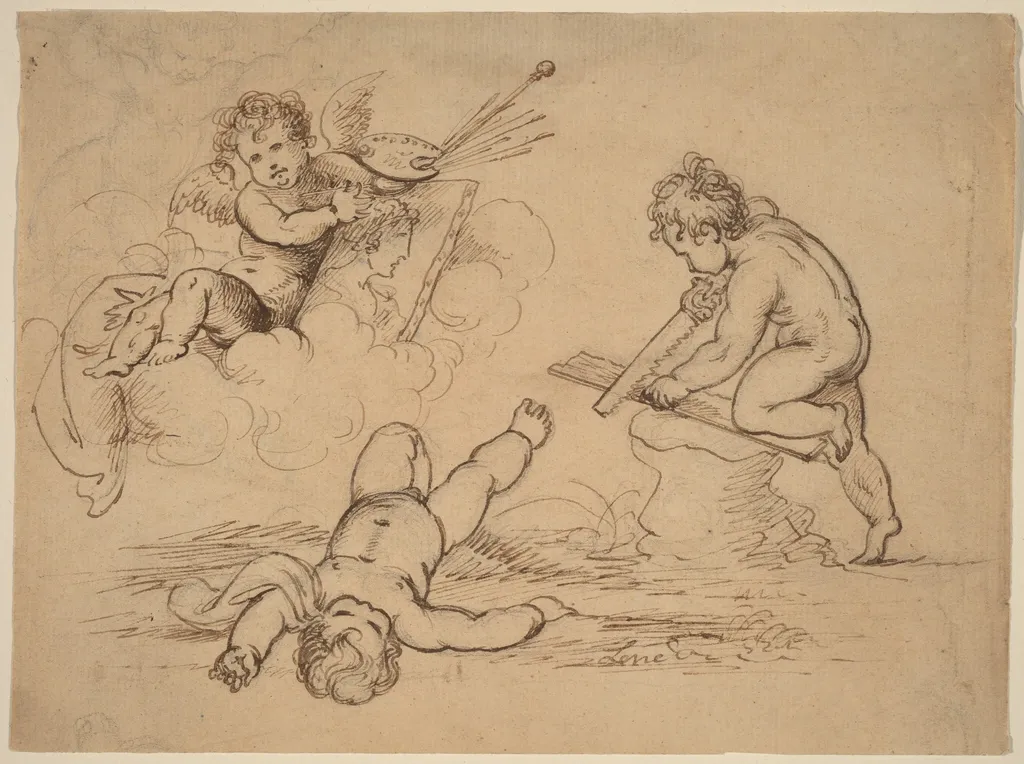
Allegory: Four Putti is an ink drawing by the Romanticist artist Mather Brown. It dates from 1785 and is held in the collection of the National Gallery of Art.
About this work
Overview
Created in 1785 by Mather Brown, this drawing is a pen-and-ink sketch on laid paper, executed over a graphite underdrawing. It depicts four putti—winged infant figures—engaged in informal, almost chaotic interactions with artistic tools. The composition lacks formal structure, suggesting spontaneity, as if capturing a fleeting moment of creative energy rather than a polished ideal.
Subject & Meaning
Their playful, unrefined actions suggest an allegory of artistic genesis—not as orderly process, but as instinctive, messy, and embodied activity.
The four putti are arranged in varied poses around art supplies: one holds a brush with trailing ink strokes, another stirs pigment in a bowl, a third is entangled in fabric, and the fourth rests nearby. Their playful, unrefined actions suggest an allegory of artistic genesis—not as orderly process, but as instinctive, messy, and embodied activity. The scene implies creativity emerges from disorder rather than discipline.
Technique & Style
Brown employed loose, fluid pen strokes over light graphite lines to convey movement and texture. Shading is achieved through sparse cross-hatching and varying line weight, avoiding heavy modeling. The sketchiness of the work conveys immediacy, as if drawn from life or imagination in a single sitting. The lack of finish emphasizes process over polish, aligning with the theme of unrefined creation.
History & Provenance
The drawing dates to 1785, during Brown’s early career in London, before his move to the United States. It likely served as a preparatory study or personal exercise, not a commissioned work. Its survival suggests it was retained by the artist or a close associate, possibly valued for its expressive quality rather than its formal completion.
Context
In late 18th-century Britain, allegorical drawings of putti were common in academic circles, often symbolizing the arts or virtues. Brown’s version diverges from idealized traditions by portraying them as unguarded, physical beings rather than ethereal symbols. This reflects a broader shift toward observing human behavior with informal realism, even in mythological subjects.
Legacy
Though not widely exhibited, the drawing offers insight into Brown’s approach to allegory and his interest in the physicality of creativity. It stands as an example of how artists used quick studies to explore abstract ideas through bodily gesture, influencing later generations who valued expressive draftsmanship over polished finish.
Artist & collection

Artist
Mather Brown (baptized 11 October 1761 – 25 May 1831) was an American painter who was born in Boston, Massachusetts and was active in England.


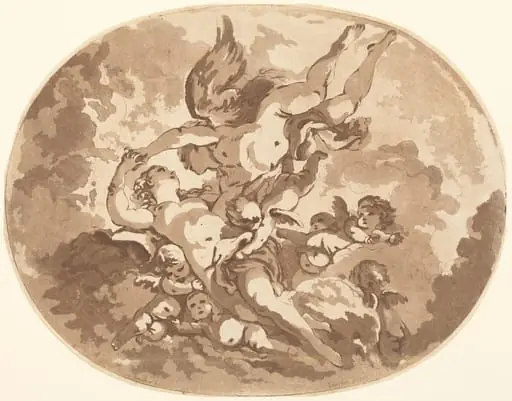 Eros and Psyche
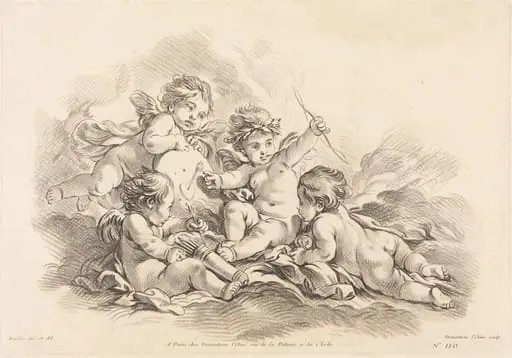 Four Cherubs at Target Practice
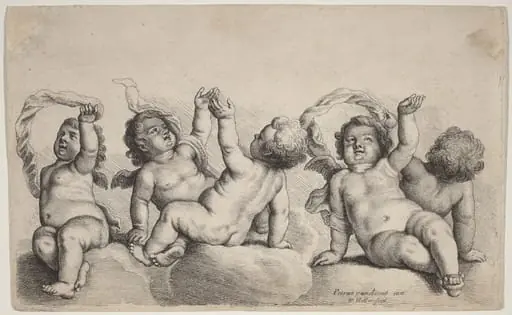 Three Cherubs and Two Boys Each Raising One Arm on Clouds
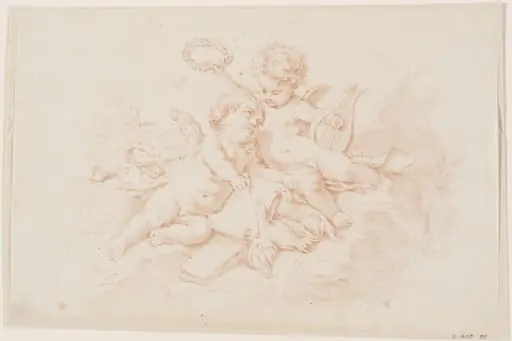 Poetry; two putti in a cloud
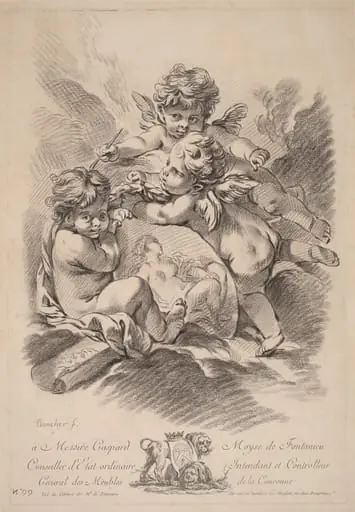 Allegory of Painting with Three Cherubs (99)
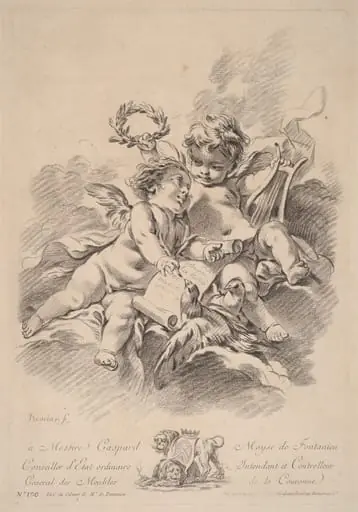 Allegory of Music with Two Cherubs and Doves (100)
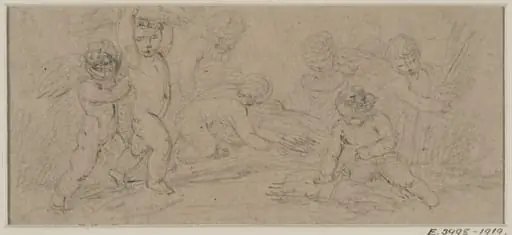 Cupids binding and carrying sheaves of corn
![Two Standing Putti [recto], by Italian 17th Century](https://artifactworldgallery.com/img/italian-17th-century--two-standing-putti-recto--30f23a10b90bc89e-w320.webp) Two Standing Putti [recto]
Two Standing Putti [recto]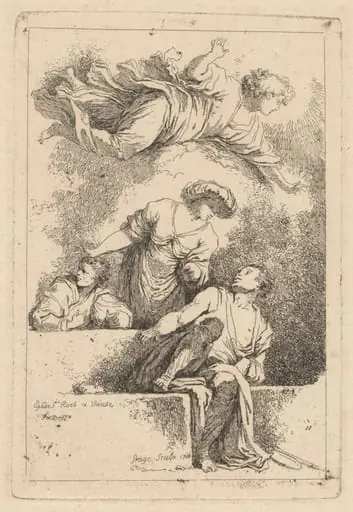 The Disciples at the Tomb
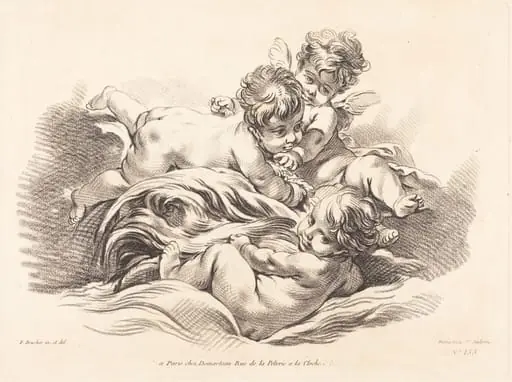 Three Cherubs Playing on Dolphin Like Wave
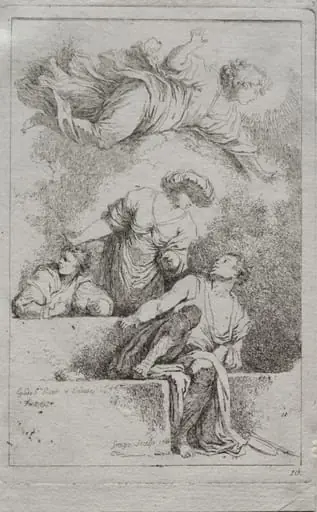 The Disciples at the Tomb
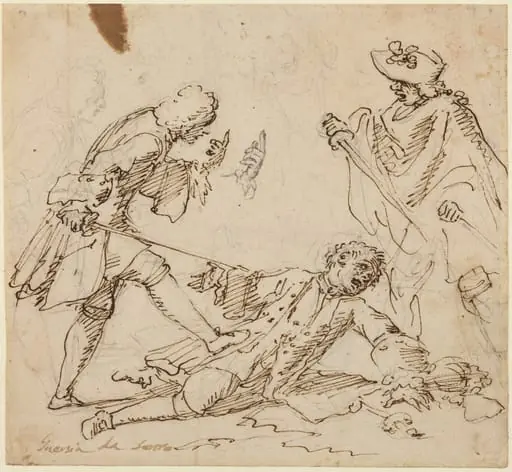 Three Men Fighting