Artwork
Neighbourhood Count
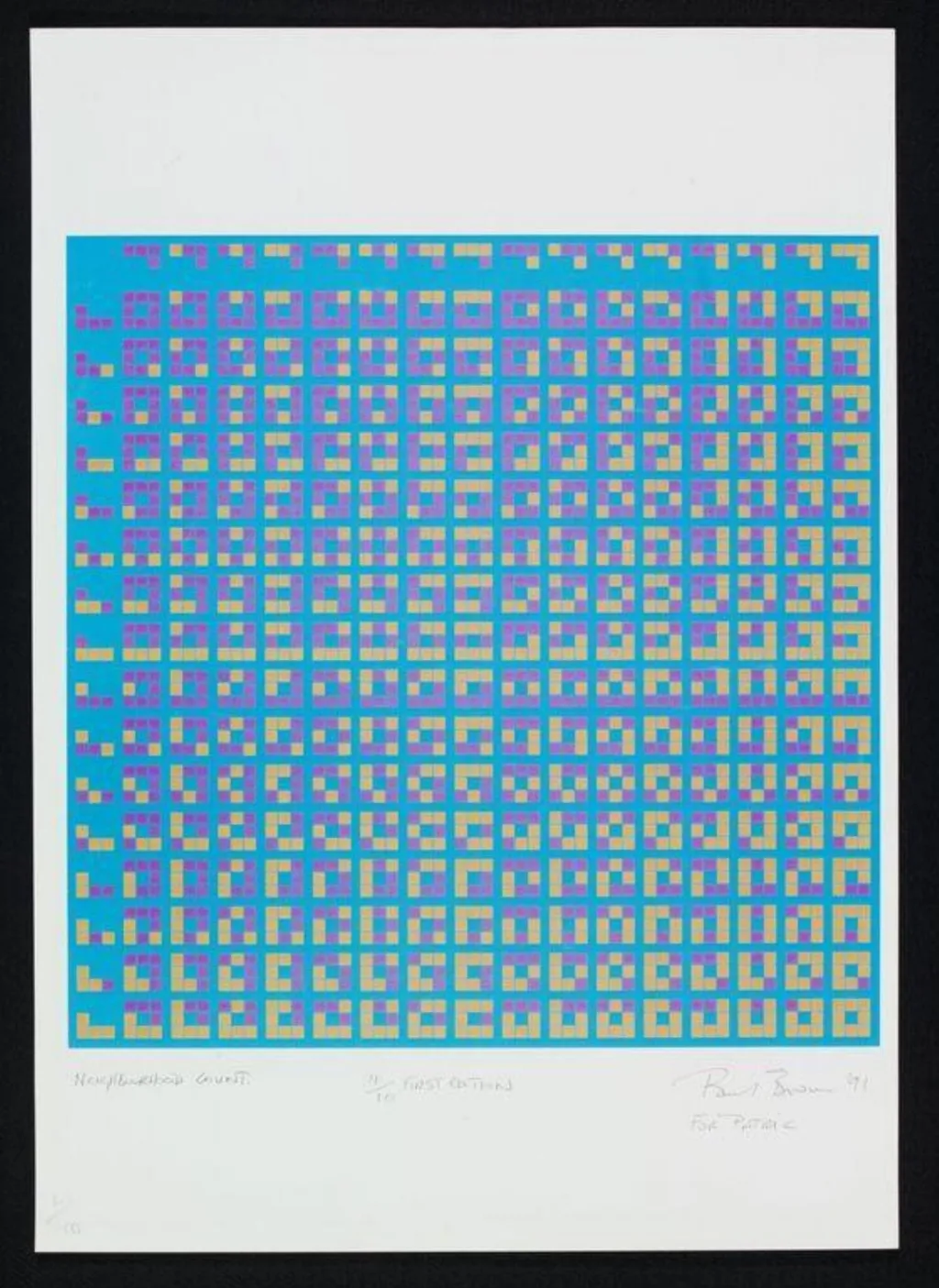
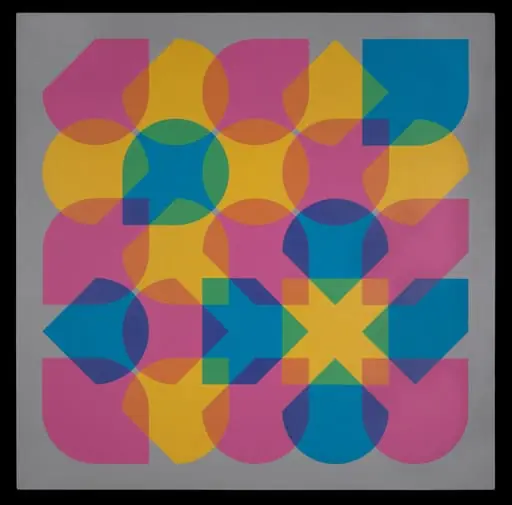
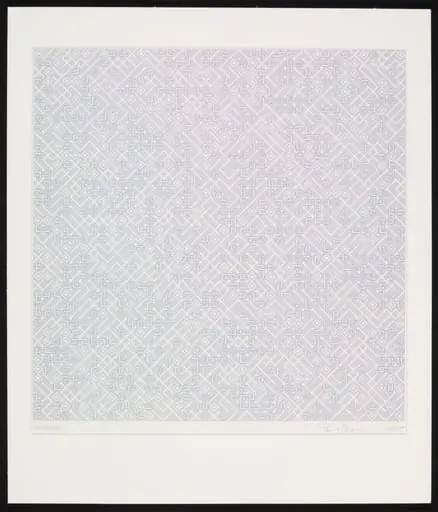
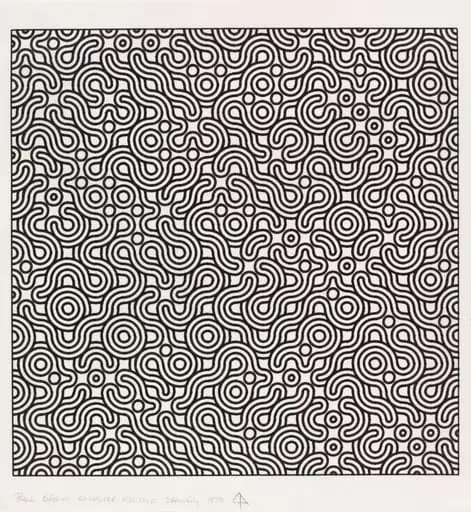
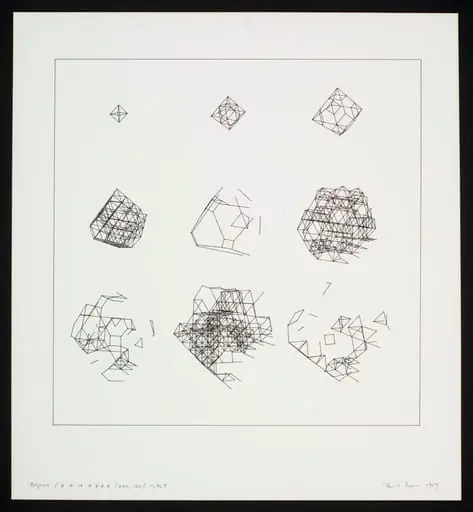
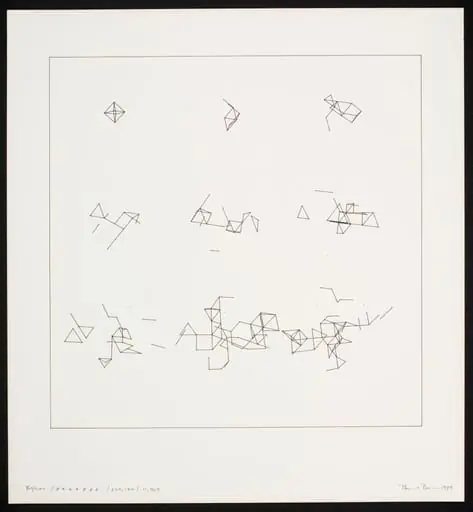
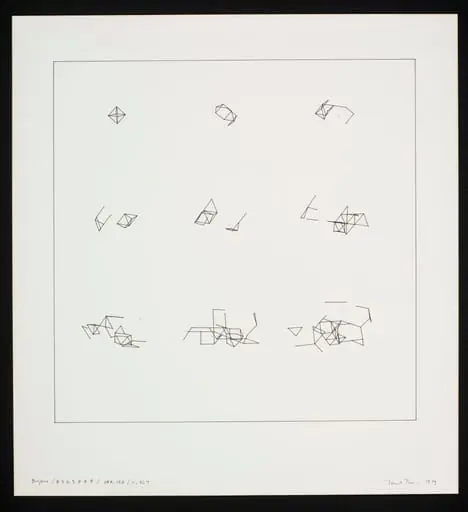
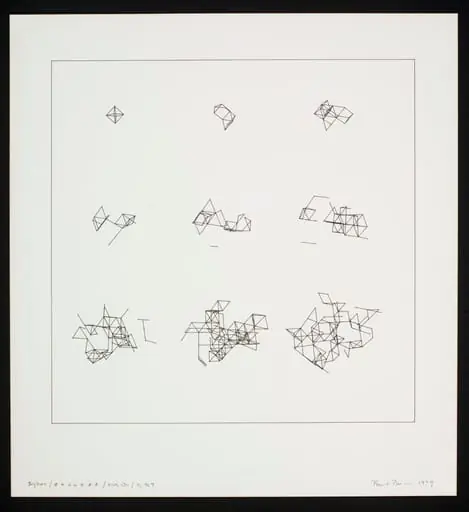
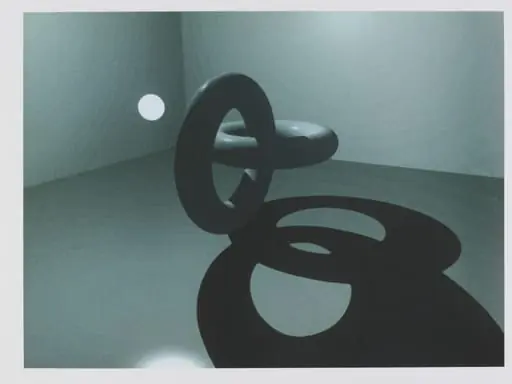
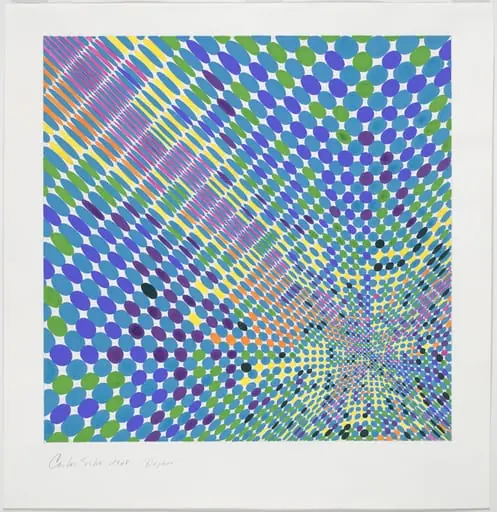
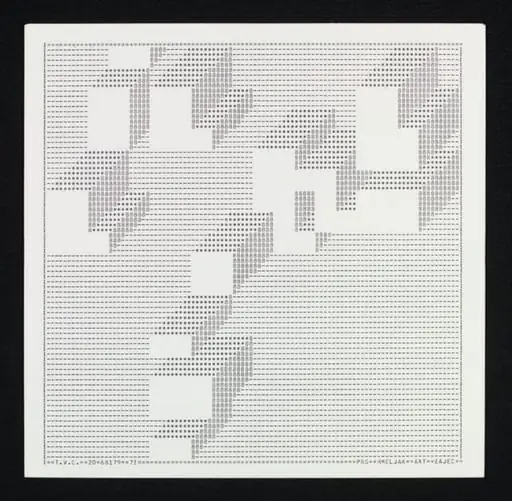
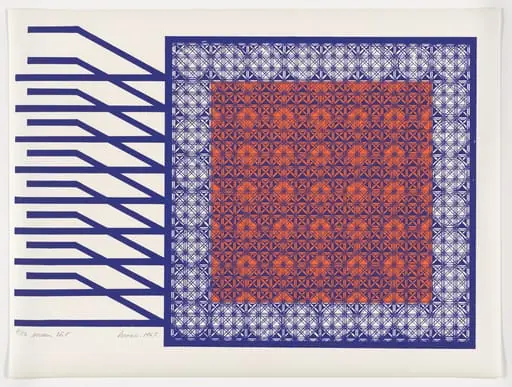
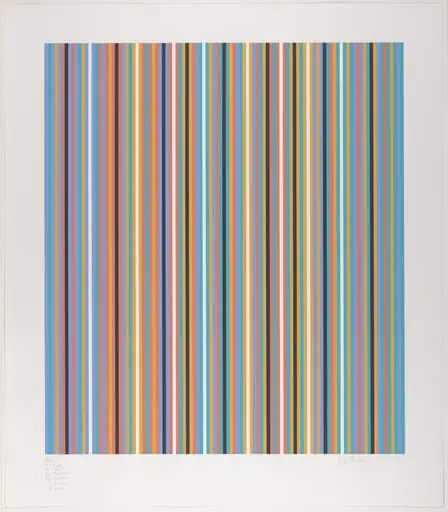
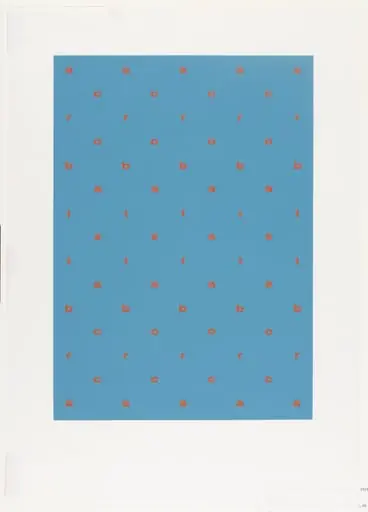
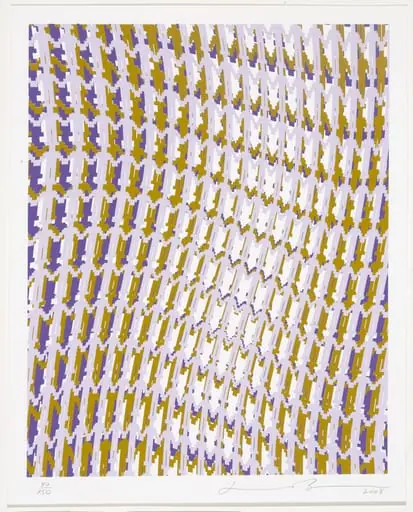
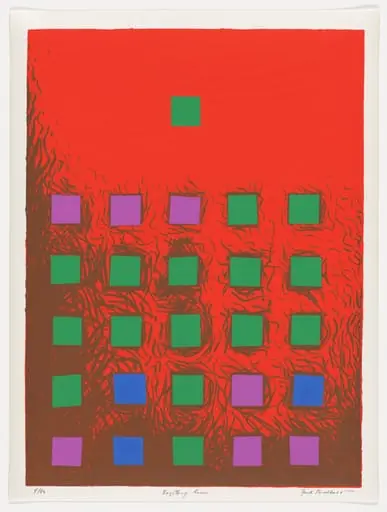
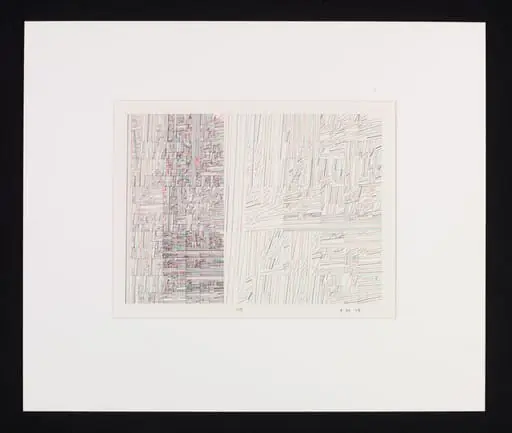
Neighbourhood Count is a print by Paul Brown. It dates from 1991 and is held in the collection of the Victoria and Albert Museum.
About this work
Overview
Neighbourhood Count is a computer-generated print created by Paul Brown, an early figure in the intersection of art, science and technology. The work originates from the 1970s, a period when Brown was active in experimental computer art at the Slade School of Art. It exemplifies the nascent practice of generative visual production using digital tools.
Technique & Style
The image was rendered by a custom program written in the C programming language. The code was executed on a Silicon Graphics Iris workstation, a high‑performance graphics system of its era. Output was transferred to a Canon D500 colour laser printer, producing a physical print that reflects the precision and palette of early computer‑driven colour processes.
History & Provenance
Brown’s involvement with the Slade School’s experimental computer art unit placed him among the first artists to explore algorithmic creation in an academic setting. The print, produced during that formative period, documents his transition from traditional media to computational methods, marking a key stage in his career that began in the late 1960s and intensified in the mid‑1970s.
Context
Neighbourhood Count belongs to a broader movement of generative and computational art that emerged alongside advances in computer hardware and programming languages. The work reflects the collaborative atmosphere of the 1970s British art scene, where artists, engineers, and scientists converged to investigate new visual possibilities afforded by emerging digital technologies.
Artist & collection

Artist
Paul Eugene Brown was an American football coach and executive in the All-America Football Conference (AAFC), the National Football League (NFL), and the American Football League (AFL).