Artwork
'T.V.C.= =20=68179'
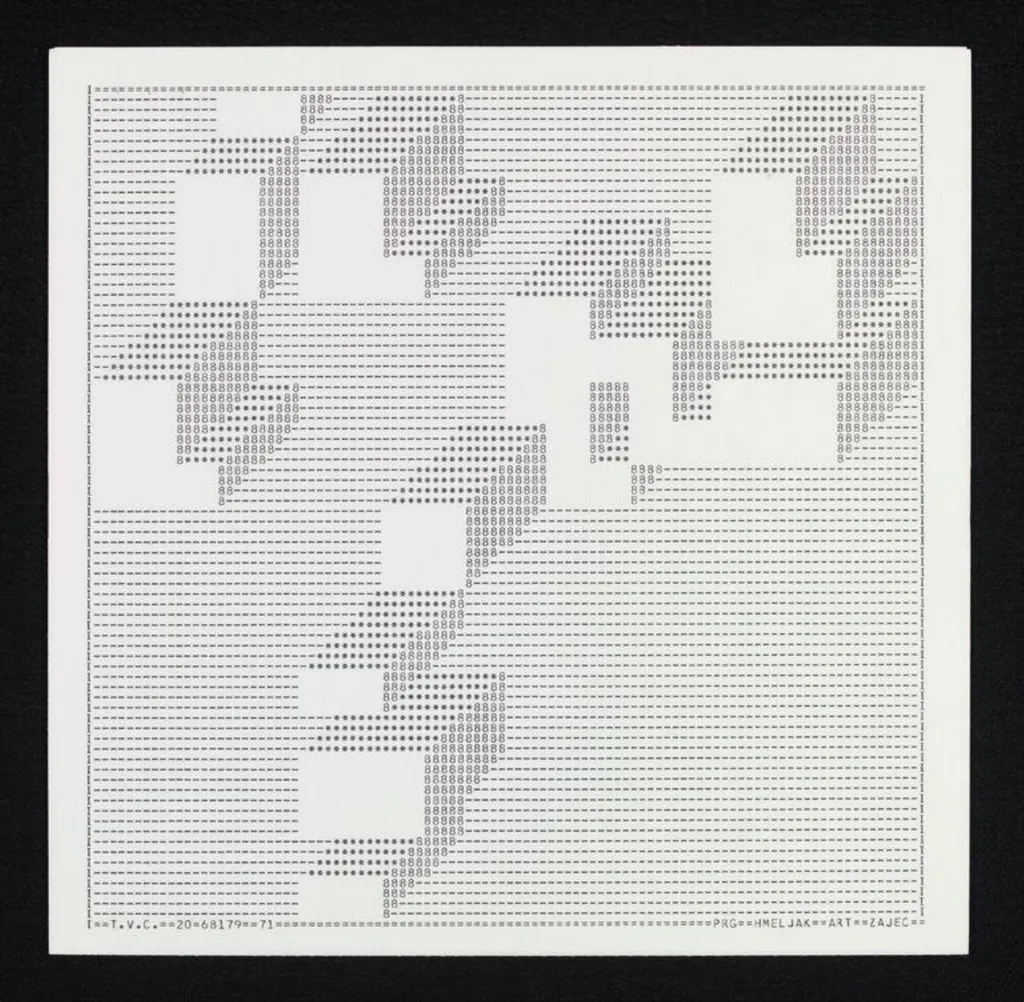
'T.V.C.= =20=68179' is a print by Edward Zajec. It dates from 1971 and is held in the collection of the Victoria and Albert Museum. T.
About this work
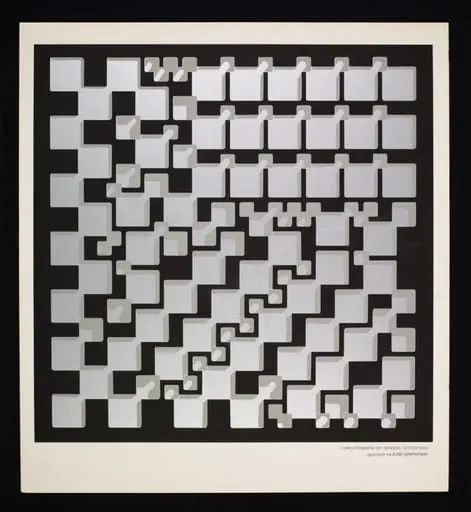
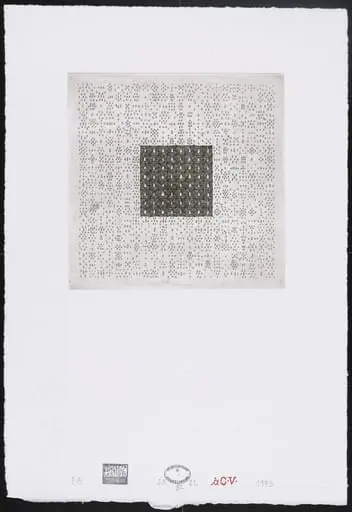
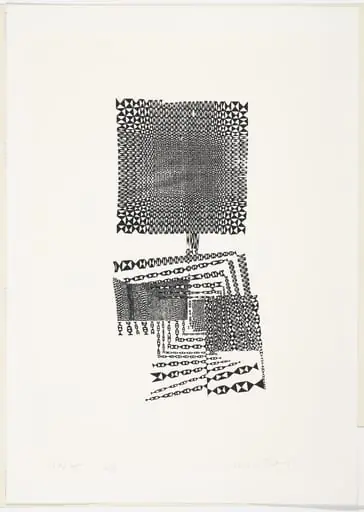
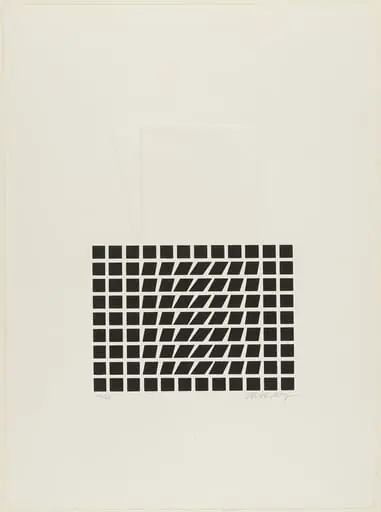
'T.V.C.= =20=68179' is a print created by Edward Zajec in 1971. It's part of a series called The Cube: Theme and Variations.
This print was made in collaboration with Matjaz Hmeljak. The series uses repeating characters to create a three-dimensional effect, with some characters in bold typeface.
To learn more about the artist behind this work, look up artist: Zajec, Edward.
Overview
The work emerges from Zajec’s shift from traditional painting to computational methods, using typographic repetition to generate spatial illusions.
T.V.C.= =20=68179 is a 1971 print by Edward Zajec, made in collaboration with programmer Matjaz Hmeljak. It belongs to The Cube: Theme and Variations series, an early exploration of algorithmic visual structure. The work emerges from Zajec’s shift from traditional painting to computational methods, using typographic repetition to generate spatial illusions. The title references a machine-generated identifier, reflecting the work’s systematic origins.
Subject & Meaning
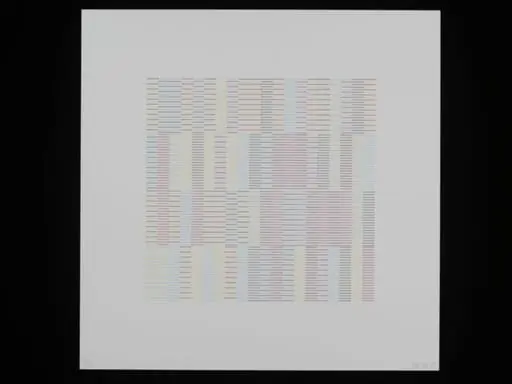
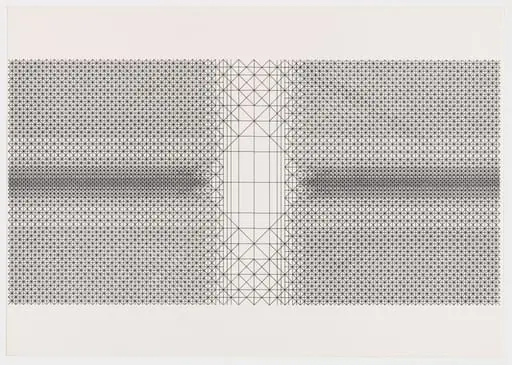
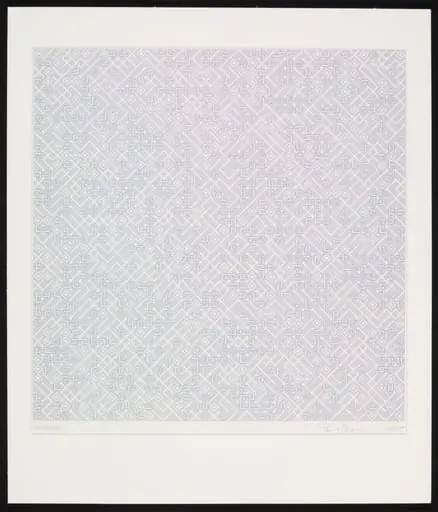
The print does not depict a recognizable scene but investigates perception through pattern. Repeating alphanumeric characters, some bolded, create the illusion of depth and volume, suggesting a cubic form in flux. The work questions the boundaries between manual design and machine-generated composition, positioning visual rhythm as a structural principle rather than a decorative one.
Technique & Style
Zajec and Hmeljak used early computer algorithms to generate the composition, translating Zajec’s conceptual framework into code. The visual effect relies on controlled repetition and typographic variation—minimal elements, carefully arranged to produce optical depth. The print’s precision and lack of hand-drawn marks distinguish it from traditional graphic art, aligning it with emerging computational aesthetics of the early 1970s.
History & Provenance
Created in 1971, this print was part of a series developed between 1970 and 1973 during Zajec’s time in Italy. It was exhibited in Tendencies 4 (1968–69) and later in Tendencies 5 (1973), key European shows for experimental art. The collaboration with Hmeljak, a computer scientist, was one of four joint projects between 1970 and 1980, reflecting a rare fusion of artistic intent and technical execution in that era.
Context
In the late 1960s and early 1970s, artists across Europe and the U.S. began exploring computing as a medium. Zajec’s work emerged alongside movements like cybernetic art and generative design, responding to new access to university-based computing resources. Unlike purely technical demonstrations, his projects retained a formal concern with perception, linking algorithmic processes to visual philosophy.
Legacy
Zajec’s collaborations helped establish computer-generated imagery as a legitimate artistic practice. His later founding of a computer art program at Syracuse University institutionalized this approach. The T.V.C. series remains a reference point for early digital art, demonstrating how limited computational tools could yield complex visual systems—laying groundwork for later generative and algorithmic art traditions.
Artist & collection
Artist