Artwork
Adonis carried off by Venus
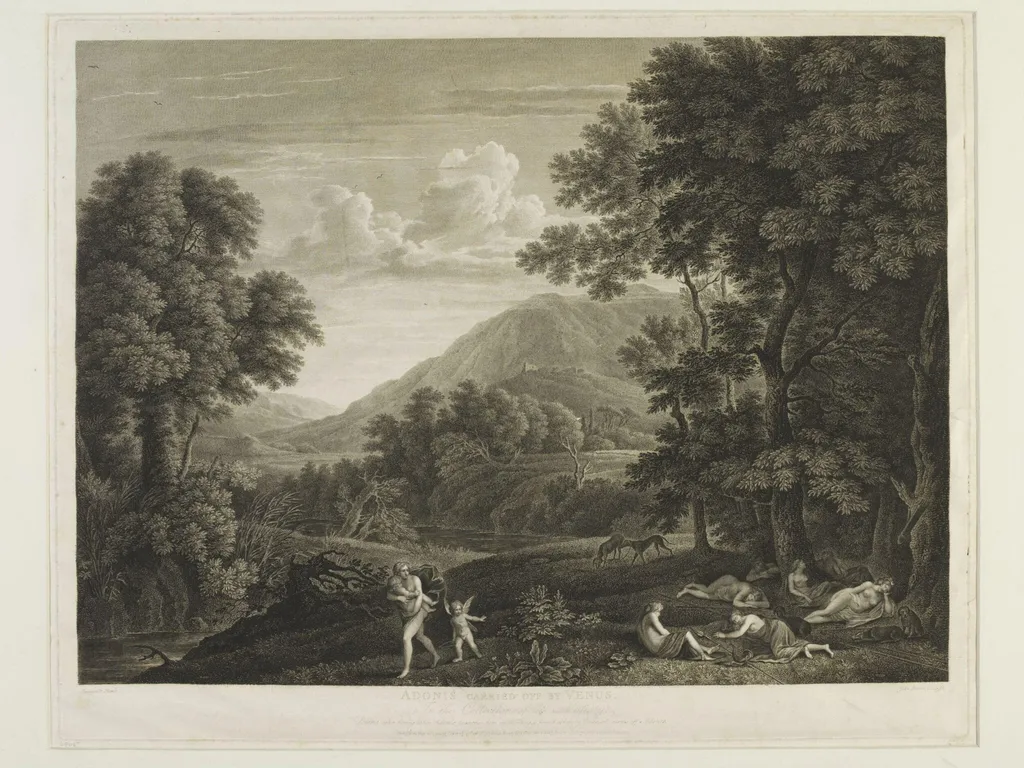
Adonis carried off by Venus is a print by the Romanticist artist John Browne. It dates from 1755 and is held in the collection of the Victoria and Albert Museum.
About this work
Overview
Browne’s version preserves the earlier design while refining its tonal structure through careful shading to suggest depth and atmosphere.
This 1755 print by John Browne illustrates a mythological episode from Ovid’s Metamorphoses: Venus carrying the mortal Adonis. Executed as an engraving on paper, it adapts a composition originally devised by Herman van Swanevelt. The scene unfolds in a pastoral landscape, blending naturalistic detail with classical narrative. Browne’s version preserves the earlier design while refining its tonal structure through careful shading to suggest depth and atmosphere.
Subject & Meaning
The print captures Venus, goddess of love, in the act of transporting Adonis, a youth beloved by her. Though the figures are not explicitly labeled, their interaction and the surrounding idyllic setting allude to the myth’s themes of desire and transience. The sleeping figures in the background may represent the mortal world left behind, while the grazing animals and distant hills reinforce the quiet, almost sacred solitude of their journey.
Technique & Style
Browne employed fine linear engraving to define forms, using subtle hatching and cross-hatching to model light and shadow. The landscape is rendered with soft gradations, creating a sense of atmospheric perspective. Trees and hills recede into the distance with delicate tonal shifts, avoiding dramatic contrasts. The style reflects 18th-century printmaking conventions, prioritizing clarity and compositional harmony over emotional intensity.
History & Provenance
The print was produced in London in 1755, following van Swanevelt’s earlier 17th-century composition. It was likely part of a series of mythological prints circulated among collectors and artists. No definitive record of its original ownership survives, but its production aligns with the period’s interest in classical themes and reproductive engraving as a means of disseminating artistic ideas across Europe.
Context
In mid-18th-century Britain, mythological subjects remained popular in print culture, often serving as vehicles for aesthetic education. Artists and patrons favored classical narratives for their moral and intellectual associations. Browne’s work reflects this trend, drawing on Dutch landscape traditions filtered through English engraving practices, positioning myth within a serene, naturalistic framework rather than theatrical spectacle.
Legacy
Though not widely reproduced in later centuries, Browne’s print exemplifies the continuity of classical themes in Georgian printmaking. It stands as a quiet testament to the enduring appeal of mythological subjects in reproductive art, bridging Dutch landscape conventions with British engraving techniques. Its legacy lies in its role as a modest but precise conduit of earlier artistic ideas into 18th-century visual culture.
Artist & collection

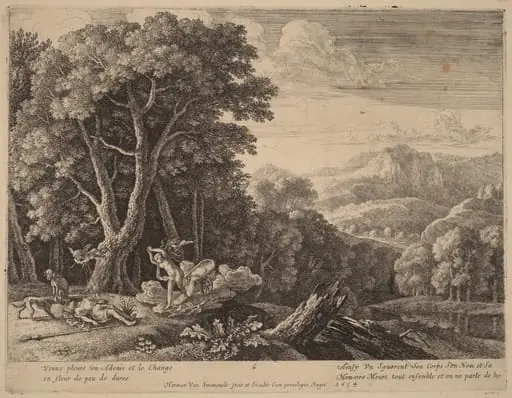 Venus Lamenting over Adonis' Death
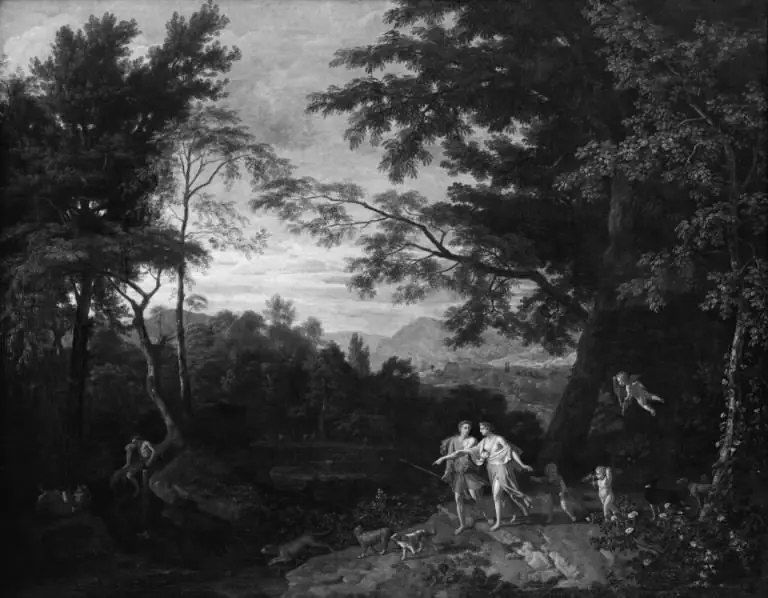 Landscape with Venus and Adonis
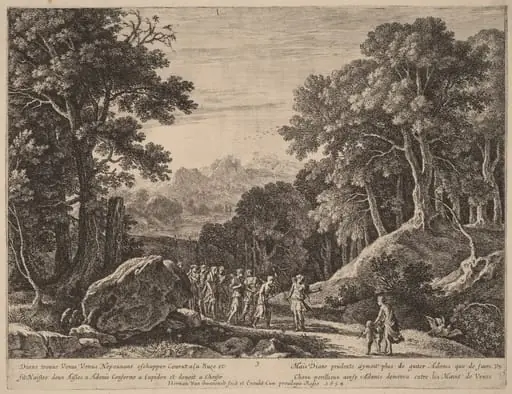 Venus Offering Diana a Choice between Cupid and Adonis
 Landscape with Venus and Adonis
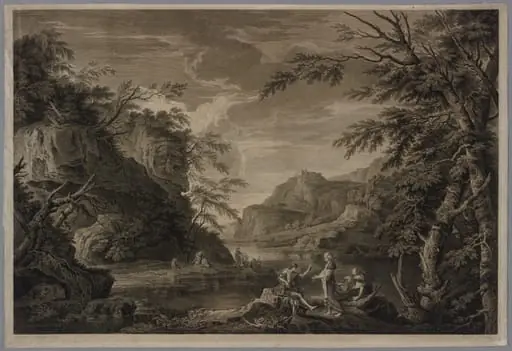 Apollo and the Sibyl
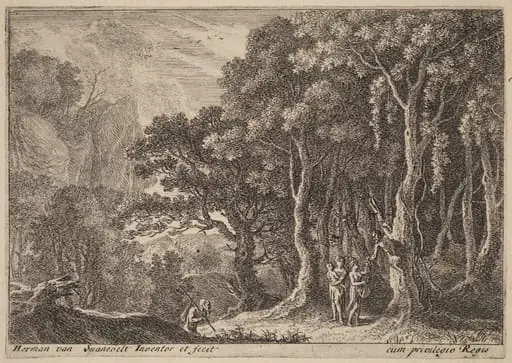 A Satyr Gathering Fruit
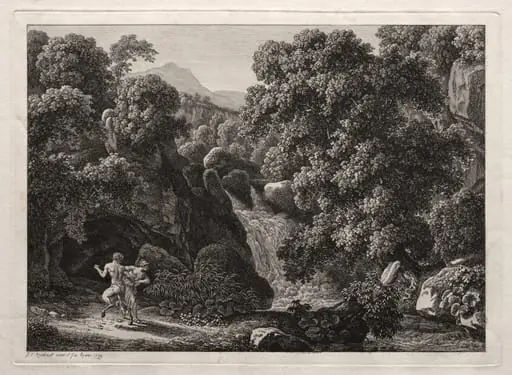 Heroic Landscape: The Satyr and the Nymph
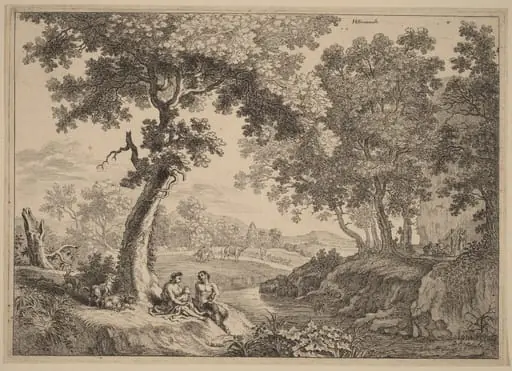 Satyr Family Seated under a Tree
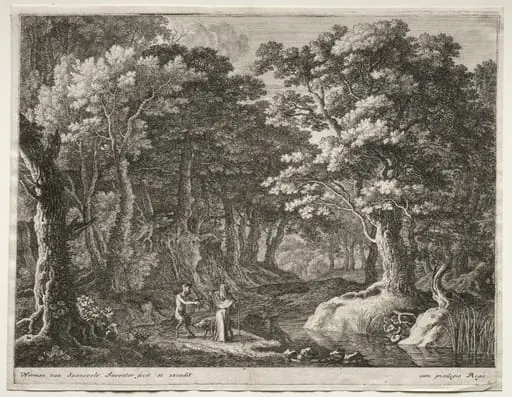 The Penitents: The Temptation of St. Anthony
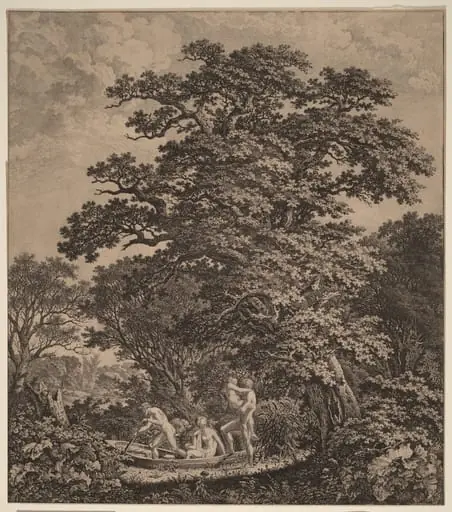 Landscape with Nudes Boarding a Boat
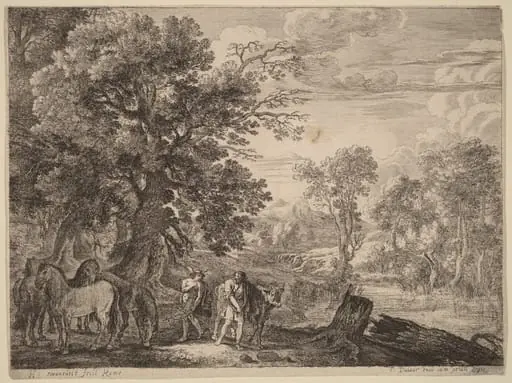 Mercury Silencing Battus
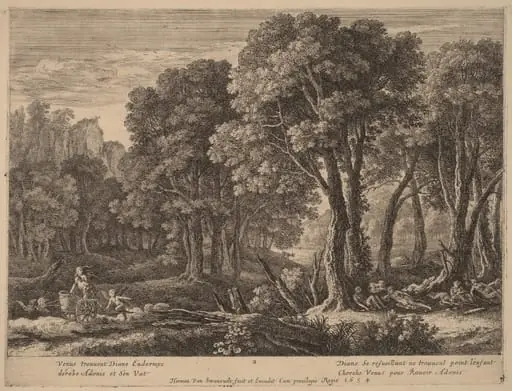 Venus Abducting Adonis