Artwork
Mercury Silencing Battus
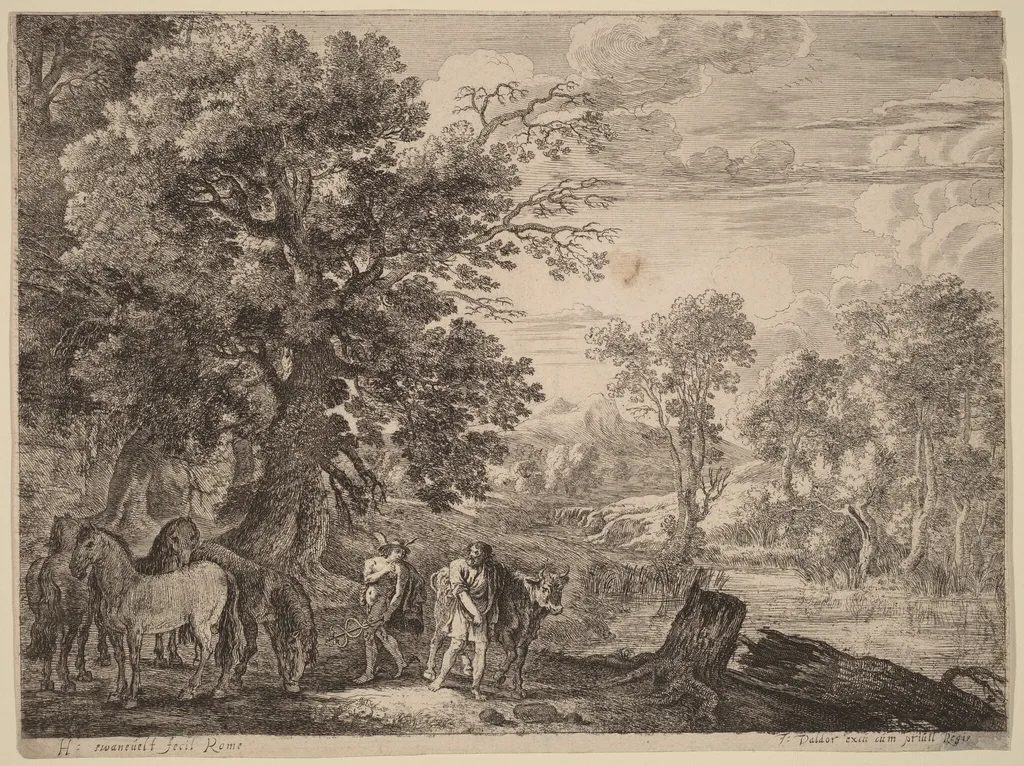
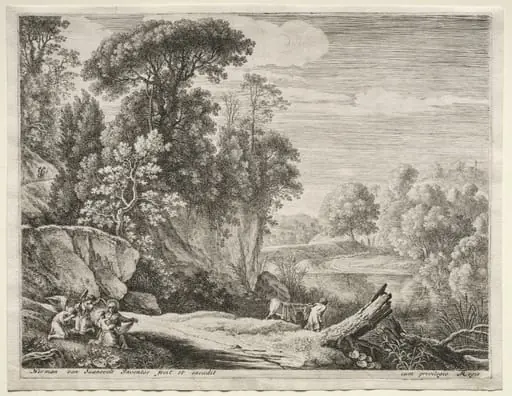
Mercury Silencing Battus is an ink print by the Baroque artist Herman van Swanevelt. It dates from 1628 and is held in the collection of the National Gallery of Art.
About this work
Overview
Fine, controlled lines define the foliage and atmospheric depth, characteristic of early 17th-century Northern European printmaking.
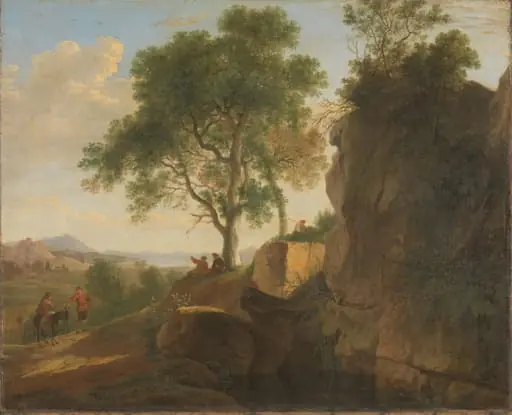
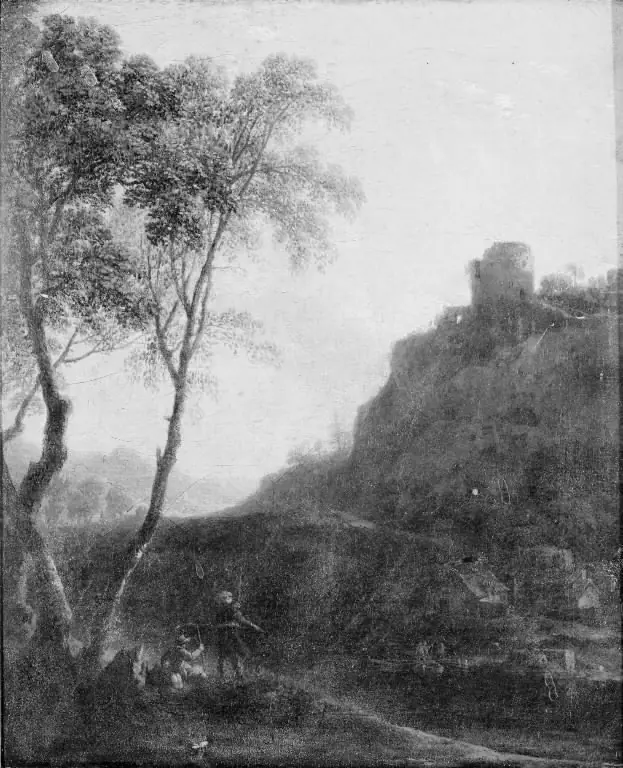
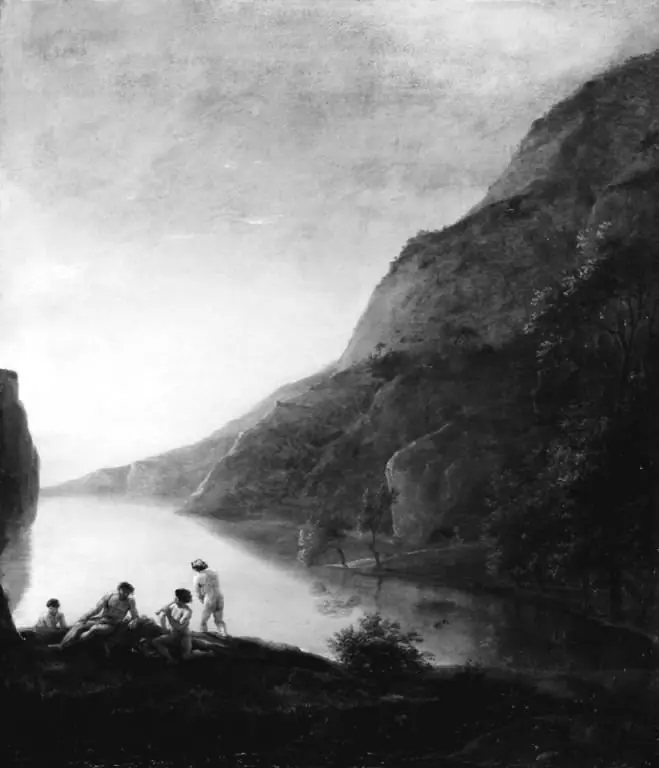
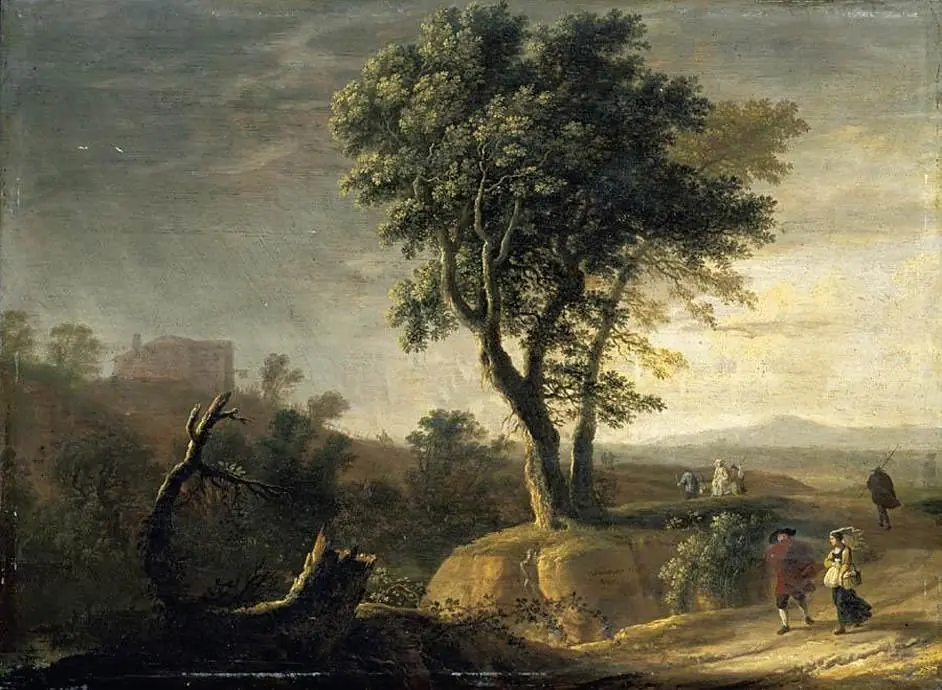
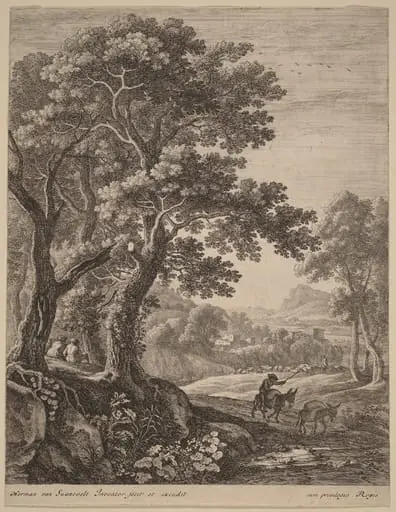
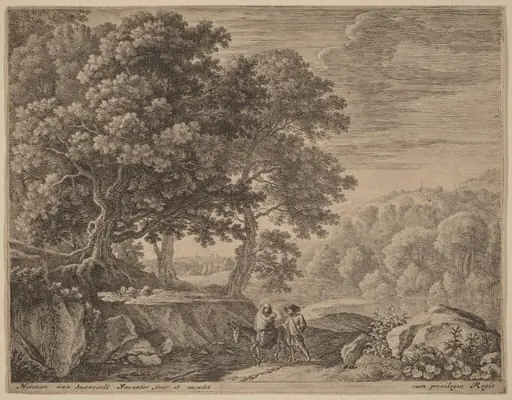
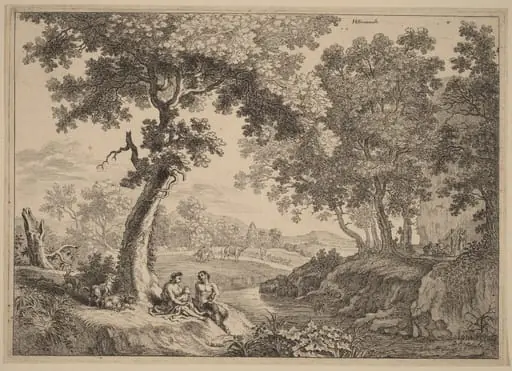
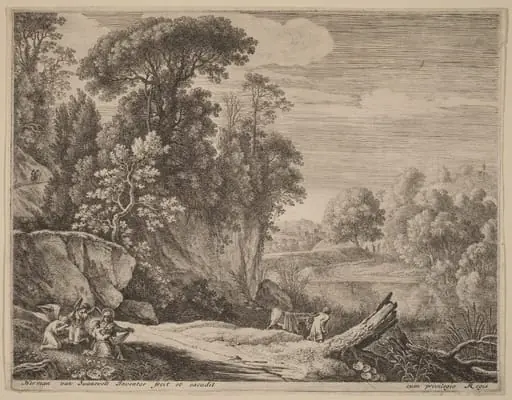
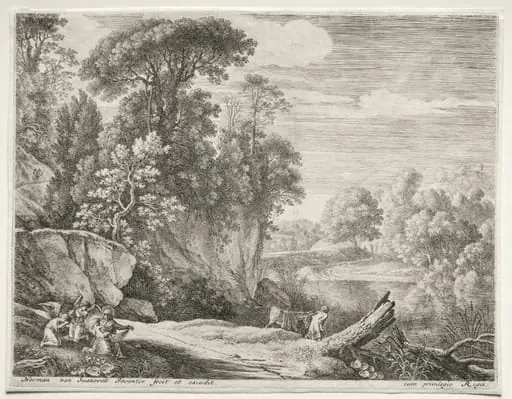
Created in 1628, Mercury Silencing Battus is a black-and-white etching by Dutch artist Herman van Swanevelt. The work depicts a tranquil woodland scene with minimal human presence and natural elements. Fine, controlled lines define the foliage and atmospheric depth, characteristic of early 17th-century Northern European printmaking. The composition balances stillness with subtle narrative tension, inviting contemplation rather than dramatic action.
Subject & Meaning
The scene references a mythological episode in which Mercury, the messenger god, silences the satyr Battus after he betrays the location of a stolen cow. Two figures—one in flowing robes, the other gesturing—suggest this encounter, while horses nearby imply the presence of the herd. The quiet forest setting transforms a moment of divine intervention into a serene, almost private encounter, softening the myth’s moral weight into a contemplative vignette.
Technique & Style
Van Swanevelt employed etching to achieve delicate tonal gradations, using acid to bite fine lines into a metal plate. The sky is rendered with light, feathery strokes, while dense tree canopies are built from layered cross-hatching. A fallen log in the foreground adds tactile texture, grounding the scene. The absence of heavy shadows and the soft light suggest a preference for atmospheric harmony over stark contrast, aligning with Northern landscape traditions of the period.
History & Provenance
The print was produced during van Swanevelt’s early career, before his move to Rome, when his style was still rooted in Dutch landscape conventions. Few impressions of this specific plate survive, and its known provenance traces through private European collections in the 18th and 19th centuries. It was not widely reproduced, suggesting limited circulation and likely intended for connoisseurs rather than mass audiences.
Context
In the 1620s, Dutch artists increasingly turned to mythological and pastoral subjects in print form, blending classical themes with observed nature. Van Swanevelt’s work reflects this trend, merging Italianate compositional ideas with Northern attention to detail. Etching, as a medium, allowed for intimate scale and nuanced expression, making it ideal for private collections and scholarly circles interested in both art and literature.
Legacy
Though not among van Swanevelt’s most widely recognized works, Mercury Silencing Battus exemplifies his early mastery of atmospheric landscape and mythological suggestion. It influenced later Dutch printmakers who sought to convey narrative through quiet, naturalistic settings. The piece remains a quiet testament to the period’s interest in translating classical stories into contemplative visual experiences, rather than grand theatrical displays.
Own this work as a print
Artist & collection