Artwork
Curte șvăbească
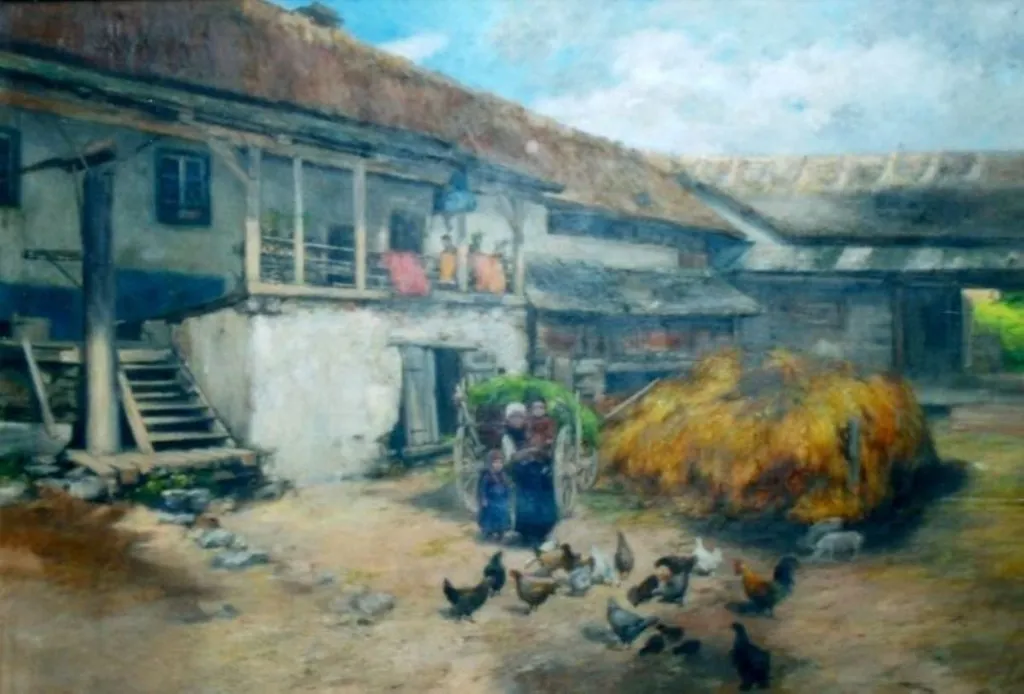
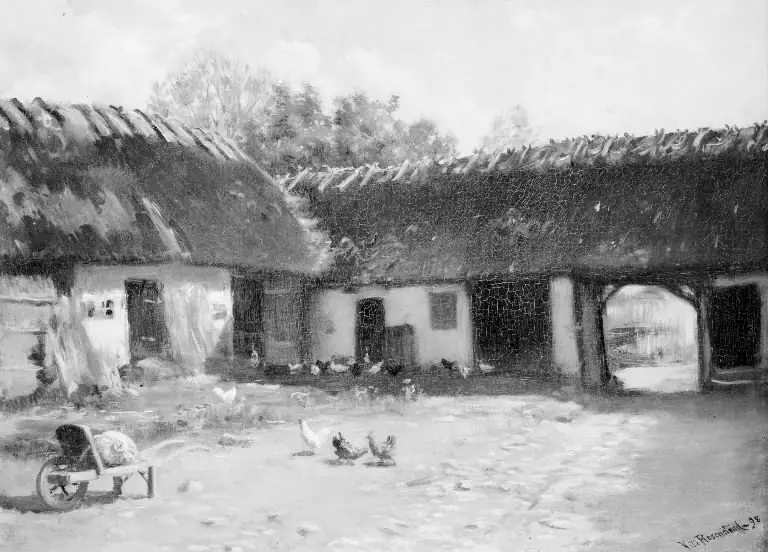
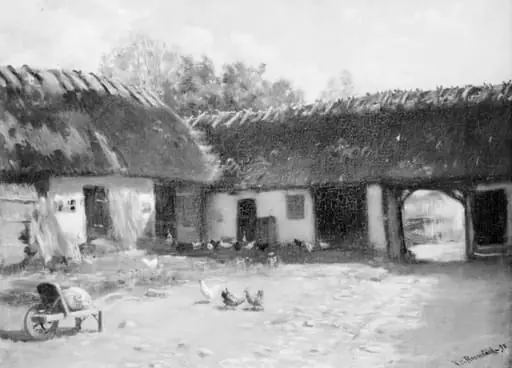
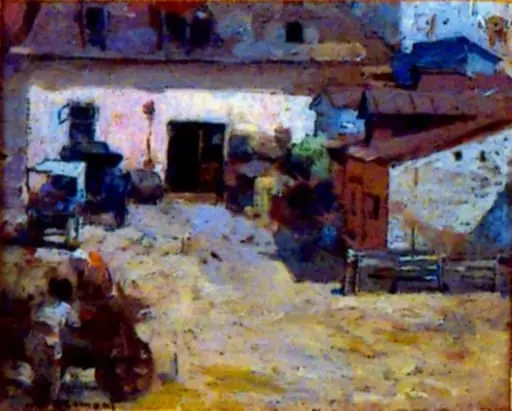
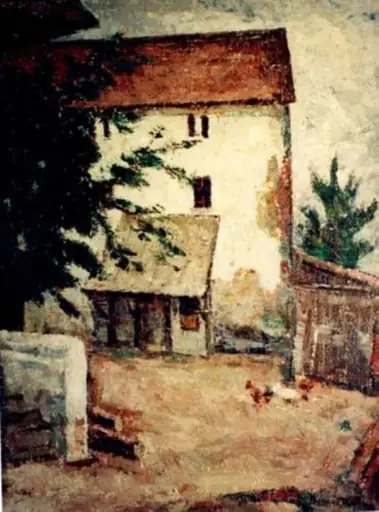
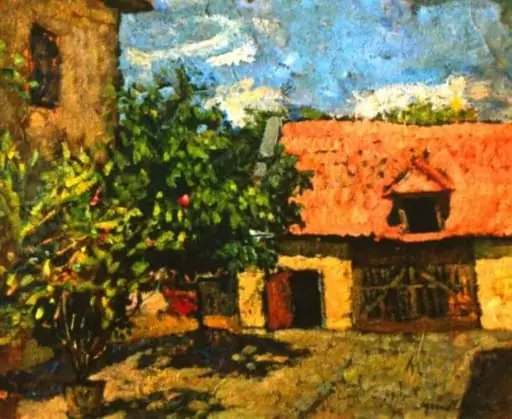
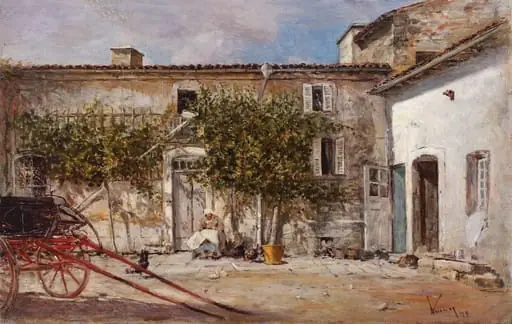
Curte șvăbească is an unspecified painting by the Art Nouveau artist Miksa Bruck. It dates from 1898 and is held in the collection of the Mureș County Museum - Art Museum.
About this work
Overview
Created in 1898 by Hungarian‑Romanian painter Miksa Bruck, “Curte șvăbească” is an oil image now part of the collection of the Museum of Ethnography. The work presents a quiet countryside tableau, centered on a modest farmyard where domestic life unfolds under a gentle, sun‑lit sky.
Subject & Meaning
The composition gathers everyday rural elements: a flock of chickens pecking the earth, a sizable haystack, and a family—woman and children—standing beside a cart. A thatched‑roofed building with a balcony rises in the distance, hinting at the broader community. The scene conveys a sense of simple, self‑sufficient life in a Transylvanian village.
Technique & Style
Bruck employs a warm palette of ochres, siennas and muted greens, applying soft, blended brushstrokes that lend the surface a velvety texture. Careful rendering of feathered plumage and the coarse hay demonstrates his observational precision, while the overall handling of light creates an intimate, enveloping atmosphere.
History & Provenance
The painting was completed in 1898 and entered the Museum of Ethnography’s holdings at an early stage, where it has remained on display as a representative example of late‑nineteenth‑century rural genre painting from the region. Its accession record links it directly to the museum’s efforts to document folk life.
Context
At the turn of the century, Bruck’s work reflected a broader interest among Central European artists in documenting traditional peasant customs amid rapid modernization. “Curte șvăbească” aligns with this trend, offering a visual record of agrarian practices and domestic architecture typical of the Șvăbă (Săbă) area.
Artist & collection
Artist
Miksa Bruck’s 1898 painting Curte șvăbească shows a Transylvanian German household at the turn of the 20th century.