Artwork
Bottom of the Village
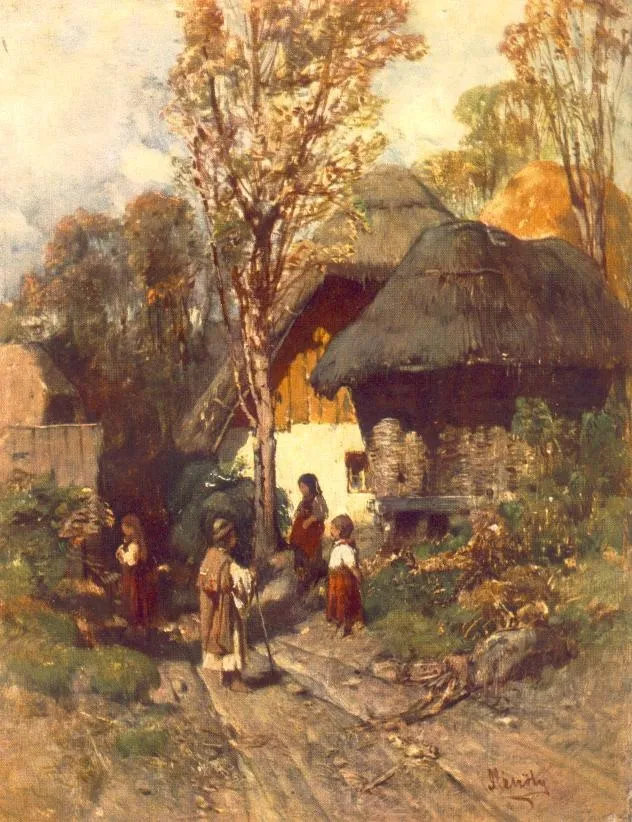
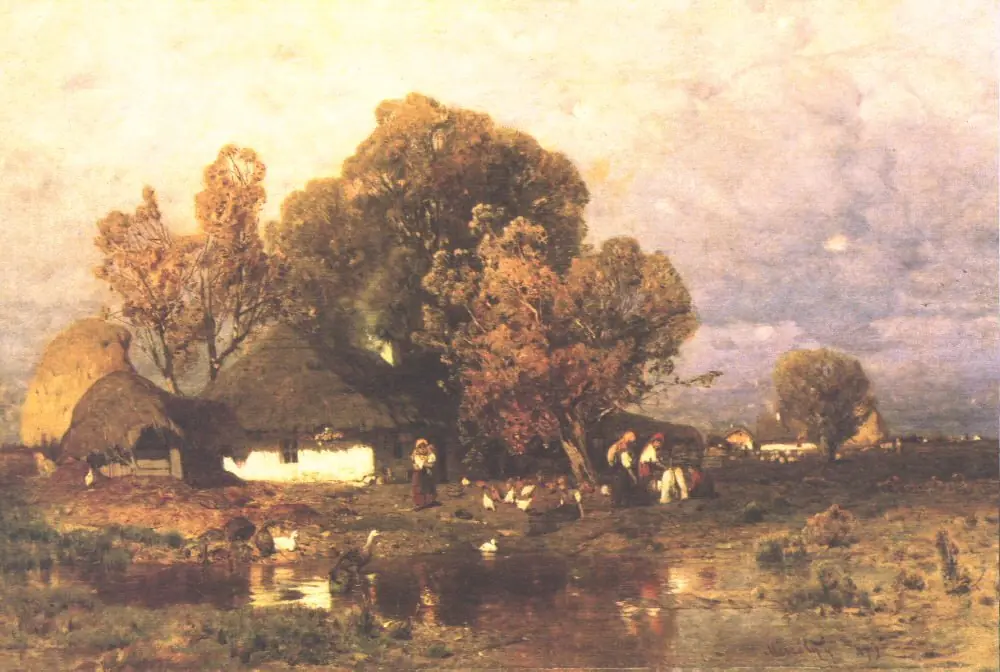
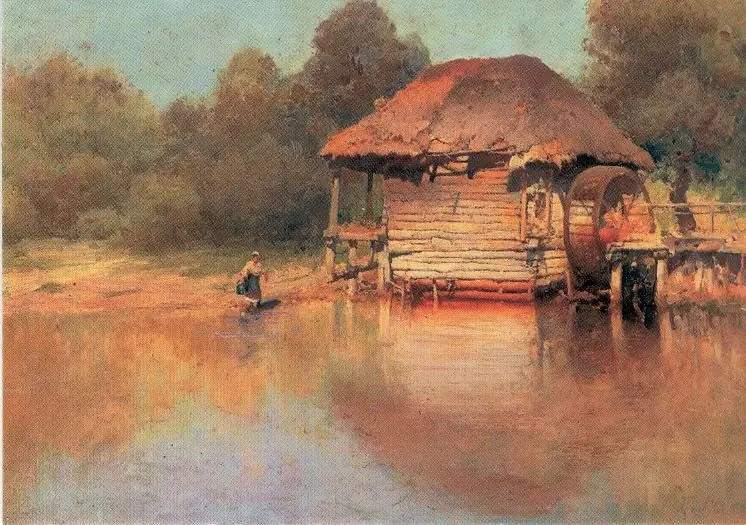
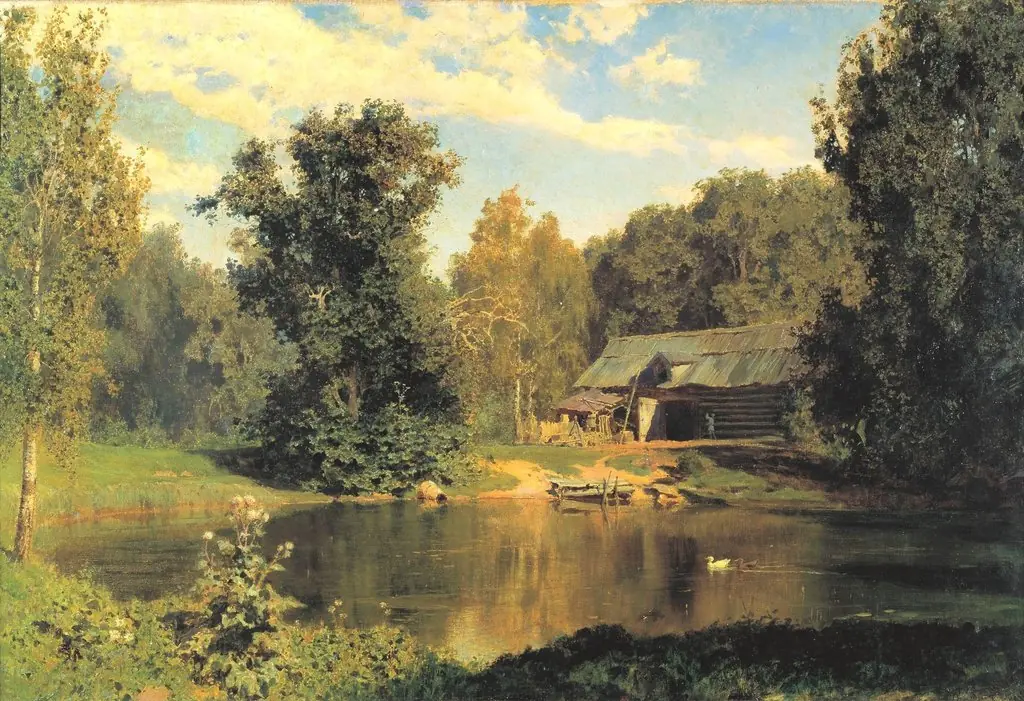
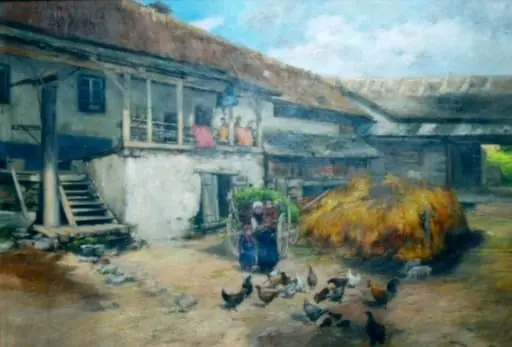
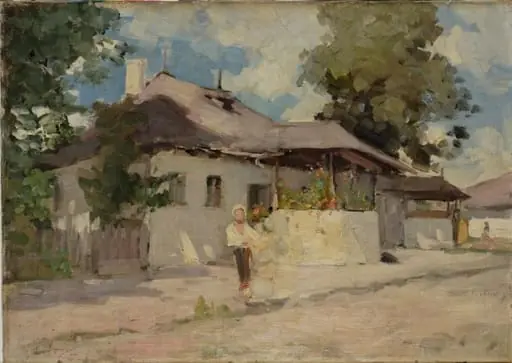
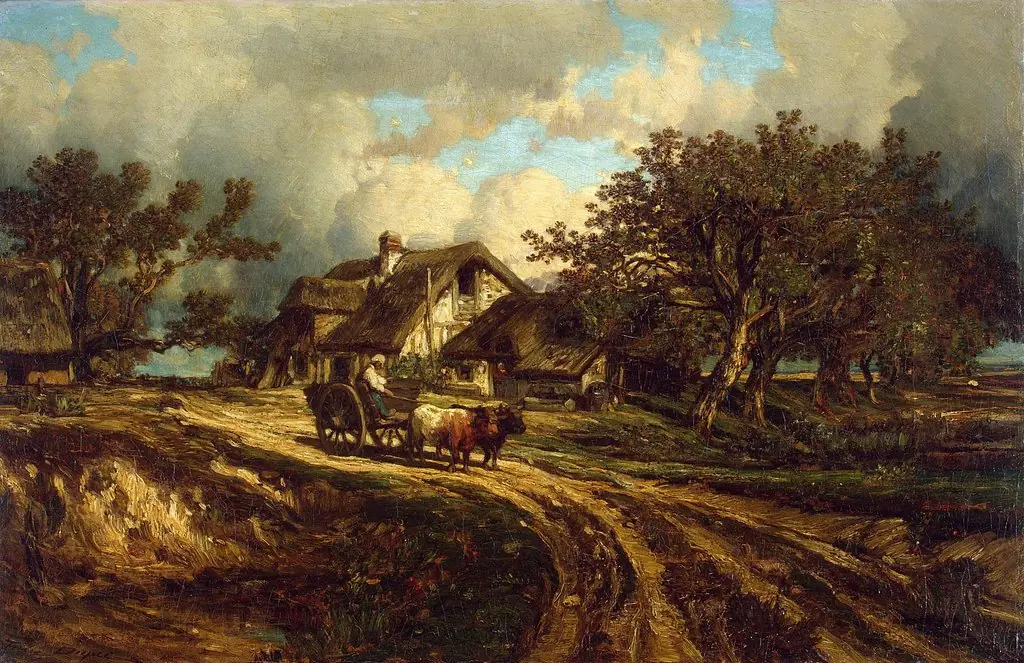
Bottom of the Village is an oil painting by the Impressionist artist Géza Mészöly. It is held in the collection of the Hungarian National Gallery.
About this work
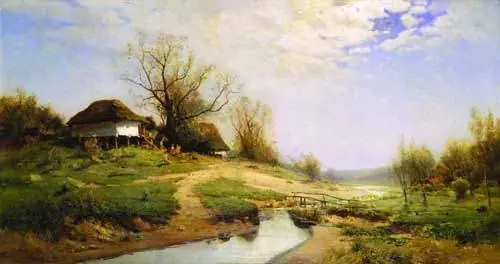
The painting "Bottom of the Village" by Géza Mészöly, created in 1879, depicts a serene scene of a village cottage.
The painting "Bottom of the Village" by Géza Mészöly, created in 1879, depicts a serene scene of a village cottage. The cottage is nestled among trees, with a thatched roof and a small garden in front. A group of people are gathered near the cottage, engaged in various activities.
In the foreground, a woman is standing near the cottage, while a child is playing with a ball. The background of the painting features a beautiful landscape with rolling hills and trees. The overall atmosphere of the painting is peaceful and idyllic, capturing a moment in time from rural life.
The painting is a great example of a genre scene, showcasing everyday life in a village. To learn more about the artist's use of light and shadow, explore the technique of chiaroscuro.
Overview
Bottom of the Village is a painting by Géza Mészöly, a Hungarian artist known for his landscapes, created in 1879 using oil paint.
Subject & Meaning
The painting depicts a tranquil village scene, with a thatched-roof cottage surrounded by trees and a garden, and people engaged in everyday activities, capturing a moment in rural life.
Technique & Style
The work is characteristic of the Impressionist movement, with a focus on capturing the natural atmosphere and light of the scene.
History & Provenance
The painting is now held in the Hungarian National Gallery, reflecting Mészöly's contribution to Hungarian art.
Artist & collection
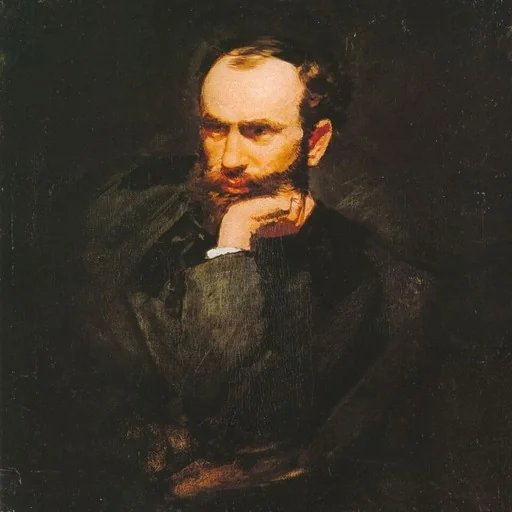
Artist
Géza Mészöly (18 May 1844 in Sárbogárd – 12 November 1887 in Jobbágyi, Nógrád County) was a Hungarian landscape painter.