Artwork
The Large Wedding Feast
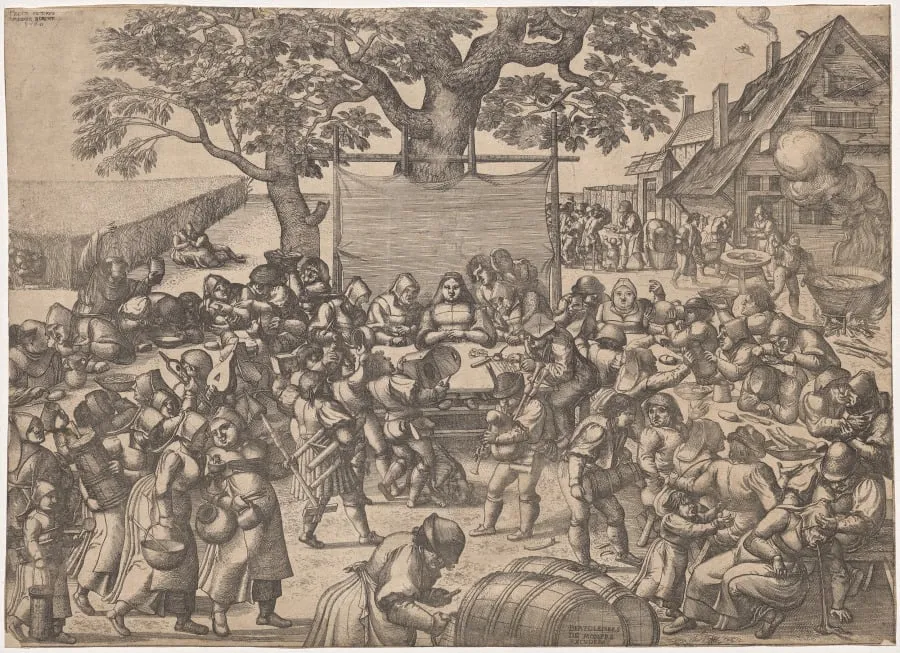
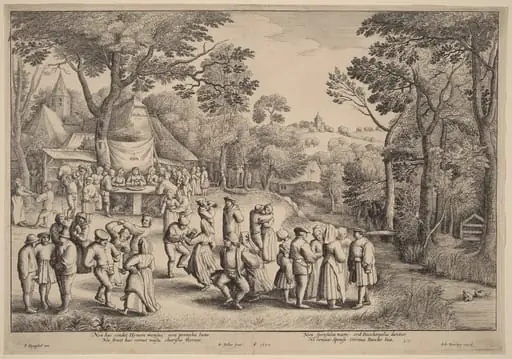
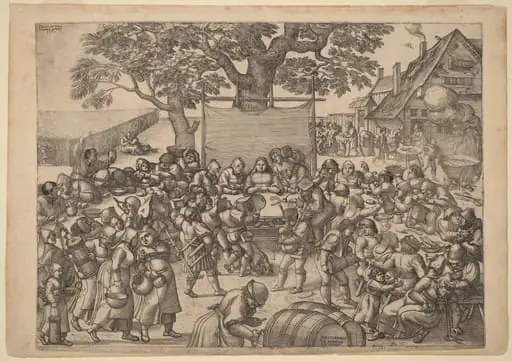
The Large Wedding Feast is a print by the Renaissance artist Peeter van der Borcht. It dates from 1560 and is held in the collection of the Cleveland Museum of Art.
About this work
Overview
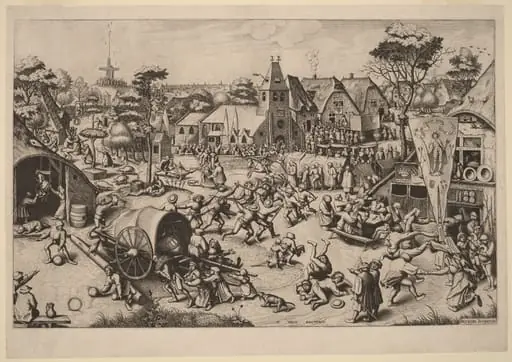
The Large Wedding Feast is a 1560 etching by Peeter van der Borcht, an Antwerp artist, depicting a vibrant peasant wedding scene in a village square, characterized by crowded festivities and a unique central figure.
Subject & Meaning
At the composition's center is the bride, seated alone with arms crossed and an expressionless face, her table notably devoid of food or drink. This detail reflects a Netherlandish custom where the bride abstained from consumption until the bridegroom's evening arrival.
Technique & Style
Executed as an etching, the work showcases van der Borcht's ability to capture detailed, bustling scenes, a hallmark of 16th-century Low Countries' artistic tradition focusing on everyday life and customs.
History & Provenance
Created in 1560, the etching is part of a broader artistic tradition in the Low Countries, emphasizing peasant life and folk customs. Specific provenance details are not provided.
Context
The etching subtly satirizes peasant life by highlighting the bride's isolation amidst revelry, leveraging a folk tradition to create a scene of gentle humor and social commentary.
Legacy
While not individually renowned as a singular landmark, The Large Wedding Feast contributes to the enduring interest in 16th-century Netherlandish prints, particularly those depicting daily life and customs, influencing later artistic explorations of similar themes.
Artist & collection
Artist
Pieter van der Borcht (I) or Peter van der Borcht (c. 1530–1608) was a Flemish Renaissance painter, draughtsman and etcher. He is regarded as one of the most gifted botanical painters of the 16th century. Pieter van der…